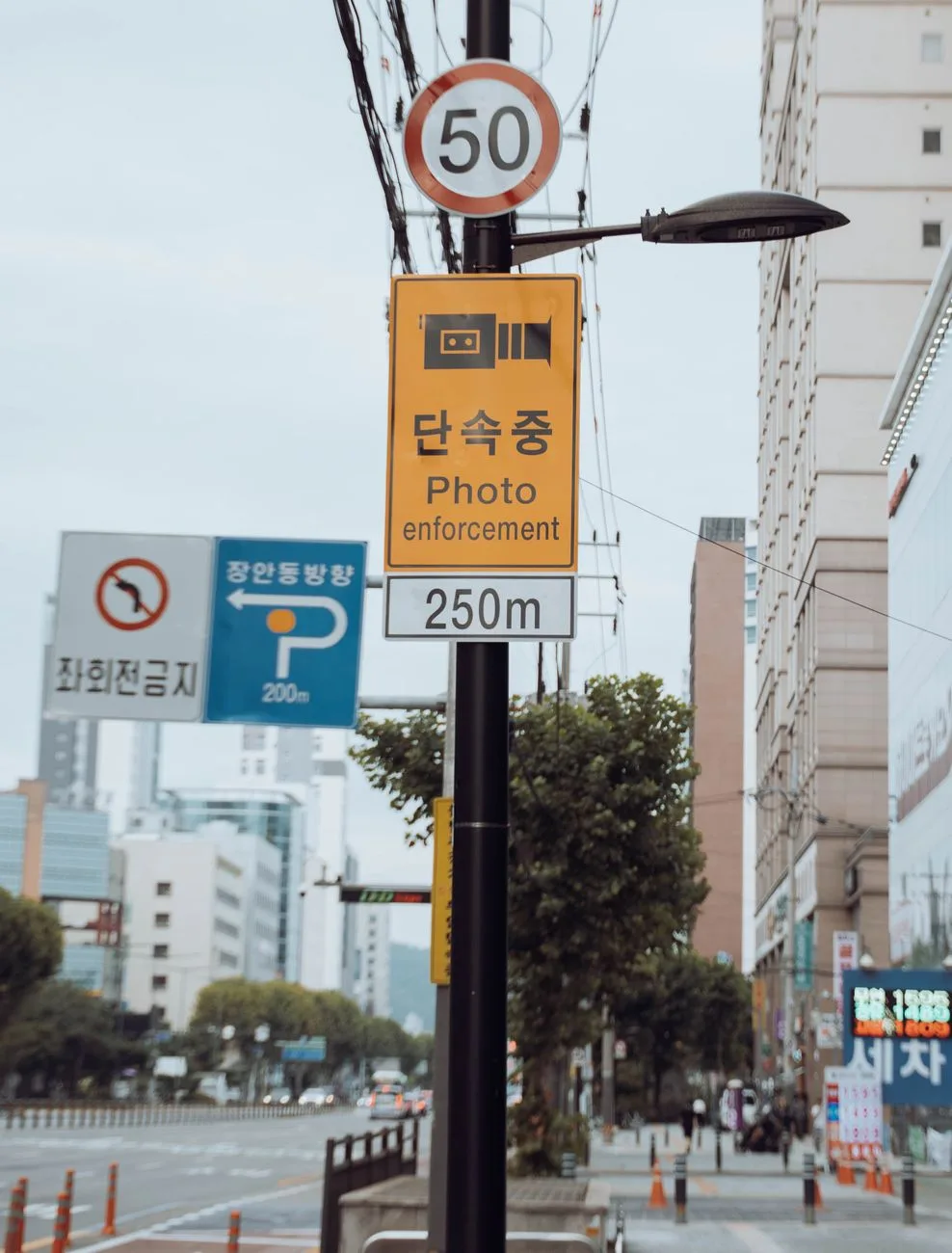
Korean etiquette runs on seniority. The oldest person at the table lifts a spoon first, drinks are poured and received with two hands, and shoes come off at any doorway with a raised floor. Most of this is social convention. A few rules are statute: smoking outside a designated area carries a ₩100,000 fine under the National Health Promotion Act.
The four things visitors get wrong in the first hour
- Over-bowing. A short nod covers nearly every encounter a traveller has. A deep bow to a barista reads as odd rather than respectful.
- Ignoring the subway seating map. About 30% of seats on Korean trains are reserved, and sitting in the wrong one attracts public correction faster than any dining mistake.
- Tipping. The menu price is the final price, tax and service included. Cash left on the table produces a confused server chasing you down the street.
- Smoking by feel. The fine applies to foreign visitors exactly as it applies to residents, and Seoul has extended the same penalty to e-cigarettes in no-smoking zones.
Why age decides almost everything
Korean grammar forces the issue. Every sentence carries a speech level, and choosing one requires knowing where the speaker sits relative to the listener. That is why a stranger's opening question is often a birth year rather than a name.
The legal side of age changed on 28 June 2023, when South Korea dropped the traditional counting system in which a newborn was one year old and everyone gained a year each 1 January. Legal and administrative age now follows the international system. Social sorting survived the reform: birth year still decides who speaks casually to whom, and school cohorts still track it.
Being asked your age two minutes after meeting someone is that person working out which verb endings to use. Answering plainly ends the awkwardness faster than deflecting does. Anyone studying the language meets the same system head-on in the first month, which is why our guide to choosing a Korean textbook you will finish spends so much space on the honorific levels.
Bowing, handshakes, and what to call people
Bow depth scales with status. Seoul's official travel guide states it directly: the elder the recipient or the higher the status, the deeper the bow, and men often follow the bow with a handshake, the right hand supported at the wrist or forearm by the left. A nod of about fifteen degrees handles shop staff, hotel reception and casual introductions.
Two hands are the constant. The Seoul Metropolitan Government's visitor etiquette page instructs travellers to give and receive any object using both hands: a business card, a payment, a shopping bag, a glass. Where two hands are impractical, the left hand touches the right forearm. This one habit does more work than anything else on this page.
Names run family name first, so 김민준 is Mr Kim rather than Mr Minjun. Given names stay unused until you are invited to use them, and seniors are addressed by professional title plus surname. A manager surnamed Park is 박 부장님, never Minsu. In most workplaces the title replaces the name entirely.
Pointing with an index finger is avoided. An open hand, palm upward, does the same job.
Shoes: the rule with a physical tell
Watch for a change in floor height. Where the floor steps up, shoes come off. Seoul's guidance sets the rule for any residence, temple or guesthouse, and it extends to hanok stays, temple-stay programmes and the raised-platform rooms in older restaurants.
Socks follow from this. Bare feet in someone's home land worse than socks, and a hole in the toe is a small public event once the table is on the floor. Slippers wait at the door in most homes and guesthouses, and bathroom slippers stay in the bathroom.
At the table: the order of operations
- Wait for the eldest to start. Seoul's official etiquette page puts this first among its dining rules, and it holds at family meals and business dinners alike.
- Spoon for rice and soup, chopsticks for everything else. The rice bowl stays on the table, which is the reverse of Japanese practice.
- Never leave chopsticks or a spoon standing upright in the rice. That arrangement belongs to ancestral memorial rites and the association registers instantly.
- Keep fingers off the food. The exception is ssam, where a lettuce or perilla leaf is wrapped by hand.
- Return the utensils to their starting position at the end of the meal rather than laying them across the bowl.
Two further habits are worth copying. Side dishes in the middle belong to everyone and refills are free at most restaurants, so reaching for the shared kimchi is expected rather than greedy. And the person who issued the invitation pays the whole bill more often than the table splits it, with the next round reciprocated later. If you are still deciding where to eat, our look at Seoul restaurants where Reddit's advice holds up sorts the usual recommendations by what they deliver.
Pouring: the table with the most rules
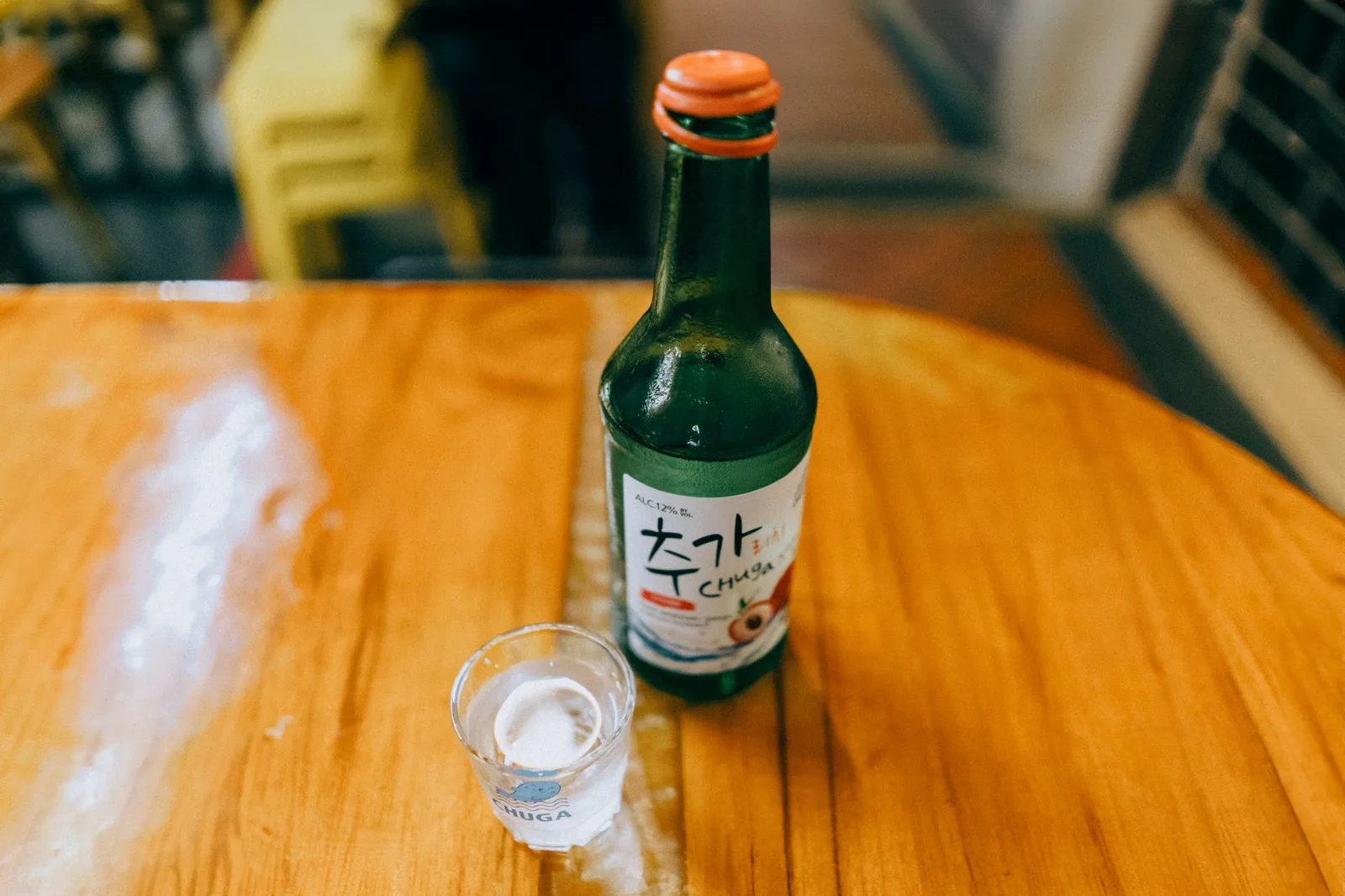
Alcohol is where etiquette turns into choreography. The sequence, as set out in Seoul's official etiquette guide, has four moving parts.
- Nobody pours their own drink. You fill your neighbour's glass and someone fills yours.
- The most senior person at the table drinks first.
- Pour with two hands, and receive with two hands.
- When drinking in front of a senior, turn your head away from them.
Refusal is the question foreign guests ask most. A full glass does not get topped up, so leaving the first pour untouched communicates "not drinking" without a word. Saying it outright works too. Declining is far more accepted than it was a decade ago, though the tolerance is not equal across every industry, and a first-week company dinner in a conservative office remains the hardest room in which to test it.
What manners cost: fines versus face
Not every rule carries the same penalty. This table separates what a police officer can act on from what only costs you standing at the table.
| Behaviour | Rule | Fine (KRW, 2026) | Police-enforced |
|---|---|---|---|
| Smoking in a no-smoking zone | National Health Promotion Act, Art. 9 | 100,000 | Yes |
| Dropping a cigarette butt | Littering | 50,000 | Yes |
| Crossing on a red signal | Road Traffic Act | 30,000 | Yes |
| Crossing away from a crosswalk | Road Traffic Act | 20,000 | Yes |
| Take-out coffee on a Seoul city bus | Boarding refused | None | No |
| Sitting in a priority seat | Social sanction | None | No |
| Tipping | Confusion | None | No |
Every enforceable line in that table is street behaviour. Nobody is fined for holding chopsticks badly; people are fined for cigarettes and crossings, which is the opposite of where most visitors direct their worry.
Run the arithmetic on one badly placed cigarette. The smoking fine of ₩100,000 plus the ₩50,000 penalty for dropping the butt comes to ₩150,000. At the 12 August 2026 exchange rate of 1,415.47 won to the dollar, that is about US$106. Set against Korea's 2026 statutory minimum wage of ₩10,320 an hour, it is 14.5 hours of work. Set against dinner, Numbeo's Seoul index put a mid-range meal for two at ₩92,500 as of 12 August 2026, so one cigarette in the wrong doorway costs more than feeding two people, with change left over.
Tipping runs the other way. On that same ₩92,500 dinner, a 20% American-style tip would add ₩18,500. The correct payment in Korea is ₩92,500, because tax and service are built into the listed price. The extra money does not read as generosity; it reads as an error the staff now have to chase you down to resolve.
These are the statutory amounts in force in 2026, and enforcement sits with the officer on the scene. Treat this as general information rather than legal advice.
The subway is where visitors get corrected
About 30% of all subway seats in Korea are priority seats reserved for elderly, disabled and pregnant passengers, and other passengers police them, not staff. An empty priority seat in an empty carriage is not an invitation.
Pink seats are a separate category. Seoul Metro introduced pink seats for pregnant passengers in 2013 under its Pink Light campaign, marked at the end of each bench. They stay empty whether or not a pregnancy is visible. Seoul Metro logs around 7,000 complaints a year about people occupying them, which is more than twenty a day.
Three further transit rules save trouble. Let passengers off before boarding, and use the queue markings painted on the platform. Carry a large backpack in front of your body or set it on the floor, which the same official guidance asks for. Seoul banned take-out coffee on city buses in January 2018 and drivers do refuse boarding over it, while strongly scented food is unwelcome on any service.
Phone calls in a carriage happen at a near-whisper if at all. Speakerphone is the fastest way to collect stares in Korea.
How formal do you need to be? Three questions
Most etiquette anxiety is misallocated. Instead of memorising thirty rules, run three checks on the way into a room.
1. Is anyone here clearly senior? Senior means visibly older, or higher in rank at a work meal. If yes, the seniority sequence governs everything: wait to be shown a seat, wait for them to begin eating, fill their glass before your own. If no, the room runs casually and two hands plus a nod is enough.
2. Is there alcohol on the table? If yes, the pouring rules outrank everything else here. Watch whose glass is empty instead of your own.
3. Are you the customer? In a shop, restaurant, hotel or taxi, staff bow to you. A nod and 감사합니다 is the complete correct response. Bowing deeply back is not more polite; it stretches a three-second exchange into something both sides have to think about.
Keep three habits and the rest follows: two hands for anything passed, wait before sitting and eating, let the older person set the pace.
Where this advice breaks down
The seniority script assumes a mixed-age table. Among friends in their twenties in Hongdae or Seongsu it mostly dissolves. Glasses get refilled by whoever is nearest, nobody tracks the pouring order, and formal speech would be the odd choice.
Foreign visitors also get real latitude. The effort registers and the errors do not offend. Goodwill runs out only at the enforceable list above, where a foreign passport changes nothing about the fine.
The shoe rule fails in the direction people least expect. Modern restaurants with chairs, cafés, offices and shops keep shoes on. Reading the floor height beats guessing from the style of the building.
Questions visitors keep asking
Do I have to bow to everyone in Korea?
No. A short nod covers shop staff, servers, hotel reception and casual introductions. Deeper bows belong to elders, senior colleagues, formal introductions and ceremonial occasions such as weddings and memorial rites, where the depth of the bow signals the size of the status gap.
Is tipping ever expected in Korea?
No. Tipping is not customary and the listed price already contains tax and service, which is what Seoul's official visitor guidance tells travellers. Some hotels and Western-facing restaurants add a service charge that is disclosed on the menu, and nothing beyond it is expected. Delivery apps and a few tourist-facing services have begun showing optional tip prompts; declining them is ordinary behaviour.
Do I take my shoes off in Korean restaurants?
Only where the floor is raised. Rooms with a stepped-up platform and floor seating expect shoes off at the step, with shelves or lockers at the entrance. Restaurants with ordinary tables and chairs do not. Floor height is the signal, and it applies the same way in hanok stays and temples.
What happens if I sit in a priority seat?
Another passenger tells you to move, sometimes bluntly, and no fine or staff involvement follows. With about 30% of seats designated and roughly 7,000 pink-seat complaints logged a year on Seoul Metro, the social enforcement is more active than most visitors anticipate.
Is it rude to refuse alcohol?
No, and there are two clean methods. Leave the first glass full, since a full glass is not refilled, or state plainly that you are not drinking. Accepting the pour with two hands and simply not drinking it also reads as polite.
Can I ask someone their age?
Yes, and expect the question back. Legal age in Korea has followed the international system since 28 June 2023, but birth year still governs speech level and seating order, so the question is grammatical housekeeping rather than an intrusion.