Korean movies in 2026 arrive in four release corridors: Seollal (17 February), the late-July to mid-August summer peak, Chuseok (25 September), and the year-end run into January. For what is actually on screen this week, KOFIC's KOBIS daily box office is the only reliable list. Published "most anticipated" round-ups go stale within weeks because Korean release dates are often locked barely a month out.
The short version
- Four dated corridors carry the big titles; the gaps between them are where mid-budget dramas and independents open.
- A standard 2D adult ticket at CGV, Lotte Cinema or Megabox sits around ₩14,000–15,000 as of mid-2026. Verify the current price in the chain's own app before booking.
- Korean-language films in Korean multiplexes almost never carry English subtitles. This is the single thing that ruins a cinema night for visitors.
- Festivals and the Korean Film Archive are the dependable English-subtitled routes.
- A theatrical title now reaches paid digital rental in weeks, not months, and a subscription platform some time after that.
The 2026 Korean release calendar runs on four corridors
Korean distributors do not spread tentpoles evenly across the year. They aim at holiday blocks where admissions spike, and they open a day or two before the holiday so word of mouth has a running start.
Seollal, 17 February 2026. Lunar New Year falls on a Tuesday, with the holiday spanning 16–18 February. This corridor favours broad, family-viewable films: period action, comedy, disaster.
Summer peak, late July to mid-August. The densest and most competitive block of the year. Four or five wide releases can open within three weeks, which is why summer also produces the year's most spectacular failures.
Chuseok, 25 September 2026. Chuseok lands on a Friday, and because part of the holiday falls on a Saturday a substitute weekday holiday normally follows. Confirm the exact public-holiday run against the government calendar; our 2026 Korean festival and holiday dates page tracks the same window from a traveller's angle.
Year-end, mid-December into January. Awards-facing dramas and the big-budget swing that missed summer.
Between corridors, mid-January, March–April and November carry the mid-budget titles: crime dramas, courtroom pieces, romance, and the independent releases that play on a handful of screens.
This calendar has a sharp exception. Korean multiplexes reallocate screens daily on seat-occupancy figures, so a wide release that underperforms in its first five days can lose most of its showtimes in the second week. A film advertised in January as a Seollal event can be effectively gone by early March. Booking a specific title more than a fortnight ahead is a gamble.
How to check which Korean movies are in cinemas right now
Three primary sources cover this properly, and all three are public.
- KOBIS, the Korean Box Office Information System operated by the Korean Film Council (영화진흥위원회, KOFIC), publishes the previous day's admissions and screen counts each morning at kobis.or.kr. This is the industry's own reporting system, not an estimate.
- KMDb, the Korean Movie Database run by the Korean Film Archive, at kmdb.or.kr, holds release dates, credits and certification data for Korean titles going back decades.
- KOFIC's own site, kofic.or.kr, carries annual and monthly industry reports, including the admissions statistics that show how far the market has moved.
That movement is worth knowing before judging any 2026 title's numbers. KOFIC recorded roughly 226 million cinema admissions in 2019, the peak year and the highest per-capita attendance in the world at the time. Years since 2022 have run near half that. A 2026 film crossing 5 million admissions is a genuine hit by current standards, even though the same figure would have looked ordinary in 2019.
The multiplex apps (CGV, Lotte Cinema, Megabox) are where you check showtimes and seats, but they only show what each chain has booked. KOBIS shows the whole market.
What a cinema ticket costs in Korea in 2026
As of mid-2026, a standard 2D adult ticket at the three major chains runs approximately ₩14,000–15,000 at peak times, with weekday and off-peak pricing below that. Chains adjust these prices without much notice, so treat the figure as a bracket and confirm in the app.
Three ways the price comes down:
- Early-morning screenings (조조). The first show of the day, roughly before 10:00, is the cheapest standard slot on the board.
- Culture Day (문화가 있는 날). On the last Wednesday of each month, participating cinemas discount evening screenings in a window around 17:00–21:00, to roughly ₩7,000. The programme is run by the Ministry of Culture, Sports and Tourism and listed at culture.go.kr. It applies to standard 2D only: IMAX, 4DX, ScreenX and Dolby screenings are excluded, participation varies by branch, and the discount can be suspended around major holiday weeks.
- Chain membership points, which require a Korean phone number to register in most cases.
Special formats add a substantial premium. IMAX and 4DX tickets can run well above the standard price, and for a dialogue-driven Korean drama they buy you nothing.
Seating is reserved and chosen at booking. Korean audiences book ahead for opening weekends of corridor releases, and a Saturday evening show of a major Seollal or Chuseok title can be sold out days in advance.
Korean films in Korean cinemas rarely have English subtitles
This catches visitors constantly, because the logic runs opposite to expectation. Foreign-language films screening in Korea are subtitled in Korean. Korean films screening in Korea are presented without subtitles, since the audience is Korean.
Screenings tagged 한글자막 or 배리어프리 do carry subtitles, but they are Korean subtitles, provided as an accessibility service for deaf and hard-of-hearing viewers. They will not help a non-Korean speaker.
English-subtitled screenings of Korean films do exist. They are limited, they are scheduled at a small number of branches, and they are usually attached to titles with strong international interest. When a chain runs them, the showtime is tagged in the booking app.
The position worth taking: if your Korean is below solid upper-intermediate, do not book a multiplex screening of a Korean drama, thriller or period film on the assumption you will follow it. Korean courtroom, political and family dramas are dense with legal terminology, honorific registers and dialect. The exception is genre cinema with light dialogue. Action, horror and creature films survive the language gap far better, and animation aimed at children is often dubbed and simple enough to follow.
The dependable alternative is the Korean Film Archive (한국영상자료원, KOFA) in Sangam, western Seoul. Its Cinematheque KOFA programmes Korean classics and retrospectives, admission is free, and a substantial share of screenings carry English subtitles because the archive serves researchers and international visitors. The schedule is published at koreafilm.or.kr. For anyone with one free evening in Seoul who actually wants to watch a Korean film and understand it, this beats the multiplex on every axis except newness.
How long until a 2026 Korean film reaches streaming
Release windows compressed sharply after 2020 and have not gone back. The sequence for a typical wide Korean release now runs:
- Theatrical. Wide screens for two to four weeks, longer only if occupancy holds.
- Paid digital. IPTV and transactional VOD (rent or buy) on Korean platforms, frequently three to five weeks after opening. Individual deals vary and some titles wait longer.
- Subscription streaming. TVING, Coupang Play, Wavve or Netflix, depending on who holds the rights. Studio affiliation drives this: CJ ENM titles gravitate to TVING, and Netflix-financed Korean films skip cinemas entirely.
- International subscription. The gap between the Korean streaming date and the date a title appears on a foreign Netflix catalogue is unpredictable and can be a year or more, or never.
That last step is the one that frustrates people abroad. A film topping the Korean box office in March 2026 may have no legal viewing route outside Korea for a long stretch. What is available internationally at any moment is a separate question, covered in our guide to Korean movies on Netflix in 2026.
Domestic Korean platforms are not a simple workaround either. Several require a Korean phone number, a Korean payment card or resident verification to complete signup, and their catalogues are geo-restricted.
Where to watch a 2026 Korean movie: the four routes compared
| Route | Availability | Typical cost | English subtitles | Best for |
|---|---|---|---|---|
| Multiplex (CGV, Lotte, Megabox) | Opening day | ₩14,000–15,000 peak, 2D | Rarely; only on tagged screenings | New releases, in Korea, Korean speakers |
| Film festival | Festival dates only | Per-screening ticket, sold in advance | Nearly always | Premieres, indies, international visitors |
| Korean Film Archive, Sangam | Programmed schedule | Free admission | Frequently | Classics and retrospectives in Seoul |
| Streaming (TVING, Coupang Play, Wavve, Netflix) | Weeks to months after release | Monthly subscription or per-title rental | Varies by platform and territory | Watching from abroad, catching up |
Film festivals in 2026 are the reliable subtitled route
Festival screenings in Korea are subtitled in English as a matter of course, because the programmes are built for international guests, press and buyers. For a non-Korean speaker this is the difference between watching a film and watching people talk.
The main fixtures:
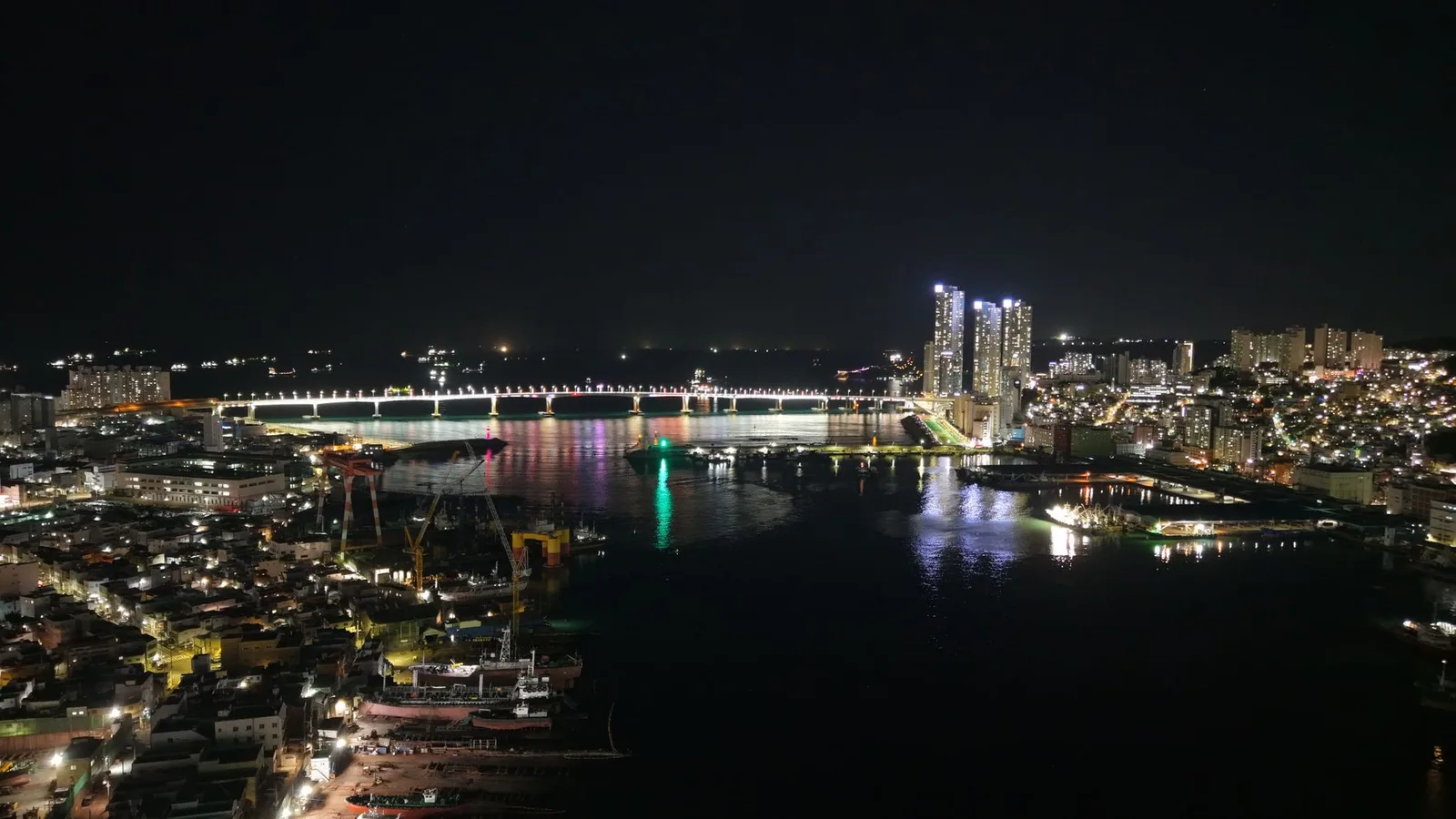
- Busan International Film Festival (BIFF), Korea's largest, centred on the Busan Cinema Center in Haeundae and screens across Nampo-dong. Recent editions have run in late September into early October. Dates and the full programme are published at biff.kr. Our Busan three-day itinerary covers the city around it.
- Jeonju International Film Festival (JIFF), spring, focused on independent and experimental work, at jiff.or.kr.
- Bucheon International Fantastic Film Festival (BIFAN), summer, genre cinema, at bifan.kr.
- Seoul Independent Film Festival, late in the year, Korean independents.
Booking opens weeks ahead and popular titles sell out within hours of tickets going live. Check each festival's own site for the 2026 dates rather than relying on last year's; BIFF in particular has shifted its window in recent editions.
Five mistakes that cost people a screening
Assuming subtitles. Covered above, and still the most common. Check the showtime tag, not the film.
Confusing a preview with the release. Korean distributors run 시사회 and paid preview screenings days before the official 개봉일. A date circulating online may be the preview, not general release.
Booking a corridor opening weekend on the day. Seollal and Chuseok Saturday evenings for a major title sell out. So do the first two days of a summer tentpole.
Expecting the international catalogue to track the Korean one. A film's Korean streaming debut says nothing about when it appears in your country.
Treating a 2026 box office number as comparable to a 2019 one. The market halved. Judge admissions against current-year peers, using KOBIS.
FAQ
Do Korean cinemas show Korean movies with English subtitles?
Only on specific tagged screenings, which are limited in number and branch. The default for a Korean-language film in a Korean multiplex is no subtitles at all. Screenings labelled 한글자막 or 배리어프리 carry Korean subtitles for accessibility, not English ones. Festivals and the Korean Film Archive in Sangam are the reliable English-subtitled options.
When do the biggest Korean films release in 2026?
Around four blocks: Seollal on 17 February, late July through mid-August, Chuseok on 25 September, and mid-December into January. Distributors typically open a wide release a day or two ahead of the holiday itself. Exact dates for individual titles are often confirmed only four to six weeks in advance.
How much is a movie ticket in Seoul?
Roughly ₩14,000–15,000 for a standard 2D adult ticket at peak times at the major chains as of mid-2026, with cheaper weekday, off-peak and early-morning pricing. Culture Day, the last Wednesday of each month, discounts evening standard screenings at participating branches to around ₩7,000. Prices change without much notice, so confirm in the chain's app.
How long after cinema release does a Korean movie hit streaming?
Paid digital rental frequently arrives three to five weeks after theatrical opening. Subscription streaming follows later and depends on which company holds the rights, with CJ ENM titles heading to TVING and Netflix-financed films bypassing cinemas entirely. International availability is a separate and much less predictable timeline.
Where can I check Korean box office numbers myself?
KOBIS, at kobis.or.kr, run by the Korean Film Council. It publishes the previous day's admissions, revenue and screen counts each morning, plus weekly and annual aggregates. It is the industry's official reporting system, and it has an English interface.
Are Korean films at festivals cheaper than at multiplexes?
Festival tickets are sold per screening at rates set by each festival and are broadly comparable to a standard cinema ticket, sometimes lower. The saving is not the point: the subtitles, the Q&A sessions with directors, and access to films that may never get a wide release are what justify planning a trip around the dates.
Prices, release windows and festival dates in this article reflect publicly available information as of August 2026 and change frequently. Confirm current figures with KOFIC, the individual cinema chain, or the festival's official site before booking.
Before you book anything, open the showtime listing and look for the subtitle tag. That one check decides whether the evening works.