Korean festivals in 2026 split into two kinds of dates: fixed-season events that land in roughly the same week every year, and lunar-calendar holidays that move. Seollal falls on 17 February 2026 and Chuseok on 25 September 2026, which pushes both peak-travel blocks well away from where they sat in 2025.
Four things that decide your dates
- The lunar holidays moved a long way this year, in opposite directions: Seollal 19 days later than 2025, Chuseok 11 days earlier.
- October 2026 is the densest month for both festivals and national holidays, and the hardest for rooms and rail seats.
- Most regional festivals publish exact 2026 dates only two to four months ahead. Season is bookable now; the specific weekend often is not.
- Blossom and foliage festivals are scheduled by committee and delivered by weather. The two do not always agree.
Why Korean festival dates moved so much in 2026
The lunar year that began on 29 January 2025 contained an intercalary sixth month (윤6월), stretching it to 384 days instead of the usual 354. Everything falling before that leap month landed about 19 days later in 2026 than in 2025. Everything after it landed about 11 days earlier.
That single inserted month is the whole story. It is why Seollal slides from late January into mid-February, while Chuseok pulls back from 6 October 2025 into late September 2026.
| Lunar-dated holiday | 2026 date | Weekday | Public holiday status |
|---|---|---|---|
| Seollal (Lunar New Year) | 17 Feb | Tuesday | Three-day block, 16–18 Feb |
| Jeongwol Daeboreum (first full moon) | 3 Mar | Tuesday | Cultural date, not a public holiday |
| Buddha's Birthday | 24 May | Sunday | Public holiday, substitute weekday expected Mon 25 May |
| Dano | 19 Jun | Friday | Cultural date, not a public holiday |
| Chuseok | 25 Sep | Friday | Three-day block, 24–26 Sep, substitute weekday expected |
Substitute holidays are governed by the Regulations on Holidays of Government Offices (관공서의 공휴일에 관한 규정), which since the 2023 amendment cover Buddha's Birthday and Christmas as well as Seollal and Chuseok. The text is published on the Korea Ministry of Government Legislation's National Law Information Center. The government confirms the final calendar for each year in advance, so treat the substitute Mondays above as expected rather than settled.
The fixed-date holidays matter too. Local elections are held on the first Wednesday of June every four years, putting 3 June 2026 on the holiday list. National Foundation Day (3 Oct) falls on a Saturday and Hangeul Day (9 Oct) on a Friday, which stacks two long weekends onto the country's busiest festival month.
Korean festivals in 2026, season by season
The table below gives the window each event has occupied in recent years, not a promise about 2026. Exact dates come from the organizing city or province, and the Korea Tourism Organization aggregates them in English at VisitKorea.
| Festival | Where | Usual window | Access | Rooms sell out? |
|---|---|---|---|---|
| Hwacheon Sancheoneo Ice Festival | Hwacheon, Gangwon | January, about three weeks | Bus from Chuncheon; no rail station in town | Yes, badly |
| Taebaeksan Snow Festival | Taebaek, Gangwon | Late January | Bus from Cheongnyangni area or Taebaek Station | Moderate |
| Jinhae Gunhangje | Changwon | Late March to early April, about 10 days | KTX to Changwon Jungang, then local bus/train | Yes |
| Yeouido Spring Flower Festival | Seoul | Early April, about a week | Line 9, National Assembly Station | No (Seoul stock is deep) |
| Jeonju International Film Festival | Jeonju | Late April to early May | KTX to Jeonju Station | Moderate |
| Yeondeunghoe Lotus Lantern Festival | Seoul, Jongno | Weekend before Buddha's Birthday | Line 1/3/5, Jonggak or Anguk | No |
| Gangneung Danoje | Gangneung | Around Dano (19 Jun in 2026) | KTX Gyeonggang line to Gangneung | Yes, coastal peak |
| Boryeong Mud Festival | Daecheon Beach, Boryeong | July, about 10 days | Janghang line to Daecheon Station | Yes |
| Muju Firefly Festival | Muju, Jeonbuk | Late August to early September | Bus from Daejeon | Moderate |
| Andong Maskdance Festival | Andong | Late September to early October | KTX-Eum on the Jungang line | Yes |
| Jinju Namgang Yudeung Festival | Jinju | October | Bus or rail from Busan/Seoul | Yes |
| Busan International Film Festival | Busan, Haeundae/Centum | Early October, about 10 days | Metro Line 2 | Yes |
| Jarasum Jazz Festival | Gapyeong | October | ITX-Cheongchun from Yongsan | Yes (tiny town) |
| Seoul Lantern Festival | Cheonggyecheon, Seoul | November into December | Line 1/2, City Hall or Jonggak | No |
Two of these carry UNESCO Intangible Cultural Heritage inscriptions: the Gangneung Danoje Festival, inscribed in 2005, and Yeondeunghoe, the lantern lighting festival, inscribed in 2020. Both are listed on the UNESCO ICH register. That status is a reasonable proxy for depth if you are choosing between events blind.
One entry that used to appear on every list needs a caveat. The Jeju Fire Festival was built around burning an oreum hillside, and the provincial government moved away from that format on wildfire and carbon grounds. The event has been reworked since. Confirm what the 2026 edition actually consists of before routing a Jeju trip around it.
Seollal and Chuseok 2026: what closes and what stays open
The common assumption is that Korea shuts down. What actually happens is more selective, and the pattern repeats every year.
Department stores, most banks, government offices and a large share of independent restaurants close for one to three days around the holiday itself. Convenience stores, large chain cafés, subway lines and airport rail keep running. Palaces and major national museums have offered free or open admission across the Seollal and Chuseok holidays in recent years, and central Seoul is emptier than at any other point in the calendar because several million residents leave for their hometowns.
The genuine pain is intercity movement. The 16–18 February and 24–26 September blocks are when expressways gridlock and KTX seats vanish. If your itinerary has you sitting in one city across those dates, the holidays are an advantage. If you planned Seoul to Busan on 24 September, they are not.
Palace closing days do not pause for festivals: Gyeongbokgung closes Tuesdays, while Changdeokgung, Deoksugung and Changgyeonggung close Mondays. That constraint drives the sequencing in our five-day Seoul itinerary, and it bites hardest when a substitute holiday Monday tempts you toward a palace that is shut.
For how the Chuseok block interacts with autumn foliage timing, the detail sits in our guide to Korea in autumn.
Which festival is worth building a trip around
Here is the position: for a first visit, do not build the trip around a festival. Choose the season, then let whatever is running land inside it. Festival-first planning locks you to a single week, and the payoff is usually one afternoon.
Three events justify bending an itinerary.
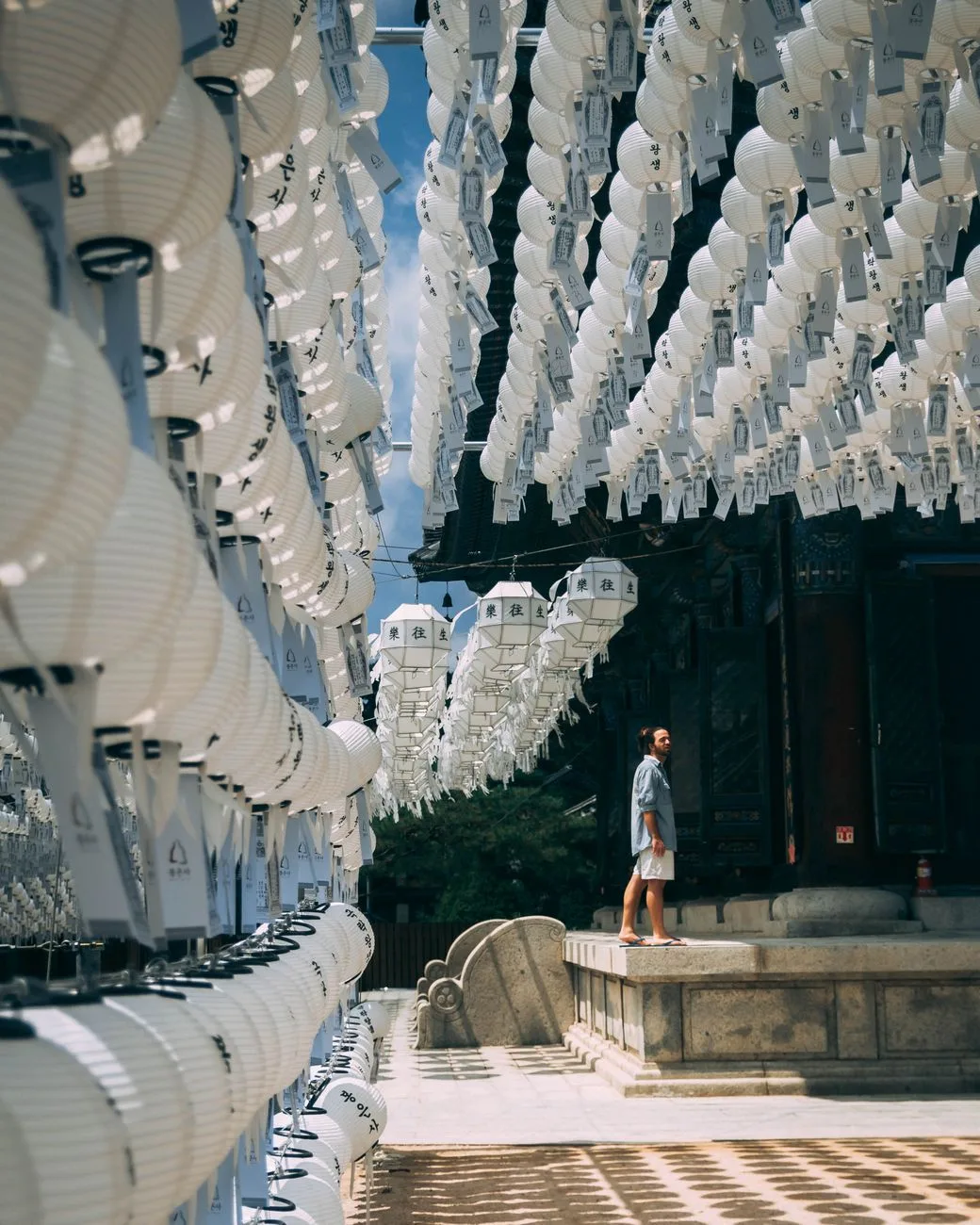
Yeondeunghoe (Seoul, mid-May 2026). The lantern parade runs along Jongno through central Seoul, costs nothing to watch from the street, and requires no detour from a normal Seoul plan. Expect the weekend before Buddha's Birthday, which points to 16–17 May 2026. Lowest cost, highest certainty.
Busan International Film Festival (early October). Worth it if Busan was already on the route. Screenings are ticketed and sell fast, but the Haeundae and Centum City districts run open-air programming and the city is at its best in October. Pair it with our Busan travel guide for logistics.
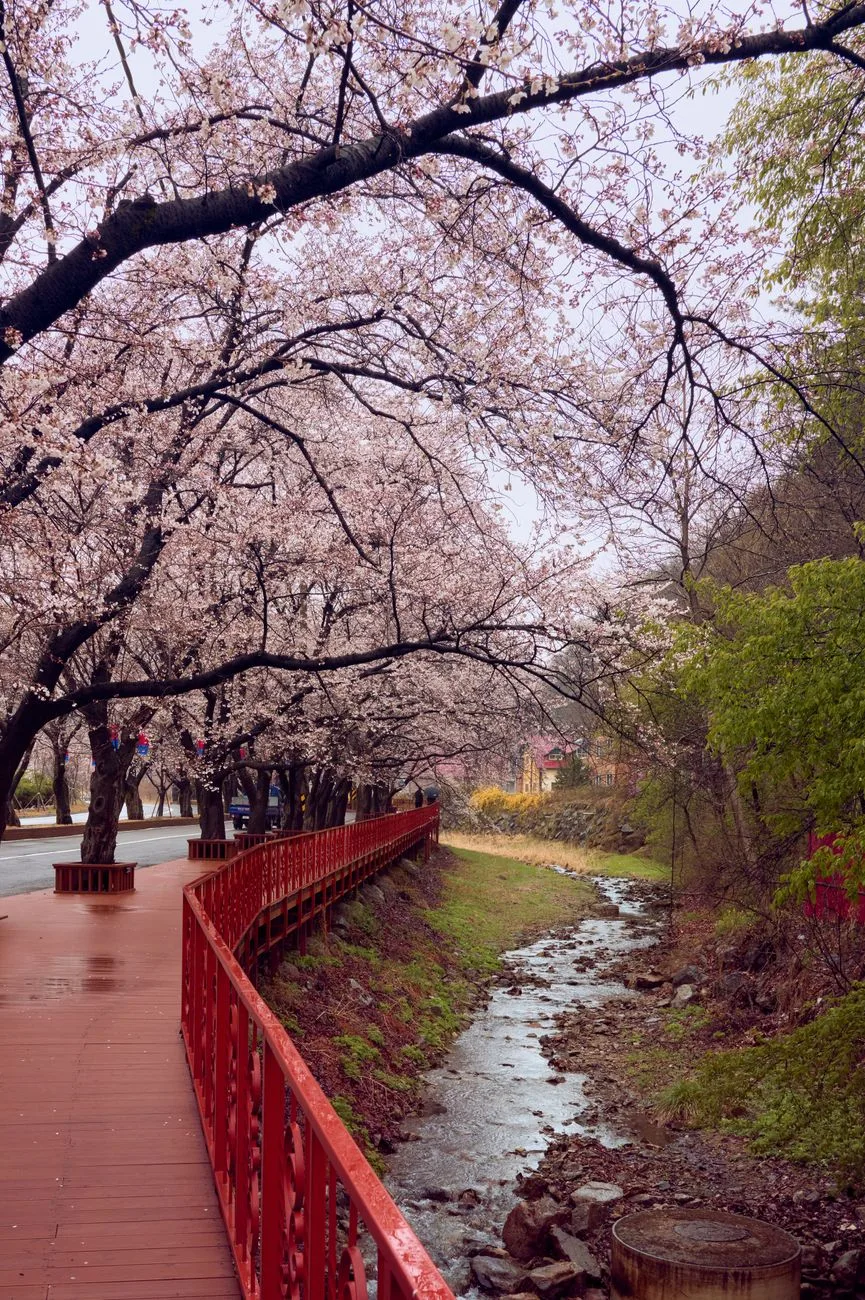
Jinhae Gunhangje (late March to early April). The largest cherry blossom event in the country, and the one most likely to disappoint. The festival dates are fixed months ahead; the trees are not. In a warm March the peak arrives before opening weekend, and in a cold one you walk through bare branches at a fully staffed festival. This fails when the bloom and the calendar diverge, which happens often enough to matter. Read our cherry blossom timing guide by region before you commit money to it.
Everything else on the table is a good reason to take a day trip, not a reason to reshape a two-week trip. If you are still choosing a season at all, start with when to visit Korea.
Booking windows: what sells out, and how far ahead
Korail opens general reservations one month before the travel date. For the Seollal and Chuseok periods it runs a separate advance sale, announced ahead of time and handled online, because demand for those specific days would otherwise swallow the ordinary window. Dates and rules for that special sale are published by Korail at letskorail.com. Set a reminder rather than assuming the standard one-month rule applies.
Lodging is the tighter constraint in small festival towns. Hwacheon, Boryeong, Gapyeong and Jinhae have thin hotel stock and it is gone months out. The workaround is to stay in the nearest real city and day-trip: Chuncheon for Hwacheon, Daejeon for Boryeong, Seoul for Gapyeong, Busan or Changwon for Jinhae. That trade costs one to two hours each way and saves both money and a booking scramble.
If a festival run means three or more intercity legs in a week, check whether a rail pass beats point-to-point fares using our KR Pass break-even breakdown. For a single day trip it almost never does.
Where festival plans go wrong
Booking flights before the organizer announces. Regional festival dates for 2026 land two to four months ahead, sometimes later. Buying a fare in November for an April festival means buying a fare for a guess.
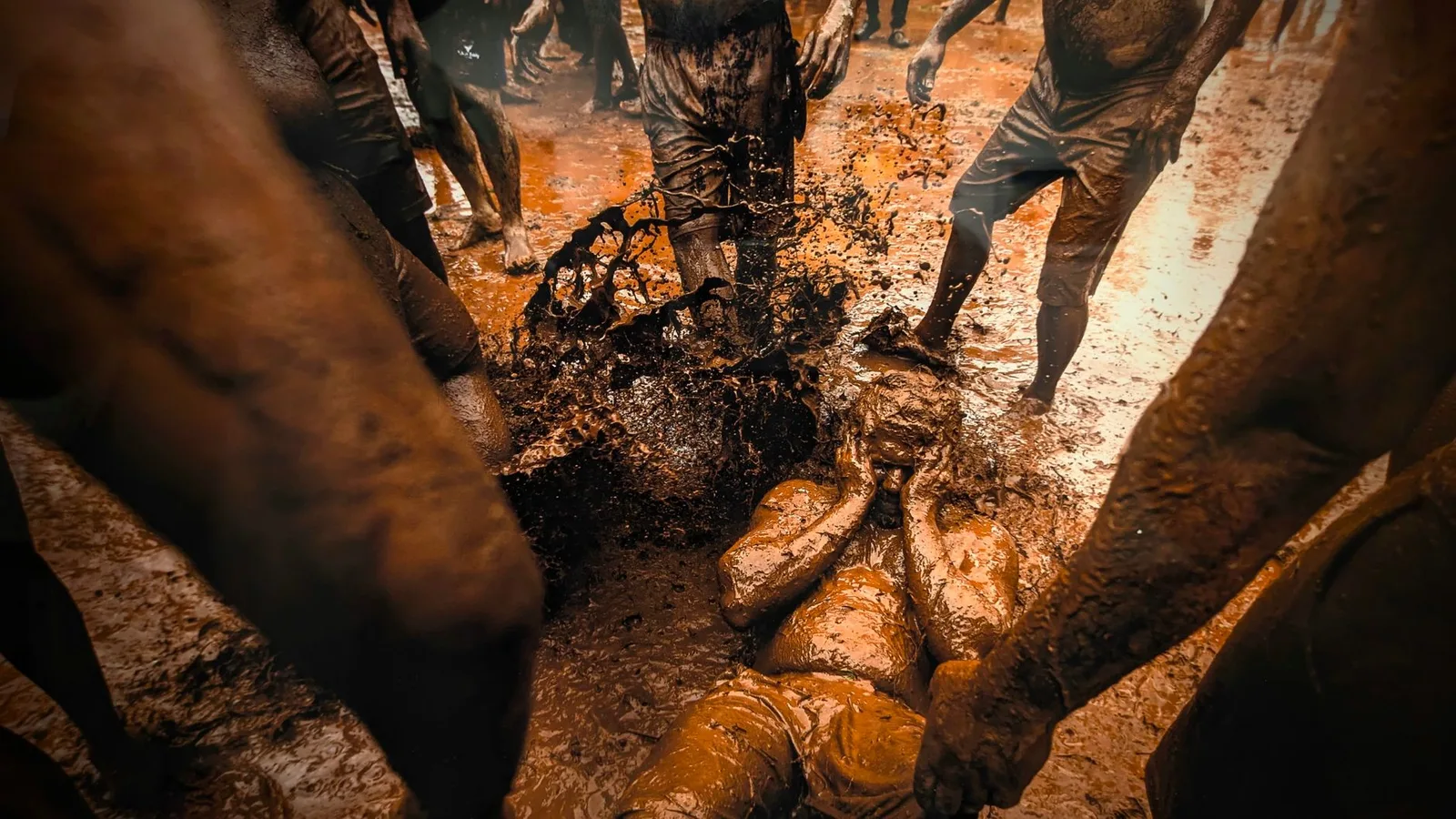
Ignoring the monsoon. Boryeong sits in July, inside the East Asian rainy season (장마). The Korea Meteorological Administration publishes forecasts and seasonal outlooks at kma.go.kr. Mud is waterproof; the rest of the day is not. Our month-by-month weather guide covers what each month actually delivers.
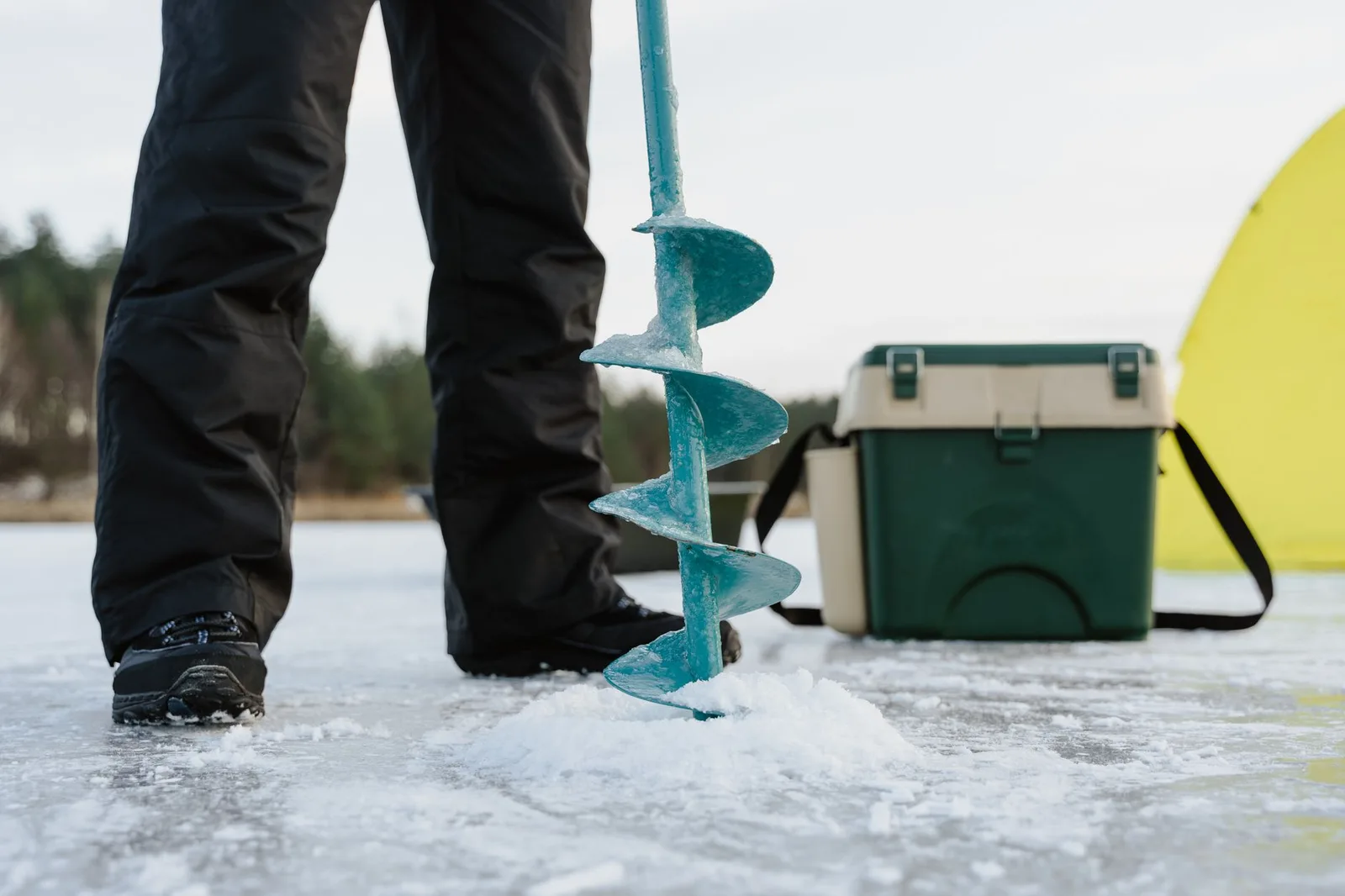
Assuming free means unticketed. Street parades and lantern displays are open to anyone. Ice fishing at Hwacheon, film screenings at BIFF and some Boryeong activity zones charge, and the popular slots go before the gates open.
Treating the holiday block as dead time. Seoul during Chuseok is one of the easier weeks of the year to see palaces and museums without queues, provided you are not trying to leave the city.
Frequently asked questions
When is Chuseok in 2026?
Chuseok falls on Friday 25 September 2026, with the public holiday block covering 24–26 September. Because the third day lands on a Saturday, a substitute weekday is expected under the substitute holiday rules. Confirm the final list against the government holiday schedule before booking non-refundable travel.
When is Seollal in 2026?
Seollal falls on Tuesday 17 February 2026, and the holiday runs Monday 16 through Wednesday 18 February. That gives a clean three-day midweek block, which means the travel crush concentrates on the weekend either side.
Is the Lotus Lantern Festival free?
Watching the parade and the lantern displays along Jongno costs nothing. Some temple programmes and workshops during the festival weekend charge a small fee or require sign-up. The event is expected mid-May 2026, on the weekend before Buddha's Birthday on 24 May.
Which month has the most Korean festivals?
October, by a wide margin. Film festivals, lantern festivals, harvest and mask-dance events cluster there, and 2026 adds a Saturday National Foundation Day and a Friday Hangeul Day. It is the best month for choice and the worst for availability.
Do I need to book festival tickets in advance?
Most street and outdoor festivals need no ticket at all. Book ahead for BIFF screenings, Hwacheon ice fishing slots and paid activity zones, and treat accommodation in small host towns as the real bottleneck rather than entry.
General travel information, current as of the 2026 calendar year. Holiday dates derived from the lunar calendar are confirmed annually by the Korean government, and festival schedules are set by the organizing municipality. Verify both against the official source before making non-refundable bookings.