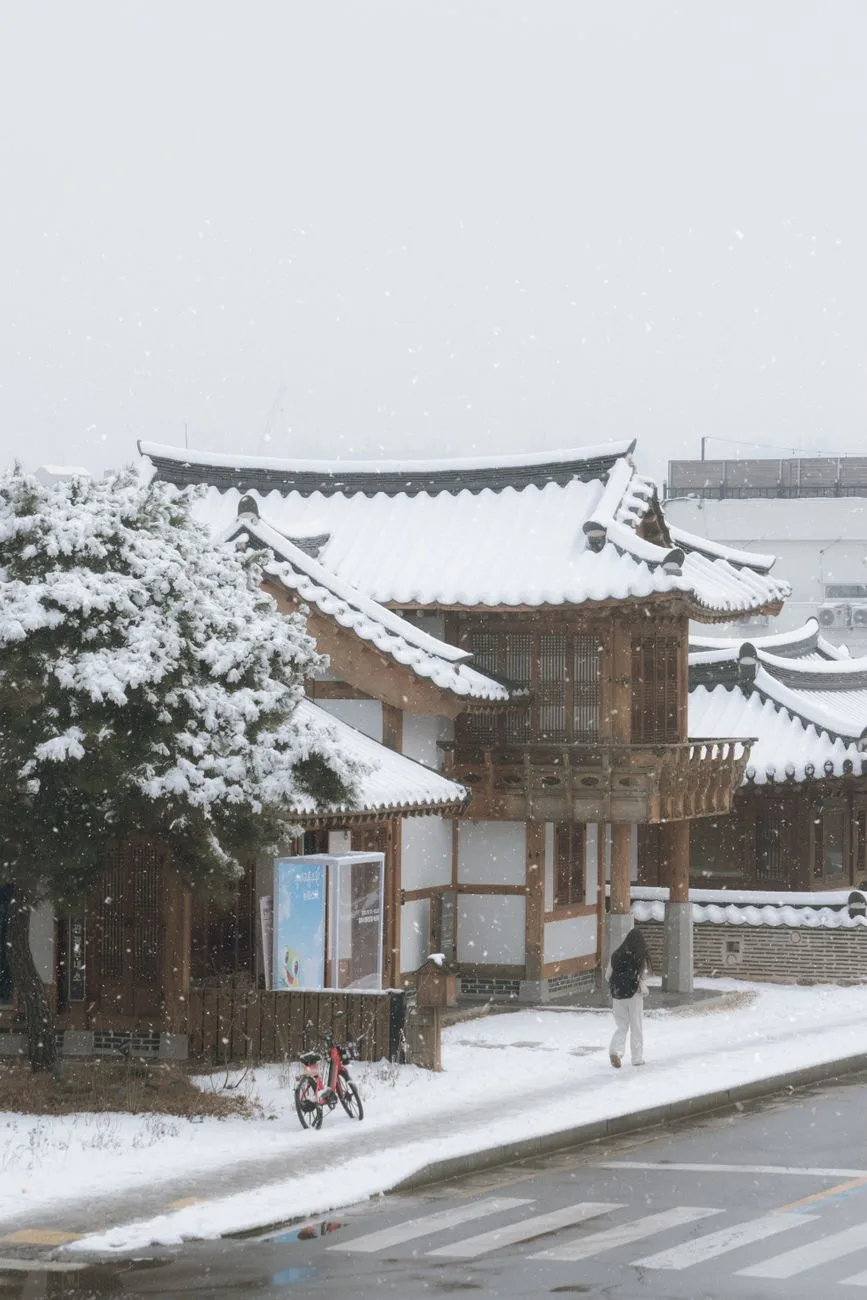
Korea in winter time runs from December through February, with January the coldest month. For a first trip, choose December for Seoul’s light events, January for ice and snow festivals, or late February for quieter city sightseeing after Seollal. Pack insulated layers and plan one indoor stop between outdoor visits.
At a glance
- December suits travellers who want Seoul’s evening lights and markets without the coldest average temperatures.
- January is the right choice for ice-focused festivals, but Seoul’s January average low is −5.5°C.
- February is warmer on average than January, yet a Seollal holiday period can alter bank and office access.
- A Seoul local-transport day can be calculated precisely: eight adult card rides of 10 km or less cost KRW 12,400 at the published base fare.
Korea in winter time: choose December, January, or February
The Korea Tourism Organization’s seasonal guide defines winter as December through February and identifies January as the coldest month. The useful planning distinction is not simply cold versus less cold. It is whether the itinerary depends on city events, frozen-river festivals, or ordinary sightseeing with fewer weather-dependent plans.
This table answers which month matches the main purpose of the trip. The Seoul high and low figures are monthly averages published by the Korea Tourism Organization.
| Month | Seoul average high/low | Strongest use | Choose? |
|---|---|---|---|
| December | 4.2°C / −3.4°C | City lights | Yes |
| January | 2.1°C / −5.5°C | Ice festivals | Yes |
| February | 5.1°C / −3.2°C | City breaks | Optional |
December gives the most balanced Seoul itinerary: daylight sightseeing, evening installations, and street food can fit into one day without making an outdoor festival the entire purpose of the journey. January earns its colder conditions only when ice fishing, snow scenery, skating, or mountain events are the priority. February is a sound city choice after the holiday rush, but its public-holiday timing changes every year under the lunar calendar.
The title’s promise is a planning verdict: choose December for a Seoul-first trip, January for a festival-first trip, and February only after placing Seollal on the calendar.
What Seoul winter weather actually means for a daily itinerary
Average temperatures describe exposure, not a forecast. The Korea Meteorological Administration’s 1991–2020 Seoul normals put January’s mean temperature at −1.9°C, with 16.8 mm of precipitation for the month. December through February totalled 67.6 mm, about 5% of Seoul’s 1,417.9 mm annual precipitation in those normals.
That relatively low winter precipitation total does not mean dry pavement or guaranteed clear views. Cold wind, shade between buildings, and overnight refreezing affect comfort far more than the monthly precipitation number. Build each sightseeing day around one outdoor district, one warm meal, and one indoor stop such as a museum, department store, café, or market.
Snow is the most common planning mistake. The same Korea Meteorological Administration normals list Seoul’s first snow date as November 20, but that is a climate normal, not a promise of deep snow, clean snow cover, or snowfall during a particular visit. A snow-dependent photography or ski itinerary fails if it has no second purpose.
A practical clothing system has three parts: a moisture-managing base layer, an insulating middle layer, and a wind-blocking outer layer. Add gloves that work with a phone, warm socks, and shoes with traction. Long outdoor waits at palace gates, bus stops, and festival entry lines expose hands and feet first; a fashionable but smooth-soled shoe is a poor trade for a winter itinerary.
Pick Seoul events or a regional winter festival before booking hotels
Seoul works when the trip needs reliable transport, many indoor alternatives, and evening programming. The Seoul Metropolitan Government’s published 2026 events schedule lists Seoul Light DDP from December 10–31, Seoul Light Gwanghwamun from December 11–31, the Hangang Christmas Market from December 18–28, and the Hangang River Festival Winter from December 19–27. These are dated in Seoul’s official 2026 event schedule, current as of August 19, 2026.
The broader 2026 Seoul Winter Festival needs more caution. One Seoul Metropolitan Government announcement schedules it for December 4, 2026 to January 31, 2027, a 59-day period, while another official annual-events page gives December 14, 2026 as the start with the same end date. Use the individually dated events when selecting December nights; the umbrella festival date is internally inconsistent.
Regional festivals make sense when the event itself is worth the transfer. In its 2025–26 winter guide, VISITKOREA listed Hwacheon Sancheoneo Ice Festival for January 10–February 1, Cheorwon Hantangang River Ice Trekking Festival for January 17–25, Taebaeksan Mountain Snow Festival for January 31–February 8, and Chilgapsan Ice Fountain Festival for December 24–February 22.
Those dates show the useful seasonal pattern, not a future booking guarantee. The Pyeongchang Trout Festival illustrates why: VISITKOREA’s winter guide published January 1–February 2, 2026, while its separate festival listing published January 9–February 9. A non-refundable stay built around a single regional festival date carries more risk than a Seoul-based plan with a festival as an optional day trip.
Winter transport costs: a worked Seoul day
A winter trip budget needs separate buckets. Flights and accommodation are not published as one national winter price, so a single trip total would be invented. Seoul local transit, however, has a stated fare rule that makes a useful baseline possible.
The Seoul Metropolitan Government’s subway fare page lists an adult base fare of KRW 1,550 with a transit card or KRW 1,650 for a single ride, valid up to 10 km. After 10 km, KRW 100 is added per 5 km up to 50 km. Card users boarding before 06:30 receive a 20% first-ride discount, making that first adult base fare KRW 1,240.
Here is a realistic four-day Seoul calculation for a traveller making two card-paid rides a day, with every ride within 10 km:
- 2 rides per day × 4 days = 8 rides
- 8 rides × KRW 1,550 = KRW 12,400
- If four first rides begin before 06:30: (4 × KRW 1,240) + (4 × KRW 1,550) = KRW 11,160
- Early-start saving: KRW 12,400 − KRW 11,160 = KRW 1,240
The conclusion is modest but useful: early boarding is not a reason to reshape a holiday, while a transit card removes KRW 100 from each base-fare ride. For buying, reloading, and refunding a card, use this related guide: How to Use a T-money Card in Korea.
Plan warm food stops around the outdoor part of the day
Winter food planning works best as a route decision, not a list of dishes. Put a market, soup restaurant, or bunsik stop after an exposed attraction, then continue outdoors only if conditions still feel comfortable. This preserves the day when wind or icy pavement makes the original walking plan unpleasant.
VISITKOREA identifies eomuk as fish cake served in broth, tteokbokki as rice cakes stir-fried with gochujang, bungeoppang as a fish-shaped bun often filled with red bean paste, and hotteok as a pancake filled with brown sugar, cinnamon, and nuts. Its winter street-food guide specifically treats these as cold-weather foods, while its street-food overview notes that hotteok is frequently found in winter.
Gwangjang Market is a workable central stop between Jongno-area sights. VISITKOREA lists its address as 88 Changgyeonggung-ro, Jongno-gu, Seoul, and names bindaetteok, kkomagimbap, and bungeoppang among its foods. Store hours vary by individual business, so treat the market as a flexible meal stop rather than a timed reservation.
No official nationwide price exists for a hotteok, fish cake, or market plate. The honest budget method is to leave a separate food allowance rather than present a fabricated standard street-food price.
Use a winter itinerary that can survive a cancelled outdoor plan
The strongest winter itinerary has a replacement ready before the day starts. The 2025–26 Seoul Plaza Ice Skating Rink charged KRW 1,000 per hour including skate and helmet rental and ran from December 19, 2025 to February 8, 2026, according to the Seoul Metropolitan Government. Its published operations notice said weather could suspend skating.
That is the correct model for every winter activity: an outdoor plan can be excellent, yet it needs an indoor backup in the same area. Do not schedule a long cross-city transfer merely to fill the gap after a weather suspension.
For a five-day Seoul-first trip, use this sequence:
- Put Gwanghwamun, palaces, or a riverside walk on the clearest-looking day.
- Reserve one evening for a dated December light event if the trip falls within its published window.
- Keep a market or museum near each major outdoor district.
- Use a regional ice festival only when its confirmed operating day fits the itinerary without displacing the only Seoul day.
- Carry the transit card and a portable battery, since cold weather reduces phone comfort and route changes are harder with gloves on.
This structure fails only when the trip is built around a single snow photo, a single festival, or an outdoor activity with no substitute.
Seollal can change access without closing the whole city
Lunar New Year is the calendar issue that matters most for a February visit. Korea’s 2026 Seollal public-holiday period was February 16–18, 2026. VISITKOREA states that offices and banks close during official holidays, while palaces, museums, department stores, and amusement facilities remain open.
The 2026 dates are an example, not a date pattern for later winters. Place holiday-sensitive tasks such as banking, document collection, or office visits outside Seollal. Sightseeing remains possible, but transport and popular family destinations deserve more time than an ordinary weekday plan.
Frequently asked questions
Is Korea worth visiting in winter?
Yes, Korea is worth visiting in winter when the itinerary values lights, skating, seasonal food, or winter festivals more than long outdoor walks. December is the strongest all-round choice for a first Seoul trip because it combines milder average temperatures than January with published city events.
What is the coldest month in Korea?
January is the coldest month, according to the Korea Tourism Organization. In Seoul, its published average high is 2.1°C and its average low is −5.5°C.
Will Seoul have snow in winter?
No, snow during a particular stay is not certain. Seoul’s November 20 first-snow figure is a Korea Meteorological Administration climate normal, not a forecast or a snow-cover guarantee.
How much should local subway travel cost in Seoul?
Eight adult transit-card rides of 10 km or less cost KRW 12,400 at Seoul’s published KRW 1,550 base fare. Longer rides add distance charges, and single-ride payment starts at KRW 1,650.
Should a winter trip be based in Seoul or near a festival?
Base the trip in Seoul when city sightseeing is the priority or festival dates are uncertain. Stay near a regional festival only when that festival is the main purpose of the trip and the published operating date supports the booking.