First-time Korea travel is easiest when the itinerary starts with one base city, a transit-card decision, and dates outside the Chuseok rush. For a five-to-seven-day visit, stay in Seoul, add only one overnight city, choose Tmoney unless frequent inner-Seoul rides clear the Climate Card break-even point, and leave the arrival day lightly scheduled.
This page focuses on the first-visitor decisions that prevent lost time at the airport, on the subway, and between cities. For a separate short-trip planning framework, see Korea Traveling Tips: Plan a Short Trip Without Losing Time or Fare Money.
The 2026 plan in four decisions
- Pick spring or fall, then exclude the Chuseok holiday block before booking hotels or intercity rail.
- Confirm whether the passport needs K-ETA before paying for non-refundable travel.
- Use one Seoul base for the first two or three nights, even if Busan or Gyeongju is on the route.
- Buy a Climate Card only when planned Seoul travel exceeds its fare threshold and excludes GTX or Sinbundang trips.
Choose Korea travel dates before choosing cities
Korea Tourism Organization defines spring as March through May and fall as September through November. These are Korea's moderate-temperature seasons, with clear and mild conditions more often than summer's rainy period or winter's cold spells. In Seoul, the Korea Tourism Organization lists average October temperatures of 20.2°C high and 10.6°C low; September averages 26.2°C and 17.7°C, while November averages 11.9°C and 3.5°C. Korea Tourism Organization's seasonal guide gives the monthly detail.
The date choice has a practical consequence: late June through late July overlaps Korea's rainy season, and typhoons can occur from June to October. An itinerary with a fixed beach day, mountain hike, domestic flight, and same-night hotel change leaves no room for a weather disruption. Put outdoor plans early in a multi-day stay and keep one urban museum, market, or café district available as the weather fallback.
For 2026, avoid treating Chuseok as an ordinary long weekend. The Korea Aerospace Administration's calendar standard places Chuseok on Friday, September 25, 2026, with public holidays from September 24 to 26; for many five-day workers, the adjacent Sunday creates a September 24 to 27 break. The Korea Aerospace Administration's 2026 calendar notice is the stronger reference because an earlier Seoul event PDF published conflicting dates. Book fixed transport before building a route around that period, or travel on a plan that can absorb a sold-out departure.
Autumn 2026 also has useful city-event windows. Seoul Light DDP runs September 3 to 20, Seoul Autumn Festa runs September 21 to November 29, and the Andong Maskdance Festival runs September 24 to October 4. Korea Tourism Organization's 2026 festival listing also lists the Jinju Namgang Yudeung Festival for October 3 to 18 and the Suwon Hwaseong Festival for October 4 to 11. Choose one event as the reason for an overnight stop rather than trying to chase every festival on one route.
Confirm entry requirements before paying for non-refundable travel
K-ETA is passport-dependent. The Ministry of Justice has extended the temporary K-ETA exemption for countries and regions already eligible for that exemption from January 1 through December 31, 2026, Korea Standard Time. An exempt passport does not make every entry condition irrelevant; passport validity, purpose of visit, and immigration questions still matter.
For travellers who do need K-ETA, the official application fee is ₩10,000 plus the online payment fee. The official guidance says processing is normally within 72 hours but can take longer, and an approval is valid for three years unless the passport expires first. K-ETA's official application guide is the source to use for the application itself.
The useful planning rule is simple: settle entry status before locking in a non-refundable flight, rail pass, or accommodation package. This is more important than choosing a restaurant list because a missing authorization can invalidate every later reservation.
Make Incheon arrival day a buffer, not a sightseeing contest
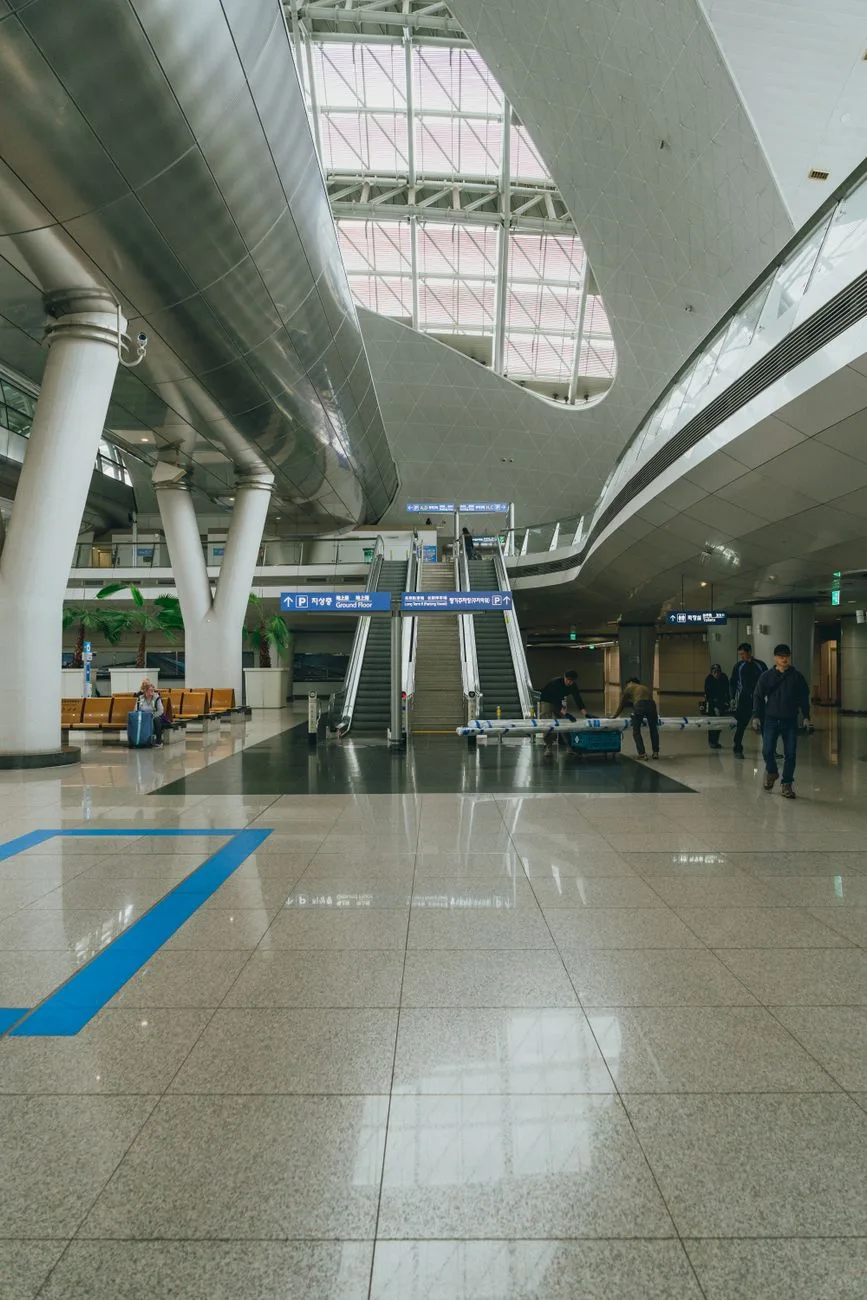
Incheon arrival has several sequential tasks: immigration, baggage collection, connectivity, cash or card setup, and the trip into Seoul. A schedule that assumes all of them finish at a precise time has no protection against a delayed flight or a crowded arrivals hall.
Keep the first booking close to the first night's base. Seoul Station, Myeongdong, Euljiro, Hongdae, and Gangnam each work for different routes, but the right first-night choice is the one that does not require a second cross-city transfer after a long-haul flight. A late arrival is a reason to preserve a simple dinner and hotel check-in, not to force a palace, market, and observatory into the same evening.
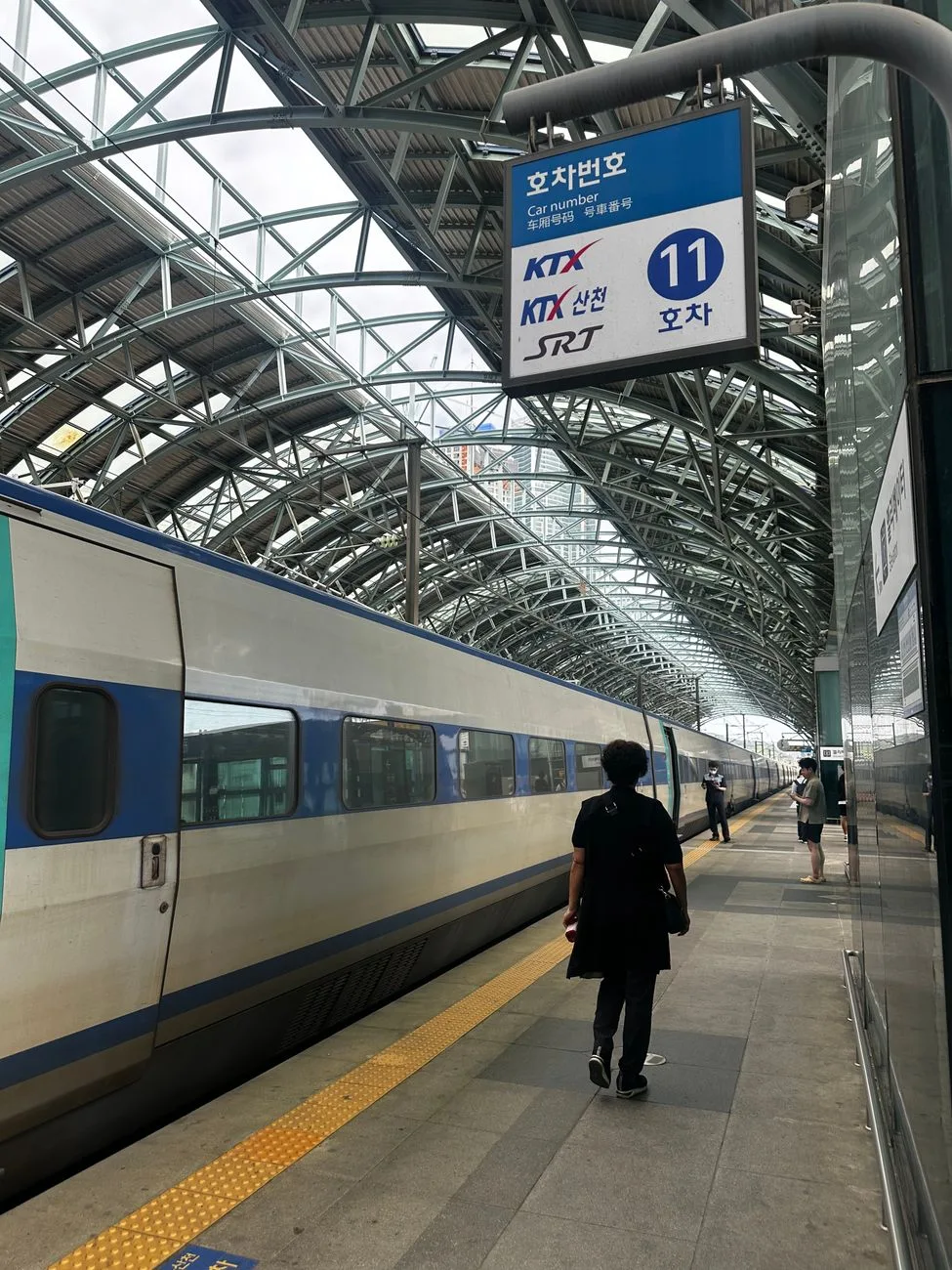
The next morning is the proper point to decide whether an intercity leg belongs in the trip. Seoul Station is useful for KTX departures, while a domestic flight or express bus may make more sense for a particular destination. The first-time mistake is booking an early long-distance departure on the morning after an international arrival. A hotel night in Seoul buys recovery time and gives the itinerary a reset point if the flight is late.
Choose Tmoney or Climate Card with the break-even calculation
A Tmoney card is the flexible default because it uses stored value. Korea Tourism Organization lists a standard Tmoney card at ₩3,000 to ₩5,000 and says it can be reloaded up to ₩500,000. The same KTO page lists a physical Climate Card at ₩3,000, plus short-term unlimited passes of ₩5,000 for one day, ₩8,000 for two, ₩10,000 for three, ₩15,000 for five, and ₩20,000 for seven days. Korea Tourism Organization's transit-card guidance, updated August 2026 provides those amounts.
This table answers which card fits the trip pattern.
| Trip pattern | Better starting choice | Why | Verdict |
|---|---|---|---|
| One to three Seoul rides a day | Tmoney | Pay only for rides taken | Yes |
| Three paid Seoul journeys daily for five days | Climate Card | Unlimited pass clears break-even | Yes |
| GTX or Sinbundang Line included | Tmoney | Those lines are excluded | Yes |
| Busan, Jeju, or intercity-heavy route | Tmoney | Climate Card is Seoul-limited | Yes |
As of August 2026, Seoul's adult subway base fare is ₩1,550 with a transit card for the first 10 km. Seoul Metropolitan Government adds ₩100 per 5 km beyond that distance, and the card fare is ₩1,240 before 6:30 a.m. Seoul Metropolitan Government's subway fare page sets out the fare structure.
Here is the five-day arithmetic for a visitor who expects three paid Seoul journeys per day:
- Fifteen base-fare journeys: 15 × ₩1,550 = ₩23,250.
- Climate Card and five-day pass: ₩3,000 + ₩15,000 = ₩18,000.
- Difference: ₩23,250 − ₩18,000 = ₩5,250 saved.
The Climate Card wins in that example before counting any distance surcharge. It fails if the route uses the Sinbundang Line or GTX, which KTO says are excluded, or if most days are spent outside Seoul. From October 1, 2026, KTO also describes the short-term Climate Card as limited to use within Seoul. For card mechanics, including purchase, reload, tapping, and refunds, read How to Use a T-money Card in Korea.
Build a first itinerary around one long-distance spine
A seven-day first trip does not need seven places. The efficient shape is Seoul as the arrival base, one intercity destination with an overnight stay, then Seoul again before departure. This structure keeps luggage movements low and makes a disrupted long-distance journey less destructive.
Use a destination only when it earns the transit time. Busan can justify two nights for a coast-and-city contrast. Gyeongju can justify an overnight for historic sites. Suwon can remain a Seoul-area day trip. Jeju needs separate flight planning and should not be treated as a casual extension of a Seoul route; Jeju Island Trip Cost: Build a Realistic Budget by Travel Style covers the budget impact of making it a separate leg.
The decision test is practical: if a city gets only one attraction, a late check-in, and an early checkout, it is consuming a hotel move without delivering a stay. Remove it or add a night. A shorter route with two real evenings is more useful than a map full of pins.
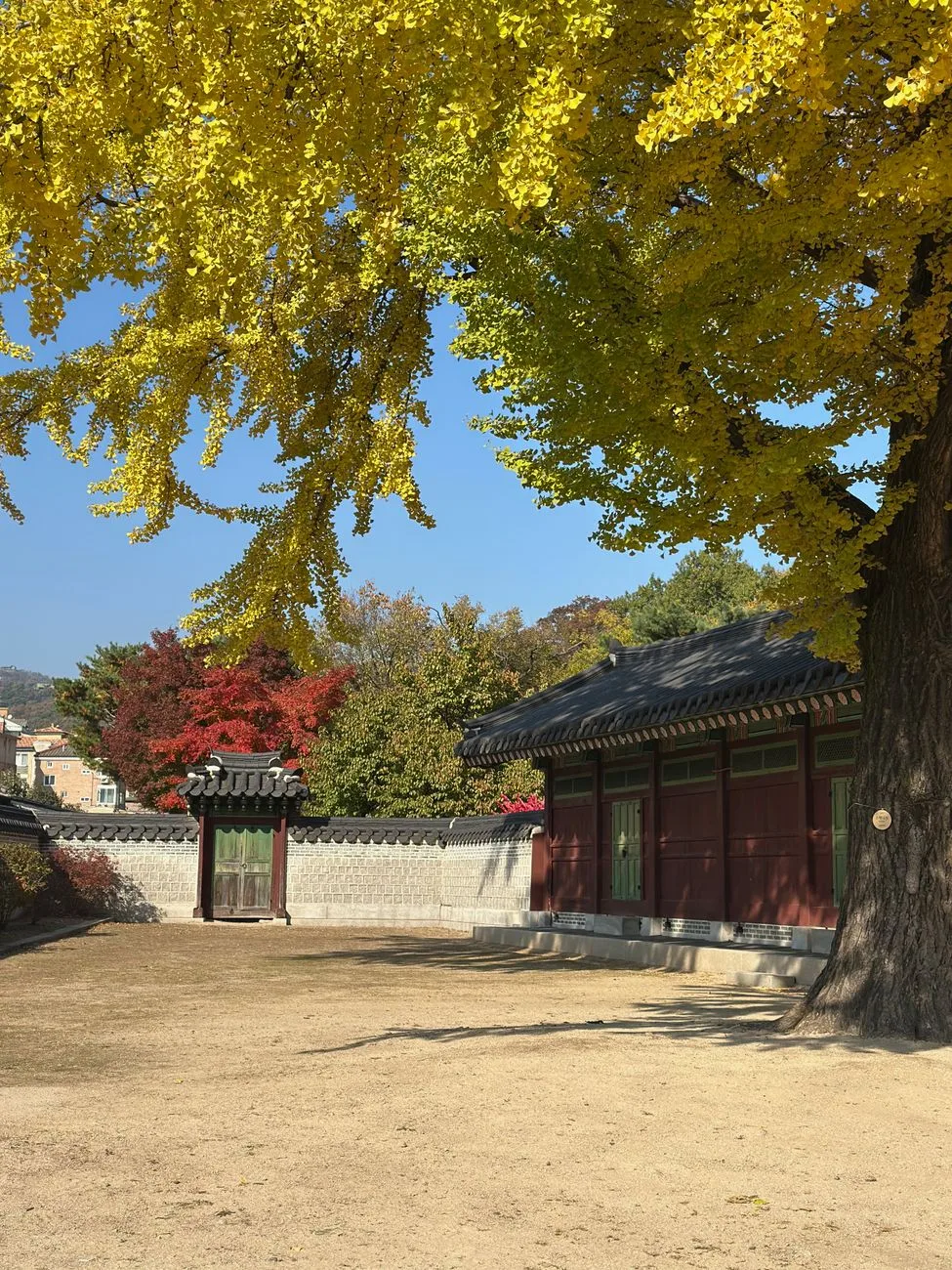
Seoul also rewards geographic grouping. Pair Gyeongbokgung Palace with Bukchon or Insadong, not with a dinner reservation across the Han River. Pair a Hongdae evening with nearby Yeonnam or Mangwon. The route should follow neighbourhoods and subway lines, then leave one meal slot open for whatever looks good nearby.
Budget around choices that change the total
A Korea budget changes most through hotel location, number of intercity legs, and whether the itinerary includes Jeju. Small purchases matter less than a fourth hotel check-in or an unnecessary backtrack to Seoul.
Set aside separate envelopes for accommodation, local transit, intercity transport, food, and activities. The transit envelope can be calculated before arrival using the card example above. The accommodation envelope should be set from the actual nights in each city, including any late-arrival night that is easy to overlook. The intercity envelope belongs to the route, not to a generic daily average.
Food planning works better as a daily rhythm than as a list of famous dishes. Korea Tourism Organization identifies tteokbokki, fried foods, sundae, gimbap, and fish cakes among common bunsik and street-food choices, while hotteok and roasted sweet potatoes are seasonal snacks. KTO's street-food overview is useful for naming what appears at markets. Tteokbokki contains red chili paste and is a spicy dish, so order with that expectation rather than assuming every market meal is mild.
The cost-saving choice is not eating every meal from a convenience store. It is keeping one flexible local meal near the day's neighbourhood, then reserving a special restaurant only when the address and travel time support the route. For Seoul-specific accommodation trade-offs, see How to Book Cheap Hotels in Seoul Without Paying More for Location.
Five Korea travel mistakes that create avoidable friction
Booking every intercity leg before seeing the route. A beautiful rail line is not automatically worth a one-night stay. Make the city prove it can fill the hours around transport.
Using an unlimited card without checking excluded lines. A pass that does not cover the actual airport or accommodation route has less value than its headline price suggests.
Treating Chuseok dates as flexible sightseeing days. Use the September 24 to 27, 2026 window only with transport and lodging already aligned.
Arriving with no offline essentials. Save hotel addresses in Korean and English, passport details, booking references, and a first-night route before boarding the flight.
Packing a different wardrobe for every possibility. October can bring a 20.2°C average high and a 10.6°C average low in Seoul. A layerable outer piece solves that temperature swing better than a suitcase built around one midday forecast.
Korea travel tips FAQ
Is autumn the best time for a first Korea trip?
Autumn is the clearest first choice for a moderate-temperature trip, especially October, because Seoul's average high is 20.2°C and average low is 10.6°C. Avoid the 2026 Chuseok block of September 24 to 27 if the route depends on flexible intercity travel.
Do I need K-ETA to visit Korea in 2026?
It depends on the passport. Countries and regions covered by the Ministry of Justice's temporary exemption do not need K-ETA from January 1 through December 31, 2026, while eligible travellers outside that exemption need to complete the official process before travel.
Is a Climate Card cheaper than Tmoney for tourists?
A five-day Climate Card costs ₩18,000 including the ₩3,000 physical card and beats fifteen ₩1,550 base-fare journeys by ₩5,250. Choose Tmoney instead when rides are sparse, when the route includes GTX or Sinbundang, or when travel extends beyond Seoul.
Should a first Korea itinerary include Seoul, Busan, and Jeju?
Not on a short visit. Seoul plus one overnight destination gives each place enough time to be useful; Jeju is the first destination to remove when flights and hotel changes would leave only a rushed visit.
What should be booked first for Korea travel?
Set entry eligibility first, then flight dates, first-night accommodation, and the one long-distance leg that defines the route. Local subway rides, neighbourhood meals, and most Seoul sightseeing decisions can stay flexible until arrival.