A cheap Seoul hotel is not simply the room with the lowest nightly rate. The practical answer is to compare the full stay cost: room price, taxes and fees, cancellation terms, transport, and time. Search several Seoul districts, compare the same room on the same dates, and book the lowest total that keeps daily travel manageable.
Key takeaways
- Compare the final two-night or three-night total, not the headline nightly rate.
- Start with Jongno, Dongdaemun, Hongdae, and areas connected directly to your itinerary.
- A room farther from attractions can lose its saving through extra transport and travel time.
- Expedia’s 2026 Hotel Price Index found that Korean outbound bookings made within one week of check-in averaged 44% less than bookings made at least four months ahead, but last-minute booking is unsuitable for fixed dates or busy periods.
- Registered Seoul Stay guesthouses and hanok guesthouses create a useful alternative to conventional hotels.
How to book cheap hotels in Seoul: compare the total stay cost
The fastest way to overpay is to compare different room types, dates, or cancellation conditions. A ₩90,000 room with no breakfast and a non-refundable policy is not directly cheaper than a ₩105,000 room with breakfast and free cancellation. The comparison must use the same number of guests, nights, bed type, taxes, and payment conditions.
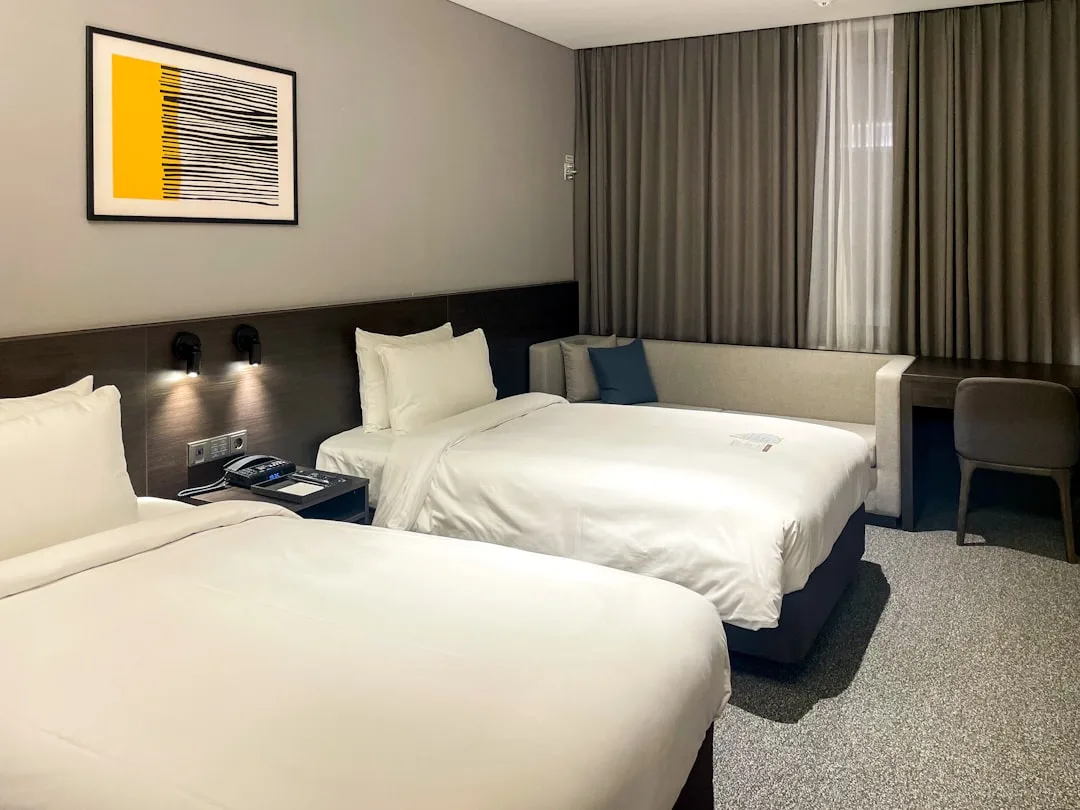
Seoul accommodation spans five-star hotels, conventional budget hotels, guesthouses, and Seoul Stay properties. The Seoul Metropolitan Government’s accommodation guide explains that service, facilities, and rates differ substantially between categories.
A worked comparison for two adults
Consider two rooms for two adults and two nights. Room A costs ₩90,000 per night in a cheaper outer location. Room B costs ₩120,000 per night near the main sightseeing route. Assume the outer room requires two additional subway rides per person each day, while the central room requires one ride per person each day.
Seoul’s official subway fare is ₩1,550 per adult card-paid ride as of August 2026. The representative calculation is:
- Room A: ₩90,000 × 2 nights = ₩180,000
- Room A transport: ₩1,550 × 2 extra rides × 2 adults × 2 days = ₩12,400
- Room A combined cost: ₩192,400
- Room B: ₩120,000 × 2 nights = ₩240,000
- Room B transport: ₩1,550 × 1 ride × 2 adults × 2 days = ₩6,200
- Room B combined cost: ₩246,200
Room A saves ₩53,800 before considering airport transfers, luggage storage, breakfast, and the value of travel time. The central room would need to cost less than ₩146,900 per night in this simplified example to erase the saving completely. The cheaper outer room wins on cash cost, but the result changes when the itinerary includes late-night taxis or long daily transfers.
This is the decision rule: choose the outer district when the nightly saving remains larger than added transport and convenience costs. Choose the central room when the price difference is small and most days begin and end near the same attractions.
Which Seoul districts are useful for low hotel rates?
District choice is a booking filter, not a ranking of neighborhoods. A room in the wrong district can be cheap and still create an expensive trip in time and taxi fares.
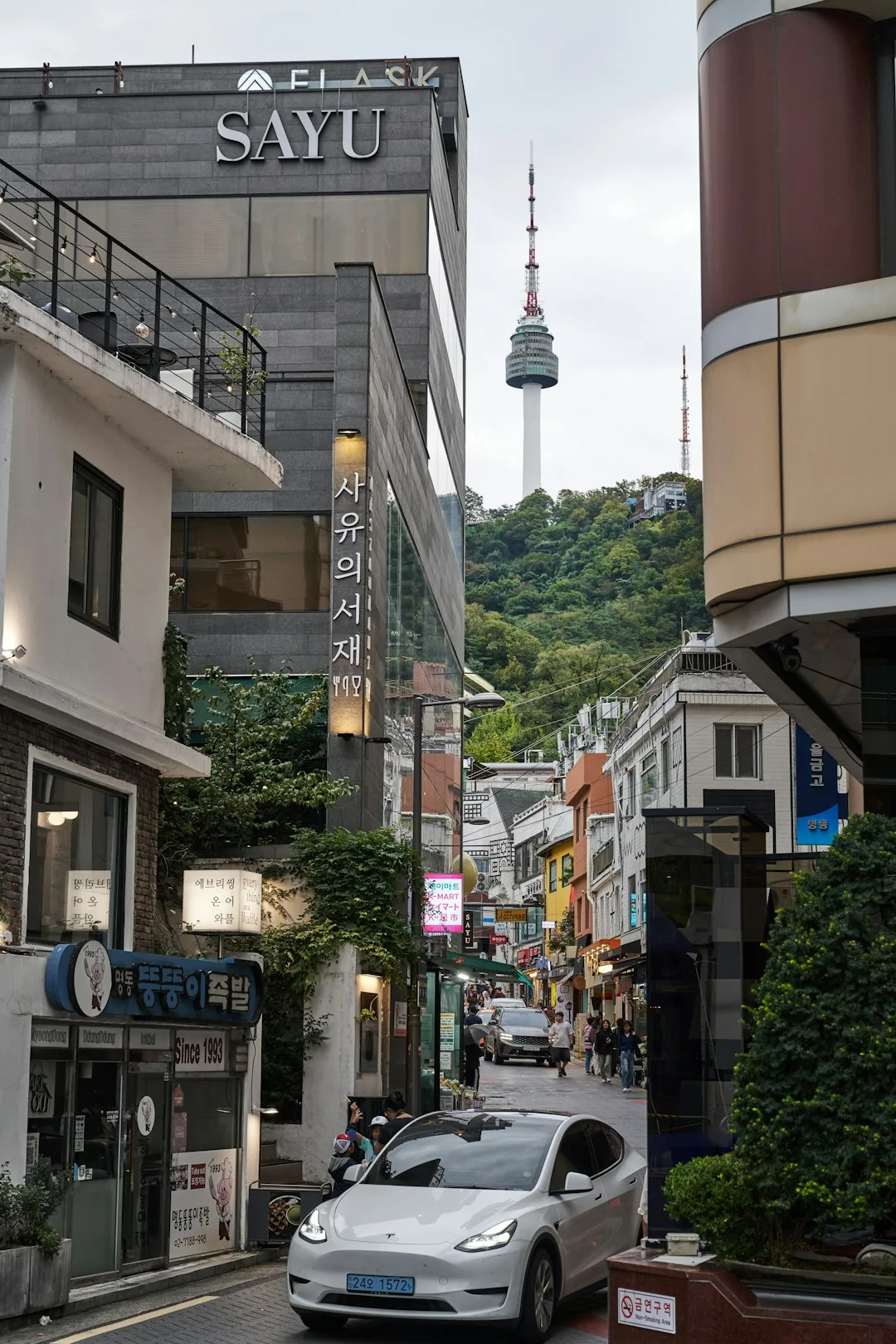
Seoul’s official accommodation guide groups listings by areas including Myeongdong, Dongdaemun, Hongdae, Itaewon, Yeouido, Gangnam, Jamsil, and Seongsu. Use that area structure to search several districts rather than entering only “central Seoul.”
Jongno and Dongdaemun
Jongno works well for itineraries centered on Gyeongbokgung Palace, Bukchon, Insadong, traditional markets, and central museums. Dongdaemun adds late shopping and direct subway connections. These areas can reduce repeated cross-city journeys when the trip focuses on historic Seoul.
Hongdae and nearby Mapo
Hongdae suits travelers who want evening restaurants, cafés, and straightforward airport access through the western side of the city. The area can be lively late at night, so a low rate should be checked against noise reviews, street frontage, and the distance from the station exit.
Myeongdong
Myeongdong is convenient for first-time visitors who want a dense shopping district and simple access to central attractions. Convenience carries a price premium in some date ranges. Compare nearby Jongno or Chungmuro before accepting a Myeongdong listing automatically.
Gangnam, Jamsil, Yeouido, and Seongsu
These areas make financial sense when the itinerary is concentrated there. A cheap room in Gangnam is not a bargain for a trip spent mainly around palaces and Jongno. The reverse applies to a business trip, concert, or sports event based in southern Seoul.
For a neighborhood decision focused on the first visit, the existing Seoul first-time area comparison is the relevant internal guide. This page addresses the separate question of how to price and book the chosen area.
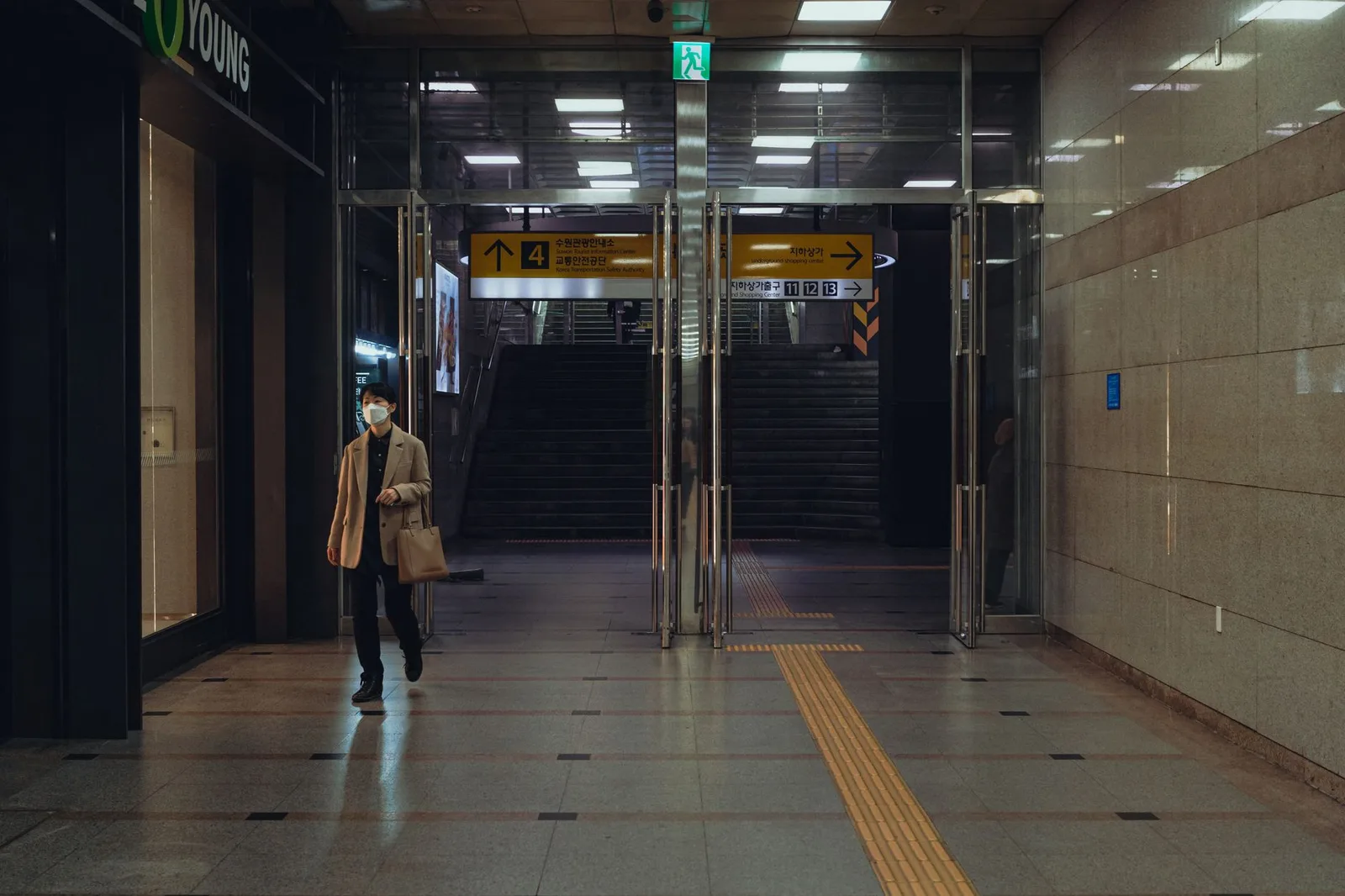
Use Seoul Stay when a conventional hotel is not the cheapest fit
“Hotel” searches can hide legally registered guesthouses and hanok guesthouses that offer private rooms, shared facilities, or smaller layouts. Seoul Stay is a Seoul Metropolitan Government-supported accommodation brand for legally registered urban guesthouses and hanok guesthouses, according to the official Seoul Stay guide.
This option fits a traveler who values location and price over a full hotel service package. It is less suitable when the booking requires a 24-hour reception, daily housekeeping, a large lift, a private bathroom, or predictable accessibility features.
Before paying, check four details in the property description:
- private or shared bathroom
- exact bed configuration
- reception and late check-in procedure
- stairs, lift access, and luggage storage
A low guesthouse rate becomes a poor deal when arrival is after reception hours and the property has no documented self-check-in process. “Registered” also does not mean every facility matches a hotel. It confirms the accommodation category and registration framework, not a universal service standard.
When should the booking be made?
The correct booking window depends on flexibility. Expedia’s 2026 Hotel Price Index report found that Korean outbound hotel bookings made within one week of check-in were 44% cheaper on average than bookings made at least four months before arrival. The same report found that last-minute four-star bookings were 36% cheaper on average.
Those figures describe Expedia’s Korean outbound-booking data, not a guaranteed Seoul discount. They also do not remove the risk of sold-out rooms, poor location, or high prices around holidays and major events.
A practical approach is to separate the reservation from the final commitment:
- Search the target dates across several districts.
- Reserve a refundable room when the cancellation deadline is clear and the price is acceptable.
- Recheck the same room category as the deadline approaches.
- Replace the reservation only after confirming the new total, taxes, room conditions, and cancellation policy.
This method works only when the first booking is genuinely refundable. A non-refundable reservation cannot be treated as a free price lock.
Check-in day also matters. Expedia reported Thursday as the cheapest check-in day and Saturday as the most expensive check-in day for Korean travelers’ international hotel stays in its June 2026 analysis. That pattern is not a Seoul-specific guarantee, but shifting a flexible stay by one day can be worth testing.
How to filter hotel listings without choosing a bad bargain
Price filters should come after basic quality filters. A listing that is cheap because it is far from transit, has a shared bathroom, or cannot accommodate late arrival should be removed before price comparison.
Use this order:
- Set the exact dates, guests, and room count.
- Filter for a private bathroom if that is required.
- Check the map distance to the station and the first major destination.
- Read recent comments for noise, cleanliness, heating or cooling, and check-in.
- Compare refundable and non-refundable totals.
- Confirm whether breakfast, city tax, service fees, and cleaning fees are included.
- Save the final booking confirmation and cancellation deadline.
The map pin needs special attention. “Near Hongdae” can mean a short walk from Hongik University Station or a bus ride from the district’s edge. For a late arrival, station distance and the route from the airport matter more than a neighborhood label.
A transportation card-paid subway trip costs ₩1,550 for an adult as of August 2026, while a cash single-ride fare is ₩1,650, according to Seoul’s official subway fare information. The first card-paid ride before 6:30 a.m. receives a 20% early-morning discount, listed as ₩1,240. These amounts are small individually, but repeated transfers and taxi rides can outweigh a modest room discount.
Hotel, guesthouse, or farther district: which option wins?
The table answers the practical choice between the three common ways to lower accommodation cost. The deciding factor is the trip pattern, not the label alone.
| Option | Price potential | Best fit | Main risk | Verdict |
|---|---|---|---|---|
| Budget hotel | Medium | Private facilities | Small rooms | Yes |
| Seoul Stay guesthouse | High | Flexible travelers | Shared facilities | Optional |
| Farther district | High | Area-focused trips | Added travel time | Optional |
The table shows why no single accommodation type wins for every itinerary. A registered guesthouse is the strongest price option when private facilities are not essential. A farther district wins when the daily route stays nearby. A budget hotel is the safer default when predictable service matters more than the lowest rate.
Seoul’s citywide subway commuter pass is listed at ₩61,600 for 30 days and up to 60 uses. That pass is designed for longer or high-frequency travel, so it is not automatically useful for a short hotel stay. For a five-day trip with two subway rides per day, the ordinary card fare would be ₩1,550 × 2 rides × 5 days = ₩15,500 per person, far below ₩61,600.
Common booking mistakes that erase the saving
The first failure is comparing nightly prices without multiplying by the number of nights. A ₩10,000 difference becomes ₩30,000 over three nights, but a separate ₩25,000 cleaning fee can reverse the ranking.
The second is treating a low average as a personal price expectation. A Seoul hotel-rate snapshot for two adults, one room, and August 18–20, 2026 reported a lowest rate of US$72, a median of US$185, and an average of US$256 across 60 properties. A separate 2026 report placed Seoul’s average at US$115 and budget rooms at approximately US$40–80. The samples, dates, providers, and methods differ, so these figures cannot be combined into one market average. They show the spread of published snapshots, not a guaranteed booking price.
The third is ignoring event dates. Korea’s 2026 Chuseok public holiday runs from September 24–26, and August 17 is the observed substitute holiday for Liberation Day. Fixed-date travel around public holidays can invalidate a last-minute strategy because room supply is less flexible.
The fourth is booking a distant room for a short stay built around multiple districts. The room saving may be real, but every morning and evening then carries a time cost. This fails when the itinerary has early tours, late flights, repeated hotel returns, or travelers carrying large luggage.
The fifth is choosing a non-refundable room before confirming arrival details. Airport delays, late-night transport, and an incorrect room configuration are expensive problems when the reservation cannot be changed.
A simple decision rule for your Seoul booking
Choose a central budget hotel when the trip lasts two to four nights, the itinerary crosses several districts, or private facilities and predictable reception matter. Choose Seoul Stay when the main objective is the lowest legal accommodation cost and the room conditions are acceptable. Choose a farther district when most activities occur there and the total transport cost remains below the central-room premium.
For a flexible traveler, the strongest process is to reserve an acceptable refundable room, compare the identical room category again near the cancellation deadline, and keep the cheaper option only after checking the complete total. For a fixed holiday or event date, secure location and cancellation protection before chasing a theoretical last-minute discount.
FAQ
Is it cheaper to book a Seoul hotel last minute?
It can be. Expedia’s 2026 Korean outbound data found bookings within one week of check-in averaged 44% less than bookings made at least four months ahead, but the result is an average and does not guarantee availability or a lower Seoul rate.
Which Seoul area is cheapest for hotels?
No single area is cheapest on every date. Compare Jongno, Dongdaemun, Hongdae, nearby Mapo, and districts beside the actual itinerary. Seoul’s official tourism guide provides area filters for these and other districts.
How much should a budget hotel in Seoul cost?
Published 2026 snapshots range widely because they use different samples and dates. One August 18–20 snapshot reported US$72 as its lowest rate, US$185 as its median, and US$256 as its average across 60 properties. Treat those as dated reference points, not a quote for your dates.
Are Seoul guesthouses safe to book?
A Seoul Stay property is part of a Seoul Metropolitan Government-supported brand for legally registered urban or hanok guesthouses. Registration does not guarantee identical facilities, so check the bathroom, entry process, stairs, reception hours, and recent property information before booking.
Is the Seoul subway cheap enough to stay outside the center?
The adult card-paid subway fare is ₩1,550 as of August 2026. Multiply that fare by every additional ride and traveler, then compare the result with the nightly room saving. A distant room wins only when the accumulated travel cost and time remain acceptable.
Should a Seoul hotel booking be refundable?
Refundability is valuable when arrival dates, flight times, or the district are uncertain. A non-refundable room can be cheaper, but it should be chosen only after the dates, room type, arrival procedure, and total charges are settled.