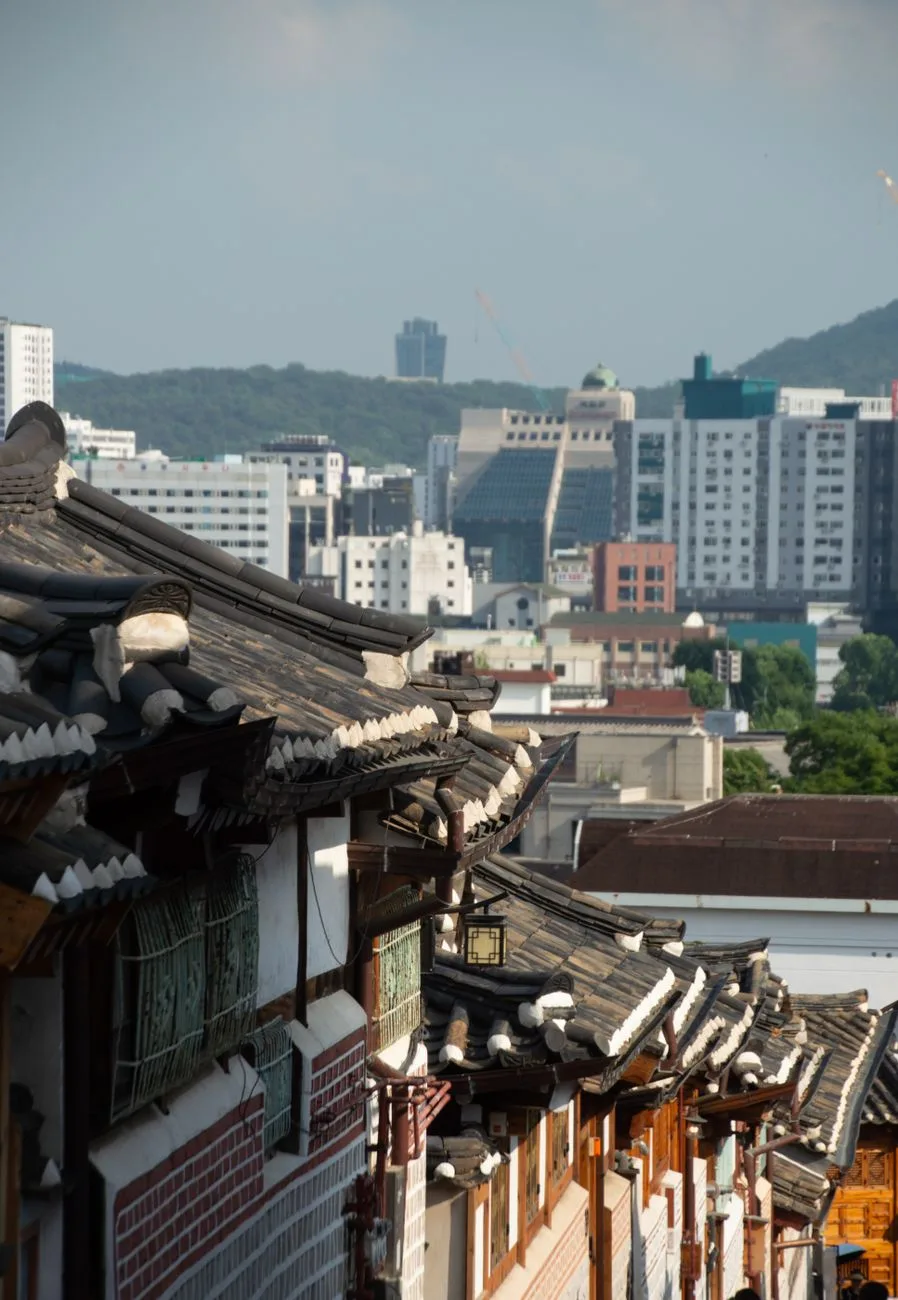
Four different places answer to the name "hanok village," and they are as far apart as 200 km. Two sit in Seoul, one is in Jeonju, and one is a theme park in Yongin. The directions differ, and so do the rules about when you are allowed to be there.
For Bukchon, take Seoul Subway Line 3 to Anguk Station, Exit 2, then walk 5 to 10 minutes uphill. Entry is free, but the main lane is closed to visitors from 5 p.m. to 10 a.m. For Namsangol, take Line 3 or 4 to Chungmuro, Exit 3. For Jeonju, a KTX from Yongsan runs about 1 hour 45 minutes.
The short version:
- Bukchon and Namsangol are both free; Jeonju's village is free to walk through, with paid sites inside it.
- Bukchon-ro 11-gil is off limits to tourists between 5 p.m. and 10 a.m., and the fine is ₩100,000.
- Namsangol is the only one of the three open into the evening (until 21:00 from April to October), and it closes Mondays.
- The Korean Folk Village in Yongin is a built attraction with paid admission, not a neighbourhood.
"Hanok village" means four places: pick yours before you pick a train
This table answers the question most searches are really asking, which is which of these you should actually go to.
| Village | City | Admission (KRW, Aug 2026) | Access | Lived-in |
|---|---|---|---|---|
| Bukchon | Seoul, Jongno-gu | Free | Anguk Station, Line 3, Exit 2 | Yes |
| Namsangol | Seoul, Jung-gu | Free | Chungmuro, Lines 3 and 4, Exit 3 | No |
| Jeonju Hanok Village | Jeonju, Jeollabuk-do | Free to walk | Jeonju Station, then city bus | Yes |
| Korean Folk Village | Yongin, Gyeonggi-do | Paid | Road access, Yongin | No |
The practical split: Bukchon and Jeonju are real neighbourhoods where people live and run businesses, so they have residents, rubbish collection and noise complaints. Namsangol is a curated set of five restored houses in a park, which is why it has gates and opening hours at all. If your goal is a first look at hanok architecture with no travel time and no curfew, Namsangol is the low-risk answer.
The Yongin one is a theme park
The Korean Folk Village in Yongin recreates a Joseon-era settlement with performances and rides. It charges admission, and the standard daytime adult price is quoted inconsistently across resale platforms, from ₩32,000 to ₩37,000. What the operator itself publishes, as of August 2026, are discounted evening tickets available from 1 August: ₩19,000 for 4 p.m. entry and ₩17,000 for 6 p.m. entry on the Korean Folk Village ticket page. Buy the daytime ticket at the gate or on that page rather than trusting a third-party figure.
How to go to Bukchon Hanok Village, and the rule that carries a ₩100,000 fine
Anguk Station, Line 3, Exit 2. Walk north and slightly west, uphill, for 5 to 10 minutes. There is no gate, no ticket and no queue, because Bukchon is a residential district between Gyeongbokgung and Changdeokgung rather than an attraction with a boundary.
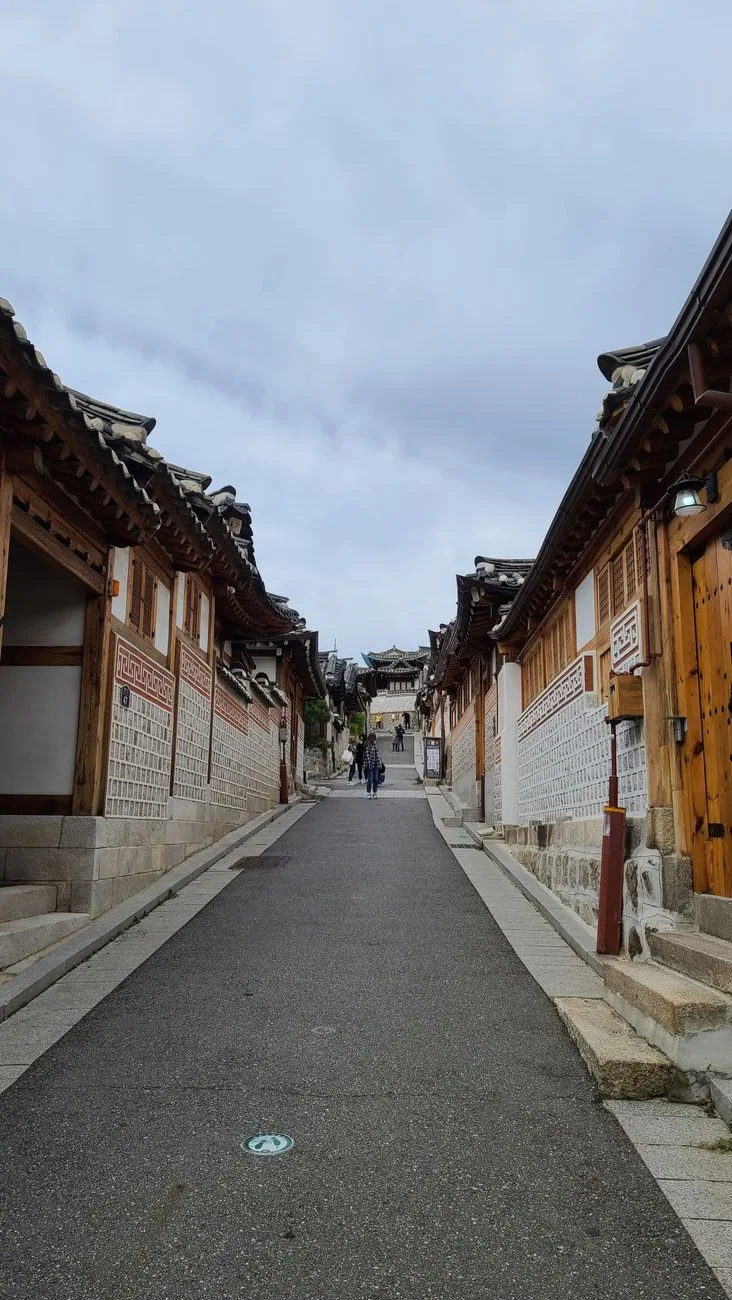
The part most guides still get wrong is the curfew. The Seoul Metropolitan Government designated Bukchon a Special Management Area on 1 July 2024, and under Seoul's notice on Bukchon visiting restrictions, tourist visits to Bukchon-ro 11-gil, an area of about 34,000 m², are prohibited from 5:00 p.m. until 10:00 a.m. the following day. A guidance period ran from 1 November 2024 to 28 February 2025; fines of ₩100,000 have applied since 1 March 2025.
Read the scope narrowly and correctly. The city's own notice names Bukchon-ro 11-gil, the famous downhill lane with the tiled roofs stacked toward Namsan. Secondary blogs describe a much larger "red zone." Go by the official designation, and treat 11-gil after 5 p.m. as closed.
If you are arriving by chartered coach, the restriction is stricter still. Seoul's Mediahub notice on the Bukchon tour bus ban covers about 2.3 km spanning Bukchon-ro and the stretch from Bukchon-ro 5-gil to Changdeokgung 1-gil, with fines of ₩300,000 for a first offence, ₩400,000 for a second and ₩500,000 for a third, reduced by 20% for payment within the deadline. Enforcement began 1 January 2026, following a Jongno-gu guideline published as district notice 2025-1644 in November 2025. In practice your coach will stop somewhere near Anguk and you will walk in, so budget the walking time.
Go in the morning. The light is better on the east-facing lanes, the residents' patience is fresher, and you avoid the 5 p.m. cutoff entirely. Our guide to Seoul's best photo spots covers which hours actually decide the shot.
How to go to Namsangol Hanok Village: free, central, open latest
Namsangol sits at 28 Toegye-ro 34-gil in Jung-gu, at the northern foot of Namsan. Chungmuro Station serves Lines 3 and 4; leave by Exit 3 and the entrance is a short walk east.
Admission is free. According to the Korea Tourism Organization's Namsangol listing, hours run 09:00 to 21:00 from April through October and 09:00 to 20:00 from November through March, the traditional garden is open around the clock, and the site closes on Mondays, rolling to the following day when a Monday falls on a public holiday. The enquiry line is +82-2-6358-5533.
Inside are five restored hanok premises, a pavilion, a performance stage and a time capsule plaza. It takes 45 to 90 minutes.
This is where the Bukchon rule sends you. If it is 6 p.m. and you wanted hanok, Anguk Station is the wrong stop and Chungmuro is the right one, at least until the end of October. From November the gap narrows: Namsangol shuts at 20:00.
How to go to Jeonju Hanok Village from Seoul
Jeonju has more than 700 hanok in one district and, unlike Bukchon, no visiting curfew. The city states that the village is open 24 hours, year-round, with the tourist information centre at 99 Girindae-ro, Wansan-gu and a main line on 063-282-1330. Walking the streets costs nothing; individual sites inside charge.
Two ways down from Seoul, with fares as quoted by booking platforms in August 2026 rather than by a published operator table:
| Mode | Fare (KRW, approx., Aug 2026) | Journey time | Departs |
|---|---|---|---|
| KTX to Jeonju Station | 34,000 | 1 hr 46 min | Yongsan Station |
| Express bus | 14,000–25,000 | 2 hr 40 min | Seoul Central City Terminal |
KORAIL runs about 26 trains a day on the Yongsan route, and buses from Central City leave at roughly quarter-hour intervals. KORAIL does not publish a plain fare table for this pair that I can point you to, so confirm the exact KTX price at the point of booking; the ₩34,000 figure is the working number, not a guarantee.
From Jeonju Station, the village is a further 25 minutes by city bus toward the Jeondong Church stop, on routes including 12, 60, 79, 109, 119, 508 and 806, or about 8 minutes by taxi.
The verdict on doing it in a day: possible, but tight. Round trip on KTX is roughly 3 hours 30 minutes of train time plus about 50 minutes of local bus, before you have walked anywhere. Add the trip out to Yongsan and you are near six hours in transit for six hours in Jeonju. That breaches the threshold in our day trips from Seoul guide, and Jeonju has enough hanok guesthouses to make an overnight the better call. Take the express bus only if you are staying over; saving up to ₩40,000 on the round trip is not worth two extra hours on a same-day return.
Inside Jeonju: what actually costs money
Gyeonggijeon Shrine, built in 1410 to enshrine the portrait of Joseon's founding king Taejo, charges ₩3,000 for adults, ₩2,000 for teenagers, university students and military, and ₩1,000 for children, with hours listed as 09:00 to 18:00 daily. Some seasonal schedules extend closing to 20:00 in June through August, so the last-entry time is the one thing worth confirming at the gate on a summer evening. Jeonju Hyanggyo, the Confucian school, charges the same three tiers and is free on Seollal, Chuseok, New Year's Day, 1 March and 15 August, though that fee schedule is not published on the city's own page.
For moving between them, the city runs a Jeonju Tourist Taxi at ₩50,000 for three hours, ₩80,000 for five hours and ₩20,000 for each additional hour, excluding parking, admission and experience fees. Reservation is required in advance on +82-10-3670-5729. Passengers receive a discount card worth 50% off hanbok rental, 10% off participating cafés and ₩5,000 off the Hanok Rail Bike, which recovers a meaningful slice of the fare for a group of three or four.
Hanbok: what it costs, and why it does not pay for itself
Rental shops cluster around Anguk Station and Gyeongbokgung. There is no regulated price. As of August 2026, basic sets start around ₩15,000 for one hour and ₩24,000 for four hours, with ₩15,000 to ₩40,000 the normal band for a two- to four-hour rental and ₩30,000 to ₩60,000 for a full day. Premium and themed sets sit at the top of that range.
The common claim is that free palace admission makes the rental pay for itself. Here is the arithmetic. The Korea Heritage Service grants free entry to anyone wearing hanbok, and charges ₩3,000 at Gyeongbokgung, ₩3,000 at Changdeokgung's main hall, ₩1,000 each at Changgyeonggung and Deoksugung, and ₩1,000 at Jongmyo. Visit all five in one day and you save ₩9,000. But the combined ticket covering those same five sites costs ₩6,000 and stays valid for six months.
So the true saving from hanbok is ₩9,000 minus ₩6,000, which is ₩3,000, against a ₩24,000 four-hour rental. You are down ₩21,000. Rent hanbok because you want the photographs, and price it as a photo shoot.
Two exceptions. Changdeokgung's Secret Garden costs ₩5,000 and is excluded from the combined ticket, so it sits outside this calculation entirely. And the Korea Heritage Service already admits everyone aged 24 and under and 65 and over free of charge at these sites, which is more generous than most guides state. If you are 22, hanbok saves you exactly nothing on admission.
Five things that go wrong
- Arriving at Bukchon after 5 p.m. The famous lane is closed and the ₩100,000 fine has been live since March 2025. Chungmuro, not Anguk, is the evening stop.
- Going to Namsangol on a Monday. It shuts, and it shuts on the Tuesday instead when the Monday is a public holiday.
- Treating Jeonju as a half-day. The last leg from Jeonju Station adds 25 minutes each way that rail timetables do not show.
- Booking a coach tour that promises to drop you inside Bukchon. It cannot; the 2.3 km chartered-bus ban has been fined since 1 January 2026.
- Forgetting that people live there. Bukchon's restriction exists because residents complained about noise and rubbish at night. Voices carry between those walls.
Subway fares apply throughout Seoul: the adult transit-card base fare rose to ₩1,550 on 28 June 2025, with youth at ₩900 and children at ₩550. A single-journey paper ticket costs more. If you are still choosing a base for all of this, our guide on where to stay in Seoul breaks the districts down by transfers and cost.
Questions people ask next
Is Bukchon Hanok Village free?
Yes. There is no ticket and no gate. The cost is the time restriction: Bukchon-ro 11-gil is closed to tourist visits from 5 p.m. to 10 a.m., with a ₩100,000 fine for entering during those hours.
Can I visit Bukchon at night?
Not the restricted lane. Bukchon-ro 11-gil is off limits between 5 p.m. and 10 a.m. under Seoul's Special Management Area rules. For hanok after dark, Namsangol stays open until 21:00 from April to October, and its traditional garden is accessible around the clock.
Which hanok village is best for a first trip to Seoul?
Bukchon in the morning, for the scale and the setting between two palaces. Pair it with Gyeongbokgung on a ₩6,000 combined ticket and you have a half-day that needs one subway stop. Namsangol is the fallback if you land late or arrive on a rainy afternoon.
How long do I need in Jeonju Hanok Village?
A full day, and preferably a night. The district covers more than 700 houses, and Gyeonggijeon alone absorbs an hour. Arriving on the 1 hour 46 minute KTX from Yongsan and returning the same evening leaves roughly six usable hours.
Do I need a K-ETA to visit?
The K-ETA requirement is suspended for eligible visa-free nationals through 31 December 2026, with no fee during the exemption. Applying voluntarily still costs ₩10,000 and exempts you from the paper arrival card. Our post on what to know before visiting Seoul covers the current paperwork in detail.
What does the Korean Folk Village cost?
Evening tickets are ₩19,000 for 4 p.m. entry and ₩17,000 for 6 p.m. entry as of August 2026, published by the operator. Standard daytime adult admission is quoted between ₩32,000 and ₩37,000 by different resellers, which is why the gate price is the one to trust.
General travel information, accurate as of 14 August 2026. Fares, opening hours and enforcement rules change; the restriction figures above come from Seoul Metropolitan Government and Jongno-gu notices current at that date.