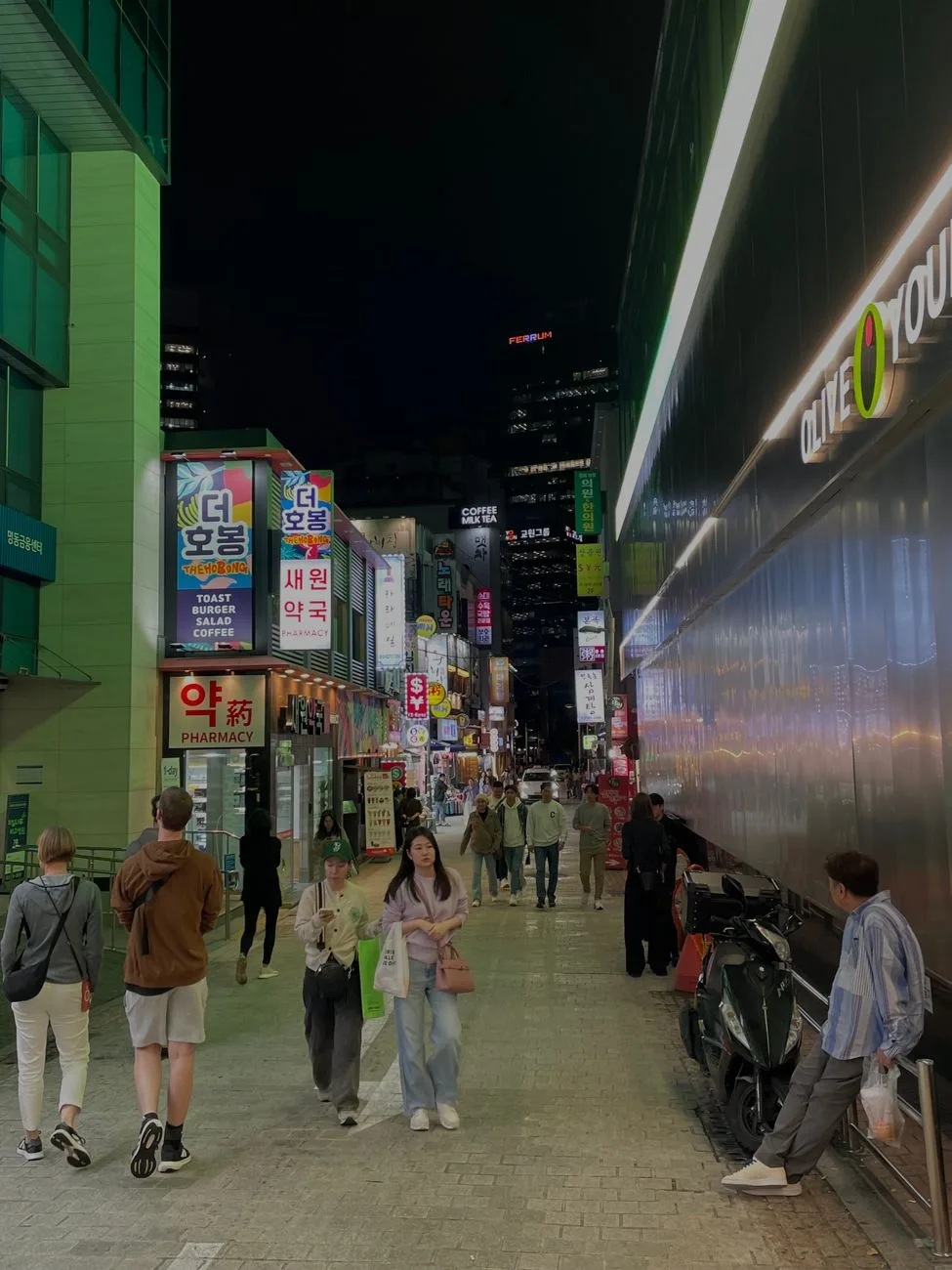
For a first trip of five nights or fewer, base yourself in Jongno/Insadong or Myeongdong: both reach the palaces, Gwangjang Market and the airport train without a complicated transfer. Hongdae is the cheapest of the four main visitor bases and the only one with its own airport rail stop. Gangnam suits business, COEX and department-store shopping rather than sightseeing.
Before you open a booking site
- Seoul is running close to full. Occupancy in the Seoul–Incheon area was 81.6% in September 2025 in STR's dataset, with average daily rate near ₩296,000, up 14.6% year on year.
- Weekends carry the increase. Friday and Saturday rates rose about 5% each in that period against 1–2% midweek, so a Sunday check-in is the cheapest single change you can make.
- The 10% VAT on a hotel room is refundable for foreign individual travellers, but only at designated hotels, and the government proposed on 7 August 2026 to end the scheme early.
- Airbnb began blocking unregistered Korean listings on 1 January 2026. Whole-apartment stays in officetels are no longer legal inventory.
Seoul hotels in 2026: a supply problem, not a luxury problem
The reason a mid-range Seoul room now prices like a Tokyo one has little to do with hotels getting fancier. Cushman & Wakefield figures reported in July 2026 put Seoul's tourist-hotel stock at 43,271 rooms in 2016, 53,564 in 2019 and 56,206 in 2025, with new supply since 2023 running near 1,000 rooms a year. Demand moved far faster: the Korea Tourism Organization recorded 18.94 million foreign visitors in 2025, a record, and 10.71 million arrived in the first half of 2026 alone, up 21.3%.
Foreign guests now account for around 71% of booked rooms in Seoul. That flips the usual assumption that luxury properties absorb the shock. Mid-range hotels led the rate rally, climbing 13.9% through August 2025 in STR's series, close to double the pace of the luxury tier, where Four Seasons Hotel Seoul averaged above ₩900,000 a night.
One thing worth knowing before you read any other district price table: Korea publishes no official district-level hotel rate series. Seoul Metropolitan Government's Open Data Plaza carries tourist-hotel registrations, grades and revenue by gu, but not comparable nightly rates. Every neighbourhood price chart online, including the bands below, is aggregated from booking-platform listings. Use them for orientation, not as a quote.
Where to stay in Seoul by district: the four bases that work
This table answers the first question most people have, which is not "which district is nicest" but "which district costs me a transfer every single day."
| District | Main subway lines | Direct airport rail | Best for |
|---|---|---|---|
| Jongno / Insadong | 1, 3, 5 | No | Palaces, markets, first trips |
| Myeongdong | 4 (2 nearby) | No | Cosmetics, central transfers |
| Hongdae / Mapo | 2, AREX, Gyeongui-Jungang | Yes | Budget stays, late nights |
| Gangnam | 2, 9, Sinbundang | No | Business, COEX, shopping |
| Yongsan / Itaewon | 1, 4, 6 | No | KTX departures, food variety |
What the table shows is that only Hongdae removes the airport transfer, and only Yongsan removes the trip to a KTX platform. Everything else is a question of what you plan to do with your mornings.
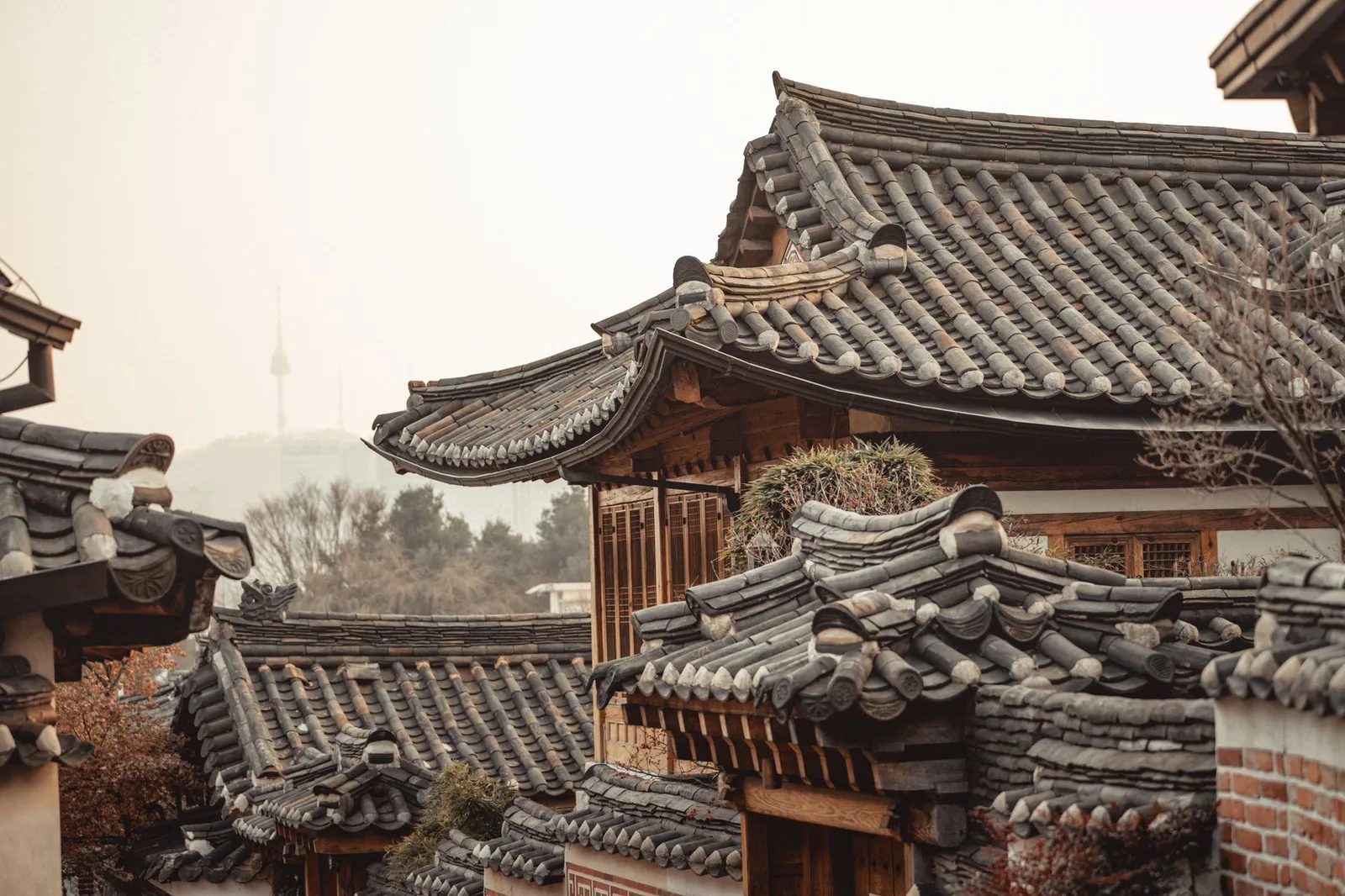
Jongno and Insadong
This is the base for a sightseeing trip. Gyeongbokgung, Changdeokgung, Bukchon and Insadong sit inside a walkable box, and Gwangjang Market at 88 Changgyeonggung-ro is 62 metres from Exit 8 of Jongno 5-ga Station on Line 1. Seoul Tourism Organization lists the general market as Monday to Saturday 09:00–18:00 and the Food Alley as daily 09:00–23:00, which catches out people who arrive on a Sunday afternoon expecting the fabric and hanbok stalls to be trading.
Listing bands here cluster around ₩100,000–220,000 for the midscale and suite-style properties near Insadong. The area also holds most of the city's traditional courtyard lodging; the trade-offs of that are covered in our hanok stay guide for Seoul.
Where Jongno fails: it empties out at night. Outside the Jongno 3-ga grill alleys, late dining thins fast after 22:00, and travellers who want a bar at 01:00 will be taking a taxi.
Myeongdong
Myeongdong Station sits on Line 4, one stop from Seoul Station and therefore one stop from both the airport railroad and the KTX. That single fact is why it stays the default recommendation despite being the most tourist-saturated square kilometre in the country.
The cost is at street level. Restaurant pricing runs above the citywide average: the Korea Consumer Agency's 참가격 index put the Seoul average for 200g of samgyeopsal at ₩21,321 in April 2026, and Myeongdong sit-down grills sit above that line. Treat the district as a transport base and eat elsewhere, using our Seoul barbecue picks by cut and budget.
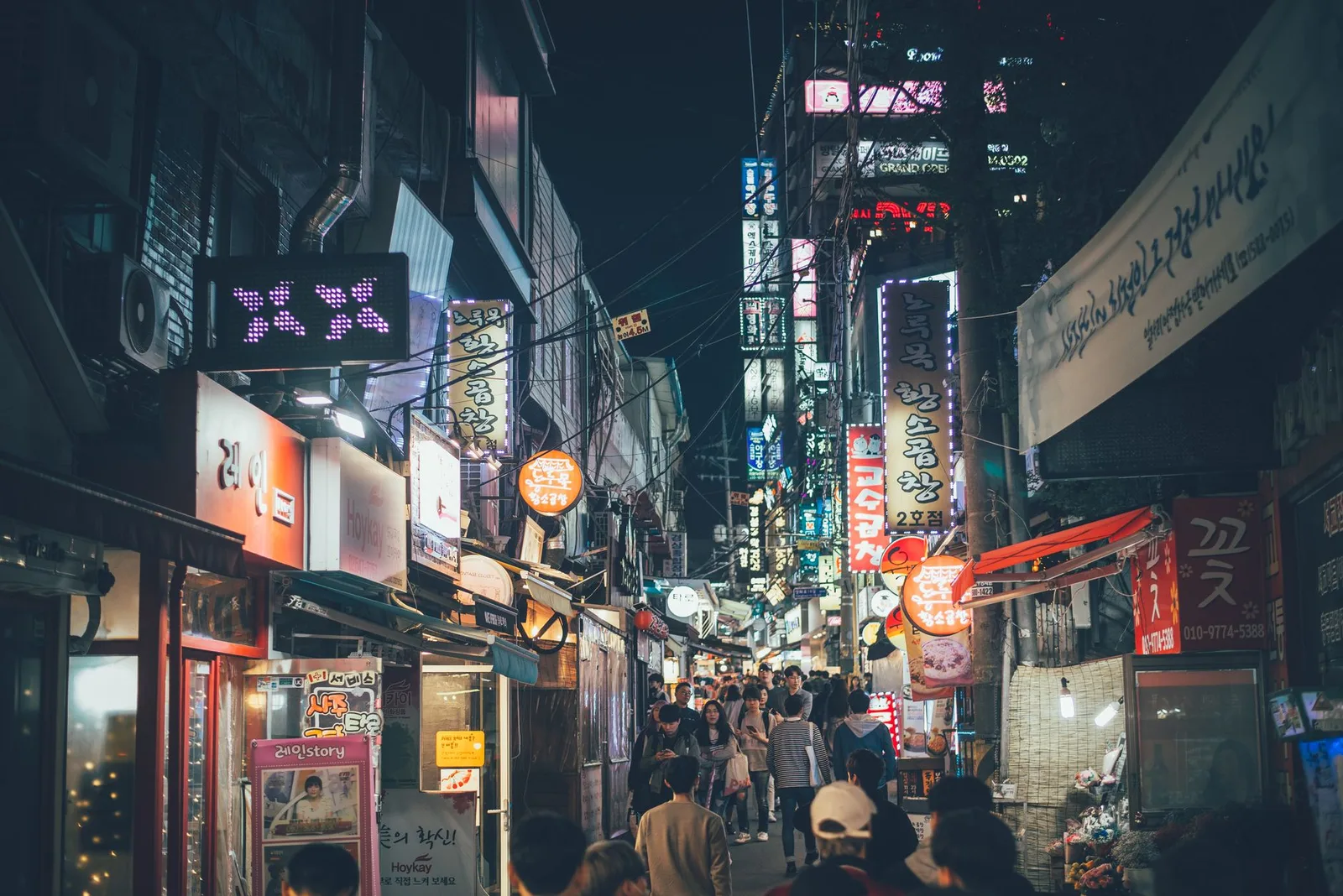
Hongdae
Hongik University Station is an AREX stop, so the airport train drops you in the neighbourhood with no line change and no stairs with a suitcase. It is also the cheapest of the four bases, with hostel and guesthouse beds quoted around ₩30,000–60,000 a night and design hotels such as RYSE in the ₩180,000–250,000 band.
Where Hongdae fails: noise, and departure logistics. Weekend streets stay loud past 03:00, and any onward KTX to Busan or Gyeongju means backtracking to Seoul Station or Yongsan first thing in the morning.
Gangnam
Gangnam earns its place for business travel, COEX, Bongeunsa and the department stores, plus the restaurant scene that includes Mingles, which held its position as Korea's only three-star restaurant when the Michelin Guide Seoul & Busan 2026 was announced on 5 March 2026. Two structural drawbacks matter for tourists: the palace cluster is a line change away, and the Sinbundang Line that serves the area is excluded from the Climate Card, so the pass covers less of your actual travel here than it does north of the river.
What five nights actually costs: three bases priced out
Same trip, same two adults, five nights, arriving at Incheon. Room rates below are set at the middle of each district's listing band rather than pulled from a specific property, and the transport line items are official published fares as of August 2026.
Fixed costs in all three cases: the AREX all-stop train at ₩5,350 per adult each way is ₩21,400 for two people return, and two 5-day Climate Cards at ₩15,000 plus ₩3,000 per physical card is ₩36,000.
| Base | Rate/night (KRW) | Rooms, 5 nights | VAT refundable | Trip total (KRW) |
|---|---|---|---|---|
| Hongdae guesthouse | 90,000 | 450,000 | No | 507,400 |
| Jongno midscale | 150,000 | 750,000 | 68,182 | 739,218 |
| Gangnam upscale | 250,000 | 1,250,000 | 113,636 | 1,193,764 |
The refund column is the part most comparisons skip. Korean VAT is included in the advertised rate, so the recoverable portion is one eleventh of what you pay, not a tenth: ₩750,000 ÷ 11 = ₩68,182. On the Jongno booking that is worth about ₩13,600 per room-night.
Which gives a usable rule. The hotel VAT refund reorders your shortlist only when two candidates sit within roughly ₩15,000 a night of each other. It never closes a ₩60,000-a-night gap, and it does nothing at all for the Hongdae option, because guesthouses and hostels are almost never on the designated-facility list.
The hotel VAT refund, and the deadline that is moving
Foreign individual tourists can reclaim VAT on room charges for up to 30 nights, breakfast included when it is bundled into the room rate, provided they leave Korea within three months of the stay. The Korea Tourism Organization's tax refund guidance for visitors sets out the conditions, including the one that disqualifies most people who assume they qualify: group and package tours are excluded.
The scheme runs only through 특례적용관광숙박시설, hotels and resort condominiums specially designated under the Tourism Promotion Act. Designation is quarterly, and a property qualifies only if it did not raise its foreign-guest average rate by more than 10% against the same period a year or two years earlier. A hotel that pushed its rates hard loses the designation, which is a deliberate brake on exactly the price rises described above.
The timing is unsettled. The statutory expiry is 31 December 2028, but the Ministry of Economy and Finance's 2026 Tax Reform Plan, announced on 7 August 2026, proposes pulling it forward to 30 June 2027, on the reasoning that 80% of foreign tourists concentrate in the capital region and the benefit lands mainly on expensive hotels. A separate Korean trade report describes the programme as ending in December 2026. Those dates conflict and I am not going to reconcile them for you; what is safe to plan on is that the refund exists for stays booked now and is not guaranteed for a 2028 trip. For shopping rather than lodging, the same page sets the minimum qualifying purchase at ₩15,000.
Airbnb in Seoul after the 1 January 2026 delisting
A legal short-term rental in Korea registers as 외국인관광객 도시민박업, foreign tourist urban homestay business, under the Tourism Promotion Act. Three conditions decide almost everything: the host has to live in the property, the building has to be residential, and the unit has to be under 230 m². Officetels cannot register at all, which removes a large share of what used to be listed in Gangnam and Yeouido.
The Ministry of Culture, Sports and Tourism loosened two rules on 10 October 2025. Homes over 30 years old are no longer automatically excluded, with local governments able to approve them where the Building Act deems them safe, and the old foreign-language requirement pegged to a TOEIC 760 equivalent was replaced by a test of effective communication that accepts translation apps. About 5,000 home-sharing businesses were registered as of 2024.
Airbnb began blocking unregistered Korean listings on 1 January 2026, with reporting at the time putting the number of unlicensed accommodations facing delisting near 30,000. That figure comes from secondary coverage rather than Airbnb's own compliance page, which I could not retrieve directly, so treat the scale as indicative and the policy itself as settled. Practically: expect fewer entire apartments, more registered rooms in a host's own home, and a live host on the premises. If a listing offers a whole officetel with no host present, it is not a registered homestay.
Getting from Incheon to your hotel
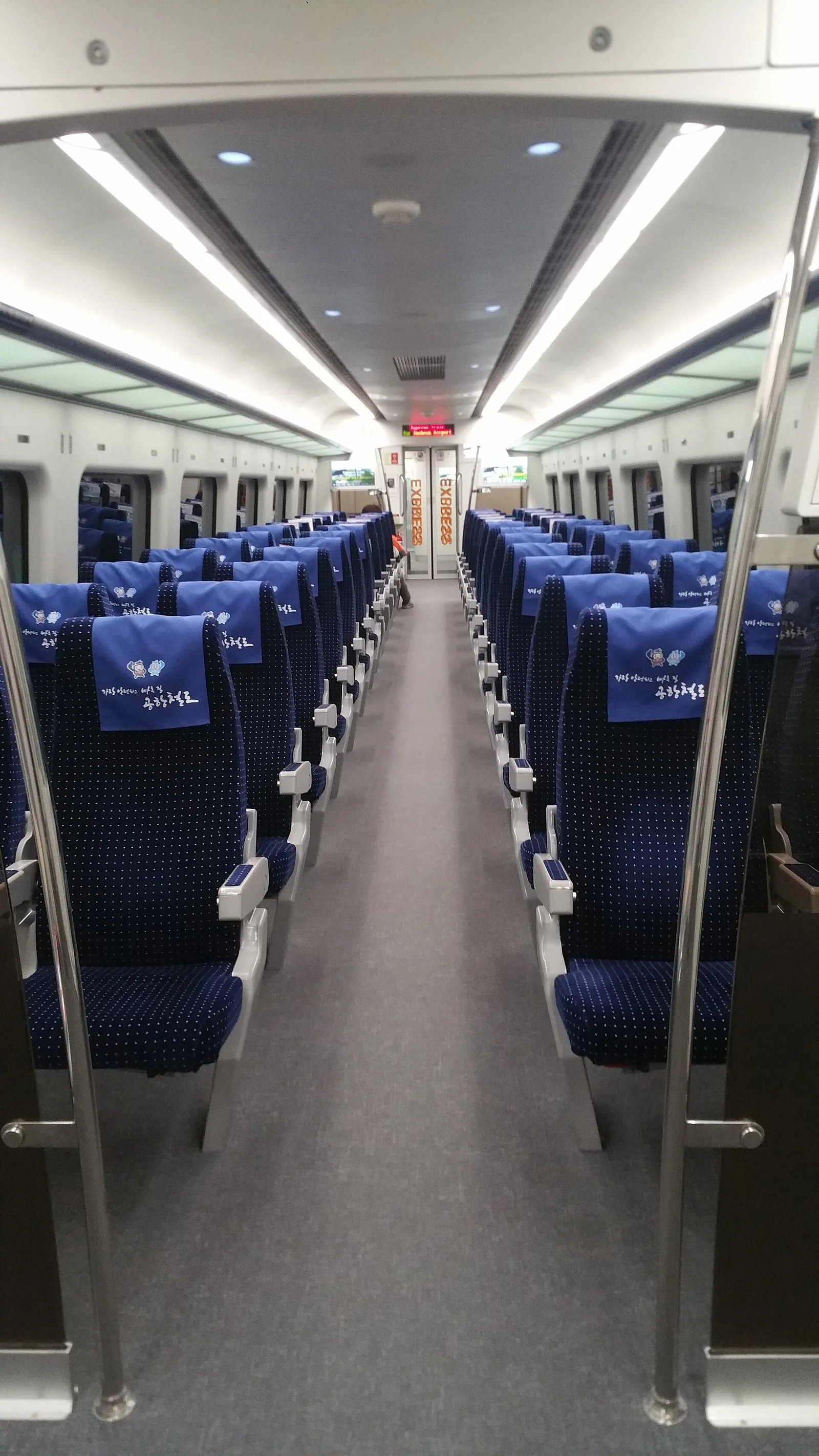
The Airport Railroad publishes the all-stop (일반) fare to Seoul Station at ₩5,350 adult, ₩3,800 youth and ₩2,350 child. The express train's fare is quoted at three different numbers across third-party sites and did not display on the operator's own page when checked in August 2026, so the all-stop figure is the one to budget against; the direct run takes 43 to 51 minutes. Airport limousine buses run in the ₩17,000–18,000 band and take 60 to 90 minutes depending on traffic.
Match the transfer to the base. Hongdae and Seoul Station are on the line, so AREX wins outright. For Gangnam, the limousine bus usually beats the train plus two transfers with luggage. If you are not staying at all and just have hours to fill, our airport layover itineraries cover what fits in six, nine or fourteen hours.
Transit passes: the Climate Card is being retired
Seoul's subway base fare has been ₩1,550 with a transport card since 28 June 2025, after Seoul, Incheon, Gyeonggi Province and Korea Railroad Corporation confirmed the ₩150 increase in April 2025. Teenagers pay ₩900 and children ₩550, and boarding before 06:30 costs adults ₩1,240.
Seoul Metropolitan Government's Climate Card short-stay passes cost ₩5,000 for one day, ₩8,000 for two, ₩10,000 for three, ₩15,000 for five and ₩20,000 for seven, plus ₩3,000 for the physical card. Break-even on the 5-day pass is 12 rides: ₩18,000 including the card divided by ₩1,550 gives 11.6. Drop to 10 rides if you already own a reusable card. Below about two and a half journeys a day, pay per ride. The pass excludes the Sinbundang Line and anything crossing the city boundary, so it does not cover the airport run in either direction.
The monthly product is ending. Seoul announced that the 30-day Climate Card's last prepaid recharge was 31 July 2026 and the last postpaid recharge 31 August 2026, with already-charged passes valid to expiry and operation extended to end-September. Its replacement, 모두의카드 (기후동행패스), launches on 1 September 2026 at ₩62,000 a month, ₩55,000 for the youth band that Seoul widened from 19–34 to 19–39. Two things about it matter to a visitor: it is aimed at Seoul residents, and it works as a rebate rather than a prepaid unlimited pass. Whether short-stay foreign visitors can use it has not been published. Short-stay travellers should plan on the day passes, which our T-money versus Climate Card comparison breaks down by trip length.
Booking timing: the dates that move the price
The Korea Tourism Organization's 2026 public holiday list gives Seollal as 16–18 February and Chuseok as 24–26 September 2026. Palaces, museums and department stores stay open through both, but domestic travel spikes and city hotels fill.
Two more dated pressure points. The Seoul International Fireworks Festival moved to 5 September 2026 at Yeouido Hangang Park, specifically to avoid Chuseok, which prices Yeouido and Mapo riverside rooms out of reach for that weekend. And autumn foliage in Seoul is commonly given as peaking 5–15 November, though no official 2026 forecast from the Korea Forest Service or the Korea Meteorological Administration has been published, so anyone quoting exact tinting dates is guessing.
The cheapest weather trade is early summer. The 2026 monsoon opened on 30 June in Jeju and the south and 1 July in central Korea, and July alone brings 414.4 mm of Seoul's 1,417.9 mm annual precipitation with mean humidity at 76.2%. Rooms are correspondingly softer. Note that the KMA no longer issues fixed official monsoon start and end predictions, citing rainfall variability, so any advance date you see is third-party.
Four mistakes that cost real money
- Booking Friday and Saturday nights. Weekend rates moved up around 5% per night against 1–2% midweek in the 2025 STR data. Shifting a five-night stay to start Sunday is free.
- Choosing Gangnam for a palace trip. The sightseeing core is north of the river, and the Sinbundang Line serving Gangnam sits outside Climate Card coverage.
- Assuming any hotel gives the VAT back. Only quarterly-designated facilities do, and package tours are excluded regardless of the property.
- Booking a whole officetel through a short-term rental platform. Officetels cannot register as urban homestays, and unregistered listings have been coming down since January 2026.
The decision rule, stated plainly: pick Jongno if your itinerary is palaces and markets, Hongdae if the nightly rate is the binding constraint, Myeongdong if you are moving on to another city by rail, and Gangnam only if your reason for being in Seoul is south of the river. Then plan the days around what opens when, using our five-day Seoul itinerary built around palace closing days and the wider list of what to book first in Seoul.
Frequently asked questions
Is Myeongdong or Hongdae better for a first trip to Seoul?
Myeongdong, if the trip includes onward rail travel. It is one Line 4 stop from Seoul Station, which puts both the airport train and the KTX within ten minutes of your lobby. Hongdae wins on price and on the direct AREX stop at Hongik University Station, but weekend street noise runs past 03:00.
Can I still book an Airbnb in Seoul?
Yes, but only registered ones. Airbnb started blocking unregistered Korean listings on 1 January 2026. A legal listing is a 외국인관광객 도시민박업 registration in a residential building under 230 m² where the host actually lives on site. Officetel apartments cannot be registered at all.
How much is the VAT refund on a Seoul hotel room?
One eleventh of the rate you pay, because VAT is already included in the advertised price. A ₩150,000 room returns about ₩13,636 before the refund operator's processing fee, and only at a designated 특례적용관광숙박시설, for stays of up to 30 nights, when you depart Korea within three months.
How far ahead should I book?
Further than feels necessary. Seoul–Incheon occupancy was 81.6% in September 2025 against roughly 1,000 new rooms a year, and the Korea Culture and Tourism Institute projects 22 million arrivals for 2026. For Chuseok (24–26 September 2026), the fireworks weekend (5 September 2026) and the November foliage window, book months out.
Do I need a Climate Card if I stay in Jongno?
Only above 12 subway rides across five days. A central base cuts your journey count, so a Jongno stay that mostly walks between palaces will not reach break-even on the ₩15,000 five-day pass plus the ₩3,000 card. It also does not cover the airport line.
This article is general travel information based on published figures dated in the text, not personalised advice. Tax rules, fares and pass schemes change; the dates attached to each figure tell you how old it is.