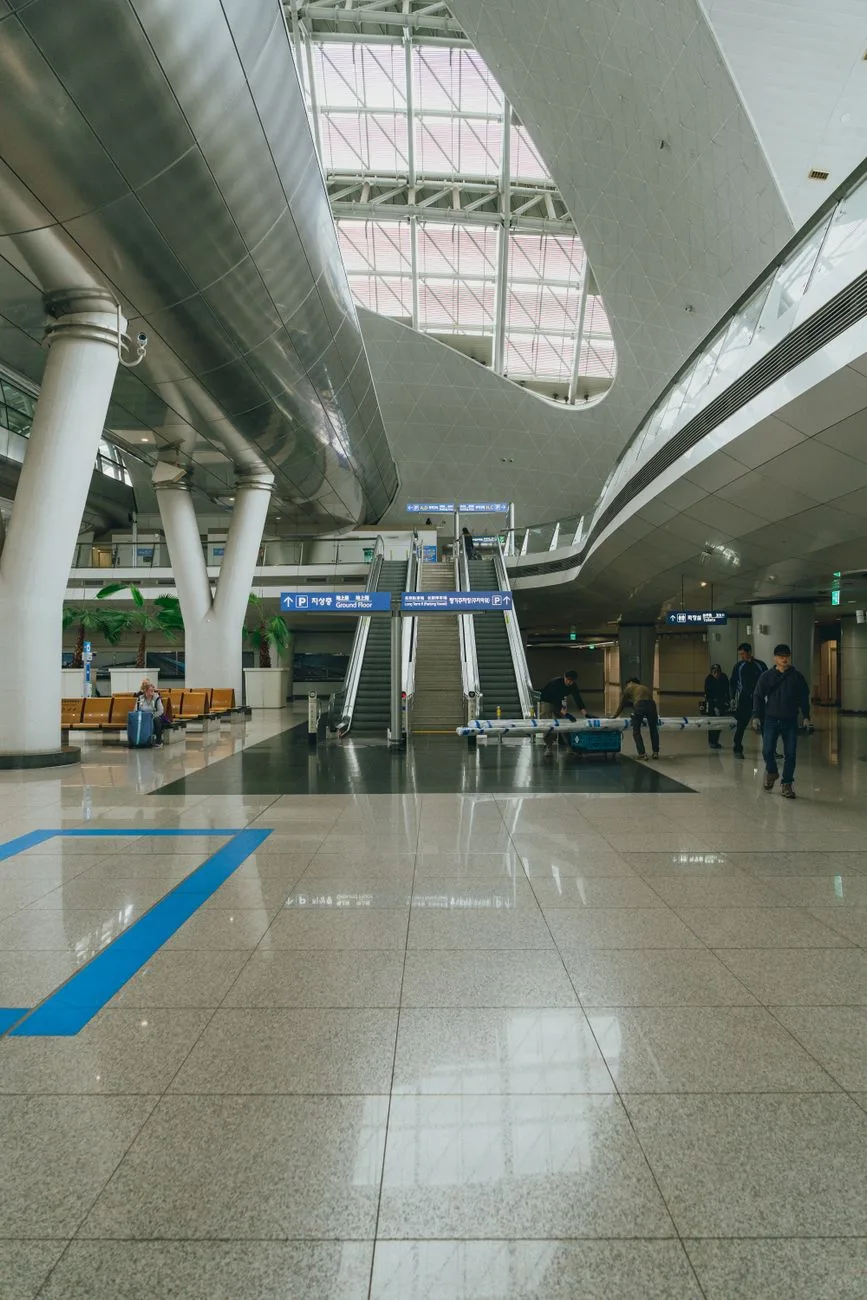
A Korea day tour from the airport is realistic once your layover at Incheon (ICN) runs past roughly eight hours gate to gate. Below that, the fixed overheads (immigration on the way in, three hours back before an international departure, and the round trip into the city) eat the whole gap. Under eight hours, stay on Yeongjong Island or take the airport's own free transit tour.
Before you commit to leaving the terminal
- Usable time is not layover time. Subtract about 45–60 minutes to clear arrivals and roughly 3 hours to be back airside. A 9-hour connection yields about 5 hours on the ground.
- You must legally enter Korea to leave the terminal, even for a two-hour walk. That means a visa or visa-free entry, and K-ETA where it applies.
- Incheon International Airport Corporation runs free guided transit tours from the transfer area for connecting passengers, in courses of roughly one to five hours.
- Seoul is 43 minutes away by nonstop train from Terminal 1, not the two-hour slog people assume. Incheon's own sights are closer still.
- Check-through baggage decides everything. Bags you have to collect and re-check can cost you an hour at both ends.
The layover math that decides whether a day tour is possible
Start from your onward departure time and work backwards. Airlines at Incheon ask international passengers to be at the counter three hours ahead, and on a busy morning that is not padding: you re-clear check-in, outbound immigration, and security, and Terminal 1's departure hall stacks up between 08:00 and 11:00.
The formula is simple.
Usable landside time = layover − 45 to 60 min (arrival) − 180 min (return buffer) − round-trip travel.
Here is what it looks like on a real connection. A flight lands at 07:20 and the onward leg departs at 21:05, a layover of 13 hours 45 minutes. Immigration and the walk out put you at the arrivals hall around 08:05. To be at the counter by 18:05 you want to be stepping off the train at Incheon Airport station by about 17:45. That leaves 9 hours 40 minutes landside. A round trip on the nonstop airport railroad, including ticketing and platform time, costs about 1 hour 50 minutes. Net: close to eight hours in Seoul, which is a palace, a neighbourhood, and a proper lunch.
Now the same arithmetic on a 6-hour 30-minute connection landing at 14:10. You are out by 14:55 and need to be back by 17:40. That is 2 hours 45 minutes of usable time, and the Seoul round trip alone consumes nearly two hours of it. The honest answer there is no. Go west to the beach instead, or stay inside.
| Layover (gate to gate) | Realistic usable time | What actually fits |
|---|---|---|
| Under 5 hours | Effectively none | Stay airside: cultural experience centre, shower rooms, transit hotel |
| 5–7 hours | 1.5–3 hours | Yeongjong Island: Eurwangni Beach, Yonggungsa temple, the outlet mall |
| 7–9 hours | 3–5 hours | Incheon city: Chinatown and Wolmido, or Songdo Central Park |
| 9–13 hours | 5–9 hours | One Seoul district plus a palace, or a guided day tour |
| 13 hours or overnight | Varies with train hours | A full Seoul day, unless the gap falls between midnight and 05:00 |
The cut-off sits at eight hours because that is where net city time first exceeds the travel cost of getting there. At seven hours you arrive in Seoul, look at one thing, and turn around.
Incheon Airport's free transit tour: how it works and who qualifies
Incheon International Airport Corporation operates a complimentary guided tour programme for passengers connecting through ICN. Sign-up happens at the transit tour desks inside the transfer area of both terminals, tours leave at fixed times, and seats are capped, so a late arrival at the desk can mean the next departure rather than this one.
Courses have historically ranged from about one hour to five, covering the temple and coastline on Yeongjong Island, Incheon's Chinatown, and the newer waterfront districts. The line-up and the minimum layover required for each course change with the season and with staffing, so treat any route list you read elsewhere as indicative and confirm the current schedule on the official Incheon Airport website before you count on a specific stop.
Two practical points. First, "free" covers the coach and the guide; food and any admission fees are yours. Second, joining the tour still means passing through Korean immigration, because the coach leaves the secure area. The programme does not create a legal exemption from entry requirements.
Getting into Seoul and back: routes, times, and fares
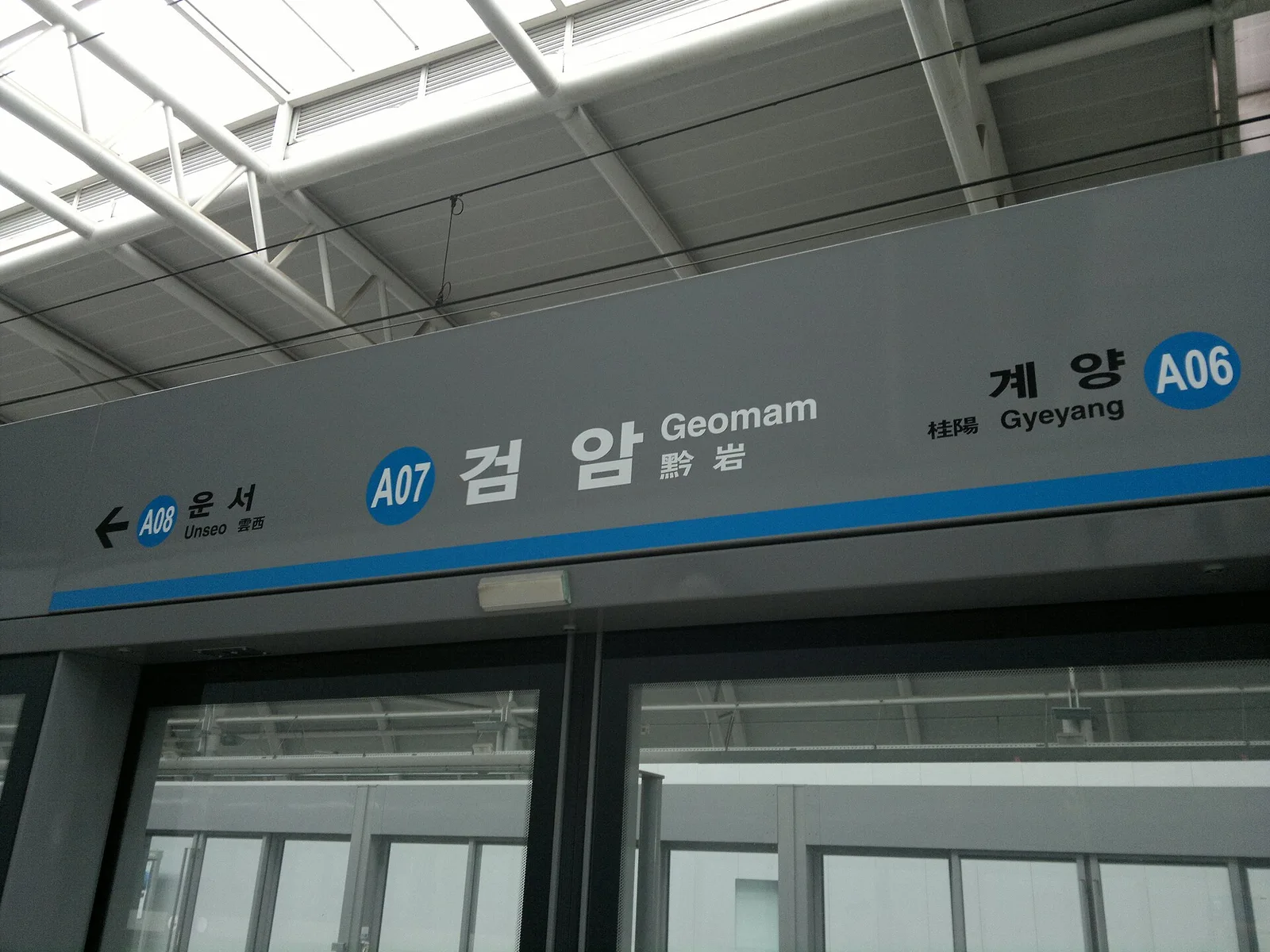
The airport railroad (AREX) is the only option with a fixed journey time, which is why it wins for anyone on a deadline. The nonstop Express covers Terminal 1 to Seoul Station in about 43 minutes and Terminal 2 in about 51. The all-stop train shares the same track, adds around a dozen intermediate stations, and reaches Seoul Station in roughly an hour from Terminal 1.
| Option | Time to central Seoul | Approx. one-way fare | Worth knowing |
|---|---|---|---|
| AREX Express (nonstop) | ~43 min from T1, ~51 min from T2 | Around ₩11,000 | Reserved seat, luggage racks, fixed timetable |
| AREX all-stop | ~59 min from T1 to Seoul Station | Under ₩5,000 with a transport card | Same platforms, connects to the wider subway network |
| Airport bus | 60–90 min, traffic dependent | Roughly ₩17,000–18,000 | Drops at hotel clusters; unreliable at rush hour |
| Taxi | 60–80 min off-peak | Roughly ₩70,000–100,000 plus tolls | Night surcharge after midnight; no protection from congestion |
Fares above reflect published rates as of early 2026 and are rounded; operators adjust them, so verify the current price with Airport Railroad Co. (AREX) or at the ticket office. For the all-stop train and any subway transfers, a rechargeable transport card is the cheapest way to pay, and our comparison of the T-money card and the Climate Card covers which one makes sense for a single day versus a full trip.
One timing trap: the airport railroad does not run through the small hours. If your connection sits between roughly midnight and 05:00, a Seoul excursion is off the table regardless of how many hours the gap contains.
With five to eight hours in the city, pick one district and stay in it. Gyeongbokgung plus Bukchon plus Insadong is a coherent walking loop from Anguk station. Hongdae or Myeongdong works if the goal is shopping and food rather than sights. Our guide to what to see in Seoul and when things close is built around opening days, which matters more on a layover than on a week-long trip, since a Tuesday palace closure is unrecoverable when you have one shot.
Staying near the airport when the layover is short
Yeongjong Island, where Incheon Airport sits, has more than most transit passengers realise, and everything on it is 10 to 25 minutes from the terminals by taxi or local bus.
Eurwangni Beach is the closest genuine destination, a short taxi ride from the passenger terminals, with seafood restaurants along the front and a sunset that faces the right way. Yonggungsa, a temple on Baegunsan, gives you a hill walk and a view back over the coast. Jeongseojin on the island's west side is built for the same sunset with a paved promenade. There is also a large outlet mall a few minutes from Terminal 1 for anyone whose layover goal is a suitcase full of things.
Push a little further and Incheon proper opens up. Chinatown at Incheon Station, at the western end of Seoul Subway Line 1, gives you jajangmyeon at its historical source and the Wolmido waterfront a short ride away. Songdo Central Park is closer to the airport than Seoul is and reads as a different city entirely.
Entry rules, K-ETA, and baggage: what can stop you at the door
Leaving the terminal means entering the Republic of Korea. The requirement depends on nationality: some passport holders need a visa, most visa-waiver nationals need a K-ETA travel authorisation applied for in advance, and a rotating list of countries has been granted temporary K-ETA exemption. That exemption list and its end date have been extended more than once, so check the current status on the official K-ETA portal and confirm visa requirements through the Korea Visa Portal operated by the Ministry of Justice. Do this at booking time, not at the transfer desk.
Korea also operates transit-tourism arrangements for certain passengers holding a confirmed onward ticket to a third country. Eligibility is defined by nationality, route, and ticket type, and it is not something to assume from a forum post. Ask your airline to confirm in writing what your specific itinerary permits.
Baggage is the second gate. If your bags are checked through to the final destination, you walk out with a day bag and nothing else to manage. If they are not, you collect them at Incheon, then either store them at a paid baggage counter or drag them into Seoul, and re-check on return. Separate tickets bought from different airlines are the usual reason bags are not through-checked, and that same split means a missed connection is your financial problem rather than the carrier's.
If a booked day tour is the plan, three questions decide whether it is safe: does the operator meet you inside the arrivals hall by name, is the return drop-off at the terminal rather than at a downtown hotel, and what is the written policy when traffic runs the schedule past your check-in time. An operator that will not answer the third question in writing is not one to hand a connecting flight to.
Where this plan breaks
The eight-hour rule fails in three specific situations, and each one has caught people out.
A long layover that falls overnight is not a long layover. Between roughly midnight and 05:00 the airport railroad is out, buses thin to almost nothing, and a taxi in each direction costs more than a hotel. The sensible move is a capsule-style transit hotel inside the terminal or an airport-area hotel landside.
The second failure is peak-season immigration. Incheon handles enormous arrival banks in the morning and again in the late afternoon, and the 45-minute arrivals estimate can double during Lunar New Year, Chuseok, and the summer school holidays. Build the extra hour in during those weeks, which our Korean festival and holiday calendar maps out by date.
The third is a self-transfer itinerary with a tight legal minimum connection time. If the airline's published minimum connection time is close to your actual gap, the buffer you would spend in Seoul is the buffer protecting your flight. Spend it on the airport.
One more thing worth doing before you land: sort connectivity. Navigation, taxi apps, and the tour operator's phone call all assume you are online the moment you leave arrivals, and picking up a physical SIM at the airport counter costs time you have already budgeted elsewhere. An eSIM activated before departure removes that step entirely.
Common questions about airport day tours in Korea
Can I leave Incheon Airport during a layover?
Yes, provided you meet Korea's entry requirements for your nationality. Leaving the terminal is a formal entry into the country, so you need a visa, visa-free entry with K-ETA, or a valid exemption. Passengers who cannot satisfy those conditions must remain in the transit area.
How long does a layover need to be for a Seoul day trip?
About eight hours gate to gate is the practical floor, and ten or more is comfortable. Below eight, the arrival buffer, the three-hour return buffer, and the round-trip journey leave too little time to justify the trip.
Is the Incheon Airport transit tour actually free?
The guided tour and transport are provided at no charge by Incheon International Airport Corporation. Meals and any entrance fees are paid separately. Seats are limited and courses change, so confirm current departures at the transit tour desk or on the airport's official site.
What do I do with my luggage during a layover tour?
If your bags are checked through to the final destination, nothing. If not, use the paid baggage storage counters in either terminal rather than taking suitcases into the city; charges are per bag per day and the counters have posted operating hours you should check against your return time.
Can I do the same thing from Gimpo Airport?
Gimpo (GMP) is considerably closer to central Seoul than Incheon, which shifts the break-even down by roughly an hour or two. The same entry rules apply, and the same three-hour return buffer applies to international departures.
Book nothing until you have written your onward departure time on paper and subtracted three hours from it. That single number, not the length of the layover, is what tells you whether a Korea day tour from the airport is a plan or a missed flight.
This article is general travel information, current as of early 2026. Entry requirements, fares, and tour schedules change. Confirm your own eligibility with your airline and the Korean immigration authorities before making arrangements.