Two riders can make the same five subway trips in Seoul on the same day and pay very different amounts. T-money charges per journey; the Climate Card (기후동행카드) buys unlimited rides inside Seoul for a fixed number of days. T-money is the safer default for short visits, airport transfers and any travel past the city boundary. The Climate Card starts winning at roughly three paid journeys a day, or about 45 a month.
What decides it, in four lines
- Geography. The Climate Card is a Seoul-boundary product. T-money works nationwide.
- Frequency. Below three separate paid journeys a day, pay-per-ride is cheaper.
- Transfers. T-money treats a bus + subway + bus chain as one fare, which quietly raises the pass's break-even point.
- Everything else. Taxis, convenience stores, coin lockers and intercity buses run on T-money balance, not on a pass.
What each card actually is
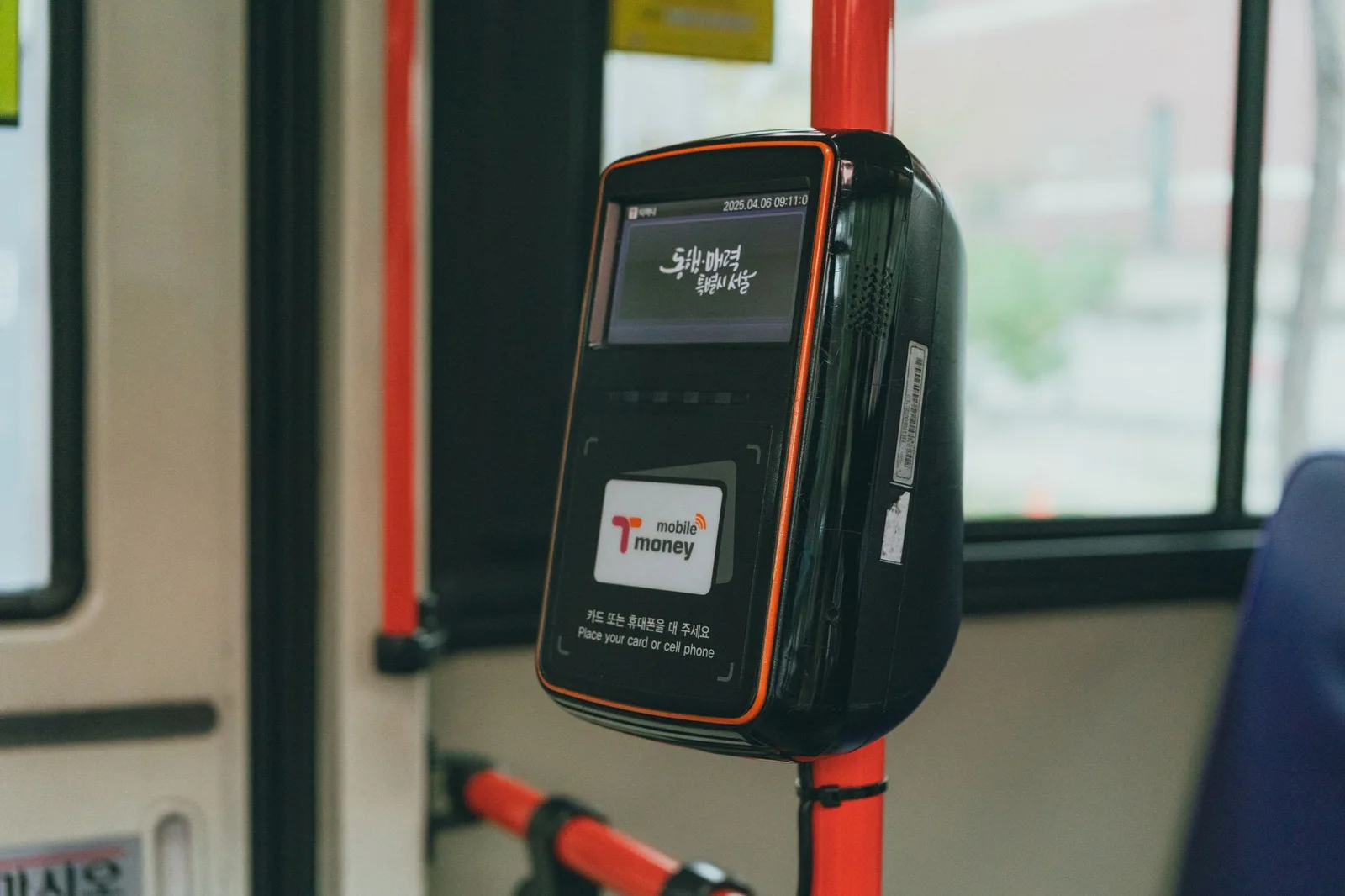
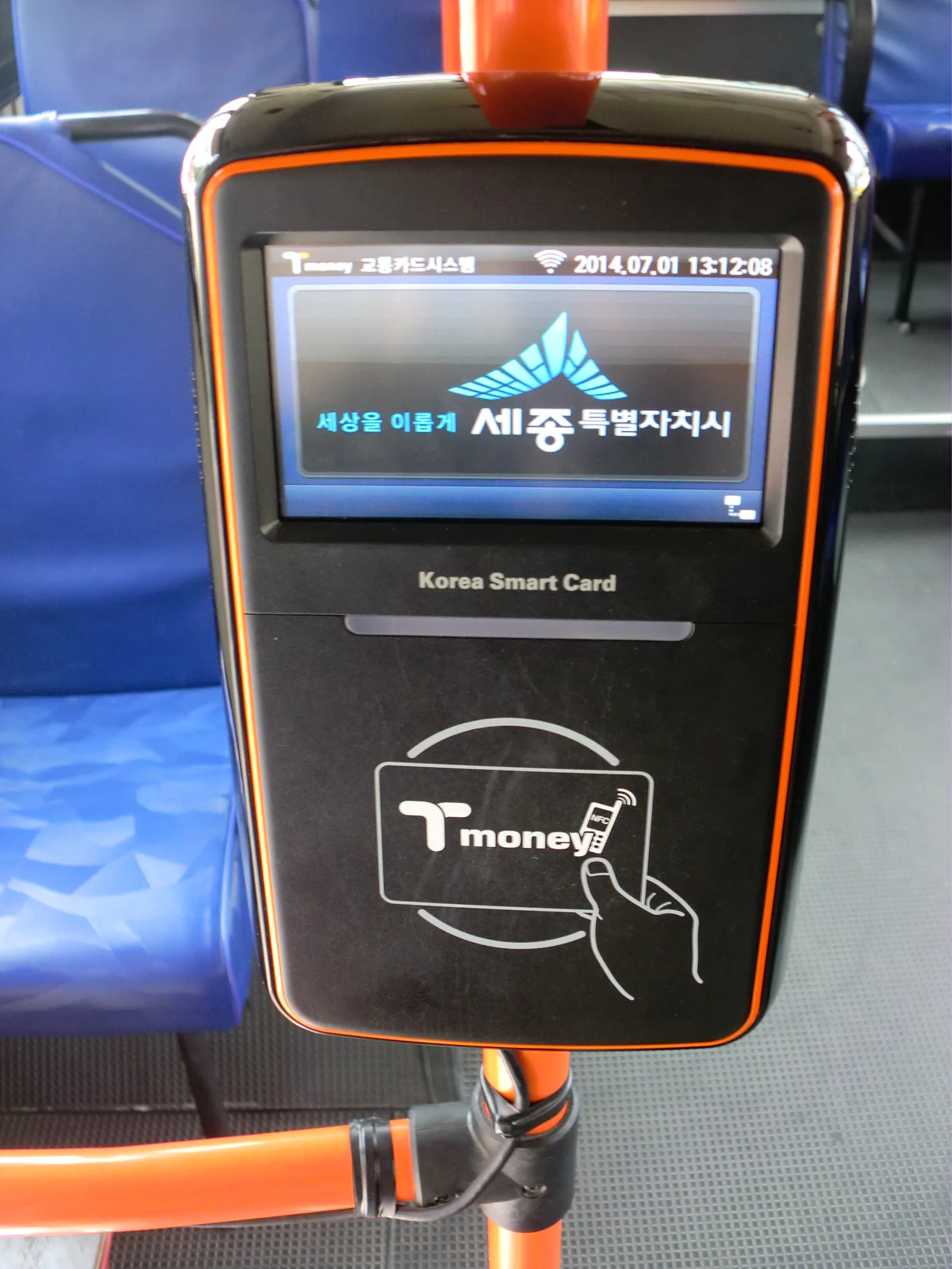
T-money is a contactless stored-value card issued by Korea Smart Card, the operator behind Seoul's fare system. You load cash onto it and each tap deducts a distance-based fare. Cards sell for roughly 2,500 to 4,000 won depending on the design at CU, GS25, 7-Eleven, Emart24 and station kiosks, and top-ups are handled at station machines or over the counter. Beyond transit, the balance pays for taxis, station lockers and convenience-store purchases, and it is accepted on buses and metros in most Korean cities, not only the capital. Acceptance details are published by the issuer at T-money's official site.
Fares work on a combined-distance model across the Seoul metropolitan area. The card base fare covers the first 10 km, with 100 won added per additional 5 km up to 50 km, and per 8 km beyond that. Seoul's base subway fare rose to 1,400 won on 7 October 2023, and Seoul city bus fares moved to 1,500 won (blue and green routes), 1,200 won (village buses) and 3,000 won (wide-area red buses) in August 2023. The city has approved a further step increase that has been deferred more than once, so verify the current figure with the Seoul Metropolitan Government before running your own arithmetic. Every calculation below scales with that number.
The Climate Card is a Seoul Metropolitan Government pass, piloted from 27 January 2024 and moved to regular service on 1 July 2024. The 30-day version costs 62,000 won for transit only or 65,000 won with unlimited one-hour Ttareungi public bike rentals; riders aged 19 to 39 pay a reduced 55,000 or 58,000 won. Short-term versions cover 1, 2, 3, 5 and 7 days. It exists as a mobile pass in the Mobile T-money app and as a physical card sold for a non-refundable 3,000 won at station convenience stores.
T-money vs Climate Card side by side
| T-money | Climate Card | |
|---|---|---|
| Payment model | Pay per journey, distance-based | Unlimited rides for a fixed period |
| Cost to obtain | About 2,500–4,000 won (card price) | 3,000 won for the plastic card, free on Android mobile |
| Price | Load any amount | 62,000 / 65,000 won for 30 days; 5,000–20,000 won short-term |
| Rail coverage | Nationwide, all lines, all operators | Seoul-area subway sections inside the city and participating neighbouring cities |
| Bus coverage | All city, village, wide-area and most intercity buses | Seoul-licensed city and village buses only |
| Excluded lines | None | Sinbundang Line, wide-area red buses, AREX beyond Gimpo Airport, express AREX |
| Public bikes | Not included | Ttareungi included on the 65,000 won tier |
| Taxis, lockers, shops | Yes | No |
| Refund | Balance refundable at convenience stores, 500 won fee | Pro-rata refund of unused value, 500 won fee; card price not refunded |
| Suits | Short trips, mixed regions, airport transfers | Dense, Seoul-only travel over consecutive days |
How many rides before the Climate Card pays off
The transfer rule most break-even math ignores
Seoul's integrated fare system gives free transfers within 30 minutes of tagging off, extended to 60 minutes between 21:00 and 07:00, for up to four transfers per journey. A bus to the station, a subway ride, then a village bus at the other end is one fare, not three, priced on total distance travelled.
This is where pass buyers overestimate their own usage. Someone who says they "ride six times a day" often makes three chargeable journeys. Count paid journeys, not taps. Cash payment forfeits the transfer discount entirely, which is the single strongest reason to carry T-money even if you also buy a pass.
Short-term passes: the tourist arithmetic
At a 1,400 won base fare, here is what each short-term Climate Card has to beat:
| Pass | Price | Cost per day | Base-fare journeys per day to break even |
|---|---|---|---|
| 1 day | 5,000 won | 5,000 won | 3.6 (so 4) |
| 2 days | 8,000 won | 4,000 won | 2.9 (so 3) |
| 3 days | 10,000 won | 3,333 won | 2.4 |
| 5 days | 15,000 won | 3,000 won | 2.1 |
| 7 days | 20,000 won | 2,857 won | 2.0 |
The one-day pass is the weakest value in the range and rarely justifies itself. The seven-day pass is the strongest, needing only two paid journeys a day.
A worked case. A visitor based in Myeongdong spends three days doing Gyeongbokgung, Bukchon and Insadong on foot in one loop, then Hongdae in the evening, then returns to the hotel. That is three paid journeys a day, 4,200 won, against 3,333 won a day on the three-day pass. The pass saves roughly 2,600 won across the trip. Cut it to two journeys a day, which is what a walking-heavy itinerary in a central neighbourhood actually produces, and T-money is 1,600 won cheaper. Where you sleep drives this more than anything else, which is why it is worth reading up on Seoul neighbourhoods for tourists before deciding.
This fails outright if the itinerary leaves Seoul. An Incheon Airport transfer, a day in Suwon for Hwaseong Fortress, or Everland in Yongin all fall outside the pass, and you pay those fares separately on top.
The 30-day pass: commuter arithmetic
Divide 62,000 by 1,400 and the pass needs 44.3 base-fare journeys to break even. A standard 22-working-day month at two journeys a day produces exactly 44 rides. At pure base fare that comes to 61,600 won, and the pass loses by 400 won.
The picture changes fast once distance enters. A Jamsil to Gwanghwamun commute crosses roughly 13 km and costs 1,500 won each way, so 44 rides cost 66,000 won and the pass saves about 4,000. Add six weekend journeys and the pass saves closer to 13,000 won a month. At the 55,000 won youth rate, break-even drops to about 39 base-fare journeys, which almost any five-day commuter clears.
The honest conclusion: a short, central, base-fare commute with no weekend travel does not justify the 30-day card. Anything longer than 10 km each way, or any real weekend life inside the city, does. For context on where transit sits in a monthly budget, see our line-by-line Seoul cost of living breakdown.
The Ttareungi upgrade is a separate calculation. Three thousand won buys 30 days of unlimited one-hour bike rentals, which is less than Seoul charges for a standalone 30-day Ttareungi pass. If you would use the bikes even twice a week, take the 65,000 won tier; check current Ttareungi pricing on the Seoul city site, as it is set independently of the pass.
Where the Climate Card stops working
The boundary rules cause more trouble than the price does.
The pass covers subway sections inside Seoul, plus participating neighbouring cities that have joined progressively since launch, including Gimpo, Namyangju, Guri and Goyang. Board inside Seoul and exit at a station outside the covered area and the pass will not open the gate; you settle the difference at a fare adjustment machine or tap a separate card. The Sinbundang Line is excluded entirely, including at Gangnam Station, because it is a privately operated line with its own surcharge.
On the airport line, only the all-stop AREX service between Seoul Station and Gimpo Airport falls inside the pass. The Incheon Airport section and the express train do not. Anyone arriving or departing through Incheon needs another payment method for that leg regardless.
Red wide-area buses registered in Gyeonggi Province are outside the scheme even when they run through central Seoul. Taxis, intercity coaches, KTX and convenience-store payments are all outside it too. If a long-distance train figures in the trip, the relevant comparison is a different one, covered in our Korea Rail Pass break-even guide.
Two operational traps. The 30-day period runs from the start date you select at charging, not from the first of the month, so buying on the 3rd and flying home on the 20th throws away ten days. And the pass requires tagging in and tagging out every time; Seoul's rules penalise repeated missed tag-offs with a temporary block, so confirm the current policy on the city's Climate Card pages if you tend to walk through open gates.
Which card for which trip
- Visiting for three days or fewer, staying centrally: T-money. The walking-heavy itineraries that come with a central base rarely reach three paid journeys a day.
- Visiting for five to seven days, entirely within Seoul: the 5- or 7-day Climate Card, provided no airport transfer or Gyeonggi day trip is in the plan. Buy a T-money card anyway for taxis and the airport leg.
- Any trip mixing Seoul with Busan, Gyeongju, Suwon or the DMZ: T-money only.
- Living in Seoul, commuting inside the city: the 30-day Climate Card once your daily fare exceeds about 1,410 won, which almost any commute over 10 km does.
- Living in Gyeonggi or Incheon and commuting into Seoul: not the Climate Card. Your inbound leg is outside it.
For most visitors, the practical answer is both: T-money in the wallet as the universal fallback, and a short-term Climate Card only when the itinerary is genuinely dense and genuinely confined to Seoul.
Alternatives worth checking before you commit
Residents have a national option. K-Pass, run under the Ministry of Land, Infrastructure and Transport, refunds a percentage of monthly transit spending rather than selling unlimited travel: 20% for general users, 30% for those aged 19 to 34, and a higher rate for low-income riders, on 15 to 60 trips a month, paid back the following month. It requires a Korean bank account and resident or alien registration, so it is closed to tourists. Gyeonggi and Incheon run their own expanded versions for residents. Programme details and eligibility are published by MOLIT.
The two schemes do not stack. Rides taken on the Climate Card are not counted toward a K-Pass refund, so cross-boundary commuters generally do better on K-Pass and Seoul-only commuters on the Climate Card.
On the tourist side, the Korea Tour Card is a T-money variant bundling attraction discounts, and the Discover Seoul Pass includes a T-money function alongside attraction entry. Both are still pay-per-ride underneath. Current pricing for tourist products is listed by the Seoul Tourism Organization at Visit Seoul.
Buying, topping up, and getting money back
- Buy T-money at any convenience store by asking for a 교통카드. Pay for the card, then load cash at the same counter or at a station machine. Card machines mostly take cash only.
- Get the Climate Card either through the Mobile T-money app, which has been Android-only, or as a 3,000 won physical card from a station convenience store. iPhone users should assume the plastic card and confirm current app support before relying on the mobile version.
- Charge the pass at a subway station recharge machine, selecting your start date. Cash is often required.
- Register the physical card on the T-money website if you want the Ttareungi function or loss protection.
- Refund T-money balance at a convenience store, minus a 500 won fee, subject to a per-transaction limit. Refund an unused Climate Card through the official channel, which returns the charged amount less rides already taken and a 500 won fee. The 3,000 won card price is gone either way.
Fares, pass prices and coverage areas are set by Seoul and change by announcement. Treat the figures here as the position at the dates given, and confirm the current numbers with Seoul Metropolitan Government before spending. This is general information, not personalised financial advice.
Questions travellers ask next
Can tourists buy the Climate Card?
Yes. No residency, registration number or Korean bank account is required. The short-term 1 to 7 day versions were introduced with visitors in mind and are sold at the same station machines as the 30-day pass.
Does the Climate Card work from Incheon Airport?
No. AREX coverage stops at Gimpo Airport, and the express service is excluded entirely. Budget for the airport leg separately, whether by AREX ticket, limousine bus or taxi, all of which T-money handles.
Can two people share one card?
On a bus, one T-money card can pay for several passengers if you tell the driver the number before tapping. The Climate Card is strictly single-rider and cannot be shared, and subway gates admit one person per tap in both cases.
What happens if I ride past the covered area on a Climate Card?
The exit gate will not open. Use the fare adjustment machine near the gates or tap a separate card to settle the difference. Carrying a T-money card with a small balance turns this from a problem into a ten-second stop.
Can I use K-Pass and the Climate Card in the same month?
You can hold both, but journeys made on the Climate Card do not count toward K-Pass's 15-trip minimum or its refund. Pick whichever matches your commute geography rather than trying to run them together.
Is the Climate Card worth it for a weekend in Seoul?
Rarely. The two-day pass needs three paid journeys a day to beat T-money, and a two-day itinerary is normally concentrated in one or two neighbourhoods. Load 10,000 won on a T-money card instead.