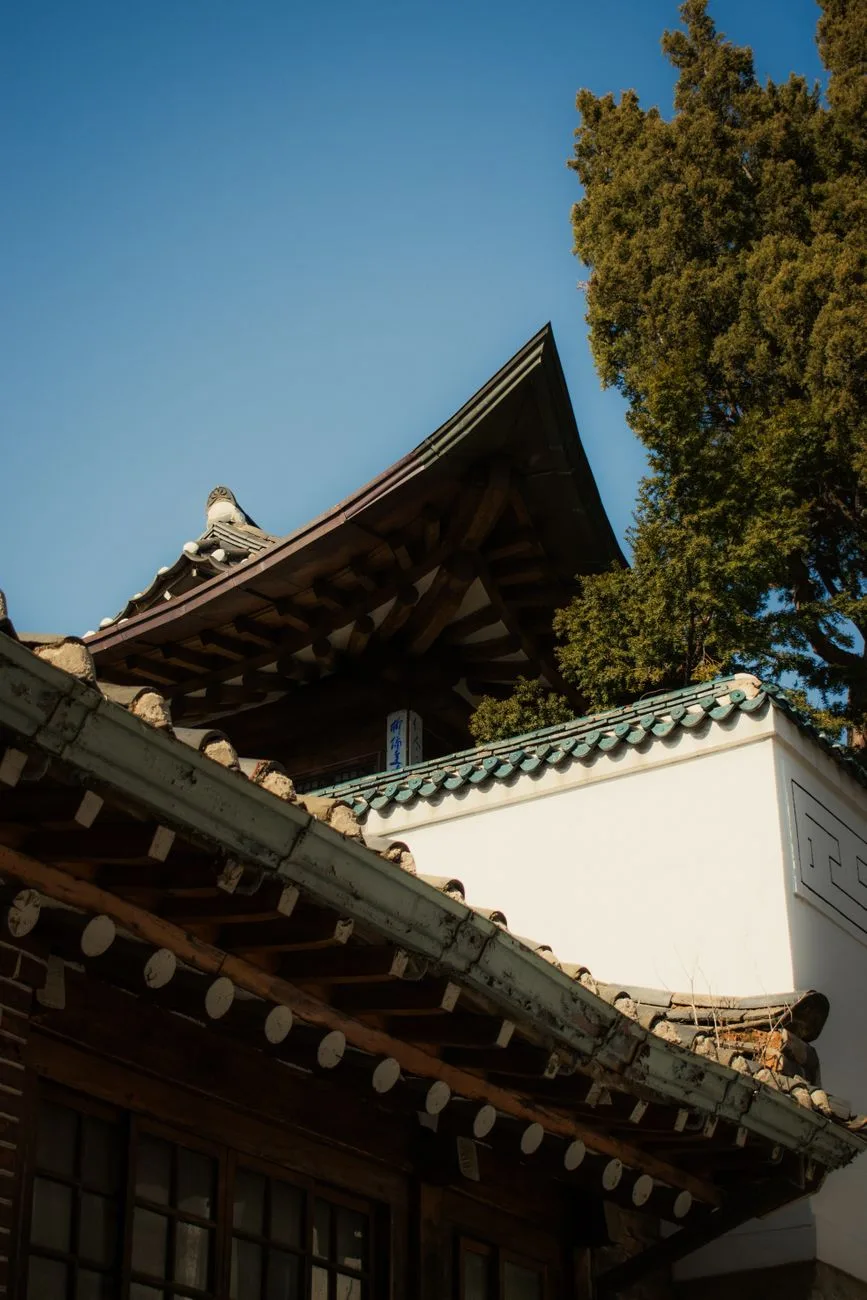
A hanok stay in Seoul means sleeping in a restored timber-frame house with a courtyard, heated floors, and paper-screened doors, concentrated in four areas: Bukchon, Seochon, Ikseon-dong, and Eunpyeong. Budget roughly ₩80,000–150,000 a night for a guesthouse room and ₩300,000 upward for a boutique hanok hotel. For most trips, two nights beats five.
Before you book, the five things that decide the experience:
- Bukchon and Seochon put you a 10-minute walk from Gyeongbokgung and Changdeokgung. Eunpyeong is quieter and roomier but 40–50 minutes from Jongno.
- Below about ₩150,000 a night, shared bathrooms and floor bedding are the norm, not the exception.
- Check the property is registered as a 한옥체험업 (hanok experience business) with the district office.
- Small hanok have no 24-hour desk. A late Incheon arrival can leave you locked out.
- Luggage is the hidden cost: cobbled lanes, raised door sills, and in Bukchon a genuine hill.
What a hanok stay in Seoul actually involves
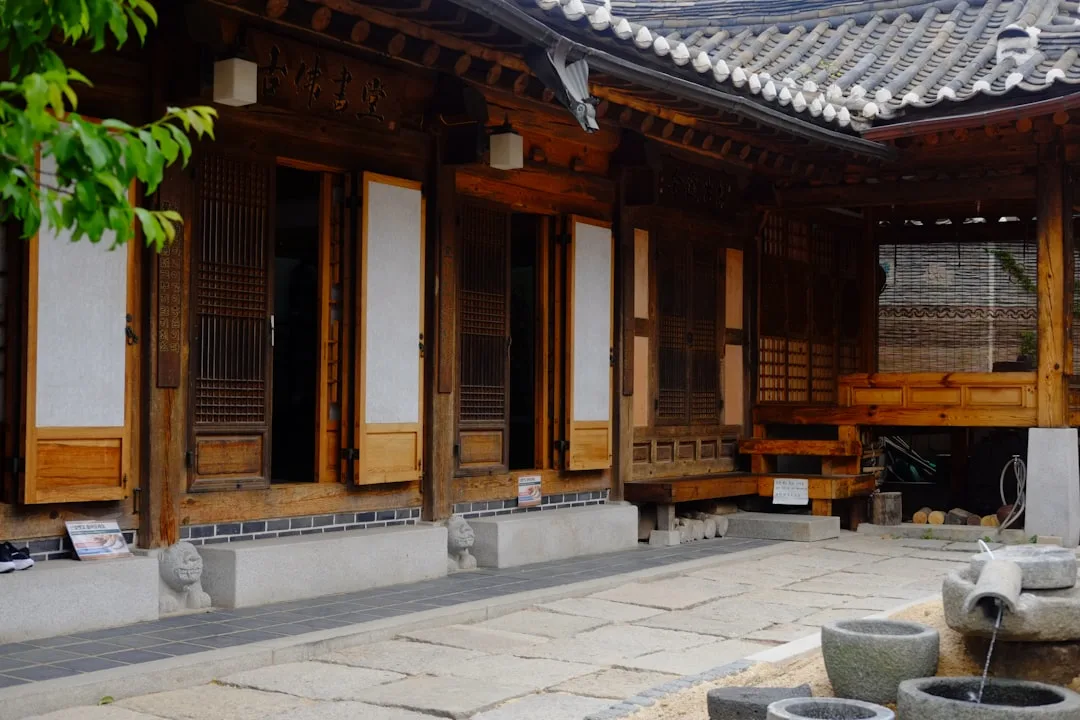
A hanok is a post-and-beam timber house with a tiled or thatched roof, built around a madang (open courtyard) with a raised wooden veranda called the daecheong or maru running along the rooms. Doors and windows are lattice frames covered in hanji, mulberry paper. Nothing about that is decorative. The layout is why the rooms feel bright and why sound carries between them.
Heating comes from ondol, the underfloor system that gave Korean housing its floor-sitting culture. Restored hanok run hot water through pipes under the floor from a gas boiler, so the floor is warm and the air at head height is not. Sleep on the yo (floor mattress) under an ibul quilt and January is comfortable. Sit up reading at midnight and you will want a jumper.
Most rooms have no bed frame. Bedding is folded into a closet by day and laid out at night, sometimes by staff, sometimes by you. Ceilings are low, thresholds are raised 10–20cm, and stepping up onto the maru is a real step.
The registration category worth checking
Under Korea's Tourism Promotion Act (관광진흥법), 한옥체험업 is a distinct registered accommodation category for traditional houses, licensed by the local district office (구청). A separate category, 외국인관광 도시민박업 (urban homestay for foreign tourists), legally hosts foreign guests only and is not restricted to hanok.
The distinction matters for two reasons. A registered hanok experience business has been inspected against fire and facility conditions, which is not trivial in a timber building with paper doors. And an unregistered short-term rental can be shut down between your booking and your arrival. Listings on booking platforms rarely display this. Ask the operator directly, or cross-check the property on the Korea Tourism Organization's official site at english.visitkorea.or.kr, which lists registered accommodation.
The four hanok districts, and who each one suits
| District | Nearest station | Character | Overnight options | Suits |
|---|---|---|---|---|
| Bukchon (북촌) | Anguk, Line 3 | Residential lanes on a slope between Gyeongbokgung and Changdeokgung | Guesthouses plus a handful of upscale hanok | First visit, palace-centred itinerary |
| Seochon (서촌) | Gyeongbokgung, Line 3 | Flatter, still a working neighbourhood of small restaurants and shops | Small family-run guesthouses | Quieter nights, easier luggage |
| Ikseon-dong (익선동) | Jongno 3-ga, Lines 1/3/5 | Dense alley grid converted to cafés and bars | Few rooms, and the alley is loud past midnight | Nightlife over sleep |
| Eunpyeong (은평한옥마을) | Gupabal, Line 3, then a short bus | Newly built hanok below Bukhansan, wide streets | Larger houses, whole-property rentals | Families, groups, hikers |
| Namsangol (남산골) | Chungmuro, Lines 3/4 | Museum park of relocated period houses | None. Day visit only | Seeing a hanok interior for free |
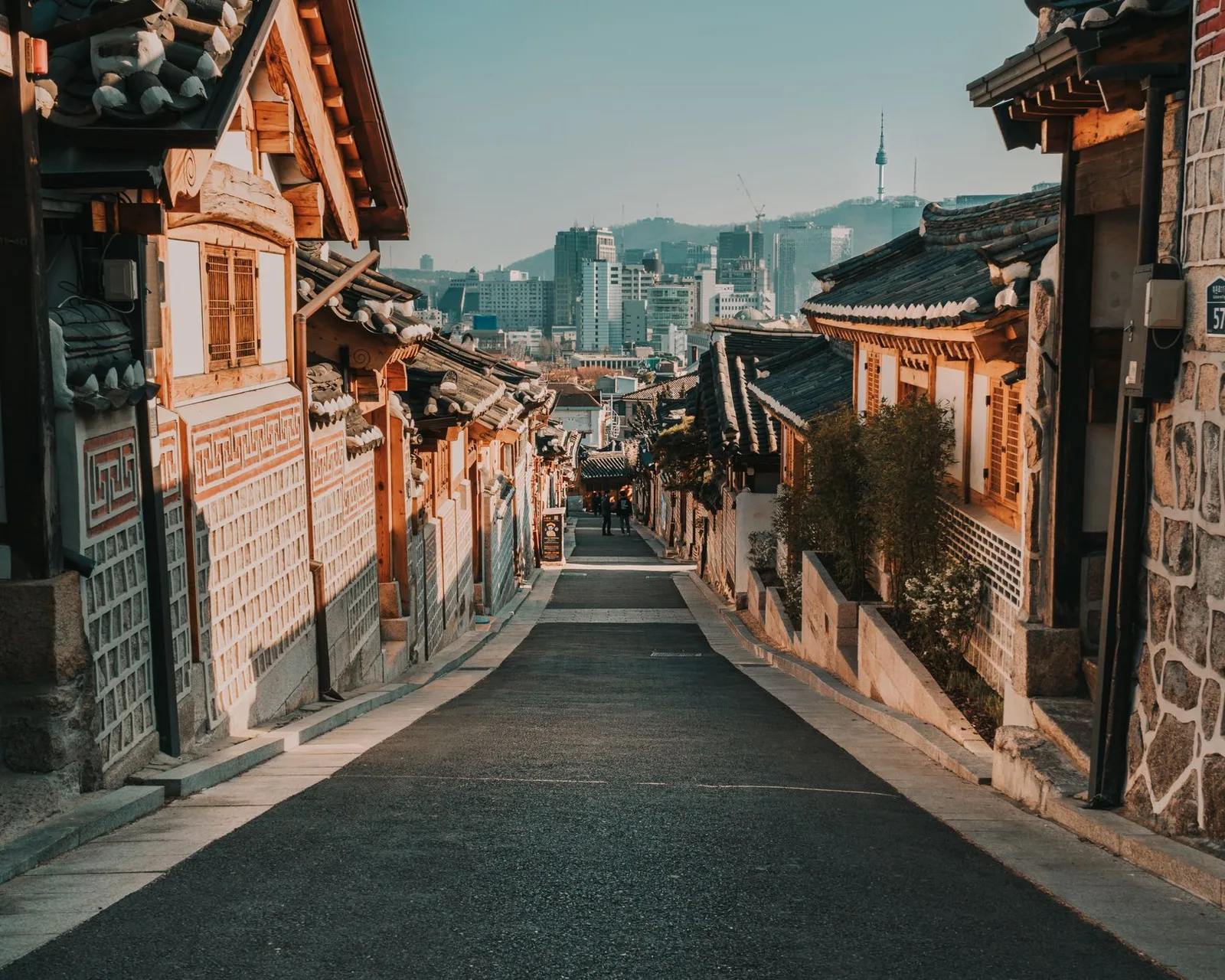
Bukchon is the default and the most compromised. The lanes are lived in by actual residents, and the volume of daytime photography pushed Jongno-gu to designate the most-photographed section, around Bukchon-ro 11-gil, as a special management zone in late 2024, limiting visitor access to daytime hours with penalties phased in afterwards. Guests of accommodation inside the zone are not the target of the rule, but signage, enforcement, and the terms have been revised more than once. Confirm the current position with the Jongno-gu district office before booking a room in those specific lanes.
Seochon is the underrated pick. It sits on the west side of Gyeongbokgung, is largely flat, has better everyday food than Bukchon, and puts you two stops from Seoul Station on Line 3 via a single transfer. If the appeal is the building rather than the postcard view, Seochon delivers the same architecture with fewer people outside the gate at 10am.
Eunpyeong is a different proposition entirely. The village was built from the 2010s onward, so the houses are new hanok with modern insulation, proper bathrooms, and sometimes beds. The trade-off is distance: Gupabal is the far end of Line 3, and a return trip to Jongno eats 90 minutes. For a wider view of how the districts compare to conventional hotel areas, see our guide to the best neighborhoods to stay in Seoul by travel style.
What a night costs, and what the price is actually buying
| Room type | Indicative nightly rate | Bathroom | Common minimum stay |
|---|---|---|---|
| Guesthouse room, shared bathroom | ₩60,000–100,000 | Shared, often across the courtyard | 1 night |
| En-suite guesthouse room | ₩100,000–170,000 | Private, small | 1–2 nights |
| Whole hanok rental, 2–6 guests | ₩250,000–500,000 | Private | 2 nights |
| Boutique hanok hotel with breakfast | ₩350,000–700,000+ | Private, sometimes with a soaking tub | 1 night |
Those bands reflect the spread of public listings for central Seoul rather than a quote from any one property, and they move sharply with season. Cherry blossom weeks in early April, Chuseok, and the late-October to early-November foliage window push rates to the top of each band and empty the good rooms months ahead. Verify the actual figure at booking; nothing here is a price guarantee.
What separates a ₩90,000 room from a ₩350,000 room is rarely the architecture. It is plumbing, insulation, and staffing: an en-suite bathroom built into the room rather than a converted outbuilding, a properly sealed modern window behind the hanji screen, air conditioning that can beat August humidity, and someone present when you arrive. At the top end you are also buying a served Korean breakfast and, at places like Rakkojae in Bukchon, a garden you can sit in without stepping into a public lane.
The cheapest hanok rooms are cheap for a specific reason: the bathroom is a walk across an open courtyard in the rain, and the wall between you and the next room is a wooden frame with paper on it.
Guesthouse, hanok hotel, or a night at a temple instead?
For a first Seoul trip of four nights or more, the strongest configuration is two nights in a hanok in Bukchon or Seochon and the rest in a conventional hotel near a subway interchange. Two nights is enough to wake up to a courtyard, eat breakfast on the maru, and walk to Changdeokgung before the gates open properly. Five nights is enough for the floor bedding, the shared bathroom, and the 7am neighbour to stop being charming.
The arithmetic on a five-night trip:
- Five nights hanok at ₩130,000 = ₩650,000
- Two hanok nights (₩260,000) plus three hotel nights at ₩150,000 (₩450,000) plus one cross-town taxi of about ₩7,000 = ₩717,000
The split costs roughly ₩67,000 more across the trip, around US$48 at early-2026 rates, and buys three nights of a lift, a 24-hour desk, luggage storage, and a bed on legs for the back half of the trip when your step count is highest. That is the trade I would make. If the budget is fixed and ₩67,000 matters more than sleep, stay in Seochon rather than Bukchon for the whole stay: flatter streets, quieter mornings, same building type.
This advice fails in one clear case. Travelling with a toddler, or with anyone who has knee, hip, or balance problems, makes a traditional hanok a poor fit. Floor bedding means getting down and up from ground level several times a day, thresholds are trip hazards, and there is no lift anywhere in a single-storey courtyard house. Eunpyeong's newer builds with actual beds are the compromise; a normal hotel plus a daytime visit to Namsangol Hanok Village is the safer one.
A templestay is the other alternative people conflate with a hanok stay, and it is a different product. The programme is run by the Cultural Corps of Korean Buddhism at participating temples nationwide, with details and booking at templestay.com. Jingwansa, near Eunpyeong at the foot of Bukhansan, is the usual Seoul option. Expect a schedule: early wake-up, chanting, temple meals, no alcohol. It is a monastery, not accommodation with a monastery theme.
Booking and check-in, in the order small operators actually work
- Fix the dates against palace closing days first. Gyeongbokgung closes Tuesdays, Changdeokgung closes Mondays. A hanok stay whose whole point is proximity to the palaces is wasted on the wrong weekday. Our five-day Seoul itinerary built around palace closing days sets the pattern out.
- Book 6–10 weeks ahead for April and late October. Hanok properties have four to eight rooms. They sell out in a way a 300-room hotel does not.
- Message the host before paying with your flight arrival time, your luggage count and size, and whether you want floor bedding or a bed. Answers to those three questions predict the stay better than any review.
- Confirm the check-in window in writing. Many hanok staff a desk only from about 15:00 to 20:00 and hand out keypad codes outside it. Some genuinely cannot admit you after 22:00.
- Plan the last mile. Airport limousine buses stop on main roads, not in hanok lanes. From Incheon, the AREX to Seoul Station plus Line 1 and Line 3 to Anguk works until late evening; after that a taxi is the realistic option, and Seoul applies a late-night surcharge on metered fares after 22:00 that steps up again around midnight, per Seoul Metropolitan Government fare rules.
- Ask where luggage goes on departure day. Small hanok often have no secure store room, and dragging two large cases down Bukchon's slope to Anguk Station Exit 2 at 11am is a specific kind of unpleasant.
The things that surprise people
Sound. A hanji door is a paper membrane. Conversations in the courtyard, a suitcase zip at 6am, and rain on the tile roof all arrive in your room unfiltered. Light sleepers should bring earplugs and request a room off the courtyard.
Bukchon's daytime population. By 10:00 the main lanes carry tour groups and hanbok rental parties. Your quiet historic street is a photo location for six hours a day, and Ikseon-dong reverses the pattern: dead by morning, loud until 1am from the bars in the alley.
January is genuinely cold. Korea Meteorological Administration climate normals put Seoul's average January low in the −5°C range, and hanok bleed heat through the doors even with modern glazing behind the screens. The floor will be warm. Ask whether the room has a supplementary heater, and check the current outlook at kma.go.kr.
The rainy season and the courtyard. The jangma monsoon runs from late June into late July. An open courtyard in a downpour means a wet dash to a shared bathroom, and mosquitoes arrive with the humidity.
Bathrooms are the real variable. "Private bathroom" in a converted hanok sometimes means a modern unit built into an annexe reachable only from outside. Ask for a photo showing the door from the room.
Cancellation terms are stricter. Small properties often hold non-refundable deposits or require 7–14 days' notice, because one empty room out of five is 20% of the night's revenue.
Frequently asked questions
Can you stay overnight inside Bukchon Hanok Village?
Yes. Bukchon is a residential neighbourhood with licensed hanok guesthouses and a small number of upscale hanok hotels, not a closed museum site. Visitor-hour restrictions introduced by Jongno-gu apply to sightseeing traffic in designated lanes rather than to registered guests, but confirm the current rules with the district office if your property sits inside the managed zone.
Is Namsangol Hanok Village somewhere you can sleep?
No. Namsangol, near Chungmuro Station on Lines 3 and 4, is a public park of period houses relocated from elsewhere in Seoul, open for daytime visits and cultural programmes. There are no guest rooms. It is the right place to see a hanok interior at no cost before deciding whether to book one.
Do hanok stays have private bathrooms and Wi-Fi?
Wi-Fi is close to universal in Seoul hanok. Private bathrooms are not: below roughly ₩150,000 a night, sharing is common, and the bathroom may sit across the courtyard. Confirm both in writing before paying, and ask specifically whether the private bathroom is inside the room or in a separate structure.
How much does a hanok stay in Seoul cost per night?
Guesthouse rooms in central Seoul commonly list between ₩60,000 and ₩170,000 depending on whether the bathroom is shared, whole-house rentals run ₩250,000–500,000, and boutique hanok hotels with breakfast start around ₩350,000. Rates climb during cherry blossom season, Chuseok, and autumn foliage weeks. Check live listings for the exact figure.
Can you do a hanok stay with large suitcases?
With difficulty in Bukchon, more easily in Seochon or Eunpyeong. Lanes are narrow and often cobbled, Bukchon climbs, and rooms rarely have space for two open 28-inch cases plus floor bedding. Travellers with heavy luggage should stay a hotel night on arrival, use luggage delivery or station lockers, and move to the hanok with a smaller bag.
Rates, transport fares, and district access rules described here change. Verify current figures with the operator and with the Korea Tourism Organization, Jongno-gu office, or Seoul Metropolitan Government before you commit money to a booking. This is general travel information, not personalised advice.