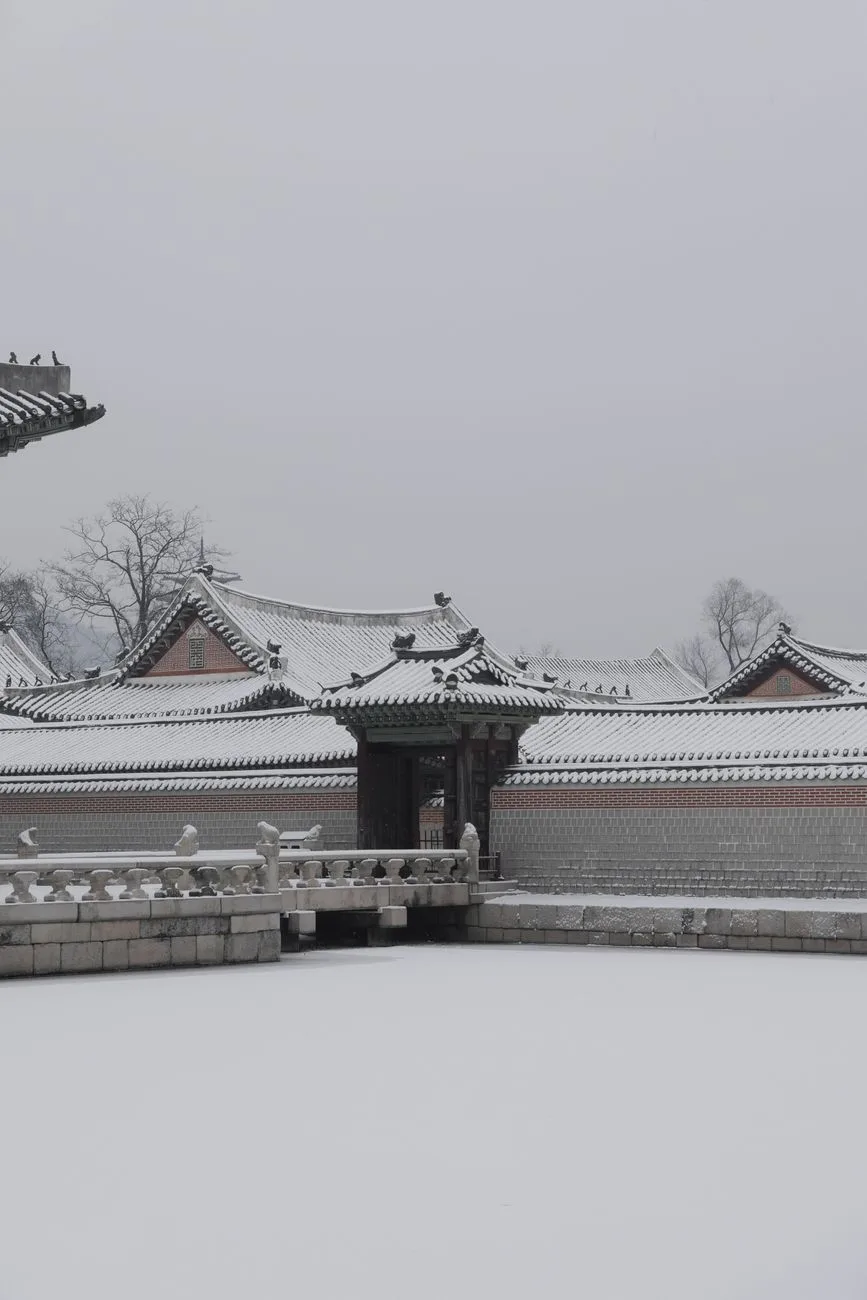
A South Korea in winter itinerary works best as five nights in Seoul plus two nights near a snow destination, with outdoor plans placed around the shortest daylight and coldest hours. For a first seven-day trip, use Seoul for culture and food, then add Pyeongchang or a confirmed January festival only after its operating dates are published.
The 7-day route at a glance
This title promises a usable seven-day route, including the order of overnight bases, winter-specific timing, a costed Seoul day, and a decision rule for adding a snow trip.
Key takeaways
- Base the first five nights in Seoul to avoid packing and intercity transfers during cold weather.
- Put palaces, markets, and neighbourhood walks in the middle of the day. Save indoor museums, cafés, and dinner for after dark.
- Choose Pyeongchang for a mountain-and-snow stay. Choose Seoul only for a city-focused trip with one short outdoor activity.
- Do not build a 2026–27 plan around Hwacheon, Pyeongchang Trout, Cheorwon, Taebaek, or Chilgapsan festivals until their official dates are published.
| Day | Overnight base | Main plan | Winter priority |
|---|---|---|---|
| 1 | Seoul | AREX arrival, settle near a subway line | Keep the first evening local |
| 2 | Seoul | Gyeongbokgung, Bukchon area, Gwanghwamun | Visit the palace before its early closing |
| 3 | Seoul | Gwangjang Market, Jongno, Seoul Plaza | Use food stops to warm up |
| 4 | Seoul | Museum or shopping district, night city walk | Keep one indoor anchor |
| 5 | Seoul | Flexible snow or festival day | Use only confirmed events |
| 6 | Pyeongchang or Seoul | Snow destination, ski area, or city alternative | Avoid same-day return pressure |
| 7 | Seoul or airport area | Return to Seoul, AREX departure | Leave margin for weather and luggage |
The route keeps the only potentially weather-sensitive overnight excursion at the end. If conditions change, Days 6 and 7 can become two more Seoul days without breaking the trip.
Choose December, January, or February by what the trip needs
The Korea Tourism Organization defines winter as December through February, calls it cold and arid, and identifies January as the coldest month. Its Seoul climate figures put average high/low temperatures at 4.2°C and −3.4°C in December, 2.1°C and −5.5°C in January, and 5.1°C and −3.2°C in February. Korea Tourism Organization’s winter travel guide is the source for these averages, current as accessed in August 2026.
| Travel priority | Strongest month | Why | Watch for |
|---|---|---|---|
| City lights and early winter atmosphere | December | Less severe average cold than January | Festival dates can shift |
| Snow-focused trip | January | Coldest average conditions | Exposed outdoor days |
| Palaces, markets, and milder walks | February | Highest average winter daytime temperature | Lunar New Year closures |
December is the right pick for a Seoul-first itinerary with winter lights and a less punishing daytime temperature. January fits travellers willing to dress for sub-zero mornings in exchange for the strongest chance of a true winter setting. February is the practical choice for a palace-and-food route, except around Seollal.
In 2026, Seollal fell on February 16–18. The Korea Tourism Organization notes that many businesses close and domestic travel rises as people return to hometowns. Its Seollal guide explains the holiday effect. A future Seollal date changes each year, so this itinerary fails if it assumes normal shop hours during that period.
For broader season-by-season planning, read Korea in Winter Time: When to Go, What It Costs, and How to Plan. This page focuses on the seven-day sequence once the travel window is chosen.
Days 1 and 2: arrive in Seoul and protect the palace day
Use Day 1 for arrival and one uncomplicated district near the hotel. The AREX airport connection options published by the Seoul Tourism Organization list the regular train from Incheon International Airport to Seoul Station at ₩4,150–4,750 and about 60 minutes, while the direct train is ₩9,500 and about 40 minutes, as of August 2026. The regular train is the cost-led choice; the direct train suits a late arrival, a tight hotel check-in, or a traveller who values the 20-minute saving.
Day 2 should start at Gyeongbokgung Palace. Its November–February hours are 09:00–17:00, with last entry at 16:00; it closes on Tuesdays. Adult admission is ₩3,000, according to the Korea Tourism Organization listing for Gyeongbokgung Palace, current as of August 2026. Arriving at 09:00 creates room for the palace, the Gwanghwamun area, and an indoor stop before sunset without rushing.
A Tuesday arrival changes the order: move the palace to Day 3 and make Day 2 a market and museum day. That small swap is more reliable than trying to squeeze the palace into the departure morning, when winter closing times leave little recovery room.
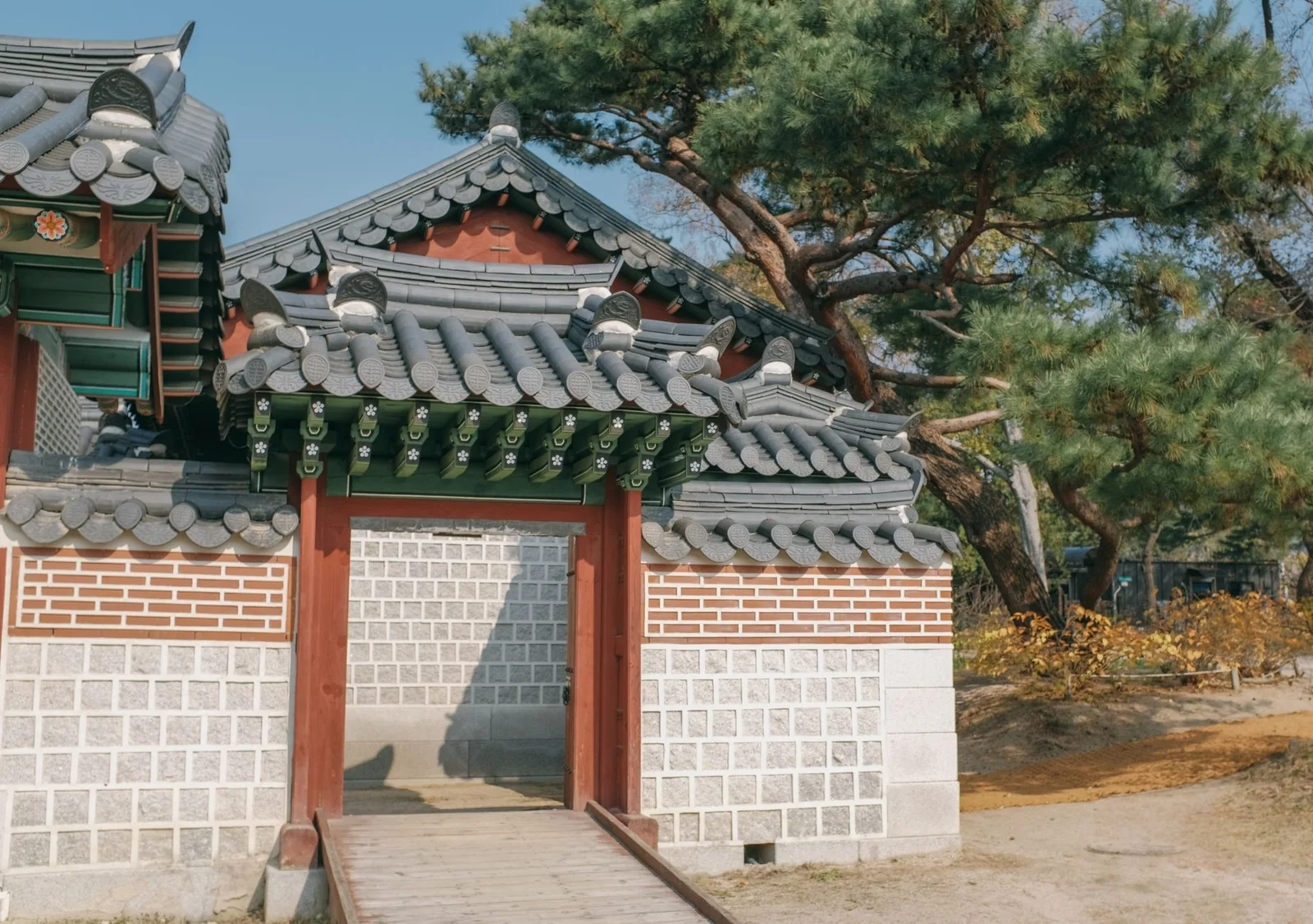
Wear insulated footwear rather than fashion boots with smooth soles. Palace stone paths, side streets, and subway entrances can be slippery after snow or thaw. A rechargeable battery also belongs in the day bag because cold reduces phone runtime, and navigation is most needed when hands are covered.
Days 3 to 5: build Seoul days around warmth, food, and flexible events
Day 3 is the food-led city day. Start later than the palace day, visit Gwangjang Market for lunch, then continue through Jongno or an indoor attraction. Gwangjang Market’s Food Alley operates daily from 09:00 to 23:00 KST, while the main market runs 09:00–18:00 and closes Sundays, according to the Seoul Tourism Organization’s Gwangjang Market page. The distinction matters: Sunday evening food remains possible, but a main-market shopping plan does not.
The market’s listed foods include gimbap, mung-bean pancake, tteokbokki, eomuk, sundae, yukhoe, and Korean-style meatballs. A specific option is Soonheenae Bindaetteok at 5 Jong-ro 32-gil: the Korea Tourism Organization lists it as open 09:00–21:00, with last order at 20:30, and identifies nokdu bindaetteok as its speciality. See the official listing. It makes more sense as a lunch or early dinner stop than as a late-night fallback.
Day 4 needs one indoor anchor, such as a museum, department store, or café district, and one outdoor district walk. The rule is simple: place the outdoor walk between lunch and late afternoon; place the indoor activity before lunch or after sunset. This avoids wasting the warmest available hours in a building while preventing a full day outside in January cold.
Day 5 is the flexible Seoul day. As of August 2026, the Seoul Metropolitan Government announced a 59-day Seoul Winter Festival from December 4, 2026 to January 31, 2027, across the Hangang River, Gwanghwamun Square, Cheonggyecheon Stream, Seoul Plaza, Bosingak Pavilion, and DDP. The March 2026 Seoul announcement gives those details. Yet the city’s annual-events page lists December 14, 2026 to January 31, 2027 for the same festival, creating a ten-day conflict. Treat December 14 as the safer planning assumption until Seoul resolves the discrepancy.
Seoul Plaza is a useful optional stop, not an itinerary foundation. The city’s annual-events page says 2026 rink admission starts at ₩1,000, but it does not publish 2026–27 operating dates. The 2025–26 rink ran from December 19 to February 8 and charged ₩1,000 per hour including skate and helmet rental, but that schedule is historical rather than a promise for the following winter. Seoul Metropolitan Government’s 2025 opening notice documents the completed season.
The worked Seoul transit-and-sightseeing calculation
This calculation answers a narrow but useful question: what do the known, base-fare transport and entry items cost for one Seoul itinerary day plus airport transfers? It excludes hotel, meals, shopping, distance-based subway supplements, and any snow-destination transport.
| Item | Input used | Cost (KRW, Aug 2026) |
|---|---|---|
| AREX regular train, airport to Seoul | 1 × ₩4,750 | ₩4,750 |
| AREX regular train, Seoul to airport | 1 × ₩4,750 | ₩4,750 |
| Seoul subway card rides | 6 × ₩1,400 | ₩8,400 |
| Gyeongbokgung adult entry | 1 × ₩3,000 | ₩3,000 |
| Seoul Plaza rink historical-price reference | 1 × ₩1,000 | ₩1,000 |
| Total | ₩9,500 + ₩8,400 + ₩3,000 + ₩1,000 | ₩21,900 |
The result is ₩21,900 for those defined items. The Seoul subway fare guide lists a ₩1,400 base fare for passengers over 19 using a transportation card and ₩1,500 with a single-use ticket, with operation around 05:30 to midnight, as of August 2026. Six rides use the base fare only; a longer trip can add a distance charge.
The decision is straightforward. Buy and use a transportation card if the itinerary includes multiple subway or bus rides, because the listed base fare is ₩100 lower per ride than a single-use ticket. For card purchase, reload, and refund rules, use How to Use a T-money Card in Korea.
Days 6 and 7: decide whether a snow destination earns two nights
Add a two-night snow destination only if snow, skiing, or a winter festival is a central reason for travelling. Pyeongchang is the cleaner choice for a mountain-oriented stay because it avoids treating a distant activity as a rushed day trip. Keep Seoul as the base if the trip’s main value is palaces, markets, neighbourhoods, and restaurants.
| Choice | Choose it if | Base nights | Verdict |
|---|---|---|---|
| Seoul only | City culture and food lead the trip | 7 | Yes |
| Seoul plus Pyeongchang | Snow setting or ski time is essential | 5 + 2 | Yes |
| Seoul plus a festival day trip | Official festival dates and transport align | 6 + 1 | Optional |
| Multiple distant festivals | The trip has only seven days | 0 | No |
The old festival calendar cannot supply a future itinerary. Korea Tourism Organization’s completed 2025–26 schedule included Pyeongchang Trout Festival from January 1 to February 2, Hwacheon Sancheoneo Ice Festival from January 10 to February 1, Cheorwon Hantangang River Ice Trekking Festival from January 17 to 25, Taebaeksan Mountain Snow Festival from January 31 to February 8, and Chilgapsan Ice Fountain Festival from December 24 to February 22. Its winter-festival guide has not published 2026–27 dates as of August 19, 2026.
That is why a confirmed Pyeongchang overnight is safer than an itinerary that strings together several tentative festival dates. If a chosen festival is later confirmed, substitute it for Day 6, keep Day 7 as the return buffer, and do not book a non-refundable onward connection immediately after the event.
What can derail this itinerary
The common failure is overloading every daylight hour with outdoor landmarks. Winter daylight, early attraction closures, wind, and wet pavement all make a summer-style walking route less forgiving.
- Tuesday palace closure: Gyeongbokgung is closed Tuesdays. Swap Days 2 and 3 rather than losing the visit.
- Sunday market assumption: Gwangjang’s Food Alley is open daily, but the main market closes Sundays.
- Festival-date confusion: Seoul’s two official pages conflict on the 2026 festival opening date. Do not plan a December 4 activity that cannot move.
- Seollal scheduling: closures and domestic travel make a fixed restaurant, intercity ticket, or small-shop plan fragile.
- Airport transfer optimism: use the 60-minute AREX regular-train figure only after adding time for immigration, baggage, station access, and hotel check-in.
A seven-day winter trip succeeds when the city days remain interchangeable. Keep the palace day, market day, and flexible event day as separate modules, then shift them around weather and closures.
FAQ
Is seven days enough for South Korea in winter?
Yes. Seven days is enough for five Seoul nights and two nights in one snow destination, or a full Seoul trip with flexible seasonal activities. It is not enough to comfortably combine Seoul, several distant ice festivals, and Jeju without turning the journey into transfers.
What should a first-time visitor do in Seoul in winter?
Start with Gyeongbokgung in the morning, Gwangjang Market at lunch, and one indoor activity after dark. This order uses the palace’s 17:00 winter closing time and keeps food or museums available when the temperature drops.
Is January too cold for a South Korea itinerary?
No, provided the itinerary limits long exposed stretches. Seoul’s average January low is −5.5°C, according to the Korea Tourism Organization, so a plan built around midday outdoor visits and indoor evening stops is more realistic than an all-day walking route.
Should the itinerary include a winter festival?
Only after the official edition dates are published. The Korea Tourism Organization’s listed festival dates are for the completed 2025–26 season, not confirmations for 2026–27, and Seoul’s 2026 festival pages disagree on the opening date.
Is a T-money card worth using on this route?
Yes for repeated city travel. As of August 2026, the listed adult base subway fare is ₩1,400 with a transportation card versus ₩1,500 for a single-use ticket, so six base-fare rides save ₩600 before convenience is considered.
This is general travel information, not a guarantee of weather, attraction operations, transport capacity, or personal safety.