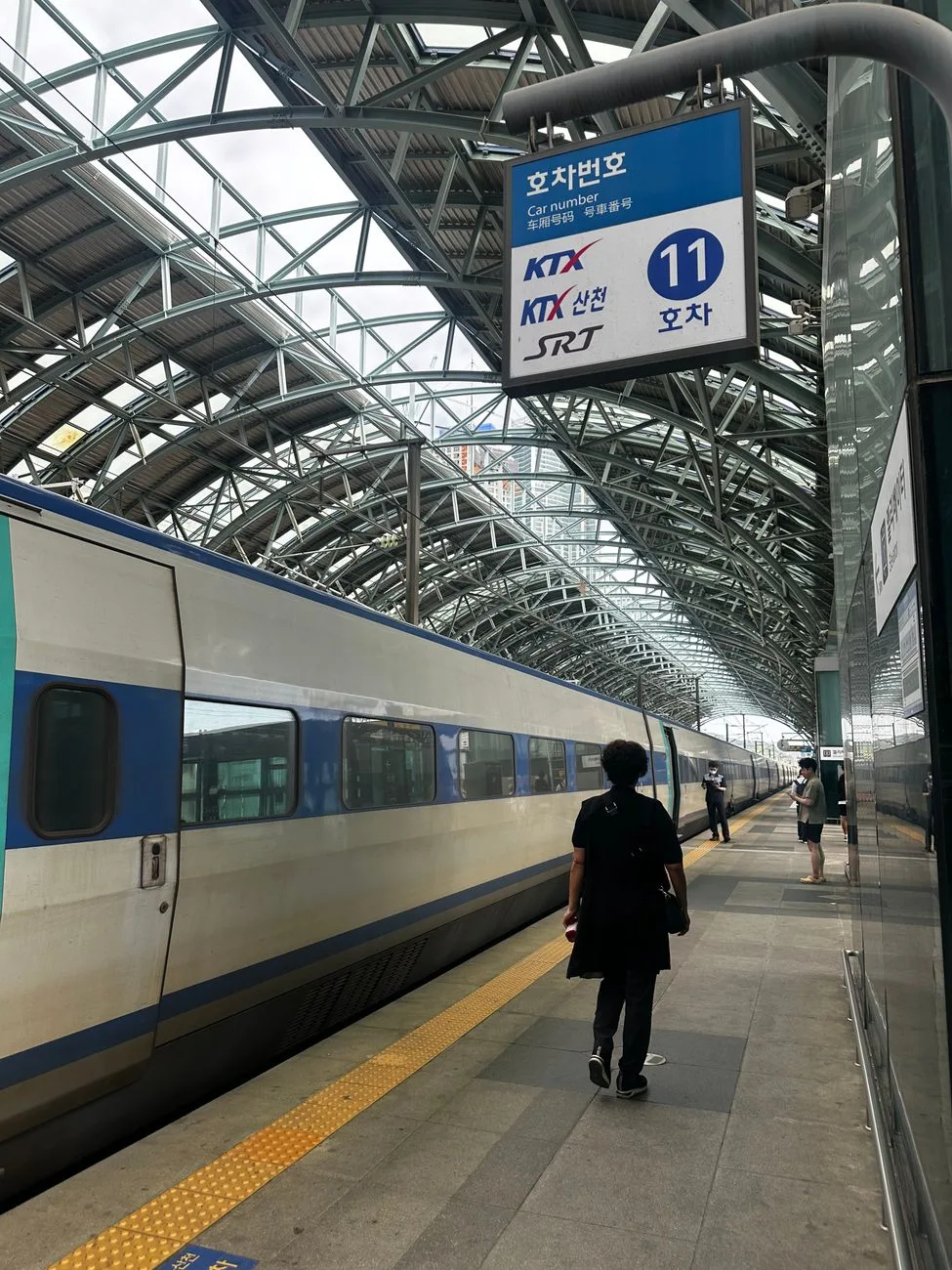
These Korea traveling tips reduce the decisions that most often waste a short trip: choose dates around holidays, settle entry status before flying, use a Seoul transit pass only once the ride count supports it, and build each day around one district. For a five-day, 15-ride Seoul stay, the Climate Card saves ₩5,250 after the card cost, as of August 2026.
The short plan
- Put Seoul, a day trip, and one regional destination on separate days. Long cross-city transfers make a short itinerary feel smaller.
- Avoid treating a festival date as a quiet sightseeing date. Lodging, transport, and crowd levels change around large events and public holidays.
- Count planned Seoul rides before buying an unlimited pass. The five-day Climate Card only beats individual base-fare rides after 12 rides when the ₩3,000 physical card is included.
- Use a reloadable transit card for a mixed itinerary, especially when Seoul is only one stop on a wider Korea route.
- Keep one food stop flexible each day. Markets and small restaurants work better as nearby choices than as cross-city appointments.
Korea traveling tips that make the itinerary coherent
The most useful planning unit in Korea is a district day, not a list of famous places. Seoul has dense subway coverage, but moving from Bukchon to Gangnam to Hongdae in one day still consumes time at station entrances, on platforms, and in transfers. Choose one anchor reservation, then add places within the same part of the city.
A five-day first trip has room for Seoul, one nearby excursion, and one overnight or long day outside the capital. It does not have room for Seoul, Busan, Jeju, Gyeongju, and a different day trip every morning without turning most daylight hours into transport time.
For a Seoul-only base, group sights this way:
- Jongno and central Seoul: Gyeongbokgung, Bukchon, Insadong, Jogyesa, and the Cheonggyecheon area.
- Yongsan and Yeouido: museums, the Han River, shopping, and evening river views.
- Gangnam and southern Seoul: COEX, Bongeunsa, Seongsu connections, and the southern business districts.
- Hongdae and western Seoul: university streets, cafés, music venues, and an airport-rail connection.
A route that crosses the Han River twice for minor stops is a warning sign. Move one of those stops to another day or replace it with something close to the day’s anchor.
For airport arrival, the transfer method depends on terminal, hotel area, luggage, and landing time. The route comparison in how to get to Gangnam from Incheon is useful when the first hotel is south of the river. Keep the arrival day light: hotel check-in, a nearby meal, cash or card setup, and an early night are enough.
Choose Korea travel dates around weather, holidays, and fixed events
Korea Tourism Organization describes spring as early March to early May. In 2026, the Jinhae Gunhangje Festival runs March 27 to April 5, which makes that period a deliberate festival trip rather than a low-friction side excursion. Korea Tourism Organization’s 2026 spring guide is the source for those dates.
May has a more workable Seoul event choice. The Korea Tourism Organization’s listing for Seoul Yeon Deung Hoe schedules the festival for May 8–25, 2026, with the Lotus Lantern Parade on May 16 around Jogyesa Temple and Jongno. Book accommodation in central Seoul before committing to that weekend.
Summer events are concentrated enough to shape a route. The Boryeong Mud Festival is scheduled for July 24–August 9, 2026, and the Hangang River Festival for August 1–16, 2026. Korea Tourism Organization also lists the Incheon Pentaport Rock Festival for July 31–August 2. These dates can justify a west-coast or Seoul-focused itinerary, but combining all three adds event travel rather than sightseeing time.
Autumn has a sharper holiday constraint. Chuseok falls on September 24–26, 2026. The Korea Tourism Organization public-holiday guidance states that government offices and banks close, while some businesses close for consecutive days during Seollal and Chuseok. A visitor arriving for Chuseok should reserve intercity transport and accommodation before arrival, and should not build the plan around administrative errands.
Weather still affects packing and walking tolerance. The Korea Meteorological Administration’s 1991–2020 normal for Seoul records an annual mean temperature of 12.8°C and annual precipitation of 1,417.9 mm. Carry a packable rain layer in every season and put outdoor viewpoints earlier in the day when the forecast is clear. The normal is climate context, not a forecast for a particular travel date.
Settle entry status before booking nonrefundable travel
Entry documentation is determined by passport and travel purpose. As of August 2026, the Ministry of Justice K-ETA notice extends the temporary K-ETA exemption for countries and regions already eligible for exemption through December 31, 2026, Korea Standard Time.
That exemption is not universal. It applies only to the nationalities and regions covered by the policy, so a traveller should establish passport eligibility before assuming an arrival-card process. The same Ministry of Justice notice says an eligible traveller can still apply for K-ETA and that doing so brings benefits including no arrival-card submission; an application fee applies.
Prepare these details in one note before departure:
- Passport validity and exact passport nationality.
- Arrival flight number and the first Korean accommodation address.
- A payment method that works internationally and a backup card stored separately.
- The hotel name in English and Korean, plus a saved map pin.
- Any prescription documentation or airline-specific baggage requirements relevant to the trip.
The failure mode is solving this at the airport. An itinerary can absorb a rain shower; it cannot absorb an unresolved permission-to-board issue.
Calculate whether Seoul’s Climate Card actually saves money
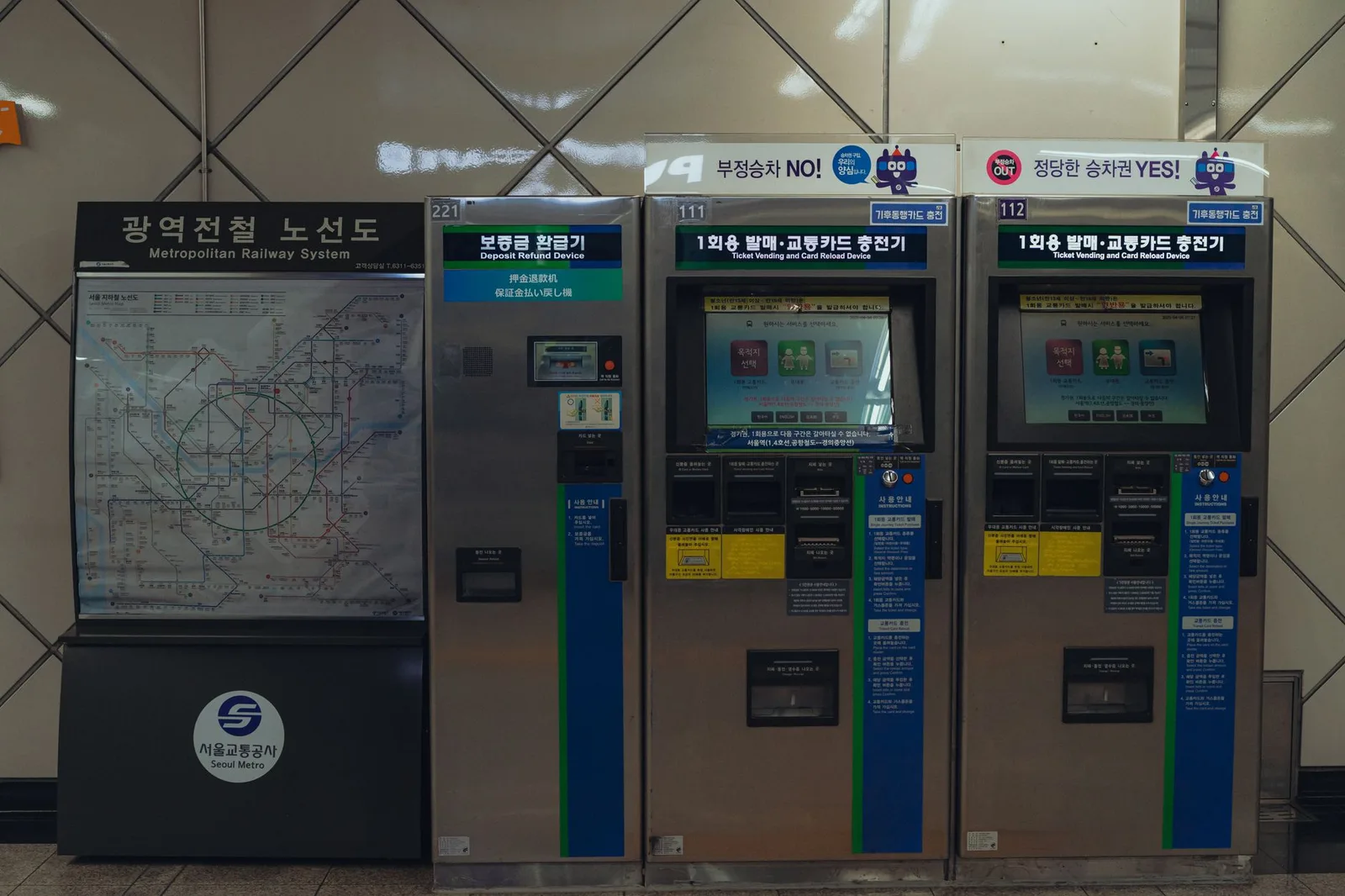
A transit card is the flexible default for airport trips, regional travel, and a trip with only a few Seoul rides. Seoul’s adult subway base fare is ₩1,550 with a transit card and ₩1,650 for a single ride, effective June 28, 2025. Seoul Metropolitan Government’s subway fare page also states that the base range is 10 km and an additional ₩100 applies for every 5 km beyond it.
The short-term Climate Card is a different decision. As of August 2026, Seoul Metropolitan Government prices it at ₩5,000 for one day, ₩8,000 for two, ₩10,000 for three, ₩15,000 for five, and ₩20,000 for seven. A physical card costs ₩3,000 separately, and short-term passes exclude Ttareungi bike and Hangang Bus use. Seoul Metropolitan Government’s Climate Card guidance says these short-term passes can be bought with internationally issued credit cards.
This table answers which choice fits the number of Seoul base-fare rides, assuming a new physical Climate Card.
| Seoul plan | Individual base fares | Climate Card cost | Better choice |
|---|---|---|---|
| 2 days, 4 rides | ₩6,200 | ₩11,000 | No |
| 3 days, 9 rides | ₩13,950 | ₩13,000 | Yes |
| 5 days, 10 rides | ₩15,500 | ₩18,000 | No |
| 5 days, 15 rides | ₩23,250 | ₩18,000 | Yes |
| 7 days, 14 rides | ₩21,700 | ₩23,000 | No |
The table shows why a pass is not an automatic airport purchase. The five-day break-even point is 12 base-fare rides: 12 × ₩1,550 = ₩18,600, which exceeds the ₩15,000 pass plus ₩3,000 card.
Here is the full worked example for a five-night Seoul stay with three subway or bus rides per day:
- Individual fare: 15 rides × ₩1,550 = ₩23,250.
- Climate Card: five-day pass ₩15,000 + physical card ₩3,000 = ₩18,000.
- Saving: ₩23,250 − ₩18,000 = ₩5,250.
Choose the Climate Card for 12 or more eligible base-fare rides across the pass period. Choose a T-money card below that threshold, for trips with distance surcharges, or when the schedule includes airport and intercity travel. The practical steps for the latter are covered in how to use a T-money card in Korea, while Naver Map versus Kakao Map explains the map-app choice before arrival.
Build each day around reservations, not viral lists
Reserve only the items that punish last-minute changes: a popular dinner, a timed palace program, a KTX departure, or a festival ticket. Everything else should be an ordered shortlist in the same area. This approach preserves options if rain, fatigue, a missed train, or a line changes the day.
Set an arrival buffer before any paid reservation. In Seoul, the map pin might be close while the correct subway exit is across a large station or several floors below street level. A 20-minute margin prevents a small navigation error from consuming the reservation.
Intercity days need a different rule: one city per day. A Seoul-to-Yeosu trip is an all-day commitment even before local sightseeing; use the Seoul-to-Yeosu transport comparison when that route belongs in the plan. Jeju also deserves its own transport calculation rather than being treated as a day trip from the mainland.
Use food stops as local anchors, with a visible price check
Street food is useful for timing, not only for cost. It fills the gap between a museum and an evening reservation, but it should not be the only meal plan on a crowded weekend or holiday. Choose an area with several stalls or restaurants, then buy from a counter where prices are displayed and the order is clear.
The Korea Tourism Organization’s August 2026 food listing gives concrete Seoul reference prices. At Dosan Bunsik Dosan Park Branch in Gangnam, fried fish cake and Dosan tteokbokki are listed at ₩6,000. At Pungnyeon Ssal Nongsan near Bukchon, fried dishes, sundae, and rice tteokbokki are listed at ₩4,000 each. Its official Seoul street-food listing also lists Corn and Curry Hot Dog in Dongjak at ₩2,000 for a corn sticky-rice hot dog and ₩2,500 for a cheese version.
Those prices are examples at named venues, not a citywide promise. Use them to spot an order that is unexpectedly expensive before paying, not to predict every market bill. For a sit-down meal, point at a menu item or use a translation app for ingredients and spice level; allergy needs deserve clearer confirmation than a guessed translation.
Mistakes that cost more time than money
The first mistake is buying a rail pass or unlimited local pass before counting actual journeys. The second is scheduling a museum, a palace, a shopping district, and a night market in opposite corners of Seoul. The third is relying on an old social-media tip for entry rules or fares.
The dedicated review of Korea travel tips from Reddit that are out of date in 2026 is the right companion for that last problem. Official notices and fare pages change faster than a saved post.
A fourth mistake is assuming every restaurant accepts every foreign card. Carry a backup payment method, keep small purchases modest until payment works, and do not let a single famous food stop determine a cross-city detour. A short Korea trip succeeds when its commitments are few and its local options are many.
FAQ
Is five days enough for a first trip to Korea?
Yes. Five full days can cover Seoul well, include one nearby day trip, and leave room for one regional overnight or long excursion. It is not enough for a relaxed Seoul, Busan, Jeju, and Gyeongju circuit, so choose the destination that matches the trip’s main interest.
Should a visitor buy Seoul’s Climate Card?
Buy it for a five-day Seoul stay with at least 12 eligible base-fare rides after including the ₩3,000 physical-card cost. Use T-money for fewer rides, distance-heavy travel, and an itinerary with airport or intercity transport.
Does the 2026 K-ETA exemption apply to every visitor?
No. The temporary exemption through December 31, 2026 applies to countries and regions already eligible under the Ministry of Justice policy. Record passport nationality, arrival details, and first accommodation before finalizing flights, then use the official status applicable to that passport.