Most of the Korea travel advice circulating on Reddit is sound. The dating is the problem: threads written in 2023 and 2024 still surface first, and three of the most-repeated tips are now wrong. As of August 2026, K-ETA is waived for listed nationalities through 31 December, the paper arrival card no longer exists, and the Seoul subway base fare is ₩1,550, not ₩1,400.
Three things to do differently from what the old threads say:
- Do not pay for K-ETA if your passport is on the exemption list; the waiver runs to the end of 2026.
- Submit the e-Arrival Card instead of hunting for a paper form on the plane. It is free and valid 72 hours.
- Budget ₩1,550 per subway ride, and decide on the Climate Card using the 40-ride line explained below.
Which Korea travel tips on Reddit still hold in August 2026
This table takes the seven tips that appear in almost every Korea thread and checks each against the rule or price in force today.
| Tip you'll see repeated | Holds in Aug 2026 | What changed |
|---|---|---|
| Apply for K-ETA before flying | No | Waiver extended to 31 Dec 2026 |
| Fill in the paper arrival card in flight | No | e-Arrival Card mandatory since 1 Jan 2026 |
| Subway starts at ₩1,400 | No | ₩1,550 by card since 28 June 2025 |
| Buy a T-money card at any convenience store | Yes | Still the default; Climate Card is the rival |
| Tax refund starts at ₩30,000 | Partly | Sources disagree on a ₩15,000 floor |
| August is hot but survivable | No | August 2026 broke the national record |
| Call 1330 when stuck | Yes | Free tourism hotline, 24 hours in English |
The pattern is worth noticing: every stale item is a rule or a price that a government body changed, while the practical habits (T-money, the hotline) have held for years. Community advice ages badly exactly where the state moves.
Entry paperwork: the K-ETA waiver and the form that replaced the paper card
Korea's temporary K-ETA exemption now runs from 1 January to 31 December 2026 (KST), according to the notice published by the Consulate General of the Republic of Korea in Atlanta. Nationals of the exempted countries, the United States included, board without a K-ETA. The list is widely reported as 22 countries and territories, though at least one travel aggregator puts the figure near 67; the official K-ETA portal is the place to confirm your own passport before you decide.
Applying anyway is still an option, and it buys one concrete benefit: K-ETA holders are exempt from filing the arrival card. The fee is ₩10,000 (about US$7 at the August 2026 rate), it is non-refundable, and the portal states decisions generally arrive within 72 hours.
Everyone else files the e-Arrival Card. Korea's Ministry of Justice made it mandatory for all foreign nationals from 1 January 2026 and discontinued the paper form at the same time. The e-Arrival Card costs nothing and stays valid for 72 hours from submission, so it is filed in the three days before landing rather than months ahead. Because the government form is free, any site charging a service fee for it is not the government.
One genuinely unresolved item: the Q-Code health declaration. The U.S. Embassy in Seoul issued an alert on mandatory Q-Code or health declaration requirements in January 2025, and travel sources published in mid-2026 contradict each other on whether it still applies. There is no clear current government statement to point to, so treat a Q-Code request at check-in as possible rather than settled. For the wider paperwork picture, our guide on what to know before visiting Seoul covers the rest of the pre-departure list.
What a day in Seoul actually costs
Threads answer this with ranges. Korea has an official price series instead: the Korea Consumer Agency's 참가격 portal publishes average restaurant prices by region, and for Seoul in April 2026 it recorded kimchi-jjigae baekban at ₩8,654, jajangmyeon at ₩7,731, samgyeopsal at ₩18,154 per serving, and naengmyeon at ₩12,615, the highest of any region in the country.
A representative day, using those April 2026 Seoul averages plus four subway rides:
- Street-food breakfast at a market: ₩5,000
- Lunch, kimchi-jjigae baekban: ₩8,654
- Dinner, one serving of samgyeopsal: ₩18,154
- Four subway journeys at ₩1,550: ₩6,200
That totals ₩38,008 a day, or about US$27 at the 13 August 2026 exchange rate of 1,417.43 won to the dollar. The rate itself moved a lot this year, from a high of 1,559 to a low of 1,428, so the dollar figure ages faster than the won one.
The room is what breaks a budget, not the food. STR and CoStar data reported in October 2025 put the Seoul and Incheon average daily rate near ₩296,000 for September 2025, up 14.6% year on year, with occupancy at 81.6%. At that rate a hotel night costs close to eight times the day's food and transit combined, which is why the accommodation decision deserves more of your planning time than the restaurant one. Our breakdown of where to stay in Seoul the first time compares the three districts people argue about most.
For eating well without paying tasting-menu prices, the value tier is published. The MICHELIN Guide Seoul & Busan 2026, announced on 5 March 2026, lists 233 restaurants, of which 51 in Seoul and 20 in Busan hold a Bib Gourmand, the good-value designation. Only one Korean restaurant holds three stars, Mingles in Seoul.
The tax refund threshold nobody agrees on
Korea's VAT is 10%, and departing visitors can reclaim part of it. The minimum purchase is where sources split: some 2026 guides state ₩15,000 per transaction, others hold to ₩30,000. Plan on ₩30,000 and treat anything lower as a bonus.
The part that is documented is the instant in-store refund. The Ministry of Economy and Finance doubled the immediate refund limits from 1 January 2024, lifting the cap from ₩500,000 to ₩1,000,000 per purchase and from ₩2,500,000 to ₩5,000,000 in total per stay. On a ₩1,000,000 purchase the embedded VAT is ₩90,909 (the price divided by 11), but agency fees eat into it, so net cash back lands around 4% to 7% of the ticket price, or ₩40,000 to ₩70,000. Above ₩1,000,000 in a single shop you fall back to the airport counter.
T-money or the Climate Card: where the 40-ride line falls
Seoul Metropolitan Government's fare page lists the current numbers: the subway base fare is ₩1,550 by transit card and ₩1,650 for a single-journey ticket, effective from the first train on 28 June 2025, with city buses at ₩1,500, village buses at ₩1,200, and standard taxis starting at ₩4,800 for the first 1.6 km. The same page grants a 20% discount on the base fare for a first card tap before 06:30, which is worth knowing if you are heading to an early KTX.
The Climate Card is the unlimited alternative. Seoul's own Climate Card page prices the physical card at ₩3,000 and the 30-day passes at ₩62,000 for subway and bus, or ₩65,000 with Ttareungi bike share included. Short-term tourist versions covering 1 to 7 days sell for ₩5,000 to ₩15,000.
The arithmetic is clean. ₩62,000 divided by ₩1,550 is exactly 40 subway rides, so the monthly pass wins above 40 journeys in 30 days, or about 1.4 a day. The 7-day tourist tier at the top of its range, ₩15,000, breaks even at fewer than ten rides across the whole week. Almost every visitor clears that on day two.
Where it fails: the pass stops at Seoul's boundary. Airport transfers, Gyeonggi buses, and trips out to Suwon or Everland are not covered, so a heavy day-trip itinerary erodes the advantage fast. AREX express to Incheon Airport ran ₩13,000 at the machine in 2026 (about ₩11,500 booked online), taking 43 minutes from Terminal 1 and 51 from Terminal 2, while the all-stop service costs up to ₩5,350 for 59 to 66 minutes. Intercity rail is separate again: Seoul to Busan by KTX was listed at ₩59,800 one way in standard class in 2026, about 2.5 hours. Our Seoul to Gwangju fare comparison shows how the same maths plays out on a shorter corridor.
Verdict: buy the Climate Card if you are staying inside Seoul for four days or more. Stay on T-money if your trip is built around day trips. Either way, budget the trip properly using our seven-day Korea cost breakdown.
When to go, now that August 2026 broke the record
The old thread consensus was that Korean summer is humid but manageable. That advice predates this year. The Korea Meteorological Administration recorded 42.5°C at Yangsan, South Gyeongsang, on 2 August 2026, the highest temperature in 122 years of observation, and Yangsan became the first place in the country to pass 40°C on five consecutive days. Seoul itself topped 40°C on 7 August 2026, with 40.2°C in Nowon District, and KMA issued its highest-level heat warning that morning.
The ten-day picture matters more than any single reading. From 1 to 10 August 2026, the nationwide average temperature was 29.1°C, the hottest such stretch since nationwide observation began in 1973, and 32 locations exceeded 40°C. Forecasters attributed it to the North Pacific High and the Tibetan High acting at once.
So the honest recommendation for 2027 planning is narrow: late September to early November, or late March to mid-April. Skip mid-July to mid-August unless the trip is indoor-heavy.
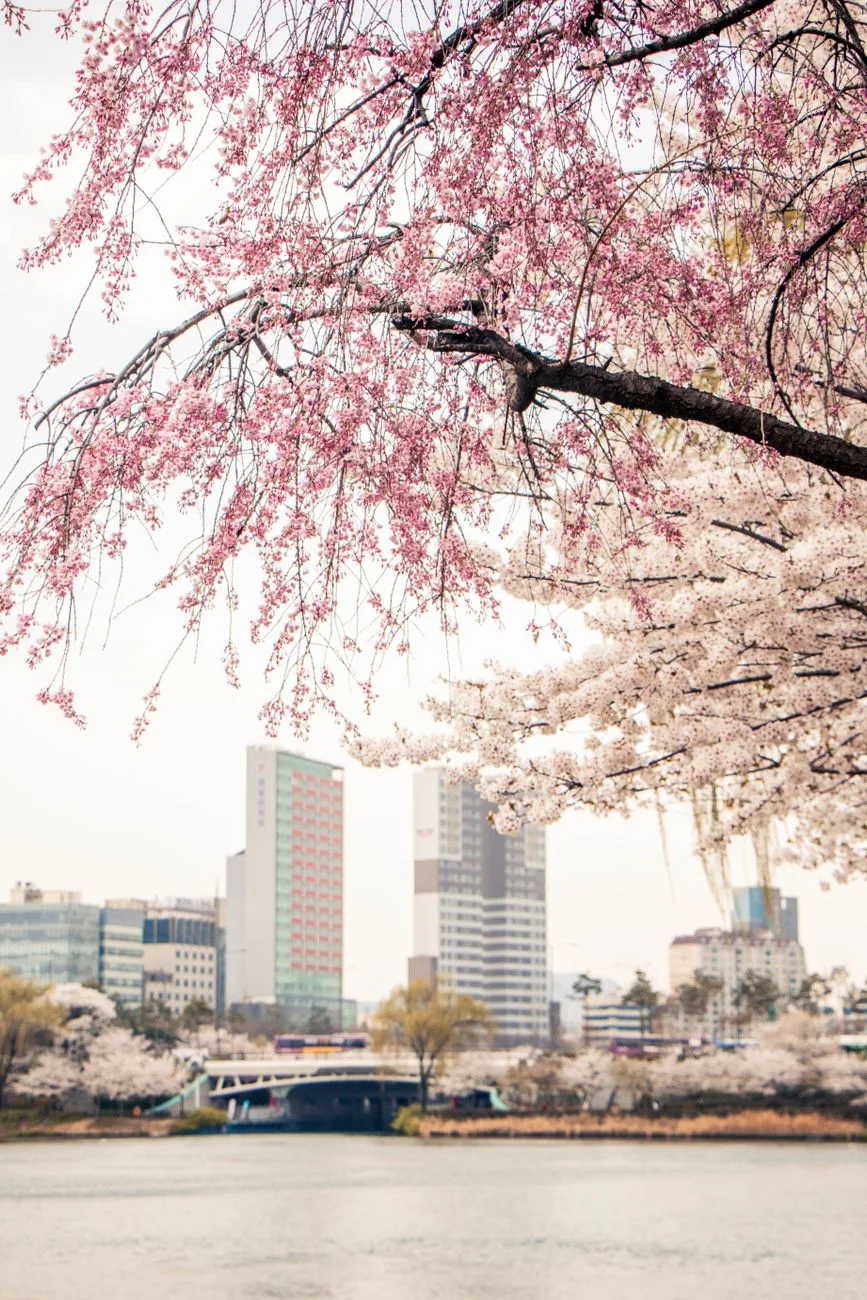
Spring timing has a published baseline. The Korea Tourism Organization's 2026 cherry blossom forecast, citing forecaster Weather i, put first bloom at 25 March in Jeju and Busan, 28 March in Jeonju and Gyeongju, 3 April in Seoul and 7 April in Incheon, with peak about a week after first bloom. That made Seoul's peak around 10 April 2026, three to eight days earlier than the long-term norm. A 2027 forecast will not exist until spring 2027, so use those dates as your booking anchor and adjust when the new forecast lands.
Autumn colour has no official 2026 forecast yet either; Korea's foliage forecast is issued in September. Travel sources place Seoul's peak at 5 to 15 November, which is a reasonable planning assumption and not a government figure.
Dates to plan around before the year ends
This table covers the fixed dates that will move hotel prices and train availability for the rest of 2026.
| Event | Dates (2026) | City | Book ahead |
|---|---|---|---|
| Seoul International Fireworks Festival | 5 Sep | Seoul (Yeouido) | Yes |
| Chuseok holiday | 24–26 Sep | Nationwide | Yes |
| Andong Maskdance Festival | 24 Sep – 4 Oct | Andong | Optional |
| Jinju Namgang Yudeung Festival | 3–18 Oct | Jinju | Optional |
| Busan International Film Festival | 6–15 Oct | Busan | Yes |
| Busan Fireworks Festival | 7 Nov | Busan (Gwangalli) | Yes |
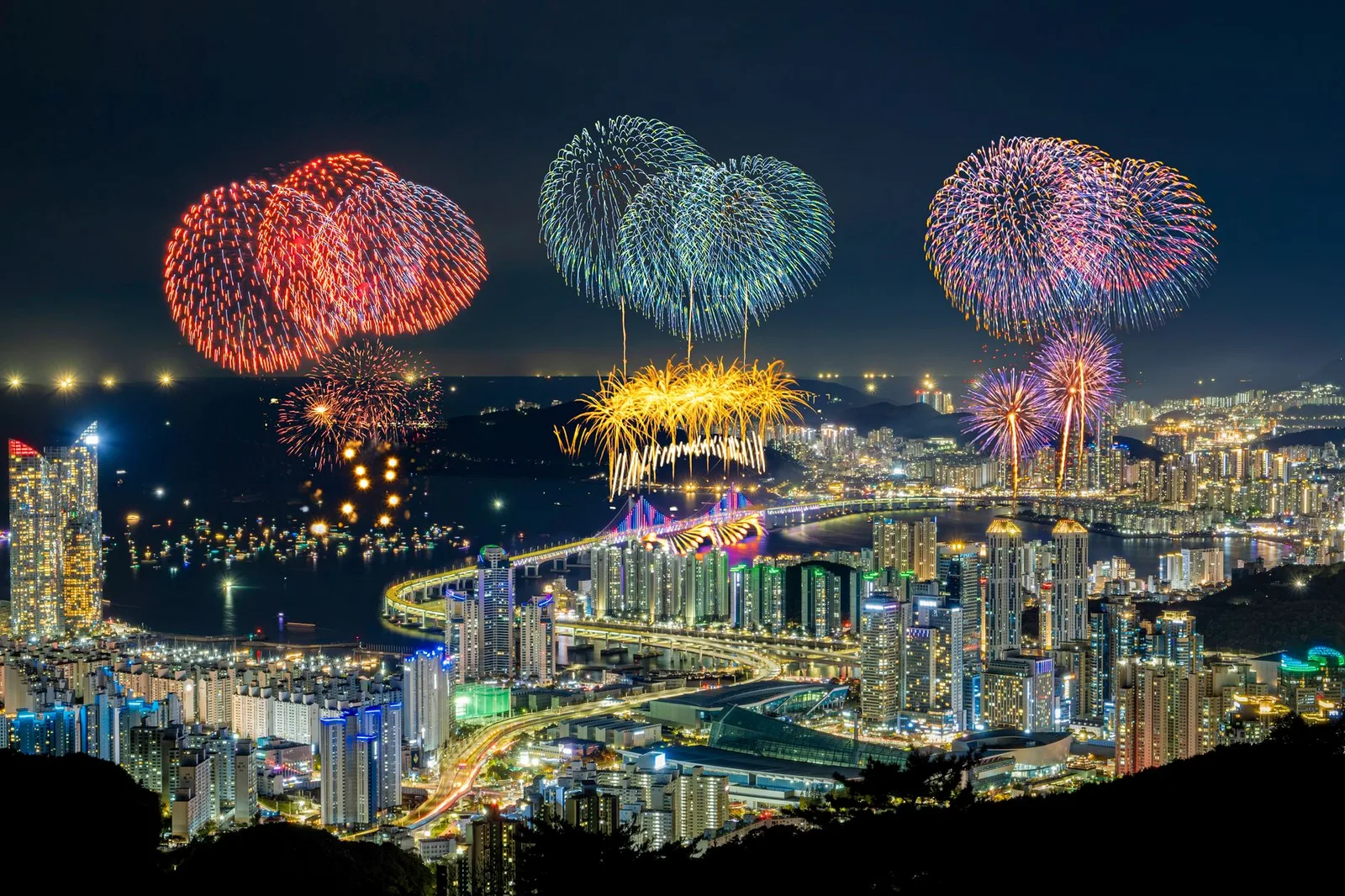
Two entries in that table need explaining. Organiser Hanwha moved the 2026 Seoul fireworks festival about three weeks earlier than usual, to Saturday 5 September, specifically to avoid colliding with Chuseok, and is deploying a record 4,700 safety and crowd-control staff across the eve and the main day. The 31st Busan International Film Festival runs 6 to 15 October per its own site, and a travel listing showing 1 to 10 October is wrong.
Chuseok is the one that catches visitors. Chuseok day falls on Friday 25 September 2026, with the holiday running Thursday 24 to Saturday 26 September. No substitute holiday is attached this year, so Monday 28 September is an ordinary working day. Expect sold-out intercity trains in both directions, closed small businesses, and full department stores.
Where the community advice actually fails
Crowding is the structural change nobody's 2023 post accounted for. Korea drew a record 18.7 million international visitors in 2025, passing the 17.5 million high set in 2019, per Korea.net. Per-person spending fell slightly against 2019, at US$1,155.80 versus US$1,185.20, which means more people paying a little less each. Advice about walking into a restaurant at 7 p.m. on a Saturday was written for a quieter country.
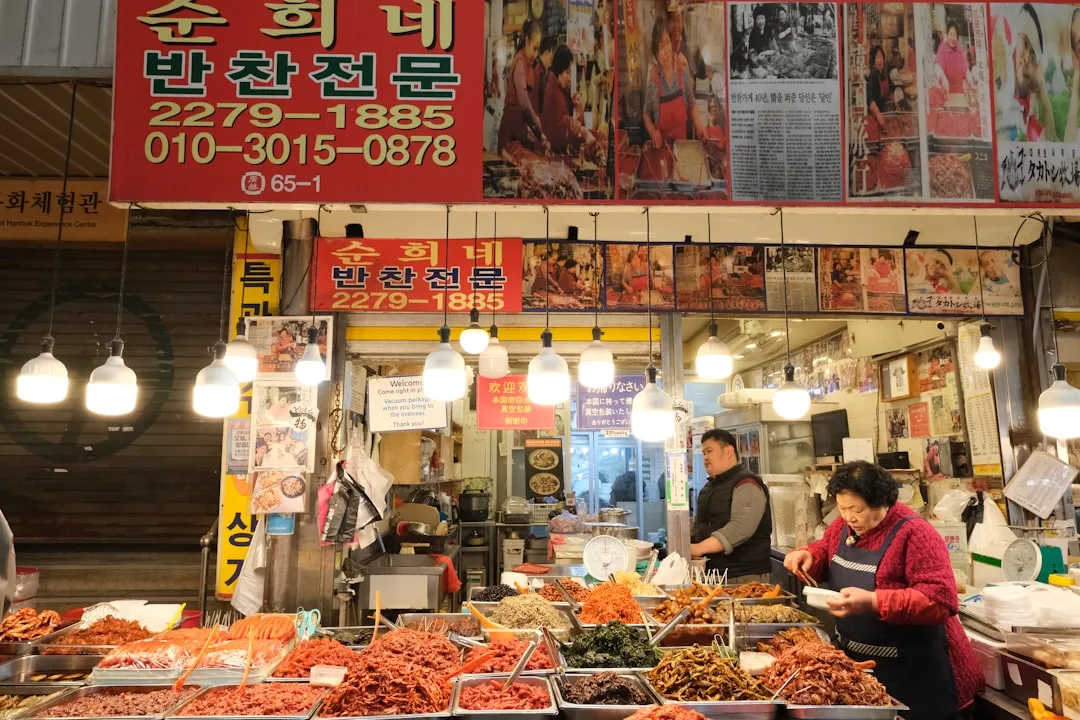
Market pricing is the second failure point. Gwangjang Market street food sits at ₩3,000 to ₩5,000 for a cup of tteokbokki and ₩2,000 to ₩3,000 for hotteok on 2026 travel listings, with ₩20,000 to ₩30,000 covering a full sampling session for one person. Overcharging complaints from foreign visitors have been reported often enough that a shop registration and QR complaint scheme was said to start there in June 2026, though that has not appeared on a Seoul city notice. Ask the price before the food is handed over.
The third failure is scale. The largest Korea travel subreddit carries about 179,000 members according to third-party subreddit analytics in 2026, which sounds authoritative until you notice that a single thread's answers come from perhaps five people, none of whom filed an e-Arrival Card this month. Anecdote is excellent for atmosphere, restaurants and neighbourhood feel. It is unreliable for fares, visas, and refund thresholds, which is the pattern the audit table at the top shows.
When an answer genuinely matters, the Korea Tourism Organization runs the free 1330 Korea Travel Hotline: dial 1330 inside Korea or +82-2-1330 from abroad, with Korean, English, Japanese and Chinese staffed 24 hours and live interpretation available. It resolves a taxi dispute or a lost item faster than any thread. On the social rules that no hotline covers, our guide to Korean etiquette and manners separates what carries a fine from what merely costs you face.
Prices and rules above are dated to the month shown and are general travel information, not personalised advice.
FAQ
Do US citizens need a K-ETA for Korea in 2026?
No. The temporary exemption covering the United States and the other listed countries has been extended through 31 December 2026, per the Korean consulate notice. Applying is still permitted and costs ₩10,000, with the practical benefit that K-ETA holders skip the arrival card.
Is the arrival card still a paper form?
No. The e-Arrival Card became mandatory for all foreign nationals on 1 January 2026 and the paper card was discontinued. It is free, submitted online, and valid for 72 hours, so file it in the three days before you land rather than weeks ahead.
How much is the Seoul subway now?
₩1,550 with a transit card and ₩1,650 for a single-journey ticket, effective 28 June 2025. Youth pay ₩900 and children ₩550. City buses are ₩1,500 and village buses ₩1,200, and a first tap before 06:30 takes 20% off the base fare.
Is the Climate Card worth it for a five-day trip?
Yes for a Seoul-based itinerary. The short-term tourist tier costs ₩5,000 to ₩15,000 for one to seven days, so it pays for itself in under ten subway rides across the week. It stops covering you at the city boundary, so a trip built around day trips to Gyeonggi or the airport is cheaper on T-money.
What is the cheapest way from Incheon Airport into Seoul?
The all-stop AREX train, at up to ₩5,350 depending on your destination and 59 to 66 minutes to Seoul Station in 2026. The express costs ₩13,000 at the machine, about ₩11,500 booked online, and takes 43 minutes from Terminal 1 or 51 from Terminal 2. Neither is covered by the Climate Card.