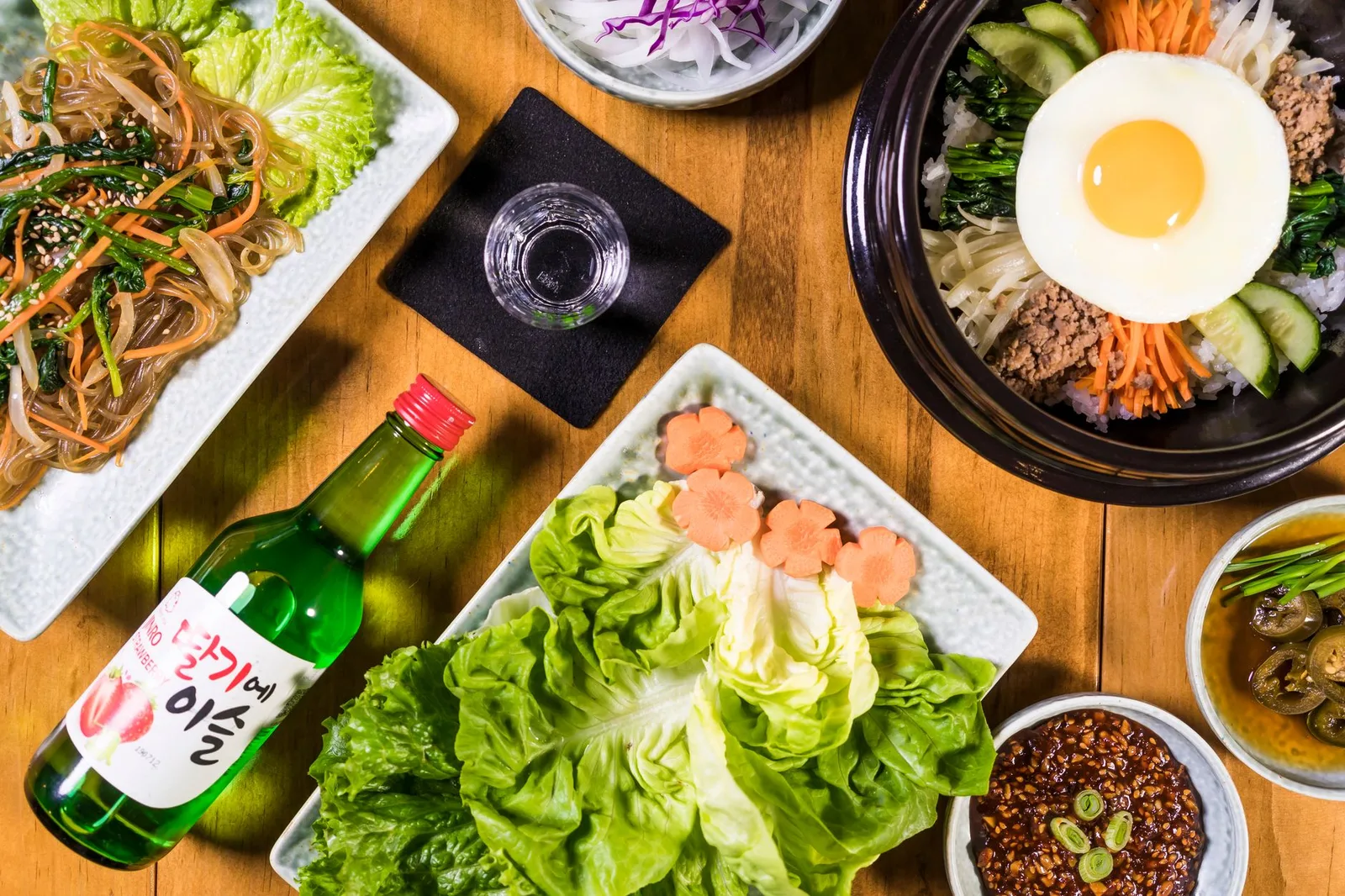
Order grapefruit. All six JINRO fruit sojus are the same 13% ABV, so picking a flavor changes the sweetness and nothing else. Grapefruit has the least sugar-forward finish of the six, which is why it holds up across a full meal while green grape starts tasting like candy by the third glass.
That one fact reframes the question. Beginners pick fruit soju believing some flavors are gentler than others. They are not. The strength is fixed across the range, and the only variable on the shelf is how sweet the bottle tastes. If you are still deciding between fruit soju and a plain bottle at all, the wider comparison sits in our guide to the best soju for beginners and what it costs.
Four points that decide the bottle
- Strength is identical across all six flavors: 13.0% ABV, on HiteJinro's own product listing.
- Sweetness is the real variable, running from grapefruit at the dry end to green grape at the candy end.
- A 360 mL bottle at 13% holds 46.8 mL of pure alcohol, close to two and a half cans of 5% beer.
- Fruit soju fails in somaek and fails against grilled pork. Keep a plain bottle for those two jobs.
Every JINRO fruit flavor is 13% ABV
HiteJinro lists Grapefruit, Green Grape, Plum, Strawberry, Peach and Lemon at 13.0% ABV across the fruit range on its global product page. The same page showed Chamisul Original at 20.1% and Chamisul Fresh at 16% when checked on 14 August 2026.
So the gap that matters to a first-time drinker is 13% against 20.1%, a difference of 7.1 percentage points. HiteJinro positions Chamisul Original as the deliberately deep, higher-strength style, which is exactly what a beginner is trying to avoid.
One wrinkle on the plain bottles. Kyunghyang Shinmun reported on 2 June 2026 that HiteJinro was cutting Chamisul Fresh from 16% to 15.7%, with nationwide rollout from mid-June. The brand site still showed 16% in August. Where the two disagree, the number printed on the bottle in front of you is the one that counts.
Chamisul Fresh has been drifting down for a quarter century: 23% at its 1998 launch, 19.8% in 2006, 17.8% by 2014, 16.9% in 2020, then 16% in February 2024. Rivals tracked it, with Jinro Is Back and Saero both at 15.7% as of that June 2026 reporting.
The table below sorts the six fruit bottles by the only axis that actually changes between them.
| Flavor (Korean) | ABV (Aug 2026) | Sweetness | Pairs with | Beginner pick |
|---|---|---|---|---|
| Grapefruit 자몽 | 13.0% | Lowest, faint bitterness | Fried chicken, jeon | Yes |
| Lemon 레몬 | 13.0% | Low, sharp | Seafood, sashimi | Yes |
| Plum 자두 | 13.0% | Medium, tart edge | Spicy stews | Optional |
| Peach 복숭아 | 13.0% | Medium-high | Light snacks | Optional |
| Strawberry 딸기 | 13.0% | High, jammy | Dessert | No |
| Green Grape 청포도 | 13.0% | Highest, candy-like | Sipping alone | No |
What the table shows is a flat ABV column and a wide sweetness spread: the choice is a flavor decision wearing the costume of a strength decision. The sweetness order here follows the fruit base, not a published measurement. HiteJinro does not publish sugar content per 100 mL for the fruit line, and the Korean nutrition panel on the bottle is the only place that figure exists.
Which flavor to pick, by what is putting you off
If the alcohol heat is the problem, all six fix it equally. Dropping from 20.1% to 13% removes most of the throat burn that defines a shot of Chamisul Original, and it does so identically whether the label says peach or lemon. At that point the deciding factor becomes what the drink tastes like after four glasses, which is where the flavors separate hard.
If sweetness is the problem, grapefruit first, lemon second. Grapefruit keeps a trace of pith bitterness that resets the palate between sips. Green grape and strawberry do the opposite: they build. A bottle that tastes bright at glass one tastes like melted candy at glass five, and that is the single most common reason people write off flavored soju after one night.
If you are drinking with food rather than sipping alone, go dry. Korean drinking happens at a table, not at a bar rail. Grapefruit and lemon sit under fried chicken, pajeon and seafood without fighting them. Strawberry and green grape belong to the sip-it-cold-alone category and stop working the moment salt and chili arrive.
If what you actually want is soju rather than a fruit drink, skip the range entirely and order Chamisul Fresh at 15.7%. Fruit soju is a different product that shares a brand, and drinking six of them will not teach you what soju tastes like.
This framework fails in one case. If citrus bitterness is itself the thing you dislike, grapefruit is the worst of the six for you, and peach becomes the compromise: sweet enough to be easy, restrained enough to finish a bottle without it turning syrupy.
On popularity, be careful what you trust. No manufacturer publishes a flavor-by-flavor sales ranking. Commerce aggregators name green grape as the 2025 top seller with peach and strawberry behind it, which is trade chatter rather than an audited figure, and it describes what sells, not what suits a beginner.
The arithmetic: what a 13% bottle actually holds
A standard soju bottle is 360 mL and a standard glass is 50 mL, which gives about seven pours per bottle. Multiply the volume by the strength and the comparison stops being a matter of taste:
- Fruit soju: 360 mL × 13% = 46.8 mL of pure alcohol
- Chamisul Fresh (15.7%, mid-2026): 360 mL × 15.7% = 56.5 mL
- Chamisul Original: 360 mL × 20.1% = 72.4 mL
A fruit bottle therefore carries 65% of the alcohol of an Original bottle, not a third of it. Per 50 mL glass that is 6.5 mL against 10.05 mL.
Now anchor it to something familiar. A 355 mL can of 5% beer holds 17.8 mL of alcohol. One bottle of grapefruit soju at 46.8 mL is 2.6 of those cans. Shared between two people at three and a half glasses each, it comes to 23.4 mL apiece, or about one and a third beers over a meal.
That is the number to keep. Sharing one fruit bottle across dinner is light. A bottle each, which is how a 13% drink that tastes like juice tends to go, is closer to two and a half beers each in ninety minutes.
Calories run the other way from strength. Commonly cited nutrition tallies put a bottle of fruit soju near 400 kcal, a little under 60 kcal per 50 mL glass, against about 37.5 kcal per glass for plain soju. Databases disagree on the plain bottle, with counts ranging from 270 to 448 kcal, so treat these as an order of magnitude rather than a label figure.
What a bottle costs, in Korea and abroad
The table answers one question: how much does the same 360 mL bottle change price depending on where you open it?
| Where | Price (2026) | What it buys |
|---|---|---|
| Convenience store, Korea | 1,800–1,900 KRW | 360 mL bottle |
| Ordinary restaurant, Korea | 5,000–6,000 KRW | Same bottle, table service |
| Gangnam restaurants | 7,000–8,000 KRW | Same bottle |
| 착한소주 990 (budget brand) | 990 KRW | 360 mL, 16%, unflavored |
| US retail | $4.49–$9.99 | 375 mL flavored bottle |
The spread shows that the bottle is cheap and the seat is expensive. At the 13 August 2026 rate of 1,417 won to the dollar, a 1,900-won convenience store bottle is about $1.34 and a 5,000-won restaurant bottle about $3.53. Korean trade press has put the wholesale cost to restaurants near 1,530–1,560 won, which makes the table markup roughly three to four times.
Part of the shelf price is tax rather than product. Soju is taxed as a distilled spirit at a 72% ad valorem rate, a level set in 2000 after being cut from 100% in 1996, which is why price competition among Korean soju brands plays out in 100-won steps rather than in halves.
When fruit soju is the wrong bottle
Somaek. The soju-and-beer mix that dominates Korean group drinking relies on a neutral spirit thinning a lager. Fruit soju turns it into a sweet, flat hybrid that neither drinker enjoys. Order plain soju for the table and keep your fruit bottle separate.
Samgyeopsal and grilled meat. Salt, fat and charred pork want something dry to cut through. A 13% strawberry bottle sits on top of the fat instead of clearing it, and the meal gets heavier with every round.
Pace. This is the real hazard. At 13% with sugar covering the ethanol, a fruit bottle goes down at soft-drink speed while still delivering 46.8 mL of alcohol. The classic beginner mistake is finishing one alone in under an hour because it never tasted strong.
Buying by label design. Fruit bottles are colorful and the plain ones are green, but Korean shelves also carry regional sojus, limited editions and imports at 16% to 25%. The strength is printed on the front label as a number followed by 도. Read the number, not the color.
At the table itself, pouring rules matter more than the flavor you chose. Two hands on the bottle, never fill your own glass, and let the eldest person start. Our guide to Korea etiquette and manners covers which of those rules carry real weight.
The step up: Saero, Chum Churum, and where fruit soju sits
If the objection to soju is sweetness rather than strength, the better answer is not a fruit bottle at all. Lotte Chilsung's Saero launched in mid-September 2022 as an unflavored 16% soju made without fructose, and it sold 50 million bottles in four months, 100 million in about seven, and 500 million by around two years after launch, on annual sales above 100 billion won. It is stronger than any fruit bottle and cleaner on the finish, which suits people who dislike sugar more than they dislike alcohol. Saero also has its own flavored extensions, Saero Salgu with apricot juice and Saero Darae with kiwi.
Chum Churum is harder to pin down. Korean press in June 2026 listed it at 16%, while US retail listings show 16.5% for the Original and 17% for Cool, and Lotte Chilsung publishes no English ABV table. In April 2026 the company added Chum Churum Classic, a 20-degree bottle reviving its original 2006 recipe, where the Korean 도 corresponds to percent ABV.
The fruit category is not a novelty at the margins. Fruit-flavored soju accounted for 48.1% of Korea's 2024 soju exports against 51.9% for the regular kind, with a record $96 million in fruit-flavored export value, on Korea Customs Service figures that also showed total soju exports passing 124,000 metric tons and $200 million for the first time. Fruit-flavored exports then crossed $100 million for the first time in 2025. Inside Korea the picture is quieter: alcohol shipments fell 17.3% over the decade to 2024, and the average Korean adult drinks 52.9 bottles of soju a year.
Before you buy
Korea's legal drinking age is 19, and under the Youth Protection Act (청소년보호법) eligibility begins on 1 January of the year you turn 19 rather than on your birthday. Supplying alcohol to a minor carries up to two years' imprisonment or a fine up to 20 million won, which is why convenience store staff card foreign customers as a matter of routine. Carry a passport or residence card, not a photo of one.
Common questions
Is fruit soju weaker than regular soju?
Yes. All six JINRO fruit flavors are 13% ABV, against 20.1% for Chamisul Original and 15.7% to 16% for Chamisul Fresh through 2026. The difference per 360 mL bottle is 46.8 mL of alcohol versus 72.4 mL.
Which soju flavor is the sweetest?
Green grape, with strawberry close behind. HiteJinro does not publish sugar content for the fruit line, so this ordering follows the fruit base rather than a printed figure.
Can you mix fruit soju with beer?
It works badly. Somaek depends on a neutral spirit diluting a lager, and fruit sugar leaves the mix sweet and dull. Use plain soju for somaek.
How many glasses are in a soju bottle?
About seven. The bottle is 360 mL and the standard Korean soju glass is 50 mL.
Which fruit soju flavor sells the most?
No manufacturer publishes a flavor-level sales ranking. Commerce aggregators put green grape first for 2025 with peach and strawberry behind, which is not an audited number.
Your first bottle, in four lines
One grapefruit bottle between two people. Ordered alongside fried chicken or jeon rather than grilled pork. Poured into 50 mL glasses, never into beer. That works out to 23.4 mL of alcohol each across a two-hour meal, a beer and a third. If it lands well and you want the actual thing next time, order Chamisul Fresh and stop at the same three or four glasses.
This article gives general product information on strengths, prices and pairings, not health or drinking advice. Alcohol tolerance differs by person, and Korea's legal drinking age is 19.