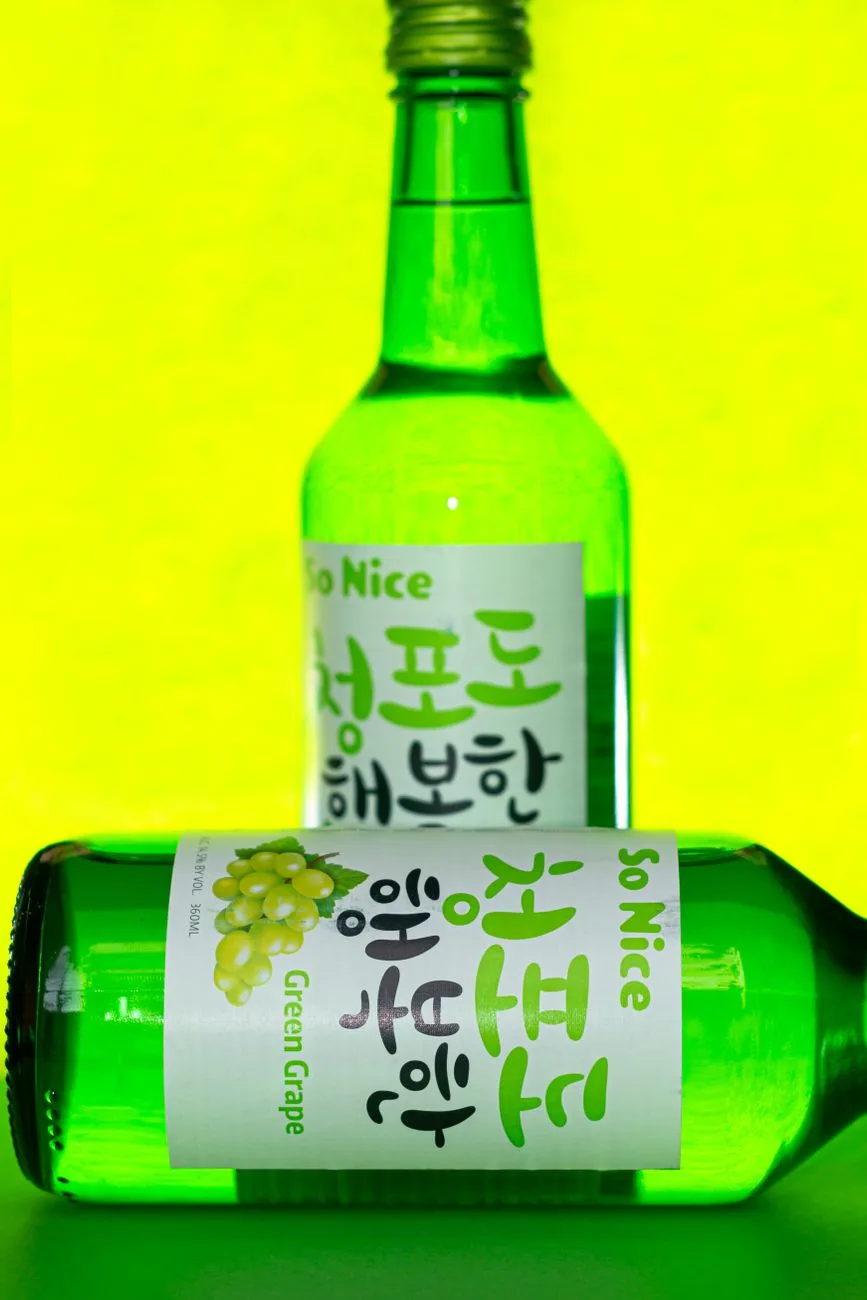
Almost every "which soju should I try first" list online quotes an alcohol figure the Korean market has already moved past.
Start with Chamisul Fresh. Since mid-June 2026 it ships in Korea at 15.7% ABV, the softest of the big green bottles apart from Jinro Gold at 15.5%, and a 360 ml bottle costs about 1,900 won at a Seoul convenience store. If the alcohol burn is what puts you off, a flavoured bottle near 12% is the bigger step down.
What to buy, in one line each
- First bottle in Korea: Chamisul Fresh, 15.7% since June 2026, about 1,900 won at GS25, CU or 7-Eleven.
- Cheapest legitimate bottle: Chakan Soju 990 at 990 won, 16%, sold only in neighbourhood supermarkets since 1 April 2026.
- If the ethanol taste is the problem: flavoured soju near 12%, which strips about a quarter of the alcohol out of the same bottle.
- If the sweetness is the problem: lowering the ABV makes it worse. Go to a distilled rice soju instead.
- Buying outside Korea: read the label. Export bottles are listed anywhere from 16% to 17.8%.
Soju is a legal category, not a recipe
Korean law splits soju into four sub-categories: two covering distilled soju and two covering diluted soju, and it caps extract content at 2% or less, which is the line separating soju from a liqueur. Those definitions are set out in Korea's Liquor Tax Law and reproduced in the WTO panel report on Korea–Alcoholic Beverages.
Everything a beginner is likely to be handed is the diluted kind: neutral spirit distilled from sweet potato, tapioca and molasses, cut back with water and sweeteners to drinking strength. That matters more than it sounds. A diluted soju has almost no congeners and no barrel character, so there is very little in the glass except water, a trace of sweetener and ethanol. The ABV number is close to the entire tasting experience.
The industrial style dominates for a historical reason. A Liquor Tax Act enacted after Japan's 1910 occupation effectively outlawed home brewing and distilling, and the small regional distilleries never fully came back. Cheap, consistent, factory-diluted soju filled the space.
Best soju for beginners, ranked by strength
This table answers one question: which mainstream bottle puts the least alcohol in front of you. All figures are the domestic Korean specification.
| Bottle (maker) | ABV (domestic, Aug 2026) | Last change | Beginner pick |
|---|---|---|---|
| Jinro Gold (HiteJinro) | 15.5% | as of Jul 2025 | Yes |
| Chamisul Fresh (HiteJinro) | 15.7% | Jun 2026 | Yes |
| Chum Churum (Lotte Chilsung) | 16% | Jul 2025 | Optional |
| Jinro Is Back (HiteJinro) | 16% | Jul 2025 | Optional |
| Chakan Soju 990 (Seonyang) | 16% | launched Apr 2026 | Optional |
| Chamisul Original (HiteJinro) | about 20%, unverified | not published | No |
Jinro Gold is nominally the weakest, but Chamisul Fresh is the bottle stocked in every convenience store cooler in the country, which is why it is the practical answer. Chamisul Fresh has come down in three steps: 16.9% in May 2020, 16% in February 2024, then 15.7% announced on 2 June 2026 and shipping nationwide from mid-June. HiteJinro described it as the brand's first quality renewal in about two years and four months and attributed the cut to consumer preference for lower-alcohol drinks, as reported by Seoul Economic Daily. Lotte Chilsung's Chum Churum went from 16.5% to 16% in July 2025, its first reduction in four years, reported by Kyunghyang Shinmun.
One honesty note on that table: HiteJinro's own product pages were returning a service error on 13 August 2026, so these ABVs come from Korean press reporting rather than the maker's published spec sheet. The Chamisul Original figure of roughly 20% appears on retailer listings only and I could not confirm it against the maker or the National Tax Service. It is the strongest mainstream option either way, so it is the wrong first bottle regardless of the exact digit.
The ABV race is mostly marketing, and here is the arithmetic
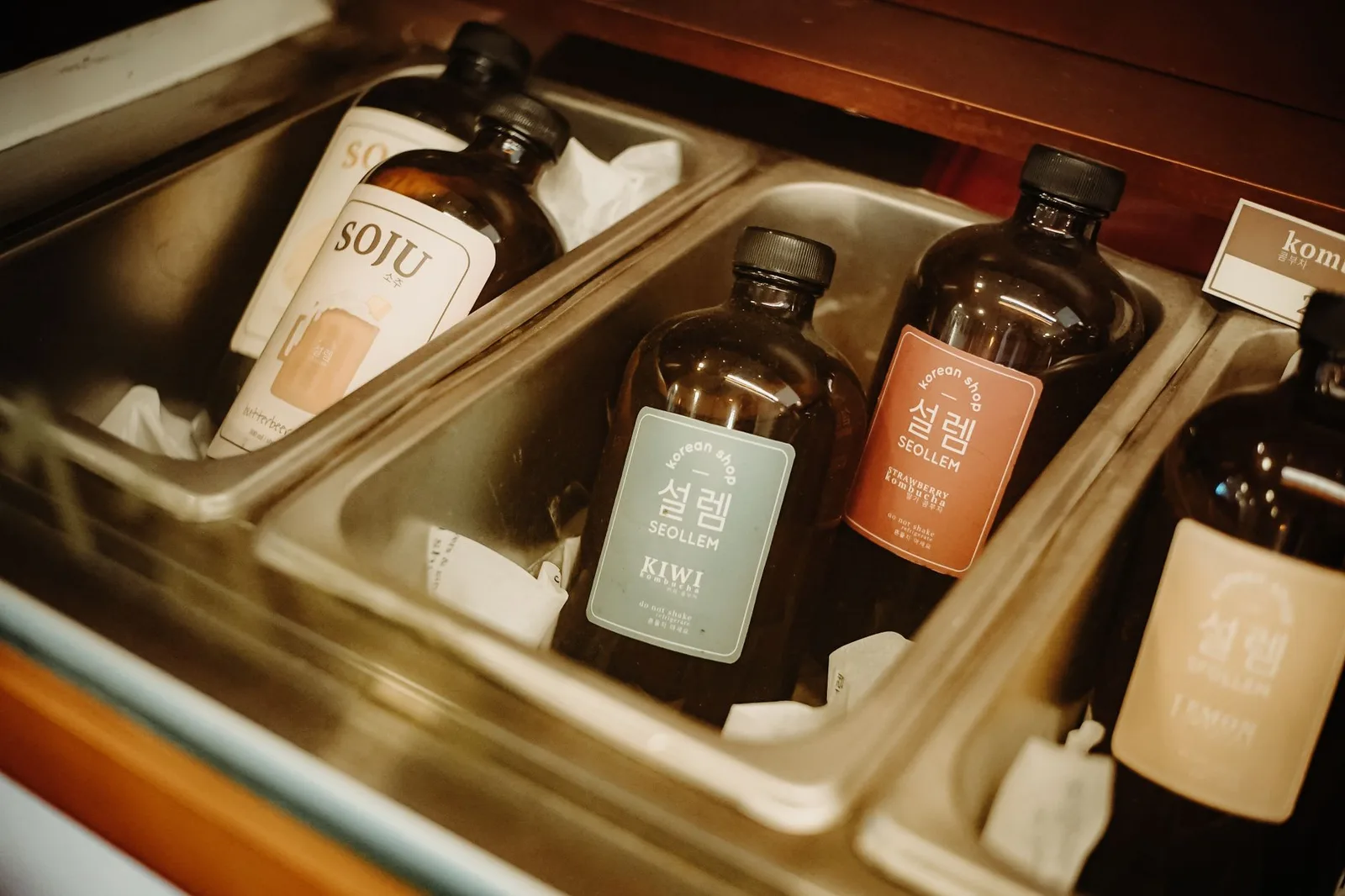
Headlines about soju "getting weaker" describe a change too small to feel. Work it out on one 360 ml bottle:
- 15.7% × 360 ml = 56.5 ml of pure alcohol
- 16.0% × 360 ml = 57.6 ml
- 16.5% × 360 ml (the 2023 spec) = 59.4 ml
The celebrated June 2026 cut removed 1.1 ml of ethanol from the bottle, about a fifth of a teaspoon. Three years of reductions removed 2.9 ml. Nobody's evening changes on that.
The number that does move is the flavoured line. Chum Churum Soonhari peach is listed at 12% by European retailers, which is 43.2 ml of alcohol in the same 360 ml bottle: 13.3 ml less than Chamisul Fresh, a 24% reduction. That is the one lever on this list large enough to matter, and it is why the honest beginner recommendation splits in two rather than naming a single bottle.
For scale, a 500 ml draught at 4.5% holds 22.5 ml of alcohol. One bottle of Chamisul Fresh is about two and a half of those.
The export bottle is not the bottle Seoul drinks
If you buy Chamisul Fresh outside Korea, you are quite likely buying a stronger product. US and UK retailers list it at 16%, 16.5%, 17.2% and 17.8% depending on the seller, against the 15.7% domestic figure. These look like genuinely different bottlings, not a labelling error, and averaging them would be meaningless.
At 17.8%, a 360 ml bottle carries 64.1 ml of alcohol against the domestic 56.5 ml. Same green bottle, same brand, 13% more alcohol. A person who paced themselves comfortably on two bottles in Seoul is drinking the equivalent of 2.27 domestic bottles on two of the export ones.
The fix is trivial and nobody does it: read the ABV printed on the label in front of you rather than the one in an article. That includes this article.
What a bottle actually costs
Soju's price is the second reason it is a beginner's spirit. These are the current Korean retail figures.
| Where you buy it | Price per 360 ml (KRW) | Figure dated |
|---|---|---|
| Neighbourhood supermarket (Chakan Soju 990) | 990 | Apr 2026 |
| Large supermarket | 1,200–1,300 | Apr 2026 |
| Convenience store (GS25, CU, 7-Eleven) | about 1,900 | Apr 2026 |
| Restaurant, major commercial district | 6,000 | 2023 |
| Restaurant, Gangnam (Cheongdam, Apgujeong) | 7,000 | 2023 |
The table shows a five- to sevenfold markup between a supermarket shelf and a restaurant table, and it shows that the two restaurant figures are three years old. I could not find a 2026 survey of restaurant soju prices from the Korea Consumer Agency or any other body, so treat 6,000 won as a 2023 floor rather than today's price. At the mid-market rate of about 1,415 won to the dollar on 13 August 2026, the convenience-store bottle is roughly US$1.34.
Chakan Soju 990 is the newest entry: launched on 1 April 2026 by Seonyang Soju at 990 won for 360 ml at 16% ABV, developed with the Small Enterprise and Market Service and the Korea Super Chain Distribution Business Cooperative, with an initial run of 9.9 million bottles. It is sold only through neighbourhood supermarkets, not convenience stores or the big discount chains, so you will not stumble across it.
Part of why the shelf price is so low is a tax change most drinkers never saw. From 1 January 2024 the National Tax Service applied a "reference sales ratio" of 22.0% to domestic soju, shrinking the taxable base and cutting the ex-factory price by 10.6%, or 132 won, from 1,247 won to 1,115 won. Whisky got 23.9% and fruit soju and liqueurs 20.9% under the same scheme.
Compare cost per millilitre of alcohol and the drinking culture explains itself. Convenience-store soju: 1,900 won ÷ 56.5 ml = 34 won per ml of ethanol. A 0.5 L domestic beer bought at a shop, priced at 3,209 won in Numbeo's crowdsourced Seoul data as of 12 August 2026, works out to 143 won per ml. Soju delivers alcohol at about a quarter of beer's cost. Numbeo is user-submitted rather than an official survey, so read it as an order of magnitude. If you are budgeting a longer stay, our breakdown of the cost of living in Seoul with rent covers where drinking sits against everything else.
Where a lower ABV stops helping
The 15.7% recommendation fails for one specific reader, and it is worth knowing whether that is you.
Diluted soju is water, neutral spirit and sweetener. Drop the ABV and the proportion of the rest goes up, so a weaker green bottle tastes slightly sweeter and slightly flatter, not cleaner. If what you dislike about soju is the faintly syrupy finish rather than the alcohol heat, going lower makes the exact thing you object to more prominent. That reader should skip the whole diluted category and try a rice-based distilled soju in a small pour.
Flavoured soju has its own trap. At 12% it genuinely contains less alcohol, and it also drinks like a soft drink, so the glass empties faster and gets refilled sooner. The per-bottle saving disappears if you get through three bottles instead of two.
Pouring, pace, and what to put on the table
Soju is not sipped alone. It arrives with food and with a group, and the group sets the pace, which is the real hazard for a beginner rather than the strength of any one bottle. National Tax Service and Korea Customs Service sales data compiled by Rep. Kim Sang-hoon put per-adult consumption at 52.9 bottles of soju a year, though that is a 2021 reference year and the most recent official figure I could locate.
Three things a first-timer should know at the table. You do not fill your own glass; someone else fills it and you fill theirs, which is also why the pours come faster than you would pour for yourself. Receiving a pour from an older person is done with two hands. Leaving your glass part-full is the polite way to stop, because an empty glass is an invitation. Our guide to Korean etiquette and manners covers the rest of the table conventions.
For food, samgyeopsal is the default pairing and the reason most people are drinking soju in the first place. The Korea Consumer Agency's Chamgagyeok price survey, reported in June 2026, put a 200 g serving in Seoul at 20,083 won, up 6.3% year on year, so a two-person grill dinner with two bottles lands near 46,000 won before sides. If you want places rather than prices, we sorted the crowd-sourced recommendations in the best Korean restaurants in Seoul.
Mixing soju with beer to make somaek lowers the strength of what is in your glass and raises the total volume you drink. It is a pace decision, not a strength one.
This is general information about products and prices, not medical advice. Tolerance differs enormously between people, and no amount of alcohol is risk-free. Shops sell soju around the clock and staff card foreign-looking buyers as a matter of routine, so carry a passport.
Stepping up: distilled soju
Once the green bottle stops being interesting, the category worth exploring is distilled soju, the sub-category the Liquor Tax Law separates from the diluted stuff.
Hwayo 41 is the accessible benchmark: 41% ABV, distilled in Yeoju about 100 km southeast of Seoul from 100% Korean rice and local mineral water, single vacuum-distilled at low temperature, with Silver medals at both the 2025 London Spirits Competition and the 2025 San Francisco World Spirits Competition. At 41% it is 2.6 times the strength of Chamisul Fresh, so a 30 ml pour carries 12.3 ml of alcohol, about a fifth of a whole green bottle. It is sipped, not shot.
The most decorated soju right now is not made in Korea at all. Minhwa Spirits' Yong, a 100% rice soju distilled in Doraville, Georgia, took Best of Class Soju and a Double Gold at the San Francisco World Spirits Competition in 2025 and repeated top honours in 2026. Minhwa's May 2026 announcement did not publish the ABV, bottle size or price, so I cannot tell you what a bottle sets you back.
Scale check on the mainstream side: Drinks International's Millionaires' Club ranking, reported on 9 June 2026, named Jinro the world's best-selling spirit for the 25th consecutive year at 94.5 million nine-litre cases, more than some entire spirits categories sell combined. The bottle you are being handed is the single most-sold spirit on earth.
Questions beginners actually ask
What ABV is soju?
Mainstream Korean soju sits between 15.5% and 16% as of August 2026: Jinro Gold 15.5%, Chamisul Fresh 15.7% since mid-June 2026, Chum Churum and Jinro Is Back both 16%. Flavoured versions are listed around 12%, and distilled soju such as Hwayo 41 goes to 41%.
Is soju stronger than vodka?
No. Standard vodka is 40% ABV, roughly 2.5 times a 15.7% Chamisul Fresh. A 360 ml soju bottle holds 56.5 ml of pure alcohol, close to two and a half 500 ml beers.
Is the soju sold abroad the same strength?
Often not. Retailers outside Korea list Chamisul Fresh at 16%, 16.5%, 17.2% and 17.8%, against 15.7% domestically. Check the label rather than assuming the Korean spec applies.
How many shots are in a bottle?
A standard bottle is 360 ml, which fills the small glasses served alongside it about seven times at roughly 50 ml each. Two people sharing two bottles are having about seven pours each.
Should a beginner start with flavoured soju?
It is a reasonable start if the alcohol taste is the obstacle, since 12% removes about a quarter of the alcohol per bottle. It is the wrong start if you already dislike sweet drinks, because the flavoured line is sweeter than the green bottle, not less.
What should I order with my first bottle?
Samgyeopsal, at 20,083 won per 200 g serving in Seoul according to the Korea Consumer Agency's price survey reported in June 2026. Order the meat first, get the soju cold, and keep one glass unfinished when you want the pouring to stop.