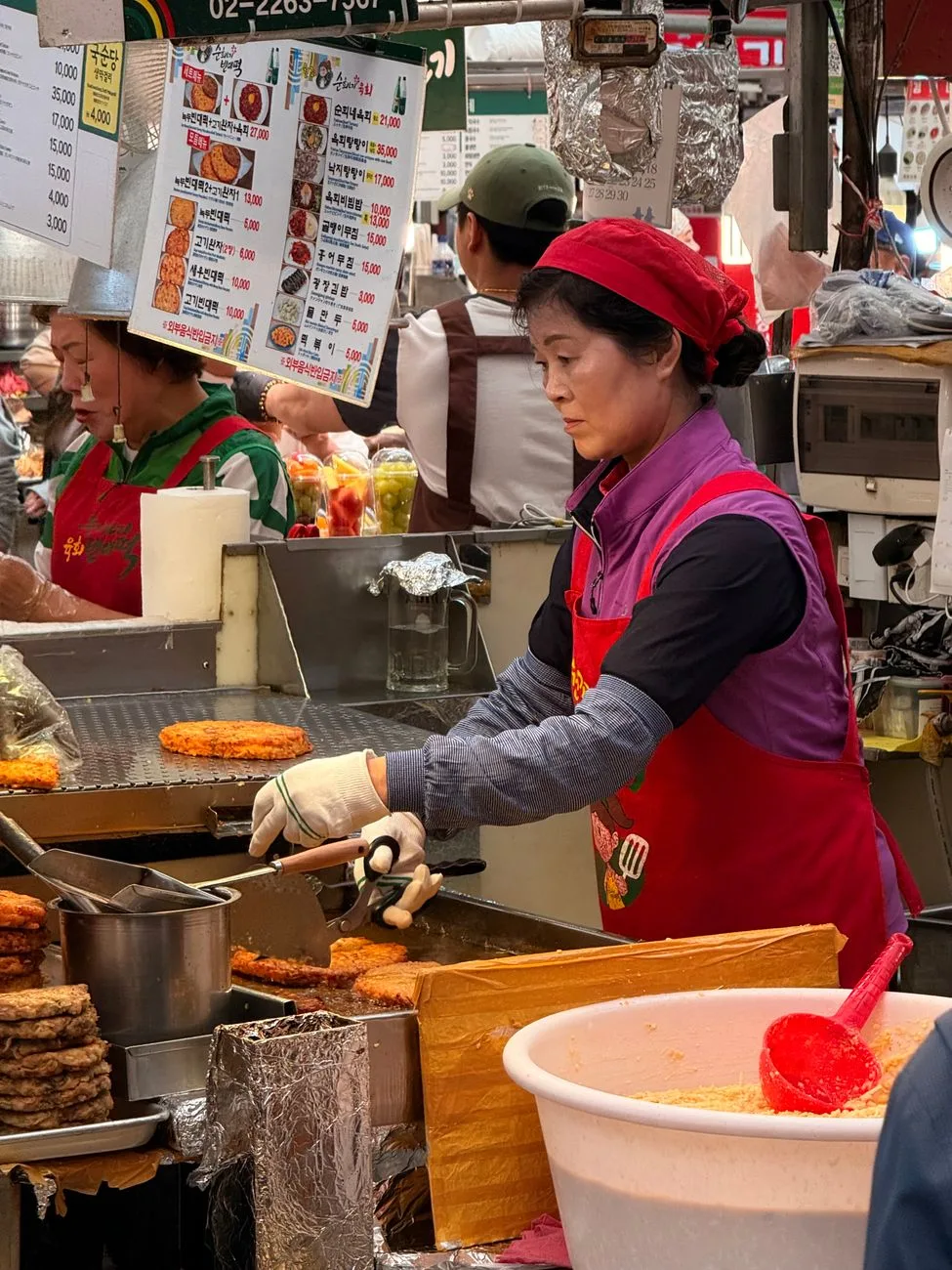
Short answer: The best banchan in Seoul depends on the meal you want. Choose a baekban restaurant for a full everyday spread with rice and soup, Tongin Market for sampling several small portions, Seoul Central Market for shopping and takeaway, or JUEUN for refined seasonal Korean dishes. Jungsik Seoul is the splurge choice, with a tasting course priced at ₩230,000 per person as of August 2026.
The right Seoul banchan depends on the experience
Banchan means the small side dishes served alongside a Korean meal. It can include seasoned vegetables, kimchi, fish, tofu, braised roots, pancakes, fermented seafood, and other preparations. The word describes a category of dishes, not one fixed recipe or a single restaurant style.
The Korea Tourism Organization’s explanation of baekban describes a familiar Korean set meal built around steamed rice, soup, and several side dishes. That format is the strongest starting point for a first banchan meal because the side dishes arrive as part of a complete meal rather than as isolated samples.
A useful decision rule is simple:
- Pick baekban when the priority is a generous, ordinary Korean meal.
- Pick Tongin Market when the priority is tasting many small portions in one walk.
- Pick Seoul Central Market when the priority is buying banchan to eat later.
- Pick JUEUN when the priority is seasonal ingredients, fermented sauces, and a composed multi-dish table.
- Pick Jungsik Seoul when the priority is a formal tasting menu and the budget supports ₩230,000 per person.
There is no official Seoul or Korean government ranking that names one restaurant as the definitive banchan winner. The MICHELIN Guide Seoul & Busan 2026, announced on March 5, 2026, selected 178 Seoul restaurants, including 42 Michelin-starred restaurants, 51 Bib Gourmand restaurants, and 85 Michelin-selected restaurants. That guide is useful for identifying serious restaurants, but its selection does not create a single official banchan champion.
Three ways to eat banchan in Seoul
The phrase “best banchan” hides three different activities: eating a meal, sampling market food, and experiencing a chef-led interpretation. Confusing them is the fastest way to choose the wrong place.
Baekban: the best first meal for most visitors
Baekban is the practical choice when the goal is to understand how banchan functions at the Korean table. Rice and soup anchor the meal, while the side dishes provide contrast in temperature, texture, seasoning, and fermentation. The result is more informative than ordering one famous side dish by itself.
A baekban meal also shows how banchan changes from table to table. One restaurant might emphasize namul and mild braises. Another might serve grilled fish, stronger kimchi, or a seafood-based side. The meal is part of the point: banchan is designed to be eaten in small bites with rice and the main dish.
Look for a restaurant described as baekban, home-style Korean food, or a set meal. The menu does not need to advertise “the best banchan.” A short menu focused on one or two set meals can be a better signal than a large menu trying to cover every Korean dish.
Baekban is the wrong choice when the purpose is to compare individual market portions or buy food for a hotel room. In that case, a market gives more control over quantity and selection.
Tongin Market: the best tasting route
Tongin Market in Jongno-gu has approximately 70 stores. Its Lunchbox Café Tong operates from 11:00 to 17:00 Tuesday through Sunday, and is closed on Mondays and the third Sunday of each month, according to Seoul Metropolitan Government’s Tongin Market information.
This format works because the visitor can assemble a meal from several vendors instead of committing to one restaurant menu. It is especially useful for two people with different preferences. One person can choose vegetables and tofu while the other selects meat, pancakes, or fish-based items.
The market route has limits. Portions, stock, and vendor participation can change during the operating period, and the lunchbox café is not an all-day evening option. A late arrival after 17:00 fails if the plan depends on Lunchbox Café Tong.
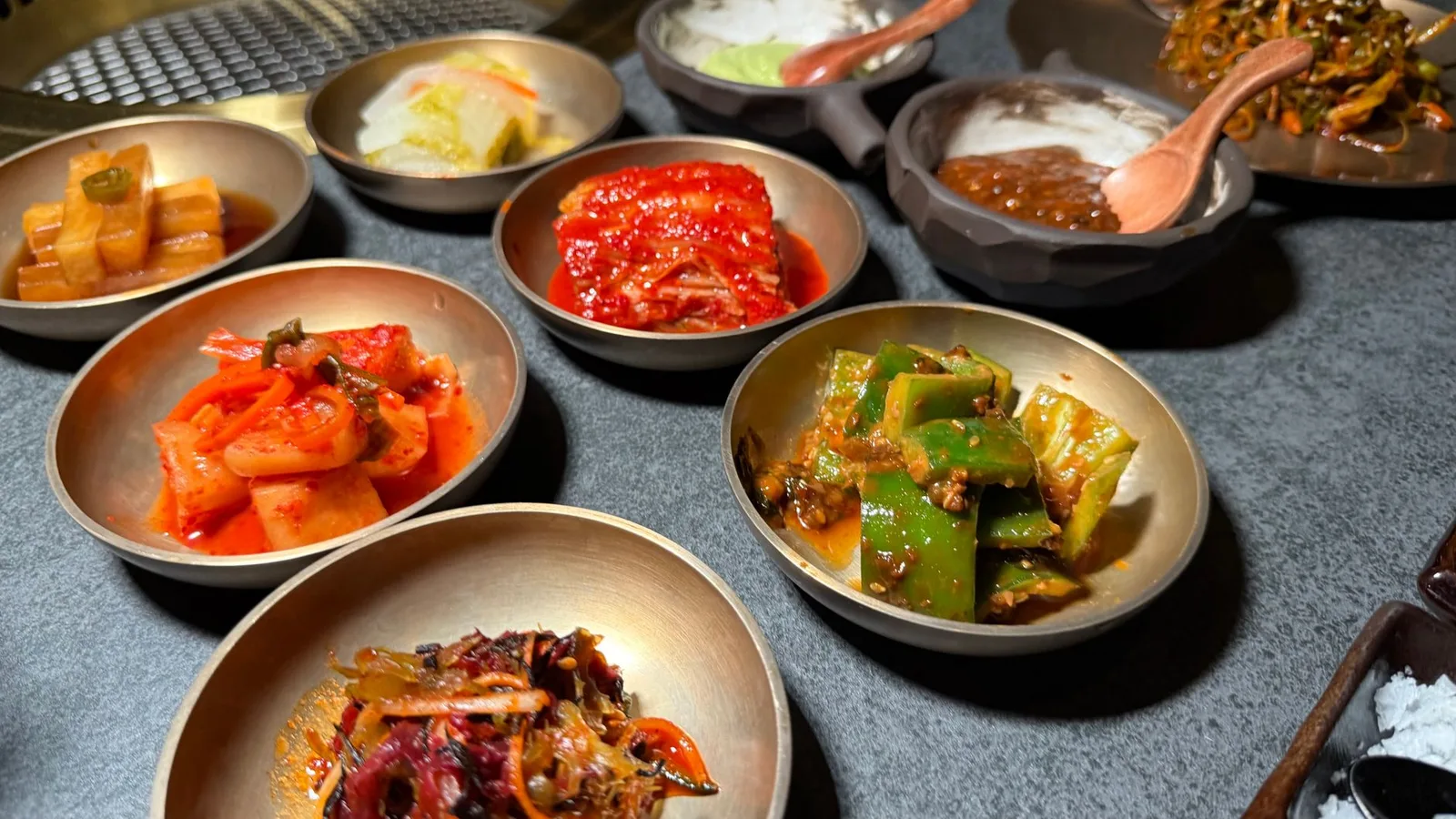
The best way to use Tongin is to treat it as a sampling meal rather than a restaurant replacement. Walk through the stalls first, identify the dishes that look freshest, and reserve enough appetite for several small portions. The experience rewards variety more than a single signature item.
Seoul Central Market: the best option for takeaway banchan
Seoul Central Market in Jung-gu is listed by the official Seoul tourism guide as a place selling fresh seafood, banchan, and snacks. Its listed hours are 07:00 to 24:00 daily, with closure on the third Sunday of each month. The official Seoul Central Market listing is the relevant source for those hours and market description.
This is the strongest option when the meal continues beyond the market. A traveler staying in an apartment, guesthouse, or hotel with a refrigerator can buy several prepared dishes and build a second meal later. The market also suits visitors who want to compare banchan by appearance, smell, texture, and price before buying.
Takeaway has practical constraints. Cold-chain handling, container size, and the time before eating matter. A dish that travels well, such as seasoned vegetables or braised roots, is a different purchase from a delicate seafood preparation intended for immediate eating. Ask the vendor how soon the food should be consumed when the packaging does not make that clear.
Gwangjang Market is another useful food stop, but it serves a broader street-food purpose. Seoul lists its food alley as operating 09:00 to 23:00 daily, while the general market area is listed as 09:00 to 18:00. The Seoul government market guide notes that Sunday closure details differ by section. Gwangjang works well for a mixed food itinerary; Seoul Central Market is the more direct choice when prepared banchan is the focus.
A comparison for choosing the right place
The table answers the practical question: which Seoul banchan format fits the purpose, schedule, and budget?
| Option | Best for | Timing or price | Main advantage |
|---|---|---|---|
| Baekban restaurant | Complete first meal | Restaurant-specific | Rice, soup, and side dishes together |
| Tongin Market | Sampling portions | 11:00–17:00 Tue–Sun | Many vendors in one route |
| Seoul Central Market | Takeaway banchan | 07:00–24:00 daily | Fresh food to eat later |
| JUEUN | Refined seasonal cuisine | Restaurant-specific | Fermented sauces and composed table |
| Jungsik Seoul | Luxury tasting menu | ₩230,000 per person, Aug 2026 | Formal course with a “BANCHAN” course |
The table shows why one universal winner would mislead. Tongin is the better answer for range, baekban for context, Seoul Central Market for flexibility, JUEUN for ingredient-led refinement, and Jungsik for a high-cost tasting experience.
What JUEUN and Jungsik reveal about modern banchan
Traditional banchan does not have to mean an informal meal. Michelin’s 2026 Seoul coverage describes JUEUN as serving seasonal Korean cuisine with fermented sauces and finishing with a traditional Korean multi-dish table setting. That makes JUEUN a strong choice for diners who want the structure and flavors of banchan presented in a more deliberate restaurant format.
The relevant distinction is control. A market lets the diner select individual dishes. A baekban restaurant shows the everyday relationship between rice, soup, and side dishes. A restaurant such as JUEUN controls the sequence, balance, and presentation of the table.
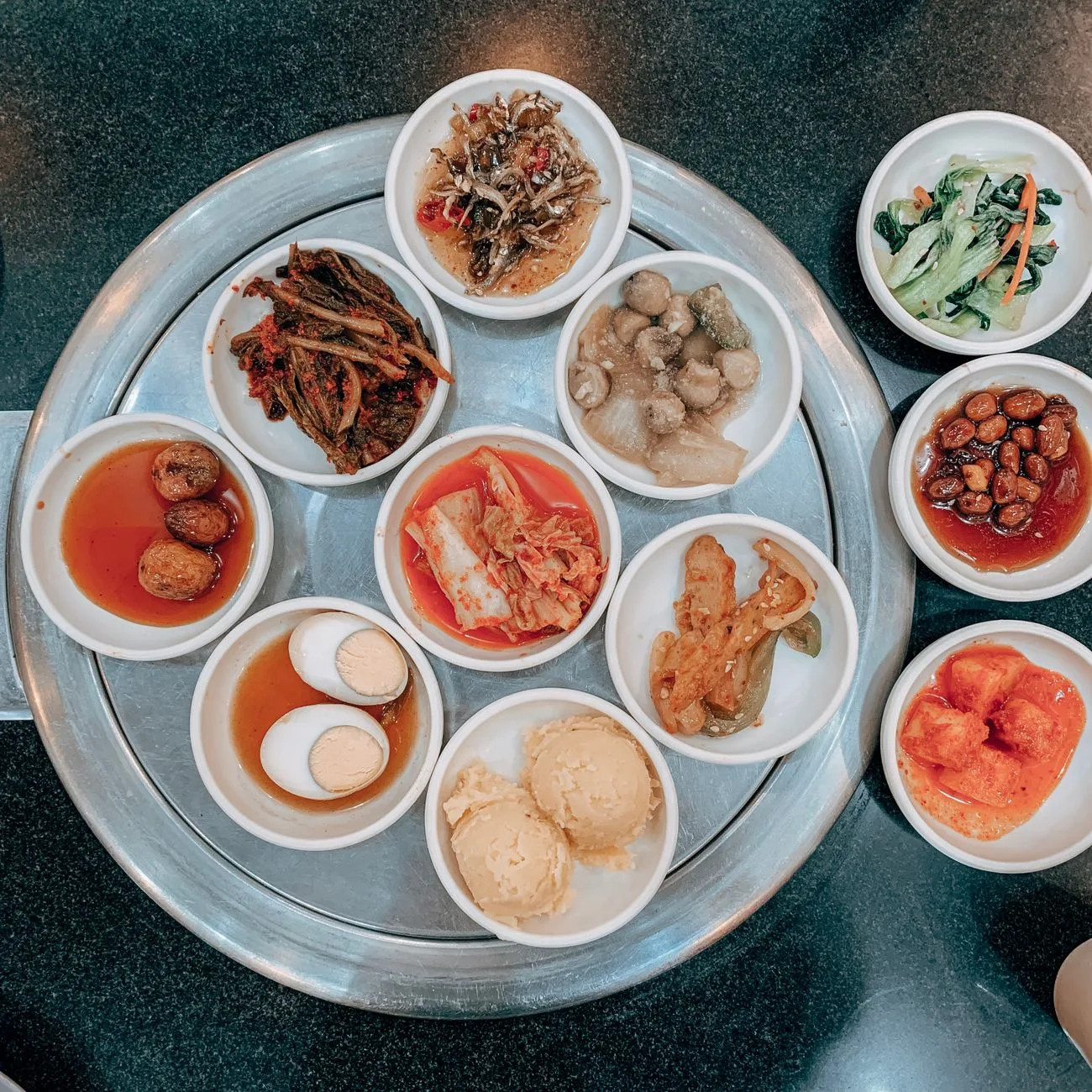
Jungsik Seoul sits at the luxury end of the spectrum. Its official menu lists a course named “BANCHAN” within a tasting menu priced at ₩230,000 per person as accessed in August 2026. One course per person is required. The same menu lists wine pairings at ₩160,000 for four glasses, ₩240,000 for seven glasses, and ₩700,000 for a premium five-glass pairing.
These figures make the decision clear. Jungsik is not a cost-effective way to eat a large quantity of side dishes. It is a formal dining purchase where banchan appears as one part of a broader tasting experience. The pairing prices are separate from the ₩230,000 food price, so adding wine changes the total substantially.
For example, two diners choosing the food course only pay:
₩230,000 × 2 people = ₩460,000 before any separately priced drinks or additions.
With the four-glass pairing for both diners, the listed pairing cost becomes:
₩460,000 + ₩160,000 × 2 = ₩780,000.
That arithmetic is why a visitor seeking “a lot of banchan” should choose baekban or a market. Jungsik makes sense when the objective is a polished tasting menu that includes a named banchan course.
How to plan a banchan day in Seoul
A compact plan can cover the three main formats without forcing one meal to do every job.
- Start with a baekban meal when the appetite is strongest. This establishes the rice, soup, and side-dish structure that makes banchan different from a plate of appetizers.
- Use Tongin Market during Lunchbox Café Tong’s listed hours, 11:00 to 17:00 Tuesday through Sunday, if sampling is the priority.
- Visit Seoul Central Market when takeaway is more useful than an immediate meal. Its listed hours extend from 07:00 to 24:00, but the third-Sunday closure matters.
- Reserve JUEUN or Jungsik for an occasion where the dining format itself is part of the goal. Their value is interpretation and service, not the lowest cost per dish.
- Carry a simple spending rule: pay for a market meal when variety matters, pay for baekban when context matters, and pay for fine dining only when the full menu experience matters.
The sequence also prevents a common failure mode: arriving at Tongin Market late, finding the lunchbox café closed, and then judging the market by a plan that depended on a specific operating window.
Timing your visit around Seoul’s food calendar
For walking-heavy food trips, the Korea Tourism Organization recommends spring, from March through May, or fall, from September through November, because temperatures are moderate. Its Seoul climate information lists average temperatures of 17.7°C in September and 10.6°C in October.
Dates can affect food plans beyond weather. Chuseok falls on September 24–26, 2026, and Seollal falls on February 16–18, 2026, according to the Korea Tourism Organization’s official holiday information. Holiday periods can affect transport, staffing, and opening schedules, so a market-based itinerary needs more flexibility during those dates.
Seoul also lists food-related events in 2026. Seoul Gourmet Week is scheduled for October 23–29, 2026, while the 2026 Seoul Spring Festival runs April 10–May 5 and includes K-food programming across Hangang parks. These events can add tasting opportunities, but they do not replace the everyday baekban or market experience.
The Sunchang Jangryu Festival, scheduled for October 15–18, 2026, focuses on Korean fermented sauces including gochujang. It is outside Seoul, so it belongs in a regional food itinerary rather than a Seoul banchan day.
Common mistakes when ordering banchan
The first mistake is treating all side dishes as unlimited. Restaurant refill policies differ, and a market purchase is a packaged transaction. Ask before assuming a second serving is included.
The second is ordering too many strongly flavored dishes at once. Fermented seafood, aged kimchi, salted fish, and spicy preparations can overwhelm milder vegetables. A balanced tray needs contrast, not five versions of the same intensity.
The third is judging value only by the number of plates. A small refined course can involve more preparation than a large market portion, while a baekban meal may provide the clearest explanation of how the dishes are meant to be eaten. Quantity and culinary purpose are different measures.
The fourth is planning around a market without checking the relevant section’s hours. Tongin’s Lunchbox Café Tong has a narrower schedule than the market itself. Gwangjang’s food alley and general market area also have different listed hours.
The fifth is assuming Michelin recognition means a restaurant specializes in banchan. The Michelin Guide’s selection identifies restaurants across Seoul’s dining scene. It does not mean every selected restaurant serves a traditional multi-dish side-dish table.
The final choice
For a first visit, choose baekban. It gives the clearest answer to what banchan is and how it belongs in a Korean meal. Choose Tongin Market when the main goal is comparison and variety, Seoul Central Market when takeaway matters, JUEUN when seasonal Korean cooking is the priority, and Jungsik only when a ₩230,000-per-person tasting menu fits the occasion.
FAQ
What is the best banchan experience for a first-time visitor to Seoul?
A baekban meal is the best first experience because it combines rice, soup, and several side dishes in the everyday Korean dining format described by the Korea Tourism Organization.
Is Tongin Market open every day?
Tongin Market’s Lunchbox Café Tong operates 11:00–17:00 Tuesday through Sunday and closes Mondays and the third Sunday of each month, according to Seoul’s official market information.
Which Seoul market is best for buying banchan to take away?
Seoul Central Market is the clearest choice because Seoul’s official tourism guide specifically lists fresh seafood, banchan, and snacks among its offerings.
How much does banchan cost at Jungsik Seoul?
Jungsik Seoul’s official menu listed a tasting course at ₩230,000 per person when accessed in August 2026. Wine pairings are priced separately at ₩160,000 for four glasses, ₩240,000 for seven glasses, or ₩700,000 for a premium five-glass pairing.
Does Michelin name the best banchan restaurant in Seoul?
No. The Michelin Guide Seoul & Busan 2026 selected 178 Seoul restaurants, but its official announcement does not identify one restaurant as Seoul’s definitive banchan winner.
What should a visitor choose if the banchan plan fails?
Switch from a specific market programme to a baekban restaurant. This preserves the central experience of rice, soup, and side dishes even when a lunchbox café has closed or a market stall has sold out.