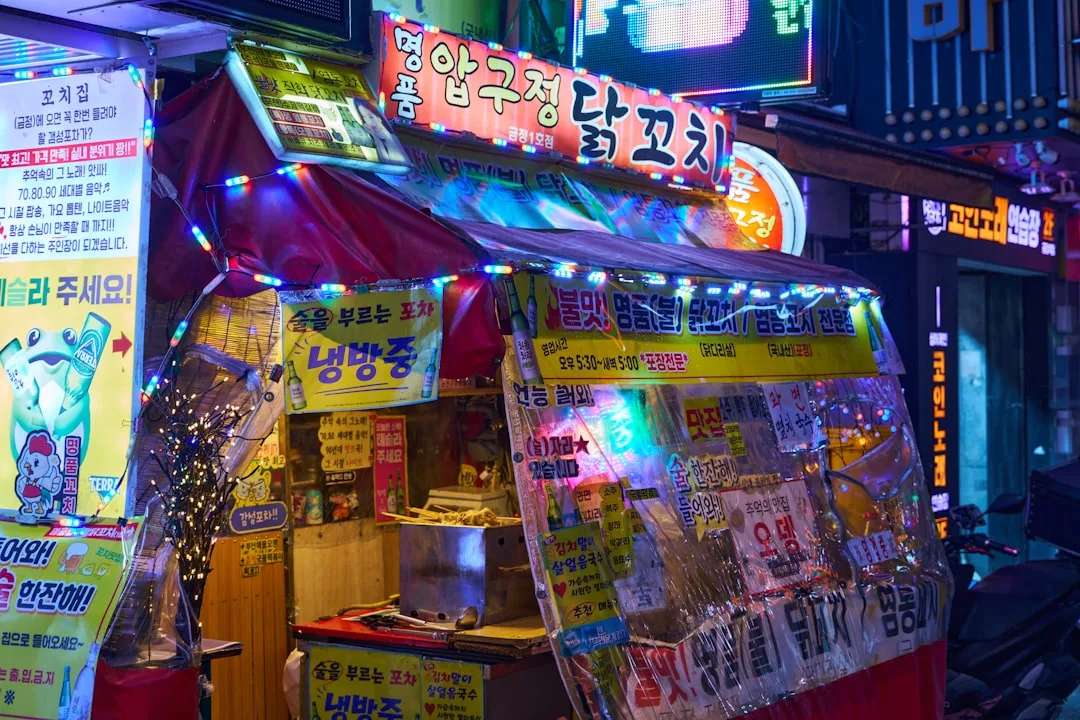
Seven days in Korea, six nights, one traveller, before international airfare: about ₩562,000 (US$397) on a hostel-and-subway budget, ₩1,477,000 ($1,044) mid-range, and ₩3,250,000 ($2,298) at four-star level. Converted at the 11 August 2026 spot rate of ₩1,414.50 to the dollar. Round-trip flights from the US add $582 to $805 on top.
What moves the number most
- Lodging is 53% of the mid-range total. Two people sharing one room cuts the per-person figure to about ₩1,087,000 ($769).
- Entry paperwork costs ₩0 for passport holders from 22 countries and regions, not ₩10,000. A lot of published advice still gets this wrong.
- Eating well is the cheap part: a full kimchi-jjigae set meal averaged ₩8,654 in Seoul in April 2026.
- The ₩10,000 Integrated Palace Ticket beats the ₩50,000 Discover Seoul Pass for most week-long itineraries.
- One Busan round trip on point-to-point KTX beats the 3-day KORAIL PASS by roughly ₩66,000.
What seven days in Korea costs, by tier
These three columns answer one question: what does a week actually come to before you buy a plane ticket? All figures are per person for 7 days and 6 nights, Seoul-based, and reflect prices current in mid-2026.
| Line item (7 days / 6 nights) | Budget (KRW) | Mid-range (KRW) | Four-star (KRW) |
|---|---|---|---|
| Lodging, 6 nights | 270,000 | 780,000 | 1,800,000 |
| Food, 7 days | 147,000 | 315,000 | 630,000 |
| City transport | 45,000 | 60,000 | 120,000 |
| Airport transfers, both ways | 10,000 | 22,000 | 150,000 |
| Attractions and tours | 30,000 | 150,000 | 250,000 |
| SIM, shopping, extras | 60,000 | 150,000 | 300,000 |
| Total per person | 562,000 | 1,477,000 | 3,250,000 |
| Total in USD (11 Aug 2026) | $397 | $1,044 | $2,298 |
The table shows that the gap between tiers is almost entirely a hotel decision. Food, transport and admissions differ by a factor of four across the columns; lodging differs by a factor of six and dwarfs everything else in absolute won.
Here is the mid-range column with the arithmetic on the page. A 3-star double at ₩130,000 a night for six nights is ₩780,000. Food at ₩45,000 a day (a ₩7,000 coffee and pastry, a ₩7,731 jajangmyeon lunch, and a ₩30,000 grilled-pork dinner with sides and a drink) across seven days is ₩315,000. Subway rides at ₩1,550 each plus a taxi every second evening runs ₩60,000 for the week. AREX Express both directions at ₩11,000 is ₩22,000. Palace tickets, a DMZ day tour and one paid experience come to ₩150,000. A tourist SIM, a hanbok rental and souvenirs add ₩150,000. Sum: ₩1,477,000.
Split that room between two people and ₩780,000 becomes ₩390,000 each, which drops the per-person week to ₩1,087,000. Solo travel in Korea carries a genuine penalty, and it is the single biggest lever in the whole budget.
Flights: the variable that swamps everything else
The airfare is worth more than the entire budget-tier ground cost, so quote it before you plan anything else. Aggregator snapshots taken around 11 August 2026 disagree because they measure different things: Skyscanner listed US-to-Seoul round trips from $582 for 2026 departures, momondo's lowest observed 2026 round trip to Incheon was $711, and Expedia's stated average round trip to ICN was $805. The first is a floor, the last is a mean. Budget against the mean and treat the floor as luck.
Booking at least two weeks ahead saves around 12% against last-minute fares, and the cheapest departure months are January to February and September to November. That second window matters: it overlaps with the best weather Korea gets all year.
Entry paperwork: most readers pay ₩0
The official K-ETA portal lists the application fee at ₩10,000 per applicant, with processing generally completed within 72 hours. Most people reading this will not pay it.
Under the Visit Korea Year initiative, 22 countries and regions are temporarily exempt from K-ETA through 31 December 2026 (KST): Australia, Austria, Belgium, Canada, Denmark, Finland, France, Germany, Hong Kong, Italy, Japan, Macao, the Netherlands, New Zealand, Norway, Poland, Singapore, Spain, Sweden, Taiwan, the United Kingdom and the United States. The exemption began on 1 April 2023 and has been extended twice.
Separately, the e-Arrival Card became mandatory for all foreign nationals on 1 January 2026, replacing the paper disembarkation card. It is free, filed online at the government's e-arrivalcard.go.kr portal within the 72 hours before arrival. There is one wrinkle worth knowing: travellers holding an approved K-ETA are exempt from filing an arrival card at all. So a US or UK passport holder chooses between paying ₩10,000 for a K-ETA and skipping the card, or paying nothing and spending five minutes on the e-Arrival Card. Take the free option.
Accommodation: half the budget, and climbing
Seoul hotel rates are not what they were. STR, the hospitality data firm owned by CoStar, put the Seoul–Incheon average daily rate at nearly ₩296,000 in September 2025, up 14.6% year-on-year, with occupancy at 81.6%. That average is pulled upward by the top end: Signiel Seoul weekend rooms started at ₩1,000,000 a night and Four Seasons Hotel Seoul averaged above ₩900,000 over the same period. No 2026 ADR figure has been published by STR or the Korea Tourism Organization, so treat ₩296,000 as a floor for a market that has kept rising.
Why it keeps rising is not a mystery. The Ministry of Culture, Sports and Tourism reported 10.71 million foreign visitors in the first half of 2026, up 21% year-on-year, with foreign card spending topping ₩10 trillion, a 50.8% jump. Demand is running ahead of room supply.
Practical planning bands for 2026, per night: hostel dorms and small guesthouses at ₩40,000 to ₩70,000, mid-range 3-star doubles at ₩100,000 to ₩180,000, and 4-star from ₩250,000. Which district you pick changes the number more than the star rating does, and it also changes how many taxi fares you absorb; our guide to choosing a Seoul district by cost and transfers works through that trade-off. If you want one memorable night rather than a week of them, a hanok stay slots in as a single-night splurge without wrecking the average.
Food: ₩21,000 a day is genuinely possible
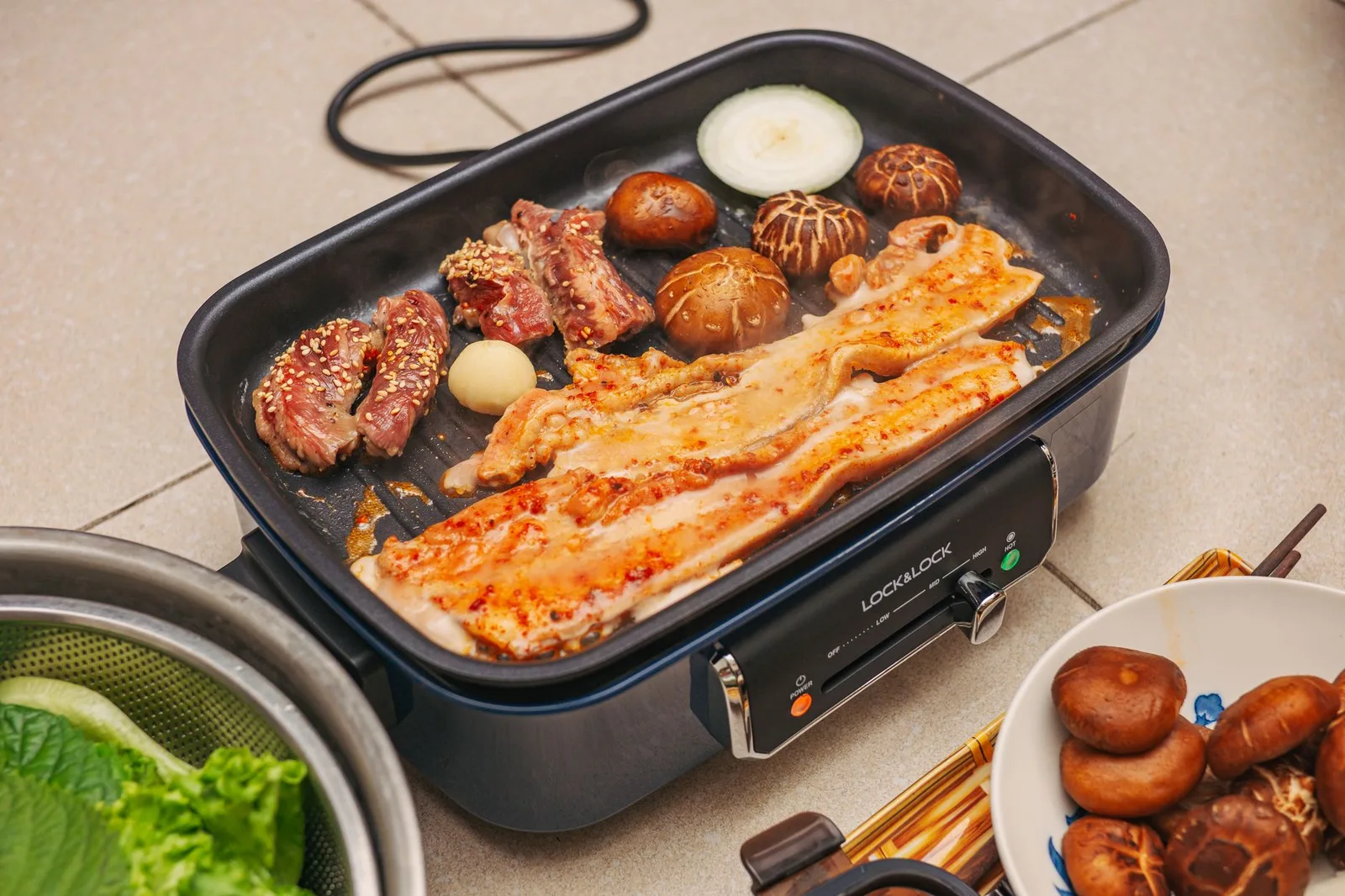
Korea's dining-out prices are tracked officially by the Korea Consumer Agency through its Chamgagyeok price service. Seoul averages for April 2026, with the April 2025 comparison, give you a real per-meal anchor:
| Dish (Seoul average) | April 2026 (KRW) | Change vs April 2025 |
|---|---|---|
| Gimbap | 3,800 | +4.89% |
| Jajangmyeon | 7,731 | +3.08% |
| Kimchi-jjigae baekban | 8,654 | +1.81% |
| Samgyeopsal, 200g | 21,321 | +4.27% |
What the table shows is that a sit-down Korean set meal still lands under ₩9,000 while grilled pork for one costs more than twice that. Build the budget tier around baekban and gimbap and ₩21,000 a day covers three meals. Grill pork twice in a week and the food line jumps ₩40,000 by itself, though choosing the cut and the neighbourhood carefully softens that.
Street food fills the gaps cheaply: single skewers of odeng or a portion of tteokbokki start at ₩1,000, and most individual items sit between ₩1,000 and ₩4,000. A three-or-four-item crawl over an hour costs ₩10,000 to ₩20,000 per person.
The upper column is a different exercise. Numbeo's crowdsourced Seoul data, last updated 22 July 2026, puts a three-course mid-range meal for two at ₩92,500, which is ₩46,250 a head for one dinner. Two of those in a week is more than the entire budget tier's food line.
Transport: cheap in the city, and the Busan question
Seoul's transit-card base fare rose to ₩1,550 on 28 June 2025, up ₩150 from ₩1,400, and applies across Seoul, Incheon and Gyeonggi Province. Cash fare is ₩1,650. Four rides a day comes to ₩6,200, which is why the city-transport line stays small in every column. Seoul Metro stated in June 2026 that the fare would need to reach ₩2,591 to normalise its finances, so the current price is a subsidised one and will not hold forever.
Taxis are the other reason ground costs stay low. Seoul's official transport page covers the standard taxi, which starts at ₩4,800 for the first 1.6 km and then charges ₩100 per 132 m. Night surcharges are the trap: 22:00 to 23:00 adds 20% (₩5,800 base), 23:00 to 02:00 adds 40% (₩6,700 base), and 02:00 to 04:00 adds 20% again. A run home from Hongdae at 01:00 is not the fare you paid at lunchtime.
From Incheon Airport, AREX Express reaches Seoul Station in 43 minutes for ₩11,000, all seats reserved. The All-Stop service takes 66 minutes across 13 stops; published fares sit between ₩4,750 and ₩5,150 depending on terminal, and the operator's own English fare table was unreachable on 11 August 2026, so budget ₩5,000 and expect small variation. A taxi over the same route costs ₩65,000 to ₩85,000, which is why it only appears in the four-star column.
Does the KORAIL PASS pay off on a seven-day trip?
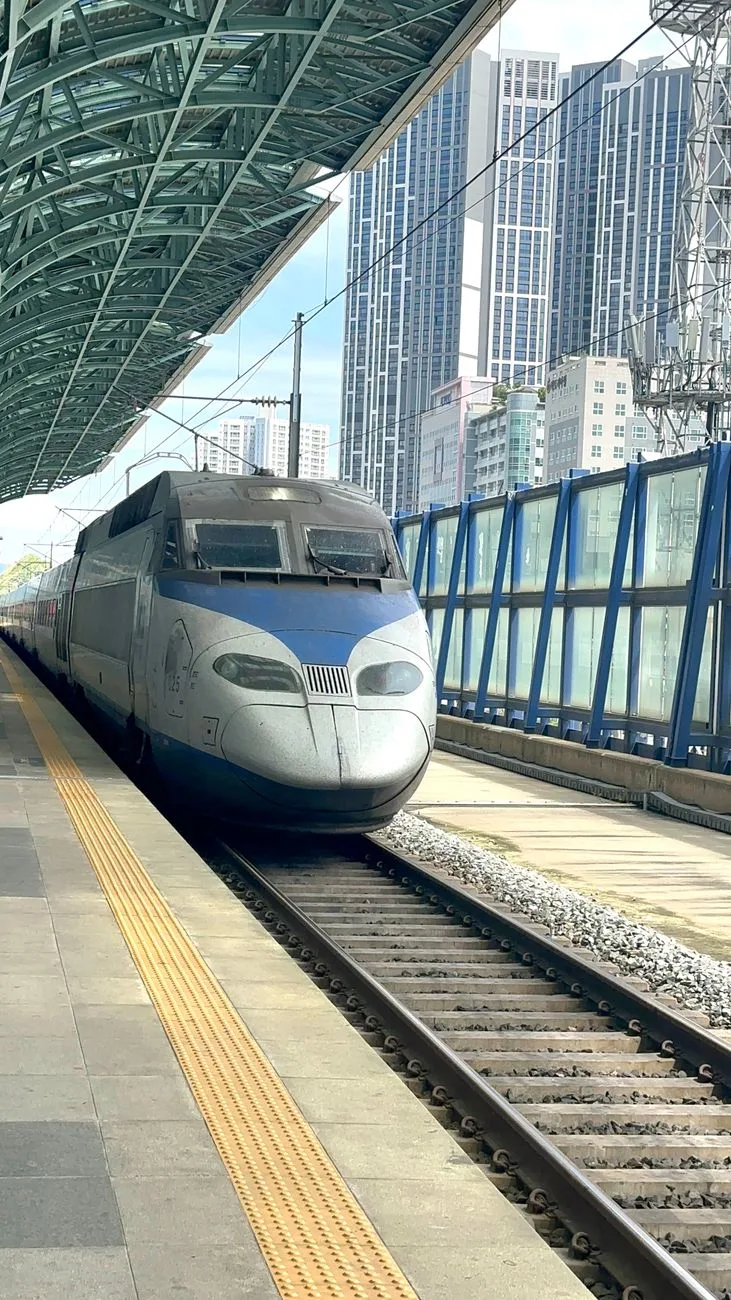
No, not for a single Busan round trip. Seoul to Busan in standard class runs about ₩59,800 one way, so the return journey is ₩119,600. The 3-day KORAIL PASS Select is reported at ₩186,000 for adults (2-day ₩131,000, 4-day ₩234,000, 5-day ₩275,000). Buying point-to-point saves ₩66,400.
The pass clears its price above roughly three long intercity legs: ₩186,000 ÷ ₩59,800 ≈ 3.1. A Seoul → Busan → Gyeongju → Jeonju → Seoul loop crosses that line; Seoul → Busan → Seoul does not. The pass is sold to foreign tourists only, and anyone resident or staying over six months is ineligible. Korail does not publish a static fare table on its current site, so treat both the fare and the pass prices as approximate to within a few thousand won.
For what a Busan leg actually looks like once you arrive, the three-day Busan itinerary covers where the extra nights go.
Attractions: the ₩10,000 ticket that usually beats the ₩50,000 pass
Seoul's headline sights are close to free. Gyeongbokgung admission is ₩3,000 for adults and ₩1,500 for youth aged 7 to 18, with entry free for children under 6 and visitors aged 65 and over, per the Korea Heritage Service, which operates the royal palaces.
The Integrated Palace Ticket costs ₩10,000 for adults and ₩5,000 for children, is valid for three months, and covers Gyeongbokgung, Changdeokgung including the Huwon secret garden, Changgyeonggung, Deoksugung and Jongmyo Shrine. Bought separately the five come to ₩14,000, so the pass saves ₩4,000 and removes four ticket queues. Cheaper still: visitors wearing hanbok enter the palaces free, and a rental typically costs less than a day of admissions if you are visiting several sites.
The Discover Seoul Pass is the other option, advertised at ₩50,000 for 24 hours, ₩70,000 for 48 and ₩90,000 for 72, covering 70-plus attractions plus an eSIM and Tmoney credit. Resellers discount it heavily, with Trazy listing the 24-hour tier at ₩35,900. The break-even rule is simple: at ₩50,000 you need three or more paid attractions of ₩15,000-plus inside the same 24 hours. An itinerary built on palaces, markets, Bukchon and Hongdae never gets there, because those cost ₩3,000 or nothing. Buy the pass only if you are stacking observation decks, themed museums and paid experiences into one dense day.
Guided day trips are the real attractions expense. A DMZ tour from Seoul is the most common single-item spend in the mid-range column, and it is worth pricing before you set the ₩150,000 line.
Five ways a seven-day budget breaks
Tourist-district food markup. The same kimchi-jjigae that costs ₩9,000 in the Jongno office district runs ₩13,000 to ₩15,000 in Myeongdong. Hotteok that rarely passes ₩2,000 elsewhere sells at ₩3,000 to ₩4,000 there. Eating three meals a day inside the shopping districts adds 40% to the food line for no gain.
Assuming Korea undercuts Japan. Numbeo's July and August 2026 data, crowdsourced rather than official, has Tokyo 21.4% cheaper than Seoul excluding rent. A mid-range meal for two is ₩92,500 in Seoul against ₩62,328 in Tokyo, and 500g of white bread is ₩4,165 against ₩2,365. Seoul wins decisively on movement: the monthly transit pass is ₩62,000 against Tokyo's ₩106,848, and per-km taxi fares are a fraction of Tokyo's. If your week is heavy on restaurants and light on trains, Seoul is the more expensive city.
Chuseok. Korea's 2026 harvest holiday falls on 24 to 26 September, and because none of the three days lands on a Sunday there is no substitute day. Intercity trains and buses book out well ahead. The Korea Tourism Organization's 2026 holiday list notes that palaces, museums and department stores generally stay open, so a Seoul-only week survives it. A Busan leg booked late does not.
Airport arrivals after the last train. The budget column assumes AREX at ₩5,000. Land at 23:30 and the only option is a ₩65,000-plus taxi with the 40% night surcharge attached, which is more than an entire day of the budget tier.
Currency drift. The won moved substantially through 2026: Exchange-Rates.org records a year-to-date average of ₩1,485.30 to the dollar against the ₩1,414.50 spot on 11 August 2026. A five-percent swing on a $1,044 trip is $52. Convert your own figures on the day you book rather than trusting a total quoted months earlier.
When you go changes what you pay
Autumn is both the cheapest flight window and the best weather. Seoul averages a high of 19°C and a low of 9°C in October, against 26.5°C and 316 mm of rain in the wettest month, July. The Korea Meteorological Administration had not published its 2026 autumn foliage forecast as of 11 August 2026; private forecasters extrapolating from historical patterns put Seoraksan's peak colour around 12 to 15 October and Seoul's urban peak between 5 and 15 November, which is an estimate rather than an official date. Our autumn timing guide goes into how the foliage front moves south.
October also stacks festivals, which raises hotel rates in the host cities rather than nationally. The 31st Busan International Film Festival runs 6 to 15 October 2026 at the Busan Cinema Center in Centum City. The Jinju Namgang Yudeung lantern festival runs 3 to 18 October, and the Andong International Maskdance Festival runs 24 September to 4 October per Andong's official tourism site. The Busan Fireworks Festival returns to Gwangalli Beach on the evening of 7 November. Book Busan accommodation for BIFF week early or accept a rate premium; see the 2026 festival calendar for the wider picture.
The decision, in one line
For a first seven-day trip, base the whole week in Seoul at the mid-range tier, budget ₩1,477,000 ($1,044) per person plus airfare, share a room if you can, and add one Busan round trip on point-to-point KTX tickets rather than a rail pass. That plan fails in exactly one situation: if your dates cross 24 to 26 September, move the Busan leg or book it now.
Prices here are dated where they were published and Korean fares, hotel rates and exchange rates move. This is general travel-planning information, not financial advice.
Frequently asked questions
Do I need a K-ETA for a seven-day trip to Korea?
Not if you hold a passport from one of the 22 exempted countries and regions, a list that includes the United States, Canada, the United Kingdom, Australia, Japan and most of Western Europe. That waiver runs through 31 December 2026. Everyone else applies and pays ₩10,000, generally cleared within 72 hours. All foreign nationals must file the free e-Arrival Card within 72 hours of arrival unless they hold an approved K-ETA.
Is Seoul cheaper than Tokyo in 2026?
Not on day-to-day spending. Numbeo's crowdsourced data from July and August 2026 puts Tokyo 21.4% below Seoul excluding rent and 13.9% below including it, with restaurants 21.9% cheaper and groceries 17.7% cheaper in Tokyo. Seoul reverses this on movement: its monthly transit pass costs ₩62,000 against Tokyo's ₩106,848, and taxi fares per kilometre are far lower.
Can seven days cover both Seoul and Busan?
Yes, at a cost of about ₩119,600 in KTX fares plus one hotel change. Four nights in Seoul and two in Busan works cleanly, since the KTX takes under three hours each way. The extra spend beyond the fare is the Busan room rate during festival weeks, particularly 6 to 15 October 2026.
What is the cheapest time of year to fly to Korea?
January to February and September to November carry the lowest fares according to airfare aggregator booking data. Booking at least two weeks ahead saves around 12% against last-minute purchases. Autumn is the better of the two windows because the weather is mild and dry, with Seoul averaging 19°C highs in October.