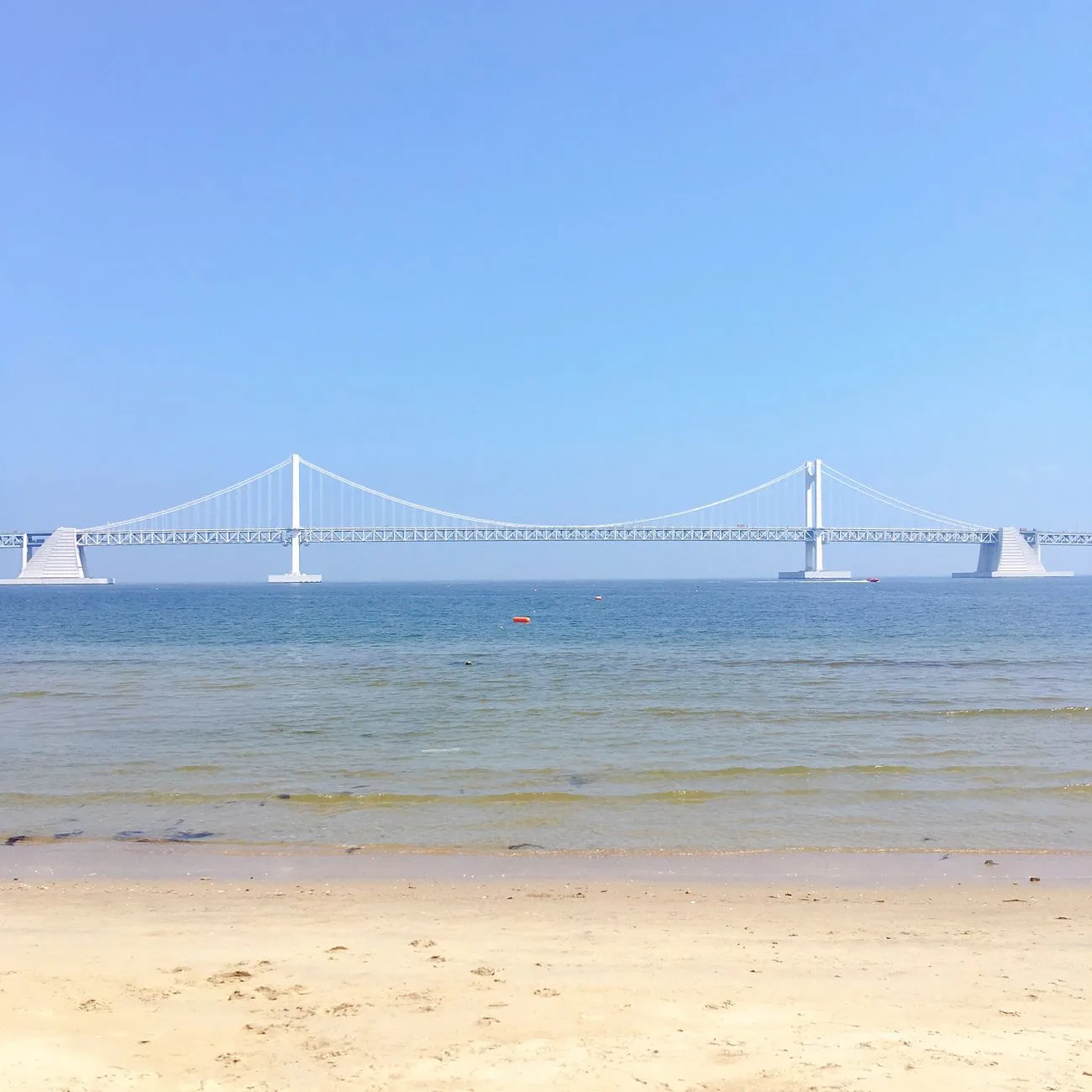
Busan is Korea's second city and its beach capital, roughly 2 hours 30 minutes south of Seoul by KTX. Three days covers it comfortably: one day in the old port districts around Nampo-dong, one on the eastern beaches at Haeundae and Gwangalli, one for a temple or a day trip. The city runs 30 km east to west, so where you sleep decides how much of it you actually see.
Lock these in before anything else
- Your base, because Busan is linear and a bad choice costs you 90 minutes a day.
- KTX or SRT seats, especially Friday evening southbound and Sunday afternoon northbound.
- A Sky Capsule slot at Haeundae Blueline Park if you want one on a weekend.
- A transport card (T-money or Cashbee) at any convenience store, which also unlocks the metro-to-bus transfer discount.
- The season: mid-July is the rainy season, late August through September carries typhoon risk, and October is the best month by a wide margin.
Getting to Busan by KTX, SRT, or Gimhae Airport
The KTX from Seoul Station to Busan Station takes about 2 hours 30 minutes on the fastest services and closer to three hours on trains that make more stops. Standard-class fare sits around ₩60,000 one way as of 2026; Korail publishes the exact fare and live timetable, and it changes with seat class and discount type. SRT trains cover the same corridor from Suseo Station in southeast Seoul, which is the better departure point if you are staying anywhere around Gangnam.
A Seoul–Busan round trip on its own does not come close to justifying a rail pass. If you are stringing together Gyeongju, Jeonju, or Gangneung as well, the arithmetic shifts, and we worked through the break-even in the Korea Rail Pass guide.
Gimhae International Airport (PUS) handles domestic flights from Gimpo in about an hour plus international routes from Japan, Taiwan, and Southeast Asia. The thing to understand about Gimhae is its position: it sits on the western edge of the metropolitan area, while Haeundae is on the far eastern edge. That transfer is longer than most people budget for.
Three ways in from the terminal:
- Busan–Gimhae Light Rail from the airport station to Sasang, then Metro Line 2 east. Cheapest, around ₩2,000–2,500 all in, but Line 2 runs the entire length of the city and the trip to Haeundae takes well over an hour with luggage.
- Limousine bus direct to Seomyeon or Haeundae, in the ₩7,000–10,000 range depending on route. Fewer stairs, no transfers. Routes and current fares are listed by Visit Busan, the city's official tourism service.
- Taxi, 45 to 60 minutes to Haeundae in normal traffic and considerably more at rush hour.
Most visitors on a short-stay visa waiver need K-ETA approval before boarding a flight to Korea; check current requirements and exemptions on the official K-ETA portal rather than a third-party site, since the exempt-country list has been revised repeatedly.
Where to stay in Busan: Haeundae, Seomyeon, Nampo, or Gwangalli
Busan has no single center. It has an old city in the west around the port, a business and shopping core in the middle at Seomyeon, and a resort strip in the east. Choosing between them is the highest-leverage decision of the trip.
| Base | Best for | Metro access | Main trade-off |
|---|---|---|---|
| Haeundae | Beach mornings, sea-view hotels, families | Line 2 (Haeundae, Jung-dong) | 45–50 minutes from Nampo-dong and Busan Station |
| Gwangalli | Bridge views, cafés, bars, drone show nights | Line 2 (Gwangan, Geumnyeonsan) | Thinner hotel supply, mostly small and mid-size properties |
| Seomyeon | Shortest average travel time to everything | Lines 1 & 2 interchange | No sea, dense and loud until late |
| Nampo-dong / Jung-gu | Markets, Jagalchi, Gamcheon, Yeongdo | Line 1 (Nampo, Jagalchi) | Far from the beaches, quiet after 10pm |
| Busan Station area | Early KTX departures, budget rooms | Line 1 (Busan Station) | Little reason to be there otherwise |
The verdict: for a first visit of three nights or fewer, stay in Seomyeon. For a beach holiday or a stay of four nights and up, stay in Haeundae. Seomyeon sits on the crossing point of Lines 1 and 2, which means no day begins with a 40-minute repositioning ride, and the food around Seomyeon Market is better than anything in the hotel strip.
This rule fails in one situation. With small children in July or August, the ability to walk back to the room at 2pm outweighs every minute of transit efficiency, and only Haeundae and Gwangalli give you that. Book the beach.
If you are splitting the trip with the capital, the same logic applied to a very different street grid is in our guide to choosing a Seoul neighborhood.
Getting around Busan: metro lines, transport cards, and the coastal train
Busan Transportation Corporation runs four numbered metro lines. Two of them do almost all the work for visitors. Line 1 runs north to south through the old city, from Nopo down through Busan Station, Jagalchi, and Nampo to Dadaepo Beach. Line 2 runs west to east along the coast, from Yangsan through Sasang and Seomyeon out to Haeundae and Jangsan. They cross at Seomyeon. Fares, station maps, and first and last train times are published by Humetro.
The line most guides skip is the Donghae Line, a Korail commuter service along the east coast from Bujeon through Centum, Shinhaeundae, Songjeong, Osiria, and on to Gijang. Osiria Station is the practical access point for Haedong Yonggungsa Temple and for Lotte World Adventure Busan, and it saves a long bus grind from Haeundae.
Both T-money and Cashbee cards work on Busan metro and buses; Cashbee is the locally issued card and either is sold at any CU, GS25, or 7-Eleven. Paying by card rather than cash also gives you the metro-to-bus transfer discount, which cash fares do not receive. Single rides within the city stay under ₩2,000 for most journeys, split across a two-zone distance system.
Here is the number that should shape your itinerary: Haeundae to Nampo-dong takes about 50 minutes on Line 2 to Seomyeon, a transfer, then Line 1. Cross the city twice in one day and you have spent nearly two hours underground. Group each day by side of the city.
Mobile data matters more here than in Seoul because the bus network is where the useful routes are and the stop names are frequently Korean-only on the signage. Our eSIM comparison for Korea covers what actually works on arrival.
Three days in Busan, planned around geography
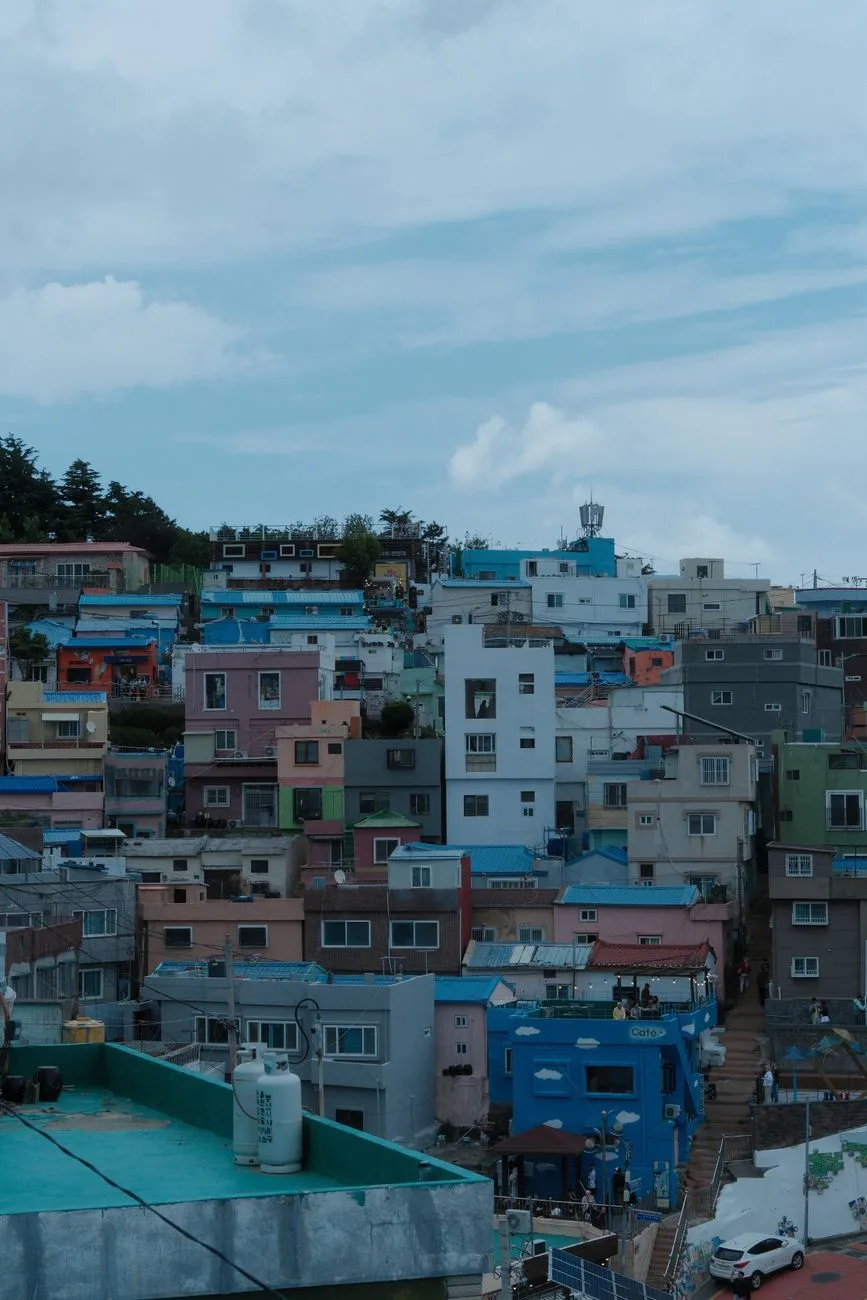
Day 1, the west and the old port. Start at Jagalchi Market, Korea's largest seafood market, then walk ten minutes to BIFF Square for ssiat hotteok, the seed-stuffed griddle pancake that costs around ₩2,000 and burns the roof of your mouth every single time. Gukje Market sits directly behind it. Yongdusan Park and Busan Tower are a short climb up from Nampo. Save Gamcheon Culture Village for late afternoon when the light hits the painted houses: take Line 1 to Toseong Station, leave by Exit 6, and catch bus 1-1, 2, or 2-2 up the hill. Ride to the top and walk down. The village is built on a steep slope and the marked route runs downhill for a reason. Alternatively, cross to Yeongdo for Huinnyeoul Culture Village and the cliff path above the water.
Day 2, the eastern beaches. Haeundae Blueline Park runs two things along the old railway bed: the open-sided Beach Train and the four-seat Sky Capsule that crawls above the shoreline from Mipo to Cheongsapo. Capsule tickets are timed, priced per capsule rather than per person, and sell out on weekends and holidays; book online in advance. Walk the coastal path back, then take in Dongbaekseom Island, the wooded headland at the western end of Haeundae Beach, where the APEC Nurimaru conference house sits. Busan X the Sky occupies the 100th floor of the LCT Landmark Tower if you want the aerial view. Finish at Gwangalli after dark for Gwangan Bridge, and check the city's schedule for drone show evenings, which run on selected Saturdays and are announced by Visit Busan.
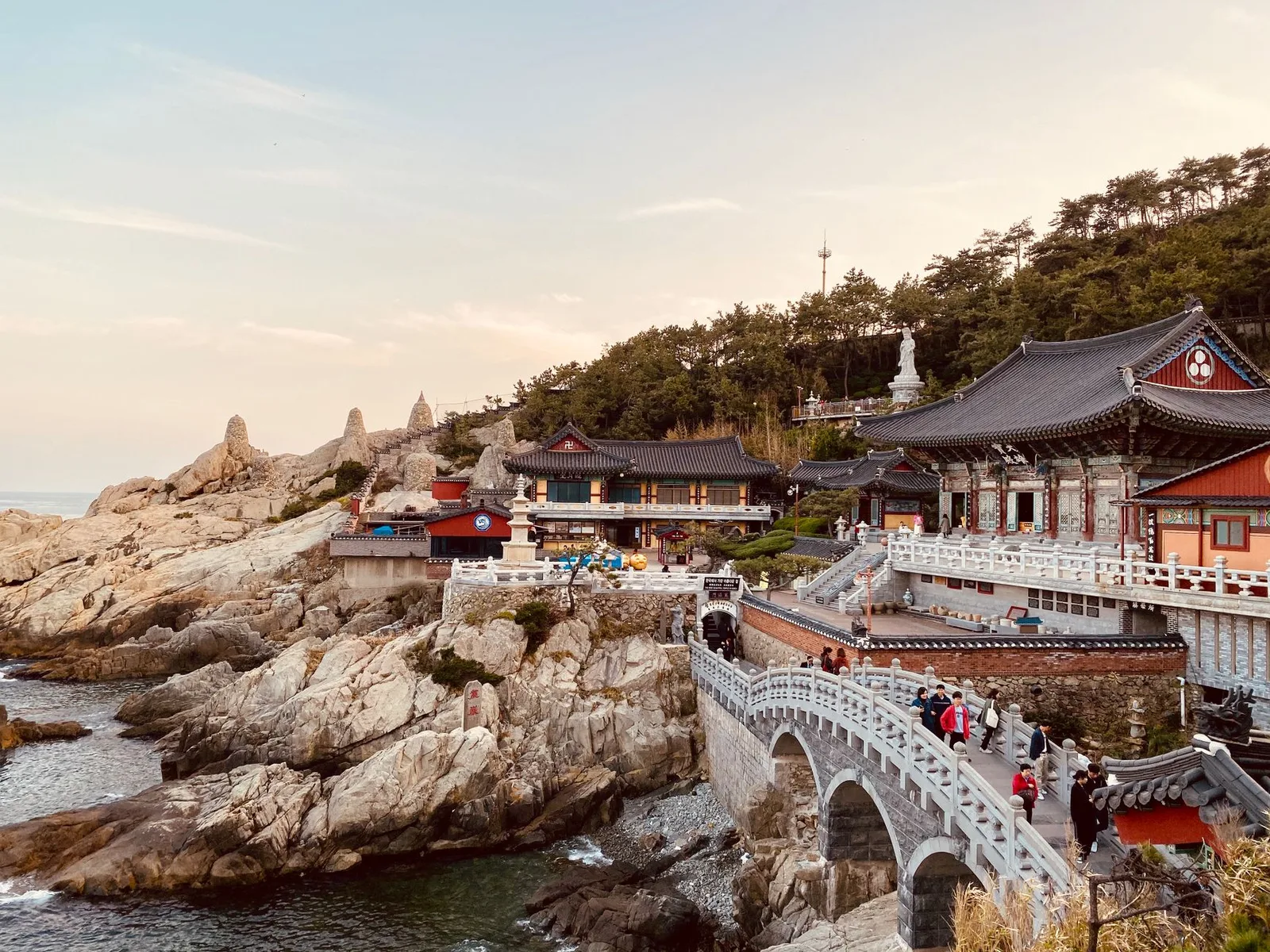
Day 3, pick exactly one. Haedong Yonggungsa, the seaside temple in Gijang built onto the rocks above the water, is free to enter and reached via the Donghae Line to Osiria plus a short bus or a walk. Beomeosa, the mountain temple founded in the Silla period on the slopes of Geumjeongsan, is Line 1 to Beomeosa Station then bus 90, and pairs with a hike along the Geumjeong Fortress walls. Or leave the city entirely: Gyeongju, the Silla capital and a UNESCO World Heritage area, is about 30 minutes by KTX to Singyeongju Station or an hour by intercity bus from Nopo Bus Terminal.
What three days actually costs
| Item | Budget | Mid-range |
|---|---|---|
| Room per night | ₩45,000–70,000 (guesthouse, business hotel) | ₩120,000–200,000 (Haeundae sea view, more in August) |
| Food per day | ₩25,000–35,000 (market stalls, gukbap, convenience store breakfast) | ₩60,000–90,000 (one seafood meal, cafés) |
| Local transport per day | ₩4,000–6,000 | ₩15,000–25,000 with taxis |
| Attractions | ₩0–15,000 (temples and villages are free or nominal) | ₩50,000+ with the observation deck and Sky Capsule |
These are 2026 ranges and they move with the season. August on Haeundae is the single biggest distortion: beachfront room rates during peak swimming season run well above the rest of the year.
What to eat in Busan and where the dishes come from
Busan food is port food and refugee food, and both origins are still legible on the menu.
Dwaeji gukbap is the city's signature bowl: pork broth over rice, served with a plate of chives, salted shrimp, and fermented shrimp paste you season it with yourself. Expect ₩9,000–12,000. Seomyeon has a whole alley of specialists near the market, and the shops that only sell gukbap are almost always better than the ones with a long menu.
Milmyeon exists because of the Korean War. Displaced northerners in Busan wanted naengmyeon, buckwheat was unavailable, and American wheat flour aid was not, so the noodles were remade in wheat. It is chewier and softer than its northern parent, served cold in beef broth or dry with chili paste, and priced around ₩8,000–10,000.
Eomuk, the fried fish cake, is a Busan industry rather than a snack. Samjin Eomuk traces its founding to 1953 in Yeongdo and now runs bakery-style shops including one at Busan Station where the product is sold like pastry.
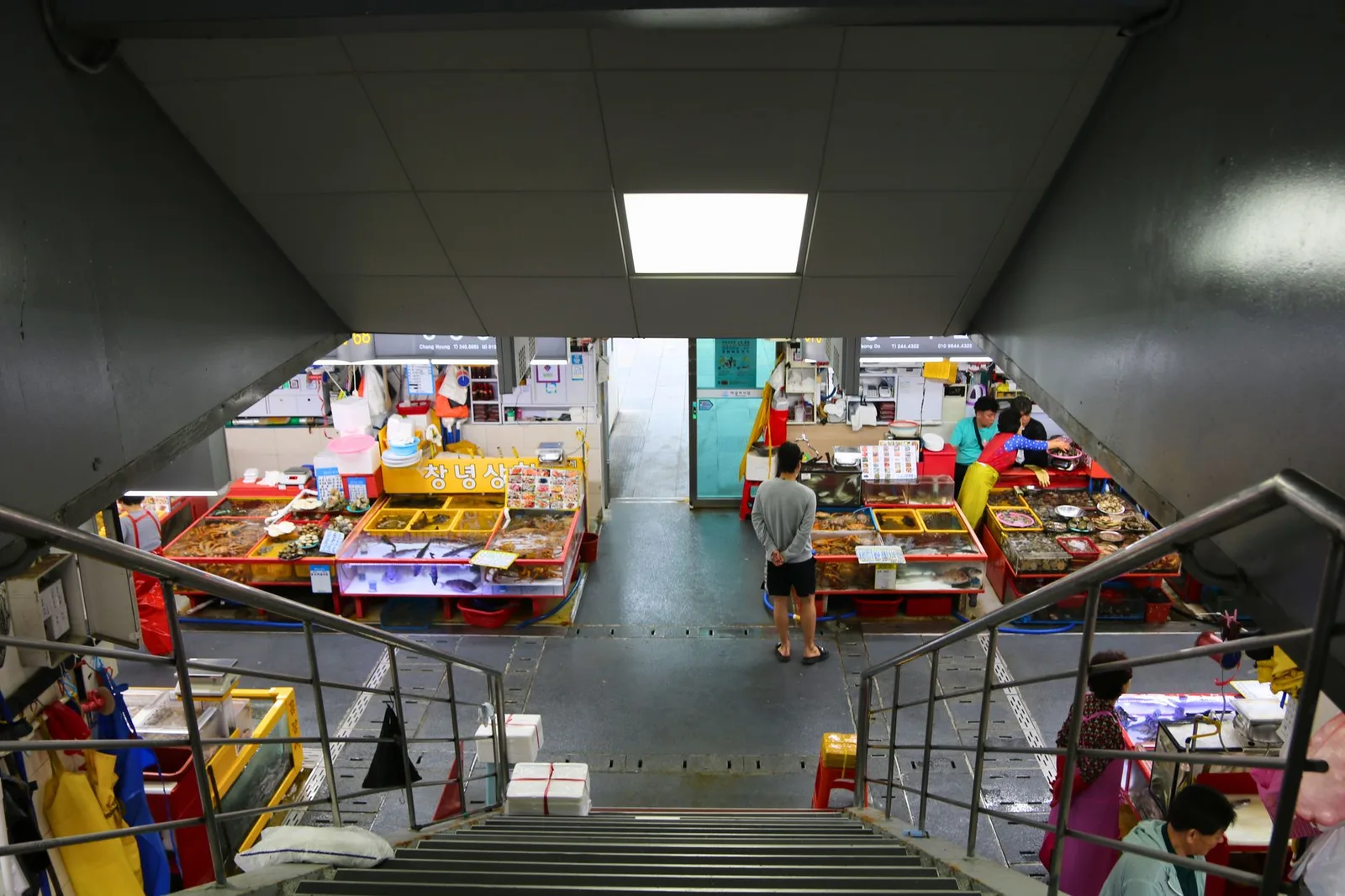
At Jagalchi, the standard move is to buy live seafood from a ground-floor stall and carry it upstairs, where a restaurant prepares it for a per-table fee. Agree the price per kilogram and the preparation charge before anything is netted. This is where visitors most often get an unpleasant bill, and it is entirely avoidable. Grilled kkomjangeo (hagfish) is the local specialty worth ordering there.
When to visit Busan: beach season, festivals, and typhoons
Busan's swimming season is an administrative date, not a weather condition. The city opens its beaches with lifeguards and facilities for a defined summer window, announced annually and running roughly July through August. Outside it, the sand is open and the water is not supervised.
The jangma rainy front sits over the south coast from late June into mid or late July, which makes the first half of July the worst-value time to book a beach hotel. August and September carry genuine typhoon exposure: Busan faces the open sea on the southeast corner of the peninsula, and past storms have closed Gwangan Bridge and flooded the Marine City waterfront. The Korea Meteorological Administration issues the warnings that matter.
October is the month. The Busan International Film Festival takes over the Busan Cinema Center in Centum City in early October, and the fireworks festival lights up Gwangalli in autumn, with the exact date announced each year. Air is clear, water is still warm enough to wade in, and hotel rates have dropped off the summer peak. Our broader Korea in autumn guide covers how these dates collide with Chuseok.
Busan blooms earlier than anywhere else on the mainland, which makes it a strategic cherry blossom base in late March: Dalmaji Hill above Haeundae, the apartment-lined stretch in Namcheon-dong, and the Jinhae Gunhangje festival about an hour west. The regional bloom timing guide has the sequence.
Winter is Busan's underrated advantage. Daytime highs stay above freezing far more often than Seoul's, snow is rare, and the coastal walks are empty. Full month-by-month conditions are in our Korea weather guide.
Five mistakes that cost travelers a day
- Booking Haeundae and then planning a market-heavy itinerary. Two 50-minute crossings a day for three days is five hours gone.
- Arriving at Blueline Park on a Saturday without a reservation. Sky Capsule slots go early and there is no useful standby.
- Not agreeing a price at Jagalchi before the fish is out of the tank.
- Climbing Gamcheon from the bottom. Take the bus to the top of the hill and descend; the village is built on stairs.
- Assuming Haedong Yonggungsa is a quick hop from Haeundae. It is in Gijang, outside the built-up city, and the last stretch is on foot or by local bus.
Busan travel questions people ask next
How many days do you need in Busan?
Three full days is the sweet spot: one for the western old city, one for the eastern beaches, one for a temple or a Gyeongju day trip. Two days works if you skip the day trip. Five or more only pays off if you add hiking on Geumjeongsan or beach time in Songjeong and Gijang.
Can you visit Busan as a day trip from Seoul?
Yes, but about five hours of the day goes on trains. A 6am departure and a late-evening return gives you roughly nine usable hours, enough for either the Nampo and Jagalchi side or the Haeundae and Gwangalli side. Trying to do both means seeing the inside of Line 2 instead. One overnight transforms the trip.
Is Busan worth visiting if you only have a week in Korea?
For a first week, Seoul plus two nights in Busan is a stronger itinerary than a full week in Seoul. Busan supplies coastline, a working fish market, hillside villages, and a completely different dialect and food culture, all within a 2.5-hour train ride. Skip it only if your trip is themed around palaces, shopping, or Seoul nightlife.
Do you need to speak Korean in Busan?
No, but expect less English than in Seoul. Metro signage and announcements are multilingual, and major attractions have English materials. Small gukbap shops, market stalls, and city buses often are not. A translation app with camera input covers most of the gap.
What is the fastest way from Gimhae Airport to Haeundae?
A taxi, at 45 to 60 minutes outside rush hour. The limousine bus is the best cost-to-effort ratio. The light rail plus Metro Line 2 is cheapest but crosses the entire city and involves a transfer at Sasang with luggage.
Two bookings deserve your attention before you fly: the KTX or SRT seat, and a Sky Capsule slot if a weekend falls inside your dates. Everything else in Busan can be decided the morning of.
This guide is general travel information. Fares, opening dates, festival schedules, and entry requirements change; confirm current details with Korail, Visit Busan, and the K-ETA portal before you travel.