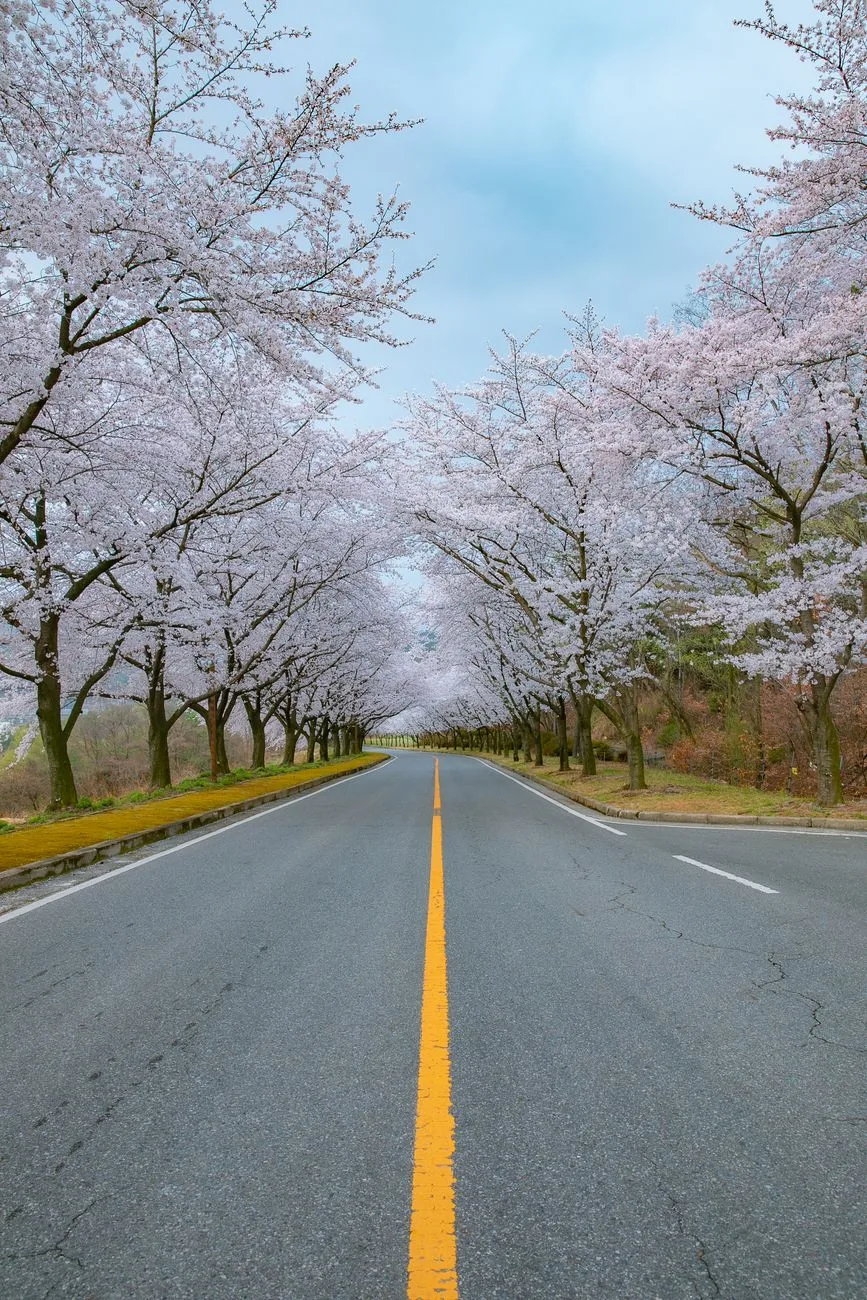
Korea's cherry blossom front moves north about two weeks from Jeju to Seoul. Flowering begins on the south coast around March 25–30 and reaches Seoul roughly a week later, with full bloom arriving about seven days after flowering. For one trip that covers both ends of the country, April 1–10 is the safest single window.
That range is an average, not a promise. Three of the last several springs pulled Seoul's bloom into the last days of March, and a cold second half of March can push it past April 10. The planning problem is not finding the average date. It is deciding how much risk to carry, and where to run if the forecast moves after your flights are booked.
For the broader seasonal picture beyond spring, see our season-by-season guide to visiting Korea; this page covers the blossom window only, in the detail that timing actually requires.
The four numbers that decide your dates
- Flowering (개화): the day three or more flowers open on the Korea Meteorological Administration's designated standard tree for that city.
- Full bloom (만개): roughly 80% of buds open on the same tree, most often six to eight days after flowering.
- The usable window: about ten days from flowering until petals are mostly down, of which only three to five days look like the photographs.
- The buffer: ±5 days around any forecast, which is why refundable hotel rates matter more than cheap ones in this season.
The best time to visit Korea for cherry blossom, region by region
Blossoms open earliest where spring warmth accumulates first: the south and the islands. The front then climbs north and inland at a pace that works out to roughly 20–25 km a day in an average year.
| Region / city | Flowering, most years | Peak (full bloom) | Headline location | Planning note |
|---|---|---|---|---|
| Jeju | Mar 21–28 | Mar 27–Apr 3 | Jeonnong-ro, Jeju National University road | Earliest in the country; canola fields overlap |
| Busan, Changwon (Jinhae) | Mar 24–30 | Mar 30–Apr 5 | Yeojwacheon, Gyeonghwa Station | Festival crowds peak on the first weekend of April |
| Gwangju, Yeosu, Hadong | Mar 26–31 | Apr 1–6 | Hwagae ten-ri blossom road | Rural roads; a car helps far more than rail |
| Daegu, Gyeongju | Mar 26–Apr 1 | Apr 1–7 | Bomun Lake, Bulguksa approach | Pairs well with a Busan base |
| Daejeon, Jeonju | Mar 29–Apr 4 | Apr 4–10 | Jeonju Hanok Village edges | Good mid-trip stop between Seoul and the south |
| Seoul, Incheon, Suwon | Apr 1–8 | Apr 5–13 | Yunjung-ro (Yeouido), Seokchon Lake | Urban heat pulls the city ahead of its suburbs |
| Gangneung, Sokcho | Apr 3–11 | Apr 8–16 | Gyeongpo Lake | Sea breeze slows and then prolongs the display |
| Chuncheon and inland Gangwon | Apr 5–14 | Apr 10–19 | Soyang riverside roads | Reliable fallback if you arrive late |
These are long-term ranges, not this year's dates. The Korea Meteorological Administration (기상청) records observed flowering and full-bloom dates at its standard observation trees and publishes the historical series through its open data portal, data.kma.go.kr; current climate normals use the 1991–2020 reference period. Bloom forecast maps that circulate each March now come mostly from private Korean weather companies rather than the KMA itself, so treat them as estimates and check the observed record for context.
How Korea measures flowering, and why the definition matters to you
Each observation city has one designated tree. Seoul's sits at the old Seoul weather observatory in Songwol-dong, Jongno-gu, which is why the announced Seoul date can arrive a couple of days before the trees along the Han River catch up. The published date describes that tree, not the whole city.
The practical consequence is a lag you can plan around. Flowering is only three open blossoms. What visitors picture is full bloom, six to eight days later, and the difference between those two announcements is exactly the difference between a promising branch and a tunnel of white.
Petals then hold for roughly five to seven more days in calm weather. One night of heavy rain with wind can end it in a single day, which is the single most common way a well-planned blossom trip fails.
Why the dates keep moving earlier
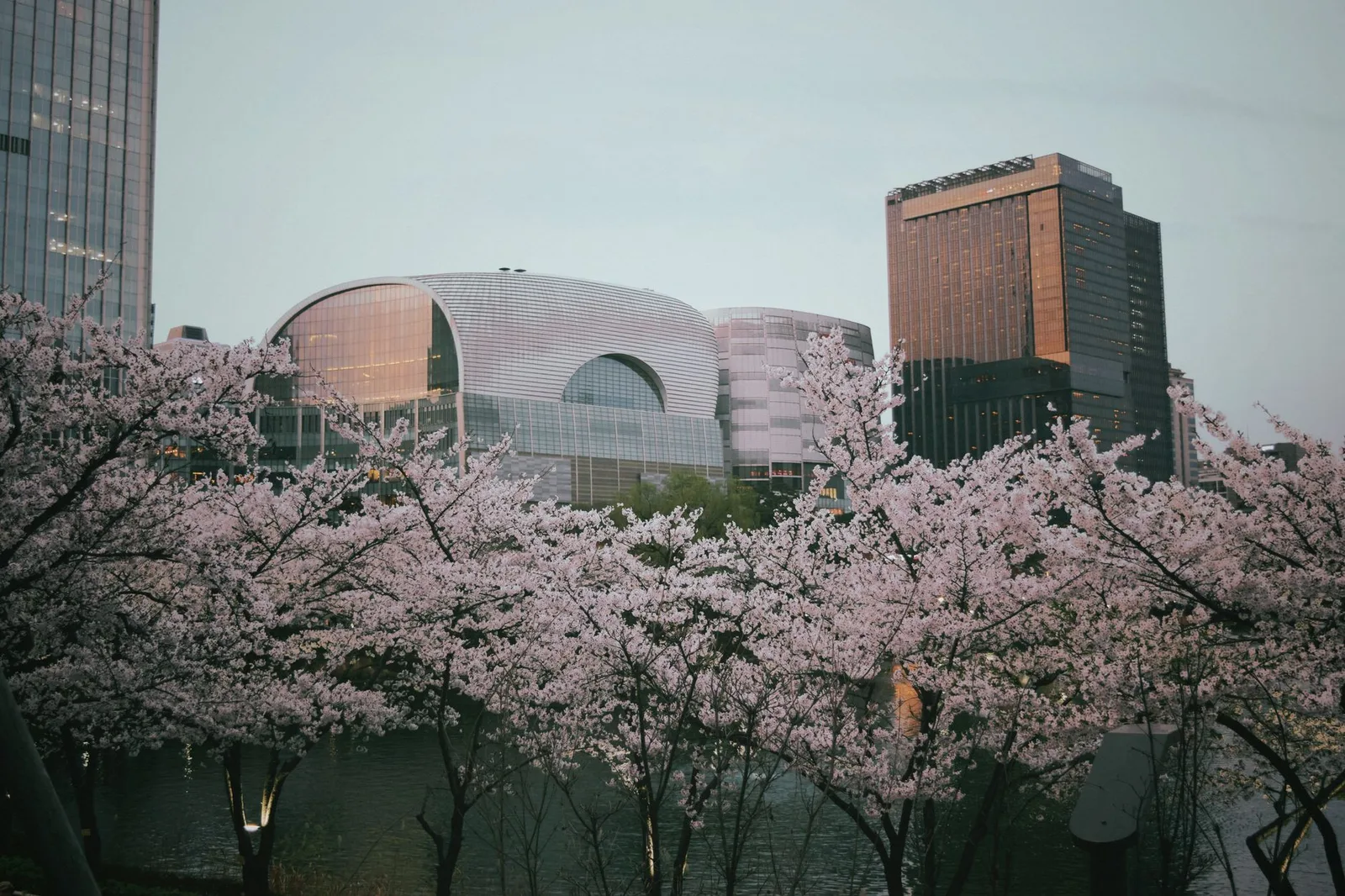
Cherry trees break dormancy after a cold period, then need accumulated warmth to open. A mild February and a warm first half of March compress that accumulation and pull the bloom forward. In 2023 Seoul's standard tree flowered in the final week of March, among the earliest dates in a record that runs back to the 1920s, and travellers who had booked around the historical April 8–10 average arrived to green leaves.
Altitude and water work the other way. Temple grounds a few hundred metres above the town below often run three to seven days behind it, and lakeside or coastal sites such as Gyeongpo hold their petals longer because the air stays cool and steadier.
Here is the case where the standard advice breaks: a cold snap in late March. It delays flowering, which sounds like bad news, but cool weather during bloom is what makes petals last. A chilly, dry first week of April is better for viewing than a warm, wet one, even though the warm year opens first.
A worked example: choosing dates for a seven-night trip
Start from the city you refuse to miss, not from the calendar. Suppose that city is Seoul, with a day trip south for the festival.
- Take Seoul's mid-range full-bloom estimate: April 8.
- Subtract the buffer for a warm spring: 8 − 5 = April 3.
- Set arrival at April 2 and departure at April 9. Seoul's window sits in the middle, with the southern cities already past flowering at the front of the trip.
- In mid-March, when the year's forecast maps appear, check the projected Seoul date. If it has moved to April 2, your trip still works because the south is your early-trip insurance. If it has moved to April 14, shift the first half toward Gangneung and Chuncheon instead.
- Book accommodation on refundable rates and fix the flights last, or accept that the flights are the part you cannot move.
The arithmetic that matters is the asymmetry. Arriving five days early costs you nothing except a southern detour, since blossoms exist somewhere in the country from late March. Arriving five days late in Seoul costs you the entire reason for the trip, because nothing further south has anything left. When in doubt, book early and travel north as the trip goes on.
If that itinerary involves three or more intercity legs, run the numbers in our Korea Rail Pass break-even guide before buying one; short blossom trips often fall on the wrong side of the break-even.
Where the blossoms justify the detour
Jinhae, Changwon
The Jinhae Gunhangje Festival, held since 1963, is the largest cherry blossom event in the country. The two scenes worth the travel are Yeojwacheon Stream, where the branches close over the water beside the small footbridge, and Gyeonghwa Station, a disused rail line running straight through a corridor of trees. Changwon City publishes the festival dates and shuttle arrangements at changwon.go.kr each spring.
From Seoul this is a long day. KTX to Changwon-jungang or Masan takes a little over three hours, and local buses into Jinhae are slow during the festival because roads are restricted. A 06:00 departure gets you there mid-morning; anything later and you queue.
Seoul
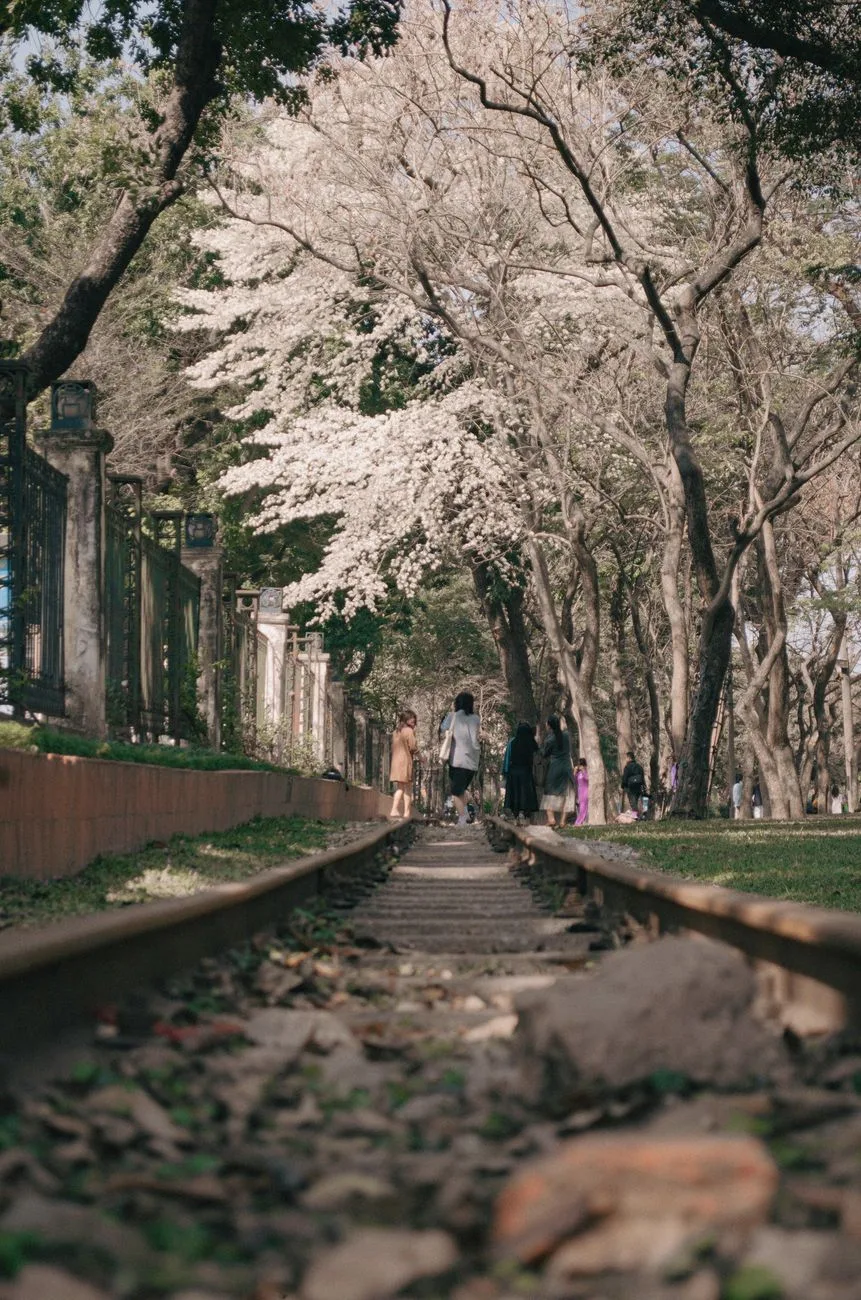
Yunjung-ro, the road behind the National Assembly on Yeouido, is the classic stretch and the busiest. Seokchon Lake beside Lotte World Tower gives you a circular walk with the tower in every frame. Seoul Forest, the Namsan slopes and the smaller streams such as Anyangcheon and Jungnangcheon are where residents actually go, and they are pleasant on a weekday morning when Yeouido is not. Festival dates and street-closure details appear on the city's official channels at english.seoul.go.kr. Choosing a base matters here; our guide to the best areas to stay in Seoul by neighbourhood and travel style covers the trade-offs.
Gyeongju
Bomun Lake and the roads around the historic centre put blossoms against tombs, pagodas and temple gates rather than apartment blocks, which is a different photograph entirely. Gyeongju peaks a few days before Seoul and hosts a large cherry blossom marathon in early April, so the town books out early.
Jeju and the late bloomers
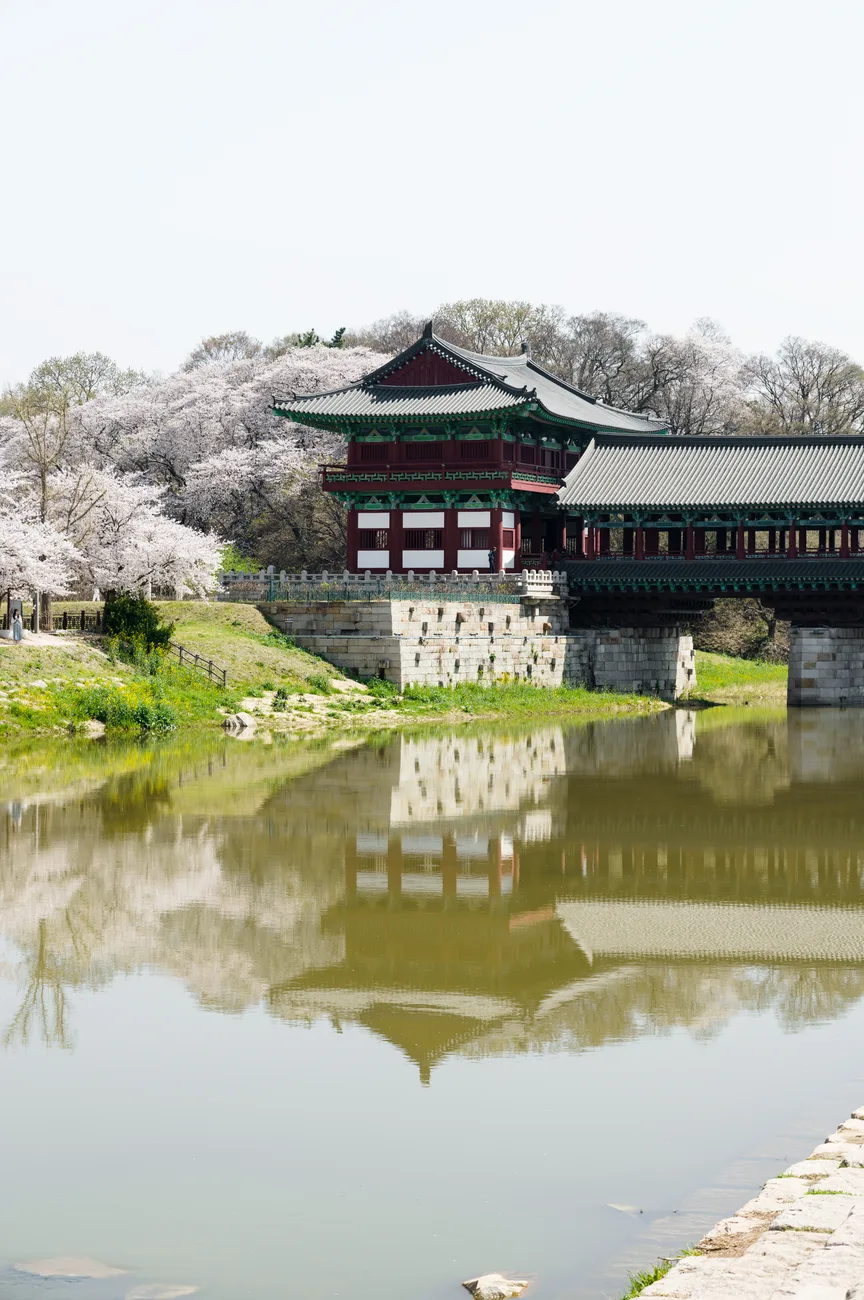
Jeju's king cherry (왕벚나무) opens first and coincides with the island's canola bloom, giving yellow fields under white branches. At the other end, double-flowered cherries (겹벚꽃) open roughly two to three weeks after the single varieties, so a late-April arrival is not empty: temple grounds and some park plantings still have heavy pink blossom well after Yeouido has finished.
What trips people up
The expensive mistakes are predictable. Booking non-refundable rooms on the 30-year average date is the first, and it has failed repeatedly in warm springs. Assuming Jinhae is a relaxed stroll is the second: on the festival Saturday, Gyeonghwa Station is a managed queue and the last trains back to Seoul fill up.
Weekends multiply crowds at every major site by a wide margin, and blossom viewing is one of the few Korean attractions where a Tuesday morning genuinely looks different from a Saturday afternoon. Night illumination at Yeouido and Seokchon draws its own crowd, with one-way pedestrian flow in places.
The last one is quiet but common: assuming the country has a single bloom date. It does not, and the two-week spread between Jeju and inland Gangwon is a tool, not an obstacle. Arrive early and chase it north.
Current-year dates should be checked against the KMA at kma.go.kr and against festival announcements from the relevant city office and the Korea Tourism Organization at english.visitkorea.or.kr. This is general planning information, and no forecast can guarantee blossoms on a given day.
Cherry blossom questions travellers ask next
When does the cherry blossom forecast for Korea come out?
The year's bloom maps generally appear in the first half of March, published by private Korean weather companies, with updates as March temperatures resolve. That timing is late for flight booking but early enough to adjust a domestic itinerary, which is the argument for fixing your regional plan later than your international one.
Is Jinhae worth the trip from Seoul?
Yes for a first Korea spring trip, if you can go on a weekday and start before dawn. The Yeojwacheon and Gyeonghwa Station scenes have no equivalent in Seoul. On a festival weekend, with a same-day return, the travel-to-viewing ratio stops making sense and Seokchon Lake serves you better.
What if I arrive after peak bloom in Seoul?
Go north and east. Chuncheon, Gangneung and inland Gangwon run roughly a week to ten days behind Seoul, and higher-elevation temple grounds add several more days. Double-flowered cherries extend the season into late April in many parks.
Do Korea's cherry blossom festivals charge admission?
The main street and park festivals, including Jinhae Gunhangje and the Yeouido spring flower festival, have no entry fee. Costs come from parking, shuttle buses, festival food stalls and the sharp seasonal rise in nearby accommodation rates, which is where a blossom trip actually gets expensive.
Can I combine Korean and Japanese cherry blossoms in one trip?
The windows overlap but do not align city by city, and the sequencing decides whether it works. We compare the two calendars in Korea and Japan in one trip: when the seasons line up.