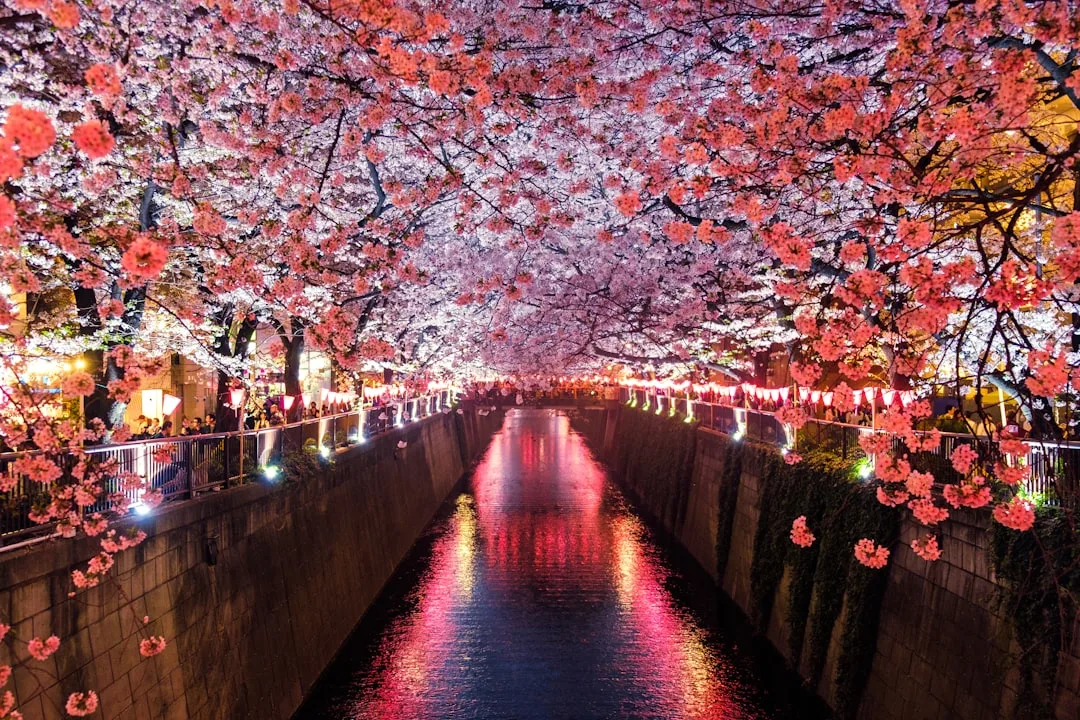
Planning a single trip that covers both Korea and Japan means finding weather that works across two countries at once. The best overall time to visit Korea and Japan together is spring (late March to April) for cherry blossoms and mild weather, or autumn (October to mid-November) for clear skies, comfortable temperatures, and fall foliage. Both windows avoid the summer rain and the harsh winter cold in most regions.
Because Korea and Japan share a similar mid-latitude, four-season climate, you rarely have to compromise between them the way you would if you added a tropical destination. Below is a practical framework for choosing your month based on what you actually want to see and do.
Key takeaways
- Spring (late March–April) and autumn (October–mid-November) are the two sweet spots for a combined Korea + Japan trip.
- Cherry blossoms bloom slightly earlier in southern Japan (late March) than in Seoul (early–mid April), so a Japan-then-Korea itinerary can chase the bloom.
- Summer (June–August) brings the East Asian rainy season (Korea's jangma, Japan's tsuyu), high humidity, and typhoon risk — bookable but less comfortable.
- Winter (December–February) suits ski trips and fewer crowds but is cold and can disrupt travel with snow.
- Always cross-check forecasts with the Korea Meteorological Administration (KMA) and the Japan Meteorological Agency (JMA) before locking in dates.
Why Korea and Japan share the same travel seasons
Seoul, Busan, Tokyo, Kyoto, and Osaka all sit in a humid subtropical to temperate zone with four distinct seasons. That geographic overlap is what makes a two-country trip easy to plan: the same months that are pleasant in one country are usually pleasant in the other.
The main regional differences are timing and intensity. Southern Japan (Kyushu, Osaka) warms up earlier in spring and holds warmth longer in autumn. Korea, and especially inland or northern areas, tends to be slightly colder in winter and has a sharper, drier autumn. Understanding this lets you sequence your route to follow the best weather.
Month-by-month comparison for a combined trip
The table below summarizes typical conditions. Treat these as seasonal patterns, not guarantees — verify current forecasts with the national weather agencies before you travel.
| Month | Korea (Seoul/Busan) | Japan (Tokyo/Kyoto/Osaka) | Best for |
|---|---|---|---|
| Mar | Cool, late-March blossoms in south | Cherry blossoms begin in south/Tokyo | Early blossoms, low crowds |
| Apr | Peak cherry blossoms, mild | Blossoms peak then fade | Spring flowers, festivals |
| May | Warm, dry, green | Warm, pleasant, pre-rain | Comfortable sightseeing |
| Jun | Rainy season (jangma) begins | Rainy season (tsuyu) | Fewer crowds, lush scenery |
| Jul–Aug | Hot, humid, typhoon risk | Hot, humid, festivals, typhoons | Summer festivals, beaches |
| Sep | Warm, lingering typhoon risk | Warm, typhoon season | Shoulder season |
| Oct | Clear, crisp, dry | Warm-to-mild, comfortable | Ideal all-round travel |
| Nov | Cool, peak fall foliage | Fall foliage peaks late Nov | Autumn colors |
| Dec–Feb | Cold, dry, occasional snow | Cold, drier Pacific side, snow north | Skiing, winter illuminations |
The two best windows, explained
Spring: late March to April
Spring is the marquee season because of cherry blossoms (beot-kkot in Korean, sakura in Japanese). The bloom moves north and follows warmth, which you can use to your advantage.
Southern Japan (Fukuoka, Osaka, Kyoto) typically peaks in late March to early April, while Tokyo peaks around late March to early April as well. Seoul usually peaks early to mid-April, with Busan a little earlier. A route that starts in Japan and ends in Korea can let you experience blossoms in both countries.
Be aware that bloom dates shift by a week or more each year with temperature, so book flexible dates and follow the JMA and KMA blossom forecasts released each spring.
Autumn: October to mid-November
Autumn is arguably the most reliable window. Skies are clearest, humidity drops, typhoon risk fades through October, and temperatures are ideal for walking cities and hiking.
Fall foliage peaks in Korea from late October into November and in central Japan (Kyoto, Tokyo) from mid to late November. So an autumn trip can start in Korea for early color and finish in Japan as the maples turn.
Worked example: a two-week itinerary by season
Say you have 14 days and want the best weather in both countries.
- Spring version: Fly into Osaka in late March, spend days 1–5 in Kansai (Kyoto, Osaka, Nara) during early blossoms. Take a short flight to Busan or Seoul for days 6–14 in early-to-mid April to catch Korea's peak bloom. You effectively "chase" cherry blossoms northward.
- Autumn version: Fly into Seoul in late October, spend days 1–7 enjoying Korea's crisp weather and early foliage, then fly to Tokyo for days 8–14 in early-to-mid November as Japan's colors intensify.
This sequencing matters: going the wrong direction can mean you arrive after the blossoms drop or before the leaves turn.
When to avoid — or embrace — the harder seasons
Summer rainy season and typhoons
Both countries have a rainy season in June to mid-July — jangma in Korea, tsuyu in Japan — followed by hot, humid weather and typhoon season roughly August through September. Typhoons can cancel flights and ferries between the countries.
Summer isn't off-limits: festivals, fireworks, and green landscapes are highlights, and prices outside peak holidays can be reasonable. But pack for heat and build buffer days around any inter-country flights.
Winter
Winter is cold, especially inland Korea, but it rewards ski travelers and fans of winter illuminations and hot springs (onsen in Japan, jjimjilbang culture in Korea). Snow can disrupt regional transport, so keep itineraries flexible.
Adding China to the itinerary
If you're weighing a Korea–Japan–China trip, the same spring and autumn logic applies to eastern China (Beijing, Shanghai), which shares the temperate-season pattern. The bigger planning factor is visa requirements, which differ sharply among the three and change periodically. Check each country's official immigration or foreign-ministry site before committing — do not rely on old blog posts, as entry rules and visa-free policies are updated frequently.
Common planning mistakes
- Assuming blossom dates are fixed. They shift yearly; a rigid non-refundable booking can miss the bloom entirely.
- Underestimating summer humidity. "Warm" in July means heavy, sweaty heat plus rain — not beach-holiday dry heat.
- Ignoring typhoon buffers. Booking a same-day flight between countries in September is risky.
- Overlapping national holidays unknowingly. Japan's Golden Week (late April–early May) and Obon (mid-August), plus Korea's Chuseok and Seollal, spike prices and crowds and can close businesses.
- Only planning one country's weather. Sequence your route so you're in each place during its best window.
FAQ
What is the single best month to visit Korea and Japan together?
October is the strongest all-round choice: dry, clear, comfortable temperatures in both countries and low typhoon risk. April is the top spring alternative for cherry blossoms.
Can I see cherry blossoms in both Korea and Japan on one trip?
Yes. Because blooms peak slightly earlier in southern Japan (late March) than in Seoul (early–mid April), a Japan-first route can let you enjoy sakura and then beot-kkot. Track annual forecasts from the JMA and KMA since dates vary each year.
Is summer a bad time to visit Korea and Japan?
Not bad, just harder. June to mid-July is the rainy season and July–September is hot, humid, and typhoon-prone. It works if you want festivals and lower shoulder-season prices, but build in flexible travel days.
How far apart are the best foliage dates in the two countries?
Korea's fall colors generally peak from late October into early November, while central Japan peaks mid-to-late November — often two to three weeks later, which you can use to sequence an autumn trip.
Where should I check the weather before booking?
Use the Korea Meteorological Administration (KMA) and Japan Meteorological Agency (JMA), the official national weather bodies, for forecasts and their annual cherry-blossom outlooks. These are the primary authoritative sources for each country.
Next steps
Decide whether you're chasing spring blossoms or autumn colors, then sequence your route so you hit each country in its best window. Check current forecasts on the KMA and JMA sites, confirm visa rules if adding China, and avoid national holidays unless you specifically want the festivals. For a deeper single-country breakdown, see our season-by-season guide to the best time to visit Korea.
This article is general travel information, not a guarantee of weather or bloom timing. Conditions vary each year — always verify current forecasts and entry requirements with official sources before booking.