A prepaid tourist SIM in Korea lists at roughly ₩25,000–₩35,000 for 5 days of unlimited data, and ₩50,000–₩70,000 for 30 days, at a carrier counter. Data-only plans sit at the bottom of that band. Adding a Korean phone number pushes you to the top. Booking the identical product online before arrival routinely cuts 20–50% off the counter price.
The short version
- Duration is priced in calendar days from activation, not days of use. A 5-day SIM activated on Friday evening dies Wednesday evening.
- The airport counter is the most expensive place to buy. You are paying for staff, rent, and the fact that you have no alternative at 11pm in the arrivals hall.
- "Unlimited" almost always means a daily high-speed allowance, then throttling. The throttled speed is in the fine print, and it varies by plan.
- A Korean 010 number costs extra and is worth it only if you need SMS verification for Korean apps, restaurant reservations, or delivery.
- The price bands below are advertised market ranges observed in the Korean prepaid market, not quotes. Carriers and resellers change them without notice, so confirm the current figure before you pay.
Korea SIM card price by trip length and plan type
Korea's mobile market runs on three networks: SK Telecom, KT, and LG U+. Almost every tourist SIM you will see, including the ones sold under travel brands, rides on one of those three. Coverage differences inside Seoul and along the KTX corridor are small enough that price, not network, should decide the purchase.
Korean retail prices are displayed inclusive of the 10% VAT, so the number on the sign is the number you pay. No tax gets added at the register.
| Plan | Counter list price (approx.) | What it includes |
|---|---|---|
| 5 days, data-only | ₩25,000–₩30,000 | Data only, no Korean number |
| 5 days, data + Korean number | ₩30,000–₩38,000 | Incoming/outgoing calls and SMS |
| 10 days, data-only | ₩35,000–₩45,000 | Data only |
| 30 days, data-only | ₩50,000–₩70,000 | Data only, sometimes top-up capable |
| 30 days, data + voice | ₩60,000–₩80,000 | 010 number, call/SMS allowance |
The per-day rate falls sharply as duration rises. That matters for a specific decision: two consecutive 5-day SIMs cost more than one 10-day SIM, and the second activation means a second registration. If your trip is 8 or 9 days, buy the 10-day tier rather than stacking short ones.
Four things you are actually paying for
- The duration tier. Prepaid validity starts at activation and counts down in calendar days. Leaving Korea for a side trip to Japan does not pause it.
- The data structure. A capped plan (5GB, 10GB, 20GB) is cheaper per day than an unlimited plan. Unlimited plans meter a daily allowance at full speed, then throttle. If your usage is maps, KakaoTalk, and Naver Map, a capped plan is enough and costs less.
- Voice and a Korean number. Korean telecom rules require identity verification for every mobile line, administered under the framework the Ministry of Science and ICT (msit.go.kr) oversees. Issuing a number means registering your passport, which is why voice-enabled SIMs cost more and cannot be bought on someone else's behalf.
- The sales channel. The same SKU sells at a carrier roaming desk, in a convenience store, and as an online voucher, at three different prices. The product does not change. The markup does.
Where you buy changes the price more than what you buy
Incheon International Airport keeps carrier roaming centers in the arrival halls of both Terminal 1 and Terminal 2 on the first floor, past customs. Gimpo (GMP) and Busan Gimhae (PUS) have smaller desks with shorter hours. Current locations and opening times are published by Incheon International Airport Corporation at airport.kr, and hours have changed more than once since 2023, so check before assuming a late-night arrival can buy anything.
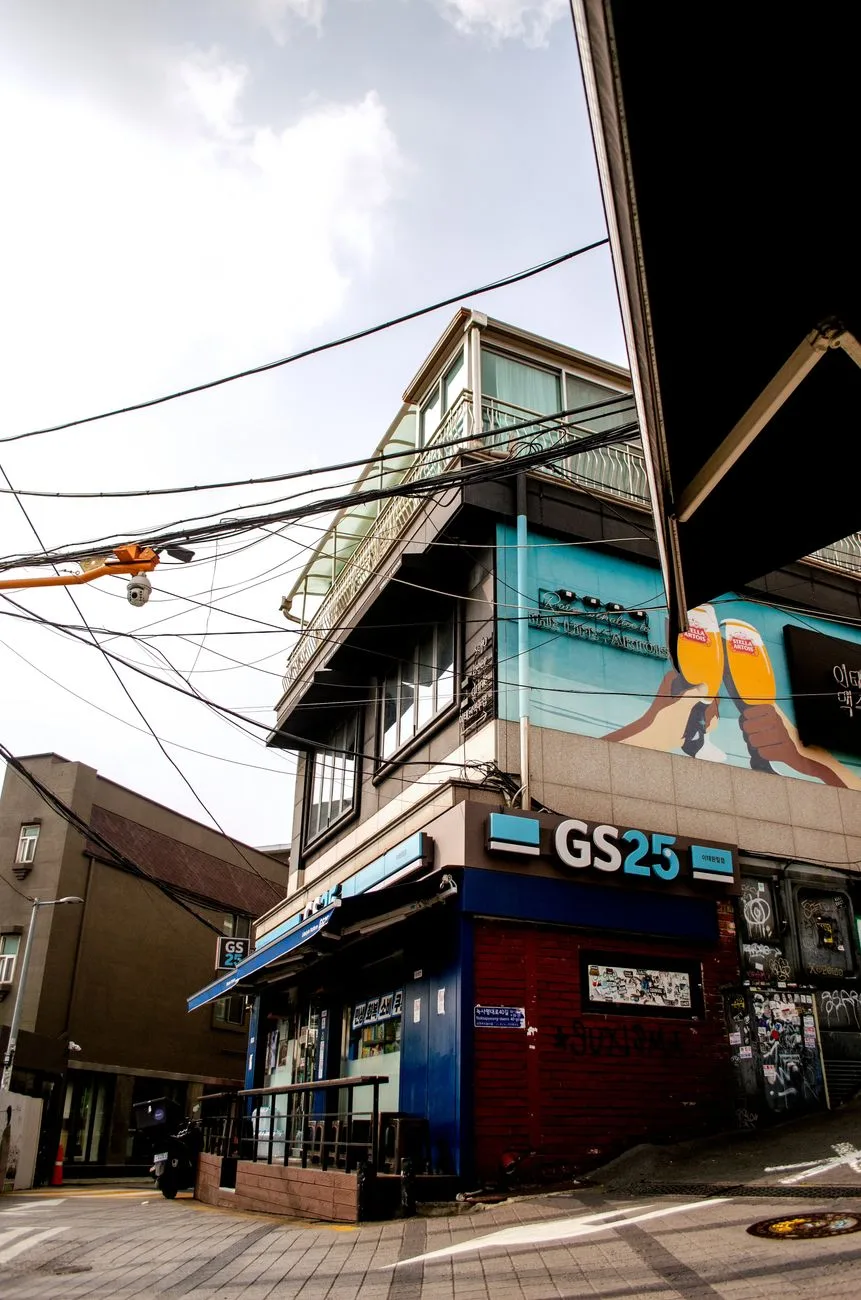
Convenience stores are the middle option. CU and GS25 stock prepaid starter packs from carriers and their resellers at a lower sticker price than the airport, but you activate them yourself through a web portal using your passport details. That works fine if you can get online first. Incheon Airport runs free public Wi-Fi throughout the terminals, which is enough to activate a SIM or download an eSIM profile before you leave the building.
Pre-booking online is the cheapest reliable route. You pay in advance, then either collect a physical SIM from an airport counter using a voucher or install an eSIM profile before departure. The discount against the walk-up price is real and large, and it exists because the reseller has already sold the inventory.
Position: for a trip under two weeks on an eSIM-capable phone, a pre-booked travel eSIM is the cheapest sensible choice. Buy the physical SIM at the airport counter only when your phone has no eSIM support, when you need a Korean number, or when you land without a booking and need connectivity in the next ten minutes.
SIM, eSIM, pocket Wi-Fi, or roaming: the cost comparison
| Option | Rough 7-day cost | Korean number | Setup | Best for |
|---|---|---|---|---|
| Physical prepaid SIM at airport | ₩30,000–₩40,000 | Optional, costs extra | Counter, passport, 10–20 min | Phones without eSIM; late arrivals |
| Travel eSIM, pre-booked | ₩12,000–₩25,000 | Rarely offered | QR scan before departure | Solo travelers, most iPhones and recent Android |
| Pocket Wi-Fi rental | ₩4,000–₩7,000 per day plus deposit | No | Pickup and return at counter | Groups of three or more |
| Home-carrier roaming | Varies enormously by carrier | Keeps your home number | None | Trips of one to three days |
| MVNO (알뜰폰) monthly plan | Not available short-term | Yes | In-store, requires ARC | Residents staying 90+ days |
Roaming is the wildcard. Some carriers include a modest daily allowance in existing plans at no extra charge; others bill per-day rates that exceed a 30-day Korean SIM within a week. Check your own tariff before dismissing it, because for a two-night stopover the zero-effort option often wins on total cost of hassle.
If you are comparing specific eSIM providers rather than categories, our breakdown of the best eSIM for Korea covers what the popular community recommendations get right and where they mislead. Travelers combining both countries in one itinerary should read when a single Korea and China eSIM beats two separate plans, because the Great Firewall changes the calculation entirely.
A worked example: ten days, two travelers
Using the mid-band figures above, for a couple spending ten days between Seoul, Busan, and Gyeongju:
- Two physical 10-day data-only SIMs at ₩40,000 each = ₩80,000, plus about 20 minutes at the arrivals counter.
- Two pre-booked eSIMs at roughly ₩22,000 each = ₩44,000, installed at home, live the moment the plane lands.
- One pocket Wi-Fi at ₩5,500 per day = ₩55,000 plus a refundable deposit, but both phones now depend on one battery and neither traveler can split off for an afternoon.
The eSIM wins by around ₩36,000 against physical SIMs, which is a decent dinner in Gwangjang Market. The pocket Wi-Fi only overtakes it at three or more devices, where ₩55,000 divided three ways beats three eSIMs.
Where this fails: if either phone is carrier-locked, lacks eSIM support, or belongs to a traveler who will not install a profile before departure, the arithmetic collapses and the physical SIM is the correct purchase. Older handsets and many regional Android variants still have no eSIM radio at all.
What trips people up
Data-only SIMs cannot receive Korean SMS codes. This is the single most expensive mistake, because it is invisible until you need it. Korean services lean heavily on phone-number verification: food delivery apps, popular restaurant reservation platforms, some ticketing sites, and almost anything involving payment. Without a Korean 010 number, several of them are simply closed to you. If your trip depends on delivery or reservations, pay the ₩5,000–₩10,000 premium for a voice-enabled line.
Validity counts from activation, not first use. A 30-day SIM activated at the airport at 9pm on the 1st expires on the 31st, regardless of the four days you spent offline hiking Seoraksan.
Extension is not guaranteed. Some prepaid products accept top-ups; others expire dead. If there is any chance your trip runs long, ask at the point of purchase whether the specific SKU supports recharge, and get the answer before you hand over the card.
You must be present with your passport. A friend already in Korea cannot buy and register a line for you, because the registration binds to the identity document of the person holding it.
Throttled speed varies. "Unlimited" plans that reduce speed after a daily allowance may still stream music comfortably or may struggle to load a map tile. The fine print states the reduced speed. Read it if you plan heavy video use.
Staying longer than 90 days: when a Korean plan beats every tourist SIM
Tourist SIM pricing stops making sense past about six weeks. A standard postpaid contract with SK Telecom, KT, or LG U+ requires an Alien Registration Card, issued through Korea Immigration Service (see hikorea.go.kr for the application process). Once you hold an ARC, the MVNO market opens up.
Korea's 알뜰폰 operators resell capacity on the same three networks at a fraction of retail. Monthly plans with generous data allowances commonly sit well under the price of a 30-day tourist SIM, and they include a permanent 010 number that passes identity verification for banking and government services. The trade-off is a contract, a Korean bank account or card for billing, and paperwork that takes longer than a counter transaction.
For the period between arrival and ARC issuance, which can run several weeks, a 30-day prepaid SIM is the bridge. Buy one 30-day tier rather than a string of short ones.
Frequently asked questions
Can I buy a Korean SIM card without a passport?
No. Every mobile line sold in Korea, prepaid included, requires identity verification, and for a foreign visitor that means the physical passport at the point of sale or its details entered during online activation. There is no anonymous prepaid SIM on the Korean market.
Is it cheaper to buy a SIM at Incheon Airport or in Seoul?
In Seoul, or online before you travel. Airport counters carry the highest markup. Carrier shops in Myeongdong, Hongdae, and Itaewon are used to foreign customers and price below the arrivals hall, and pre-booked online vouchers undercut both. The airport's advantage is speed, not price.
Do I need a Korean phone number as a tourist?
Only if you need SMS verification. Maps, KakaoTalk, translation, and ride-hailing sign-in with a foreign number work over data alone. Food delivery apps, several reservation platforms, and most payment services want a Korean 010 number, and that requirement is not negotiable at checkout.
Does my phone need to be unlocked?
Yes, for a physical SIM. A handset locked to a home carrier will reject a Korean SIM. eSIM profiles face the same restriction: a locked phone will not accept a foreign profile, so confirm the lock status with your home carrier before you buy anything.
Can I top up a Korean prepaid SIM after it expires?
Sometimes. Certain prepaid brands support recharge through a web portal or a convenience store voucher; others are single-use and expire permanently. This is product-specific rather than carrier-specific, so ask at purchase and note the top-up method while you still have the packaging.
General travel and consumer information current as of 2026. Prices, plan structures, and counter hours change without notice; verify the current figure with the carrier or Incheon International Airport Corporation before you rely on it.