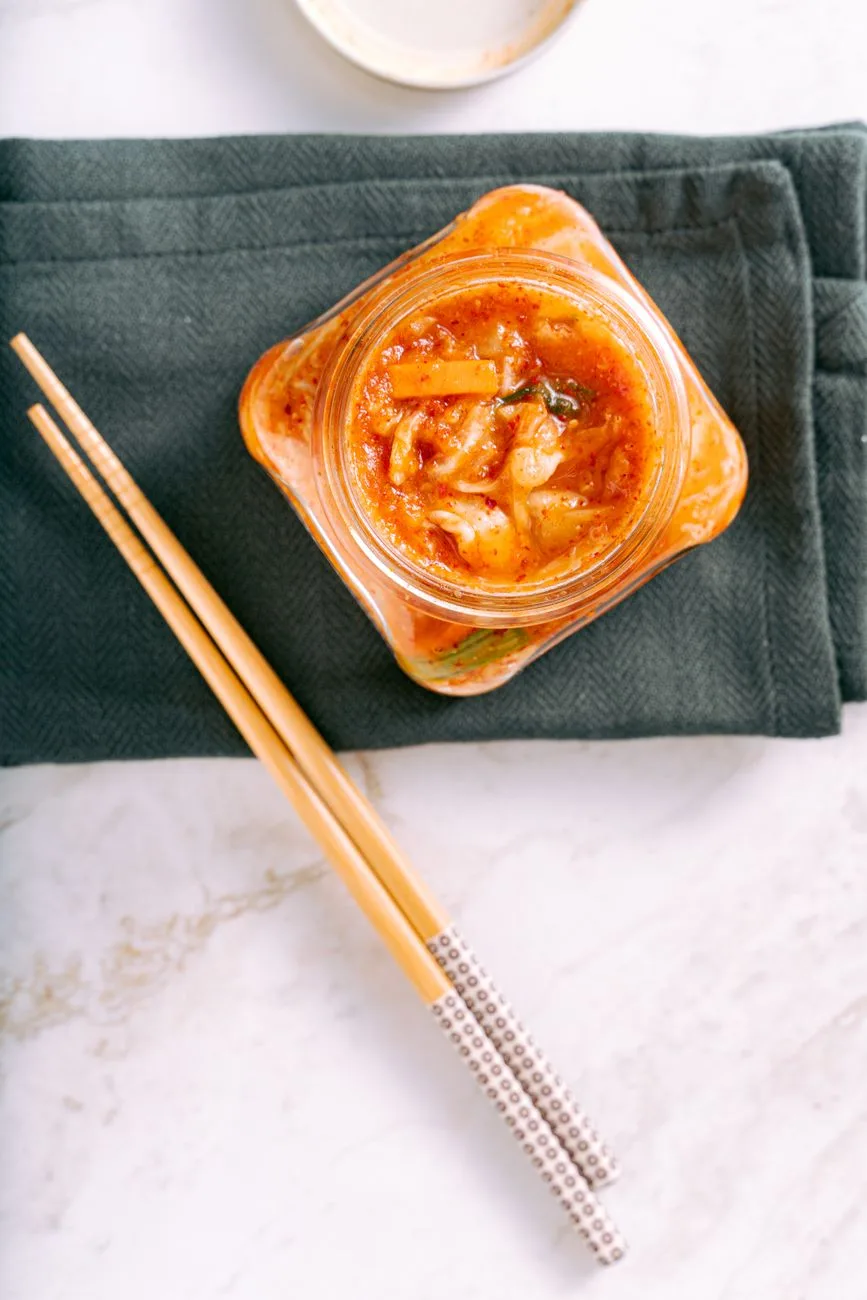
Two versions of this recipe circulate online. One treats gochujang as essential to kimchi; the other never mentions it. The second is closer to how cabbage kimchi is built in Korean kitchens, and the reason comes down to what a spoonful of the paste is actually made of.
Short answer: gochujang belongs in kimchi as a supporting seasoning rather than the chilli base. Use 2 tablespoons (about 40 g) per 1.8 kg napa cabbage alongside 60 g of gochugaru. Matching that flake weight with paste alone takes about 240 g of gochujang, which oversalts, oversweetens and thickens the whole batch.
What the paste changes, in four lines
- Colour and cling: deeper, glossier red, and seasoning that coats the leaf instead of sliding off it.
- Sweetness: enough glutinous rice and malt sugar that the sugar in a standard recipe becomes unnecessary.
- Speed: fermentable starch enters at hour zero, so souring begins sooner.
- Salt: about 2.7 g extra per 2 tablespoons, which the fish sauce and salted shrimp have to make room for.
Gochujang vs gochugaru in kimchi: what each ingredient does
Gochugaru is a single ingredient: sun-dried Korean red peppers, deseeded and ground. It delivers pigment and capsaicin with no binder, no sugar and no salt of its own, which is why a kimchi paste can carry a full cup of it without turning into a sauce.
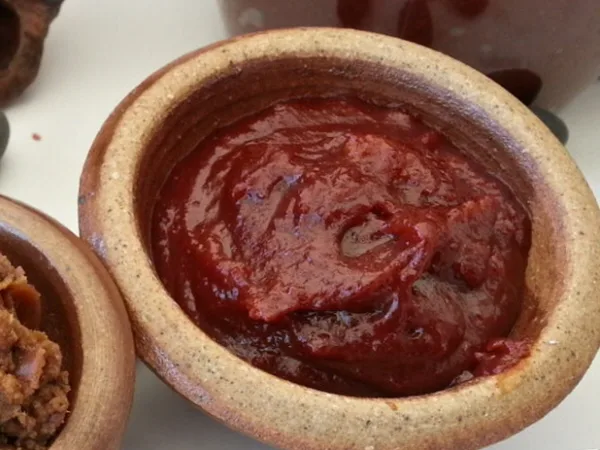
Gochujang is a finished fermented product. The proportions recorded for traditional gochujang run to about 25% red pepper powder, 22.2% glutinous rice, 5.5% meju (fermented soybean) powder and 5% malt, with salt and water making up the rest. Sources disagree on the salt share of that formula, so the more useful number is the measured one: a survey of 35 traditional cottage-industry products published in Foods in January 2022 found salt ranging from 3.44% to 12.68% (mean 6.66%) and pH from 3.57 to 4.98 (mean 4.44). The paste arrives salted, sweetened and already acidic.
Why a full substitution needs 240 g of paste
Here is the arithmetic that settles the question. A standard mak kimchi paste for one 1.8 kg napa cabbage uses 60 g of gochugaru. Gochujang is about a quarter red pepper powder by weight, so:
- 60 g ÷ 0.25 = 240 g of gochujang to supply the same pepper
- 240 g × 6.66% salt = 16 g of added salt, before any fish sauce or salted shrimp
- 240 g × 22.2% = 53 g of glutinous rice, plus about 12 g of malt
That is a jar of sweet, gluey, brown-red cabbage that sours in days. At 2 tablespoons the same maths reads very differently: about 10 g of pepper powder (a seventh of the total), 2.7 g of salt and 9 g of rice starch. The paste earns its place at that dose and stops earning it above 3 tablespoons per cabbage, where it begins coating rather than clinging.
This table answers one question: which paste base actually produces good kimchi.
| Paste base (per 1.8 kg cabbage) | Colour and cling | Sweetness | Souring speed | Use it |
|---|---|---|---|---|
| 60 g gochugaru only | Bright red, loose | Low | Baseline | Yes |
| 60 g gochugaru + 40 g gochujang | Deep red, glossy, clings | Mild | Slightly faster | Yes |
| 240 g gochujang only | Dark brown-red, muddy | High | Fastest | No |
The middle row is the recipe below. The bottom row is what happens when a recipe tells you the paste can stand in for the flakes.
The recipe: gochujang mak kimchi for one napa cabbage
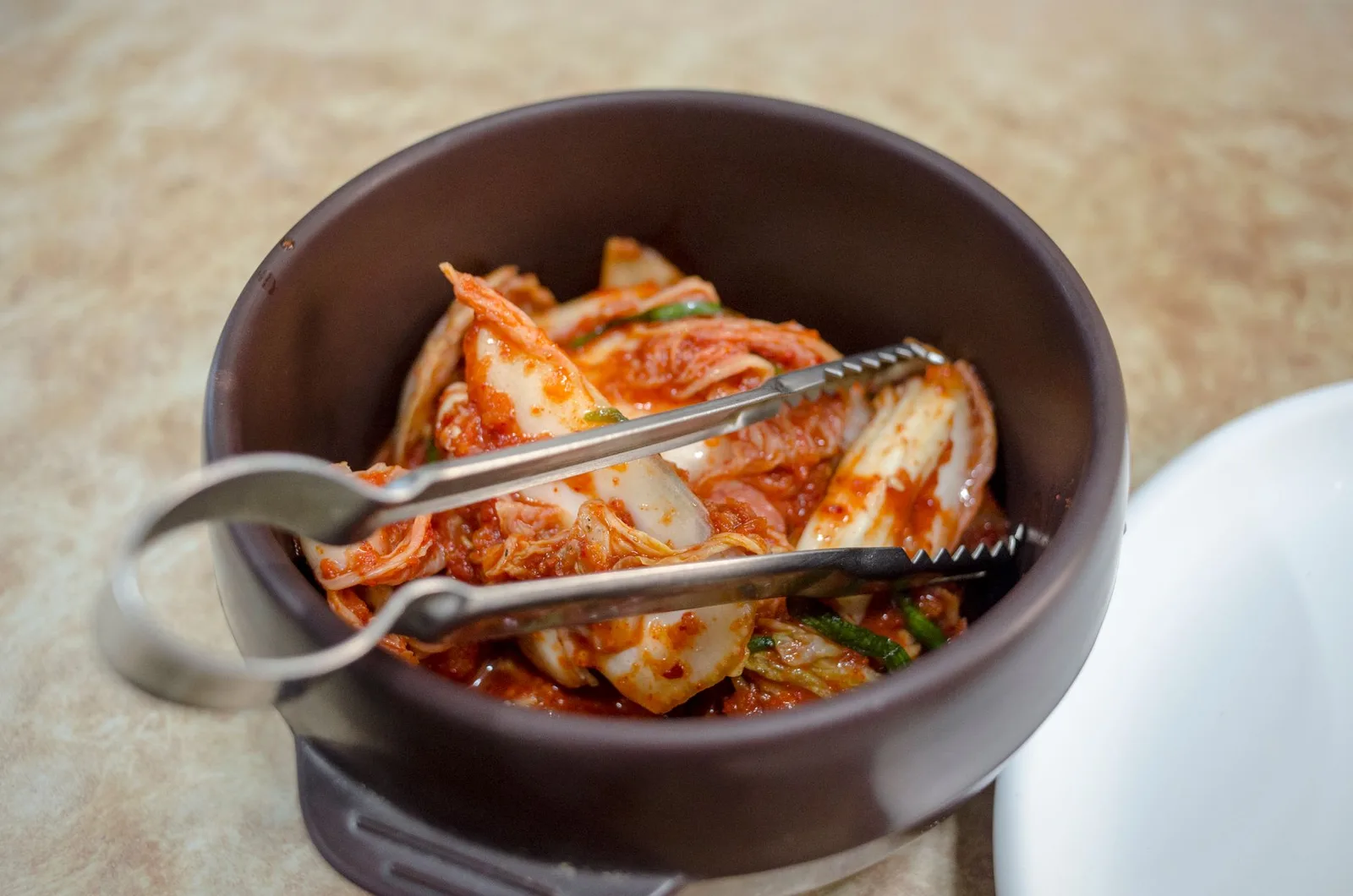
Mak kimchi is the cut version, where the cabbage is chopped before salting instead of packed leaf by leaf. It takes about 45 minutes of hands-on work plus two hours of brining, and yields roughly 1.5 litres.
Ingredients
- 1 napa cabbage, about 1.8 kg (4 lb)
- 100 g coarse sea salt, plus 2 tbsp for sprinkling
- 720 ml (3 cups) cold water for the brine
- 340 g Korean radish (mu), julienned
- 3 scallions, cut into 4 cm lengths
- 60 g (½ cup) gochugaru
- 40 g (2 tbsp) gochujang, Mild or Slight Hot
- 2 tbsp minced garlic
- 1 tsp grated ginger
- 2 tbsp myulchi aekjeot (anchovy fish sauce)
- 2 tbsp saeujeot (salted shrimp), minced
- 120 ml water, or the same volume of cooled rice-flour slurry
- No sugar
The sugar is omitted deliberately. Between the glutinous rice and the malt, 40 g of gochujang already carries about 11 g of starch and converted sugar into the paste. If your gochujang label lists corn syrup or wheat flour high in the ingredient order, cut the saeujeot to 1½ tablespoons as well, since factory pastes tend to run sweeter and saltier than the traditional formula.
Method
- Cut the cabbage lengthwise into quarters, then crosswise into 5 cm pieces, discarding the toughest core.
- Dissolve 100 g of salt in the 720 ml of water, pour it over the cabbage in a large bowl, and sprinkle the remaining 2 tablespoons over the thick white stem sections, which take salt more slowly than the leaf.
- Brine for 2 hours, turning the cabbage every 30 minutes. It is ready when a white stem bends into a U without snapping.
- Rinse three times in cold water and drain in a colander for 20 to 30 minutes. Salt left on the leaf compounds the salt already in the paste.
- Whisk the gochugaru into the 120 ml of water and leave it 10 minutes to bloom. The flakes need to hydrate before anything else goes in, or the colour stays dull.
- Stir the gochujang into the bloomed flakes until no streaks remain, then add garlic, ginger, fish sauce and saeujeot. Fold in the radish and scallions and let the mix stand 10 minutes so the radish weeps a little liquid.
- Wearing gloves, combine the cabbage with the paste, working it into the stem ends.
- Pack into a jar, pressing down firmly until liquid rises over the surface, and leave 2 to 3 cm of headspace.
- Leave one day at room temperature (18–22 °C), then refrigerate. Taste at day 5; the flavour settles properly after two weeks and the jar keeps well past two months.
How gochujang changes the fermentation
Kimchi fermentation is driven by lactic acid bacteria, dominated by Leuconostoc, Weissella and Lactobacillus. A fresh batch starts near pH 6 and falls to about pH 4 by the fourth week. Temperature governs how fast that happens: research on kimchi ripening found that fermenting at 15 °C reaches the optimal pH 4.0–4.5 window within three days and produces markedly higher bacterial counts than a 4 °C ferment.
Adding gochujang moves three dials at once. The glutinous rice and malt hand the bacteria simple sugars immediately instead of making them work on cabbage sugars. The paste's own acidity, averaging pH 4.44, lowers the starting point of the seasoning. And traditional gochujang carries live yeast: Zygosaccharomyces rouxii predominated in 82.85% of the 35 products surveyed, with mean alcohol content of 1.58%.
The practical consequence is gas. A gochujang batch fizzes more in week one, so open the lid over a sink for the first few days and never fill a jar to the rim. It also argues for one day of room-temperature fermentation instead of the two that a plain gochugaru recipe can take in summer.
Picking the gochujang: read the heat scale, not the packaging
Korean gochujang is graded on the Gochujang Hot-taste Unit scale, a five-level system based on capsaicin concentration measured by gas chromatography and HPLC. It was established by the Ministry for Food, Agriculture, Forestry and Fisheries in agreement with nine major manufacturers and announced in April 2010, and the level appears on the tub.
| Heat level | GHU | For a kimchi paste |
|---|---|---|
| Mild (순한맛) | Under 30 | Yes |
| Slight Hot (덜매운맛) | 30–45 | Yes |
| Medium Hot (보통맛) | 45–75 | Optional |
| Very Hot (매운맛) | 75–100 | Optional |
| Extreme Hot (매우매운맛) | Over 100 | No |
The gochugaru is already setting the heat of this recipe, so the paste's job is body and depth. A Mild or Slight Hot tub gives you that without a second heat source fighting the first. Anything above Medium Hot makes the batch difficult to balance once it sours, because acidity sharpens perceived heat.
Where this goes wrong
The most common failure is under-brining. Cabbage that still snaps cleanly after two hours has not lost enough water, and it will keep releasing liquid in the jar, thinning the paste into soup and diluting the salt that protects the ferment. Give it another 30 minutes rather than moving on.
The second is compounding sweetness: adding gochujang and the tablespoon of sugar a standard recipe calls for and a rice-flour slurry. Pick one starch source. If you use the slurry, drop the gochujang to 1 tablespoon.
This approach does not hold at all for the white kimchis. Baek kimchi and dongchimi are defined by the absence of chilli, and gochujang in either one destroys the point of the dish. Cooks avoiding alcohol should also note that 57% of the traditional products in that 2022 survey measured above 1% ethanol.
On safety: keep the vegetables submerged under liquid, since anything sitting dry above the brine line is where problems start. A white film on the surface is yeast and can be skimmed. Fuzzy or coloured growth means the jar goes in the bin. This is general cooking guidance, not advice for anyone managing a medical sodium restriction.
Kimchi-making has enough cultural weight that the practice itself, kimjang, was inscribed on UNESCO's Representative List of the Intangible Cultural Heritage of Humanity in 2013. Household recipes vary by region and family, and a gochujang addition sits firmly in the modern home-cook tradition rather than the kimjang one.
Questions people ask next
Can I use gochujang instead of gochugaru in kimchi?
No, not at any workable ratio. Matching the pepper content of 60 g of gochugaru takes about 240 g of gochujang, which drags in roughly 16 g of salt and 53 g of glutinous rice. Keep the flakes as the base and treat the paste as a 2-tablespoon addition.
How much gochujang per cabbage?
Two tablespoons (40 g) per 1.8 kg napa cabbage, with a practical ceiling of three. Above that the seasoning stops clinging and starts coating, and the extra starch accelerates souring past the point where the texture holds.
Does gochujang make kimchi ferment faster?
Yes, modestly. The malt and glutinous rice supply immediately fermentable sugar, so a gochujang batch gasses harder in the first week. Ferment one day at room temperature instead of two, then refrigerate.
Is this recipe vegan?
No. The fish sauce and salted shrimp are animal products, and most commercial gochujang is vegan but not all. For the swaps that keep the ferment working, see the guide to making kimchi without fish sauce.
How many calories is kimchi?
The USDA FoodData Central entry for cabbage kimchi (FDC ID 170392) lists 15 kcal, 1.1 g protein and 498 mg sodium per 100 g. The 2 tablespoons of gochujang here add about 2.7 g of salt across the whole batch, which works out to a small increase per serving.
What do I do with the rest of the tub?
Gochujang keeps for months refrigerated once opened. The most efficient use of a half-used tub is a sauce base, where the same sweetness that limits it in kimchi is an advantage: it anchors the sauce in ground beef bibimbap.