Ten days is about three more than Seoul alone comfortably fills. Give the city six or seven days, then spend the rest on one overnight in Busan by KTX or two day trips. For transport, a physical Climate Card loaded with a 7-day then a 3-day pass costs 33,000 KRW, against 62,000 for the 30-day card.
Five numbers that shape the plan
- Seoul's headline sights fill six to seven days. Days eight to ten are the ones travellers quietly hand back to department stores.
- Gyeongbokgung closes on Tuesdays; the other palaces and Jongmyo Shrine on the integrated ticket close on Mondays. Two dead days in every ten-day window.
- Climate Card arithmetic for ten days: 3,000 KRW for the physical card, 20,000 for a 7-day pass, 10,000 for a 3-day top-up.
- KTX Seoul to Busan, standard economy, was 59,800 KRW each way as of June 2026, averaging 2 hours 18 minutes.
- July and August deliver 762.6 mm of Seoul's 1,236 mm annual rainfall, about 62% of the year's rain in two months (Korea Meteorological Administration 1991–2020 normals).
What a 10-day Seoul itinerary covers that a five-day one can't
Five days forces triage: one palace, one market, one neighbourhood, one night view, one day trip, and nothing repeated. That plan works, and the day-by-day 5-day version built around palace closing days is the shorter treatment of this same city.
Ten days removes the triage and replaces it with a different failure. The extra days have no obvious owner, so they get spent on Myeongdong and Gangnam by default. Seoul Metropolitan Government recorded 8.23 million international arrivals in the first half of 2026, up 21.3% year on year, with shopping absorbing 46.4% of foreign card spending. The default is a crowded one.
The fix is structural. Decide before you fly which days leave Seoul, and the rest of the plan builds itself around two fixed constraints: the palace closing days, and the fact that Seoul's transport pass tops out at seven days.
The 6-3-1 split
Six days based in Seoul, three days on a single overnight trip, one flex day held in reserve. That is the allocation I would defend for a first ten-day visit.
The case against a 5-and-5 split is luggage. Korean hotel checkout lands around 11:00 and check-in around 15:00, so each base change costs a morning of transfers and a bag-storage detour. Two changes inside ten days burns close to a full day of the ten. One overnight trip, with a single hotel change, costs half of that.
Hold the flex day back rather than assigning it. It absorbs a rained-out afternoon, a sold-out booking, or the neighbourhood you decide on day four that you want to see twice. Pick your base first, because transfer time compounds over ten days; the district-by-district breakdown by cost and transfers is the decision to make before anything else here.
One exception: if the trip is really a K-pop or shopping trip with sightseeing attached, this split is wrong. Stay eight days in Seoul and take one day trip.
Day by day
Days 1–2: landing, then the palace day
The AREX all-stop train runs Incheon Terminal 1 to Seoul Station for 4,750 KRW on a T-money card in about 66 minutes. The non-stop Express covers it in about 43 minutes with a reserved seat. Its 2026 adult fare is quoted at 9,500, 11,000 and 13,000 KRW by different sellers, and the operator's own fare page did not load on 11 August 2026, so buy at the AREX counter in the arrivals hall rather than prepaying a price you cannot confirm.
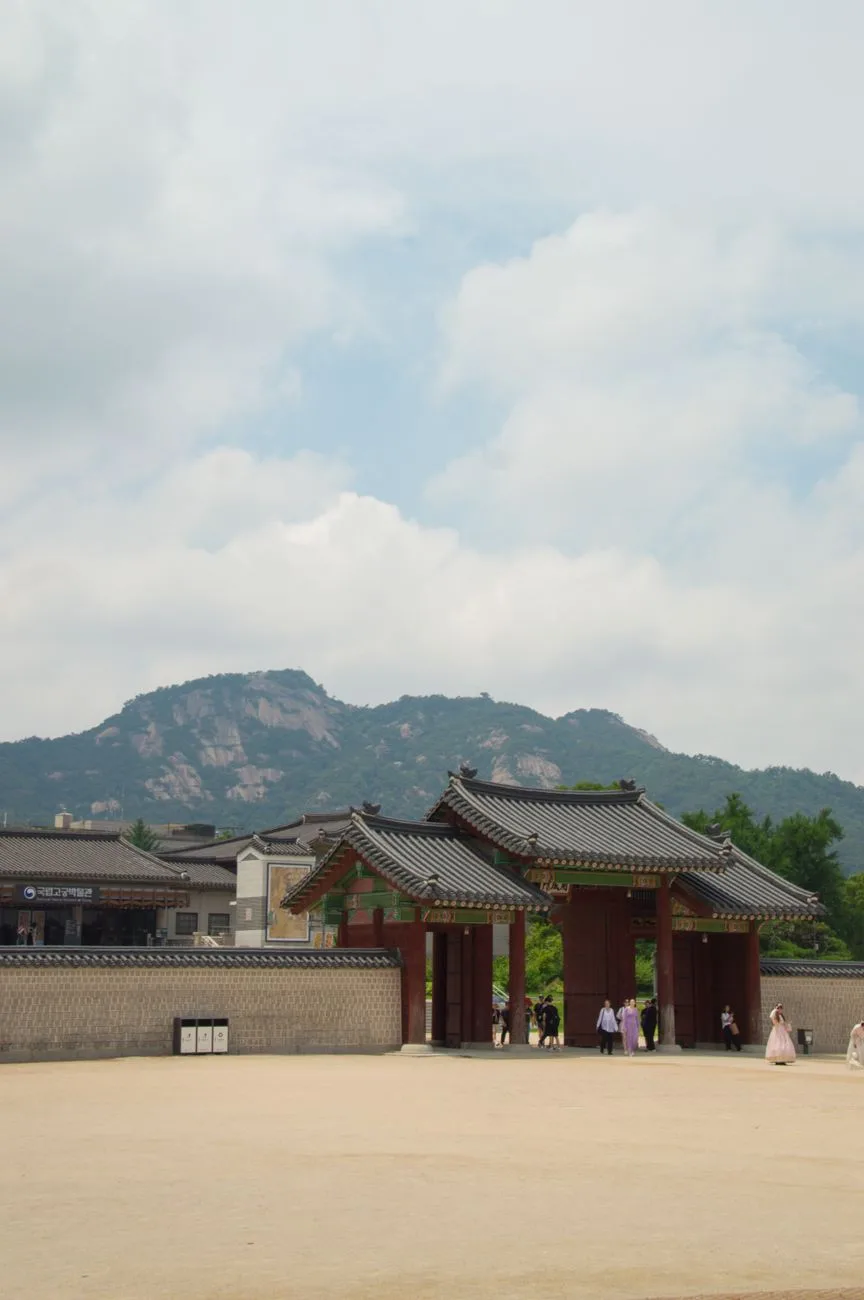
Day two is the palace day, and it wants a Wednesday, Thursday or Friday. Gyeongbokgung costs 3,000 KRW for adults and runs 09:00 to 18:30 from June to August with last entry at 17:30, closed Tuesdays, free for under-19s and over-65s, and free for anyone in full hanbok. Time your arrival to the Changing of the Royal Guard at 10:00 or 14:00, which lasts about 20 minutes and is free to watch.
Lunch belongs at the Tongin Market dosirak café in Seochon, ten minutes' walk west. Brass yeopjeon coins cost 500 KRW each and 5,000 KRW buys ten, which Visit Seoul describes as enough for one person's tray. The café opens 11:00 to 15:00 on weekdays and closes Mondays, which is the other reason day two should not be a Monday.
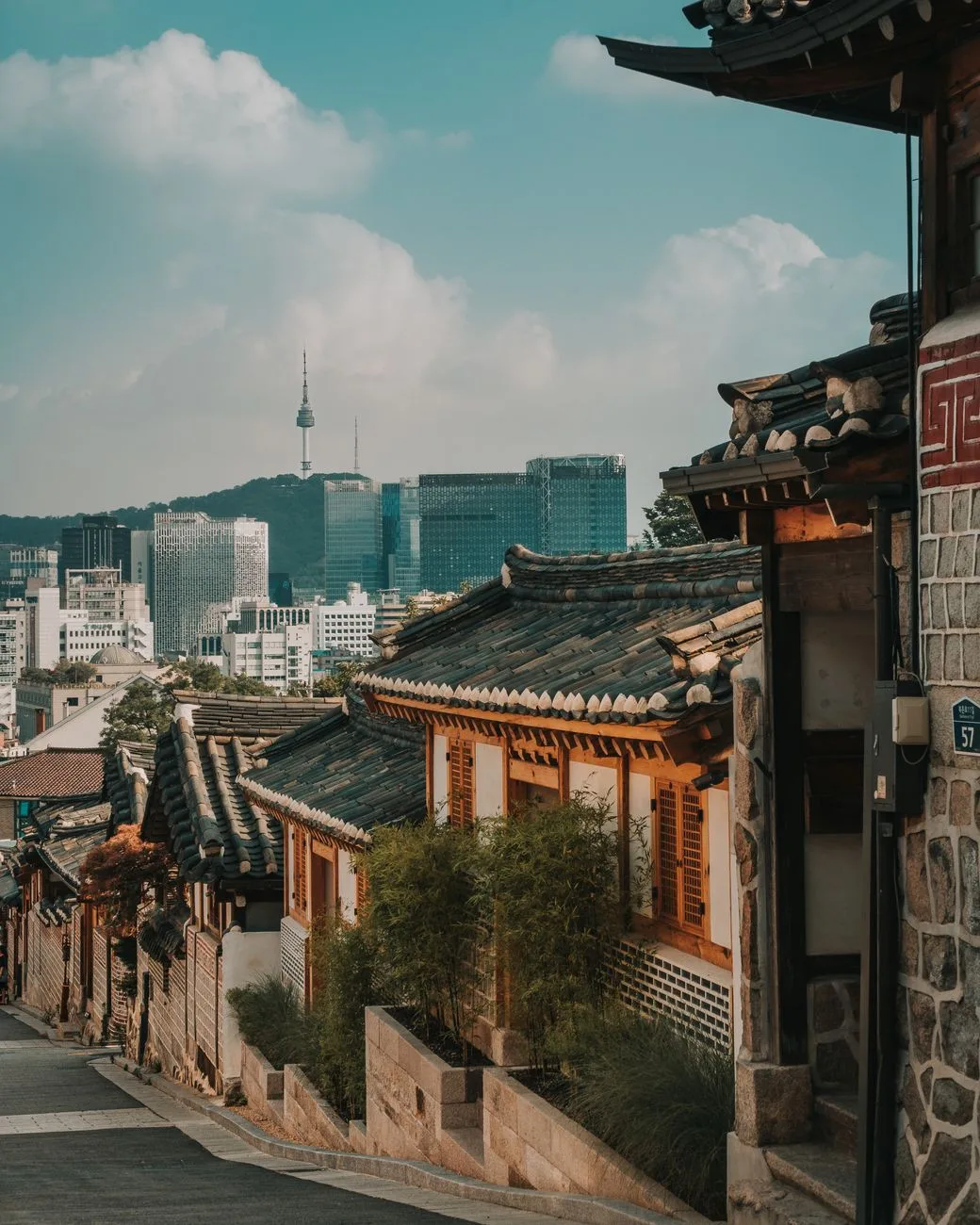
Bukchon comes after lunch, not after dinner. Seoul Metropolitan Government's Bukchon special management area rules prohibit tourist visits to the Red Zone on Bukchon-ro 11-gil from 17:00 to 10:00 the following day, with a 100,000 KRW fine, enforced since 1 March 2025.
Days 3–5: markets, neighbourhoods, one day outside
Day three is Changdeokgung and its Secret Garden, then Insadong and Jongno on foot. Buy the integrated palace ticket only if you will use four of its five sites: at 10,000 KRW for adults and valid three months, it covers Gyeongbokgung, Changdeokgung with the Secret Garden, Changgyeonggung, Deoksugung and Jongmyo Shrine, against 3,000 + 3,000 + 1,000 KRW for the three most-visited singly. Three palaces cost 7,000 KRW separately, so the pass wins from the fourth site onward.
End the day at Gwangjang Market. The market itself runs 09:00 to 18:00 and closes Sundays, while the food alley opens daily 09:00 to 23:00, 62 metres from Jongno 5-ga Station Exit 8 on Line 1. Bindaetteok was 5,000 KRW in early 2026 and mayak gimbap 3,000 KRW for six rolls. For the sit-down meals, the restaurants that hold up against their online reputation are worth booking rather than wandering into.
Day four is neighbourhoods, Seongsu or Yeonnam, plus one observatory at dusk. Pick one. N Seoul Tower charges 29,000 KRW for adults and sits above Jongno and Myeongdong; Seoul Sky at Lotte World Tower charges 31,000 KRW and sits in Songpa, forty minutes east. If you are based in the old city, take Namsan; take Seoul Sky only if you are already spending the day at Lotte World.
Day five leaves the city without an overnight. The DMZ routes from Seoul and which one repays the day run on the Imjingak side and operate normally in 2026. The JSA at Panmunjom is a separate product and has been closed to civilian visitors since July 2023, with no official statement resuming it located as of 11 August 2026. Do not book a tour that promises the blue conference huts.
Days 6–8: the overnight that makes ten days work
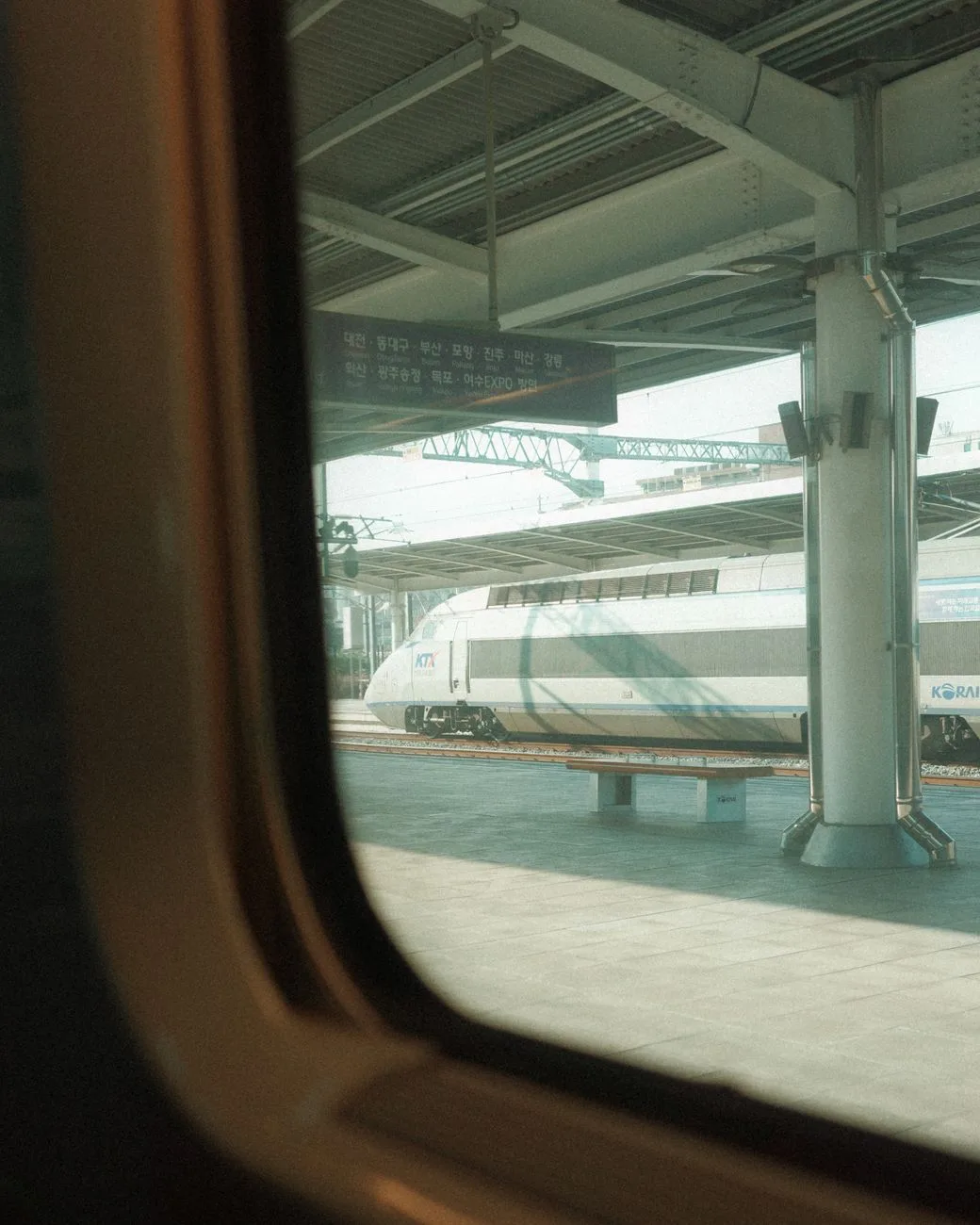
KTX services leave Seoul Station roughly 05:15 to 22:30, every 20 to 30 minutes at peak, and booking opens one month ahead. At 59,800 KRW each way as of June 2026, a return is 119,600 KRW, about USD 85 at the Federal Reserve's H.10 rate of 1,409.94 KRW per dollar on 7 August 2026.
Two nights, not one. A single night in Busan means a 2h18 ride, an afternoon, and a morning, which is less time on the ground than the fare deserves. Take the 08:00-ish train on day six and the late afternoon train back on day eight.
Days 9–10: the flex day and the refund window
Day nine is whatever the first eight days proved you wanted more of. Day ten is departure, and it is also the tax refund day. The Korea Tourism Organization sets the minimum qualifying purchase at 15,000 KRW in a single store; the in-store immediate refund is capped at under 1,000,000 KRW per transaction and 5,000,000 KRW across the whole stay. Keep receipts and your passport together, and clear the airport refund kiosks before you check the bags containing the goods.
Which side trip earns the three days
The three days outside Seoul have five realistic claimants, and they separate on travel time more than on price.
| Side trip | Days | Travel from Seoul (KRW, Aug 2026) | Entry (KRW) | Overnight |
|---|---|---|---|---|
| Busan by KTX | 2–3 | 119,600 return | None | Yes |
| Nami Island via Gapyeong | 1 | 8,000 city tour bus | 19,000 | No |
| Everland, Yongin | 1 | Operator shuttle | 39,000–59,000 | No |
| DMZ, Imjingak side | 1 | Included in tour | Operator set | No |
| Extra Seoul days | 3 | 0 | 10,000 palace ticket | No |
The table shows that only Busan justifies moving hotels; everything else returns to your Seoul bed the same night. Nami Island admission was listed at 19,000 KRW for adults in 2026 with the round-trip ferry included, and the Gapyeong City Tour Bus costs 8,000 KRW per adult for unlimited travel on its loop. Everland's gate price was 59,000 KRW in 2026, with online resellers around 39,000, so buying at the gate is a 20,000 KRW mistake.
What ten days of Seoul transport actually costs
Seoul's subway base fare with T-money was 1,550 KRW for the first 10 km as of June 2026, rising 100 KRW per additional 5 km, with paper single-journey tickets at 1,650. The Climate Card tourist passes published by Seoul Metropolitan Government run 1-day 5,000, 2-day 8,000, 3-day 10,000, 5-day 15,000 and 7-day 20,000 KRW, with the physical card itself costing 3,000 KRW once. There is nothing between the 7-day pass and the 30-day card at 62,000 KRW.
Take the 6-3-1 plan above, with days six to eight in Busan. That leaves seven Seoul days at about five subway and bus trips each.
| Option | Cost for 7 Seoul days (KRW) |
|---|---|
| Pay per ride, 35 trips at 1,550 | 54,250 |
| 5-day + 2-day pass, plus card | 26,000 |
| 30-day Climate Card, plus card | 65,000 |
The pass wins by 28,250 KRW, and the 30-day card loses badly. The break-even is lower than most people assume: a 5-day pass costs 3,000 KRW per day, so two rides a day at 1,550 already beats paying per ride.
Here is where it fails. The Climate Card does not cover the Sinbundang Line, subway lines outside Seoul, non-Seoul-licensed buses, intercity and airport buses, or the AREX Express. Your airport days and any Gapyeong or Yongin trip fall outside it entirely. The tourist passes also run on consecutive days from first use, so buying a single 7-day pass that spans your Busan nights throws away two of the seven. Load the passes to match the days you are physically in Seoul, which is why 5+2 beats 7+3 in this particular plan.
Prices and schedules here were checked on 11 August 2026; Korean fares and admission fees are revised on their own timetables, and this is general travel information rather than personalised advice.
The closing days that break itineraries
This table answers one question: which day of the week can each fixture not be on?
| Site | Closed | Adult fee (KRW) | Plan around |
|---|---|---|---|
| Gyeongbokgung | Tuesday | 3,000 | Guard change 10:00 and 14:00 |
| Changdeokgung | Monday | 3,000 | Secret Garden has timed entry |
| Gwangjang Market | Sunday | Free | Food alley open to 23:00 |
| Tongin dosirak café | Monday | 5,000 for 10 coins | Open 11:00–15:00 weekdays |
| Bukchon Red Zone | Nightly 17:00–10:00 | Free | Closed to tourists after 17:00 |
| Seoul City Tour Bus | Monday | Not published | Runs 09:30–18:20 |
Mondays and Tuesdays are the structural problem: the Korea Heritage Service closes Gyeongbokgung on Tuesdays and the remaining integrated-ticket sites on Mondays, so no single day covers every palace. Give Monday to Gyeongbokgung, Tuesday to Changdeokgung and Jongmyo, and neither day is wasted. The Seoul City Tour Bus publishes no fare on its official Visit Seoul listing, so treat any price you see online as a reseller's, not the operator's.
Dates that are already fixed for 2026
K-ETA is not required for nationals of 67 exempt countries, including the United States, Canada, Australia, New Zealand and Singapore, and that temporary exemption now runs to 31 December 2026. Applying anyway costs 10,000 KRW, processes within about 72 hours, and exempts you from filling out the paper arrival card. For a ten-day trip landing after a long-haul flight, that is 10,000 KRW well spent.
Chuseok falls on 24–26 September 2026 on the Korea Tourism Organization's official holiday list, with National Foundation Day on 3 October observed on 5 October. Palaces, museums and department stores stay open through both; offices and banks close, and KTX seats disappear. If your ten days touch either block, book the Busan legs the day the one-month window opens. One aggregator lists Chuseok 2026 as 5–7 October; the KTO date is the one to plan on. The wider 2026 festival calendar with what closes and what to book first covers the rest.
Two evening bookings are worth knowing about. The Changdeokgung Moonlight Tour costs 30,000 KRW for about 100 minutes, ran 16 April to 31 May 2026 in its first-half season, and takes foreign-visitor bookings through Creatrip at least three days ahead. The Gyeongbokgung Starlight Tour costs 60,000 KRW and includes a twelve-dish royal dinner. Autumn 2026 dates for both were unpublished on 11 August 2026; the Korea Heritage Service posts them in September, and the 2025 equivalents opened in early September and mid-October respectively.
When this plan doesn't hold
A July or August trip needs a different shape. Seoul's July normal is 414.4 mm of rain and August 348.2 mm, so a ten-day trip in that window should assume three or four afternoons lost to weather. Move the DMZ day to the front of the trip while the forecast is readable, and hold two museum days in reserve instead of one flex day.
The split also breaks for repeat visitors. If you have already done the palace and market circuit, six days in Seoul is two days too many, and the better ten-day plan is four in Seoul and six spread across Busan and Gyeongju. Before you leave, load the travel and transit apps that actually work in Korea; Google Maps will not route you through the subway transfers this plan depends on. For the money side across a whole trip, the seven-day cost breakdown line by line scales up cleanly to ten.
FAQ
Is 10 days too long to spend in Seoul?
Not if three of those days leave the city. Seoul's palace, market, neighbourhood and night-view circuit fills six to seven days at a comfortable pace. Beyond that, the marginal day is better spent on a Busan overnight or a Gapyeong day trip than on a fourth shopping district.
Do I need a K-ETA for a 10-day trip in 2026?
No, if you hold a passport from one of the 67 exempt countries, because the exemption runs to 31 December 2026. Applying voluntarily costs 10,000 KRW and removes the arrival card at immigration. Trips in 2027 need re-checking, since the exemption expires with the calendar year.
Is the 30-day Climate Card worth it for a 10-day trip?
No. The 30-day general card costs 62,000 KRW plus 3,000 for the physical card. Ten days of Seoul travel on tourist passes costs 26,000 to 33,000 KRW depending on how many days you spend outside the city, so the monthly card loses by roughly 30,000 KRW.
Can I fit both Busan and Jeju into ten days?
No, not without spending two of the ten in transit. Jeju needs a domestic flight from Gimpo in each direction plus airport time at both ends, and stacking it on a Busan overnight leaves three bases and two travel days inside a ten-day trip. Pick one.
What is the best month for a 10-day Seoul itinerary?
October. Seoul's 1991–2020 normals give October 52.2 mm of rain and a mean daily maximum of 20.2 °C, against 414.4 mm in July. Check your dates against Chuseok on 24–26 September 2026 and the 3–5 October holiday block before you book the KTX seats, because those are the two weeks the trains sell out.