Most day trips from Seoul live or die on one number: total transit time. Keep the round trip under three hours and the destination gets a real day. Gapyeong and Nami Island come to about 53,800 won per adult all in, including the 19,000 won island ticket. Gangneung is 1 hour 30 minutes each way by KTX, and that fare falls on 1 September 2026.
The short version
- Under 3 hours of return transit: a full day on the ground (Gapyeong, Suwon, Incheon, Yongin).
- 3 to 4 hours: one anchor site only (Gangneung, Paju).
- Over 5 hours: book a night instead (Sokcho, Jeonju, Busan).
- Korail merges KTX and SRT services on 1 September 2026 with an average 10% fare cut, so the same rail day trip is cheaper in September than in August.
- The Seoul Climate Card pays for none of these. It stops at the city boundary.
The three-hour rule for day trips from Seoul
Distance is the wrong measure. Seoul sits at the centre of a rail network where 200 km by KTX takes less time than 60 km by local bus, so the figure that governs a day trip is how many hours the return journey eats, not how far the map says you went.
Three hours of total transit is the working ceiling. After an 08:00 departure and a 19:00 return, that leaves seven or eight hours on the ground: enough for a fortress wall, a market and a sit-down lunch without watching the clock. Between three and four hours of return transit, plan one anchor site and accept that you will not see a second. Past five hours, the day is travel with a stop in the middle of it.
Closing times bind harder than train times. Nami Island stays open until 21:00, but ferries from Gapyeongnaru Pier depart between 08:00 and 18:00, at 10 to 20 minute intervals through the day, according to the Korea Tourism Organization's Nami Island listing. The pier ends that day, not the last ITX back to Yongsan.
Eight day trips from Seoul, with times and fares
This table answers the question people actually ask before booking anything: how long does it take, what does the travel cost, and what is the ticket at the other end.
| Destination | One-way from Seoul | Return transport (KRW, Aug 2026) | Main admission (KRW) | Back by dinner |
|---|---|---|---|---|
| Gapyeong (Nami Island) | 60 min, ITX-Cheongchun | 13,800 | 19,000 | Yes |
| Suwon (Hwaseong) | 60–70 min, Line 1 | Metro fare | 1,000 | Yes |
| Incheon (Chinatown) | 60–75 min, Line 1 | Metro fare | Free | Yes |
| Yongin (Korean Folk Village) | ≈1 hr 40, metro + bus | Metro + bus | 32,000 | Yes |
| Gwangmyeong Cave | ≈1 hr, metro + bus | Metro + bus | 5,000 | Yes |
| Paju (DMZ, Imjingak) | 60–90 min, tour coach | 55,000–95,000 tour | 12,200 tunnel | Yes |
| Gangneung | 1 hr 30–1 hr 54, KTX | 55,200 | Free (beach) | Yes |
| Sokcho (Seoraksan) | 2 hr 20–2 hr 30, express bus | 26,000–50,000 | 16,000 cable car | Tight |
What the table shows is that the expensive part of a Korean day trip is almost never the ticket at the destination. Suwon's fortress costs 1,000 won and Incheon's Chinatown costs nothing; Gangneung costs 55,200 won before you buy so much as a coffee. Times marked ≈ combine a verified metro leg with a short local bus from Suwon Station or Cheolsan Station, and will move with the connection you catch.
What a Nami Island day actually costs, line by line
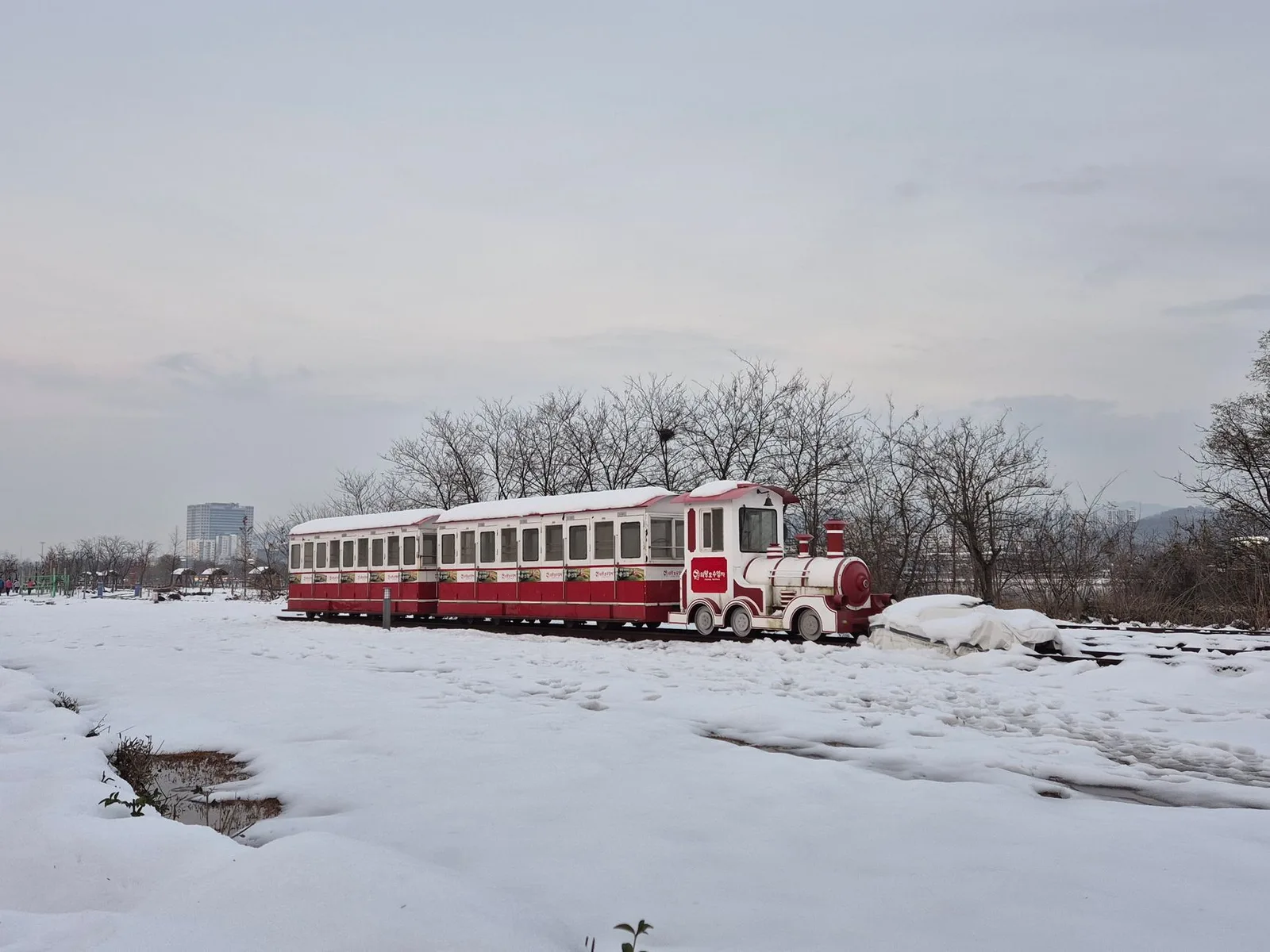
Here is the arithmetic for one adult leaving central Seoul on a weekday, using the ITX-Cheongchun rather than the slower Gyeongchun subway line.
- Yongsan to Gapyeong on the ITX-Cheongchun: 6,900 won, about 60 minutes.
- Gapyeong City Tour Bus, the hop-on service linking the pier, Petite France and the Garden of Morning Calm: 8,000 won adult, paid to the driver (6,000 won for a child).
- Nami Island admission: 19,000 won regular, which includes the round-trip ferry. Elementary students pay 13,000 won and middle or high school students, visitors aged 70 and over, and national merit holders pay 16,000 won.
- Lunch: 13,000 won, using Numbeo's July 2026 figure for an inexpensive restaurant meal in Seoul as the benchmark.
- Gapyeong back to Yongsan: 6,900 won.
Total: 53,800 won per adult. Add two Seoul subway legs at the 1,550 won card fare and the door-to-door number is 56,900 won. Two adults with a child aged 10 come to roughly 145,000 won for the day, since the child pays 13,000 for the island and 6,000 for the bus.
That sits below a standard guided DMZ day, which runs 55,000 to 95,000 won per person before any admission. If you are pricing a whole week this way, our breakdown of what seven days in Korea costs line by line uses the same method across accommodation and food.
The zip wire from the mainland to the island is the one big optional add-on at 55,000 to 58,000 won, and it includes island admission, so buying both separately wastes 19,000 won.
Gangneung, and why the date on your ticket matters this month
Korail announced on 5 August 2026 that it will merge KTX and SRT high-speed services on 1 September 2026, cutting fares by an average of 10% and rebranding SRT trains as KTX-Sancheon. The company published two worked routes: Seoul to Busan drops from 59,800 to 54,400 won, and Yongsan to Gwangju Songjeong from 46,800 to 42,000 won. Weekday high-speed departures rise from 379 to 402, and weekend departures from 431 to 457.
Gangneung was not one of the published routes. The arithmetic still tells you the shape of it: at around 27,600 won one-way in 2026, a return is 55,200 won today, and the announced average cut would land it near 49,700 won from September. On the Gyeonggang line, opened in December 2017 for the PyeongChang Olympics, KTX-Eum trains run from Seoul Station and Cheongnyangni, with 18 one-way services on weekdays and 26 at weekends.
Korean high-speed fares are regulated and fixed, so there is no advantage to booking months ahead on price alone, only on seat availability. If your dates are flexible and it is late August, moving a long rail day into September is worth about 5,000 won per person.
Where the Climate Card stops paying for you
This is the single most common budgeting mistake on a Seoul day trip. The Seoul Metropolitan Government's Climate Card sells at 5,000 won for one day, 10,000 for three days, 15,000 for five and 20,000 for seven, with a 3,000 won fee for the physical card. It excludes the Sinbundang Line, intercity and airport buses, and routes outside Seoul.
Every destination in the table above is outside Seoul. The pass covers your ride to Yongsan Station and nothing after it. Keep a topped-up T-money balance for the day itself. Note also that the 30-day prepaid Climate Card is discontinued after 31 August 2026, with short-term recharges continuing on existing cards.
The Seoul city fare tables are worth knowing for the edges: the 1,550 won card fare covers the first 10 km with additions per 5 km beyond, transfers are free within 30 minutes (60 minutes between 21:00 and 07:00), and boarding before 06:30 takes 20% off the base fare. That early-bird discount is real money on a 06:00 start for a Paju tour pickup.
Paju and the DMZ: the trip you cannot improvise
The border day is the one that punishes spontaneity. A standard DMZ tour covering the Third Tunnel of Aggression and Dora Observatory runs 6 to 7 hours, departs Hongdae or Myeongdong around 07:00, requires your passport on the coach, and does not operate on Mondays or public holidays. Booking two to three weeks ahead is normal in high season.
JSA and Panmunjom tours are a separate matter. Public access has been suspended since the July 2023 incident in which a US soldier crossed the line during a civilian tour, and remains under United Nations Command restrictions. The Camp Bonifas visitor centre partially reopened in summer 2025, but Freedom House and the blue conference buildings are closed to tourists. Any listing selling you the blue huts today should be treated with suspicion.
The independent alternative is Imjingak in Paju, reachable without a tour. The Korea Tourism Organization lists the Imjingak Peace Gondola at 12,000 won round trip for a regular cabin and 10,000 won for middle school students and children, open 09:00 to 18:00 on weekdays with last tickets at 17:30, and until 19:00 at weekends. ID is required for the section crossing the Civilian Control Line. Inside the tour, the Third Tunnel costs 9,200 won on foot or 12,200 won with the monorail.
Which operator and route is worth the day is a longer question, and we answer it separately in our comparison of DMZ tours from Seoul.
Half-day trips that stay inside the metro network
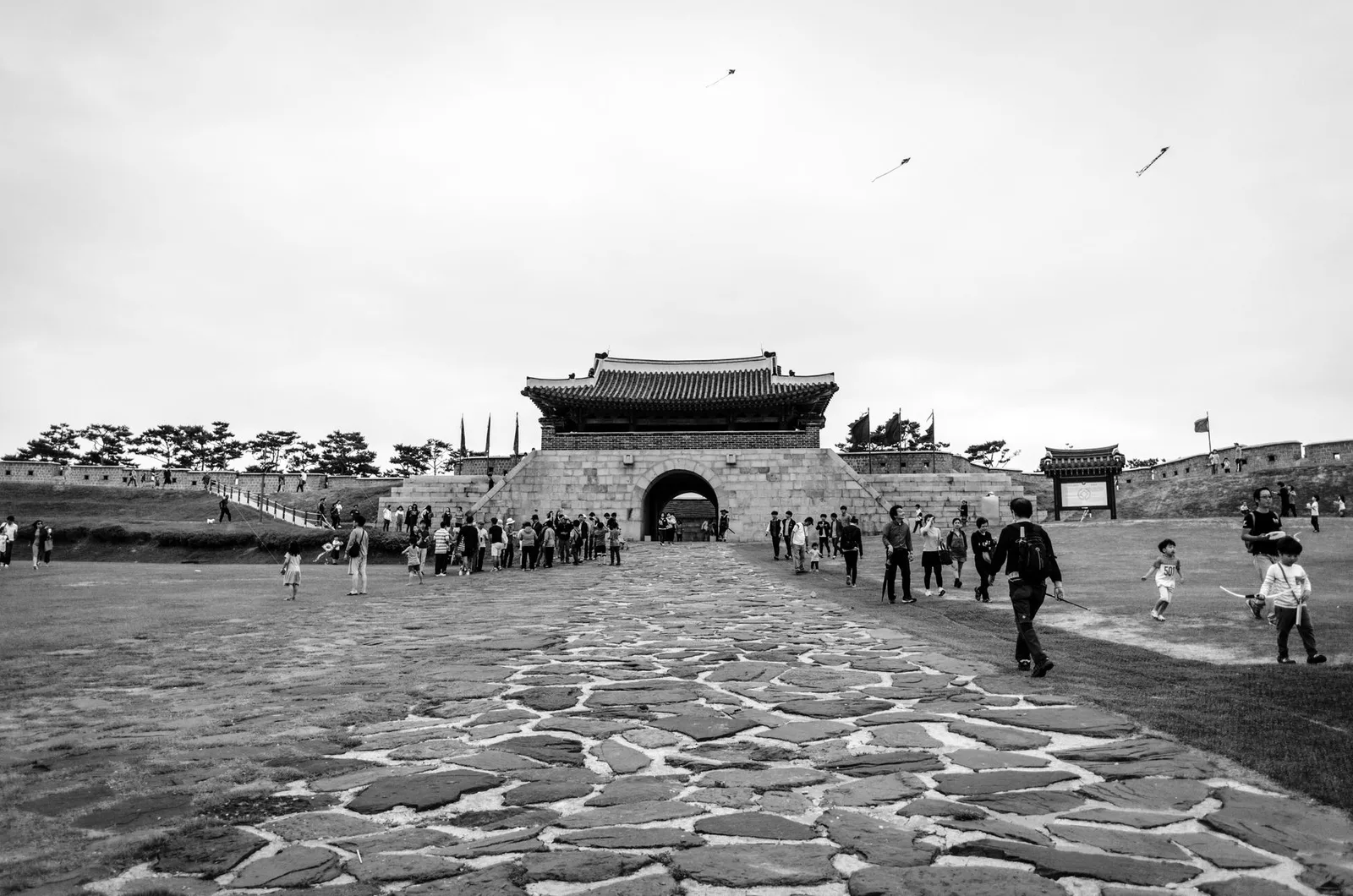
Suwon is the highest value per won on this list. Hwaseong Fortress, inscribed by UNESCO in 1997, has been ticketed at 1,000 won for adults and 500 won for children, with a 1,500 won combination ticket that adds Hwaseong Haenggung Palace, open 09:00 to 18:00 with last entry at 17:00. Entry to the palace is free if you arrive in hanbok. One caution: 2026 guidance is inconsistent about whether walking the wall itself is now free with charges applied only at individual sites, so the amount you hand over at the gate may be smaller than the figure above rather than larger.
Gwangmyeong Cave is the clearest example of a ticket trap. The Korea Tourism Organization's own listing gives 5,000 won for adults, 2,500 for teenagers and 1,500 for children, free under 3 and for over-65s, with the site closed Mondays and last admission an hour before the 18:00 close. Resale listings quote 12,000 won for the same adult entry, and 20,000 won for a bundle with the dinosaur exhibition. Buy at the gate unless you specifically want the exhibition.
In Yongin, the Korean Folk Village charges 32,000 won for adults aged 14 to 64, 26,000 for children from 36 months to 13, and 22,000 for over-65s and disabled visitors, with the Amusement Village rides included and an AFTER4 evening ticket at 17,000 won. Everland, next door, is harder to pin down: 2026 listings put the gate day pass between 54,000 and 59,000 won, while discounted online tickets for foreign visitors circulate between 32,000 and 39,000 won. The operator's own price page was unreachable on 11 August 2026, so treat those as market prices rather than published ones.
Incheon closes the list. Chinatown sits beside Incheon Station at the end of Line 1, 60 to 75 minutes from central Seoul on the metro fare alone, with no admission anywhere.
Timing: foliage, Chuseok, and the days things are shut
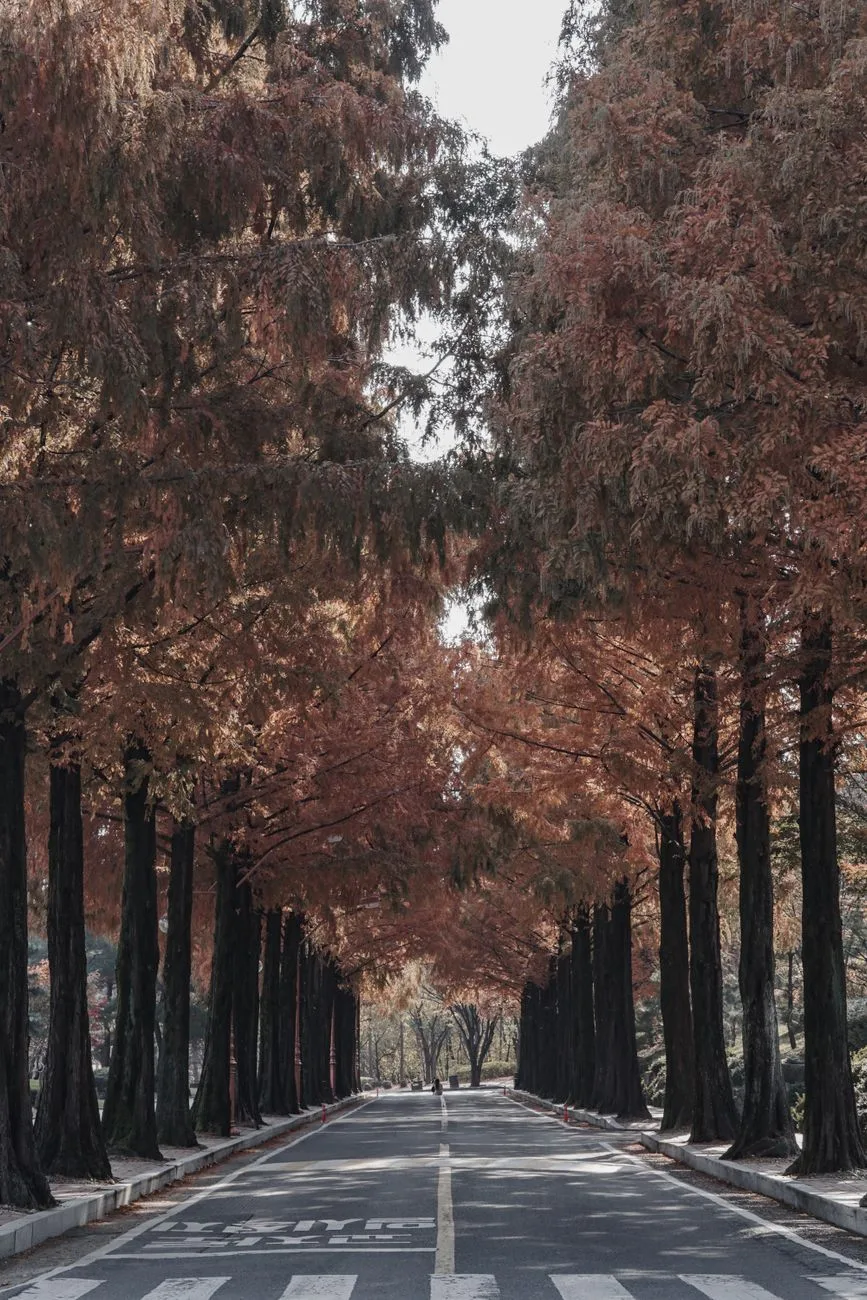
Autumn inverts the usual advice about staying close to Seoul. The Korea Meteorological Administration tracks first tinting at around 20% of leaves and peak colour at 80% or more, and the front moves south. Seoraksan and the northern mountains turn from late September to mid-October, while Seoul and Gapyeong follow from late October into early November, with Seoul's peak falling roughly between 5 and 15 November. The far day trip is the early-autumn one; the near one comes later.
Two festival dates make a day trip better rather than worse. The Suwon Hwaseong Cultural Festival runs 4 to 11 October 2026, headlined by King Jeongjo's Royal Parade with more than 4,000 participants over a 59 km route, and the Jarasum Jazz Festival's 23rd edition runs 9 to 11 October 2026 in Gapyeong, which pairs directly with the Nami Island trip above. Our 2026 festival calendar covers what closes around each one.
The three-hour rule fails outright on three kinds of day. Mondays close Gwangmyeong Cave and stop DMZ tours. The Chuseok holiday, 24 to 26 September 2026, with Chuseok day on Friday 25 September, sells out intercity trains and buses and shuts many small businesses. And July is a genuine gamble outdoors: Seoul's long-term normals put July at about 414 mm of rain against an annual 1,418 mm, close to 30% of the year's total in one month.
For a first visit of four or five days, take Gapyeong or Suwon and leave the east coast alone. Past a week, one Gangneung day earns its fare, and Sokcho earns a night rather than a day. If you are still shaping the week itself, our five-day Seoul itinerary sets the palace closing days that a day trip has to work around.
FAQ
Can I visit the DMZ from Seoul without joining a tour?
Partly. Imjingak in Paju, including the Peace Gondola at 12,000 won round trip, is open to independent visitors with ID. The Third Tunnel of Aggression and Dora Observatory sit inside the controlled zone and require a booked tour with your passport, at 55,000 to 95,000 won as of 2026.
Is Busan a day trip from Seoul?
No. The return high-speed fare alone is 119,600 won until 31 August 2026 and 108,800 won from 1 September, when Korail's merged KTX and SRT pricing takes the one-way Seoul to Busan standard fare from 59,800 to 54,400 won. Spending that to sit on a train twice makes little sense against one hotel night.
Does the Climate Card cover Gapyeong, Suwon or Incheon?
No. The pass is valid inside Seoul and specifically excludes routes outside the city, the Sinbundang Line, and intercity and airport buses. Carry a T-money card with a balance for anything past the boundary.
What is the cheapest day trip from Seoul?
Suwon and Incheon. Both are reachable on Line 1 for the standard metro fare, which starts at 1,550 won with a transit card and adds distance charges beyond the first 10 km. Hwaseong Fortress admission is 1,000 won for adults; Incheon's Chinatown is free.
Do I still need a K-ETA to enter Korea in 2026?
Not if you hold a passport from one of the 67 designated visa-exempt countries and regions. The Ministry of Justice has extended the K-ETA exemption through 31 December 2026. Applying voluntarily still costs 10,000 won and removes the paper arrival card, with processing generally inside 72 hours.
This article is general travel information, and fares, admission prices and opening days change. Figures are dated where they are known.