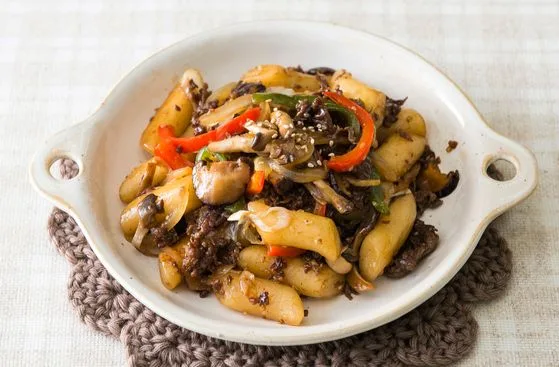
Gochujang does four separate jobs in a tteokbokki pan: heat, fermented soybean depth, colour, and body from its starch. Remove the paste and all four leave together, which is why one spoon of sriracha never lands. The four builds below cover those jobs in different combinations, each with its ratio per 400 g of rice cakes.
What leaves the pan along with the paste
Gochujang is a fermented paste rather than a chili sauce. Chili powder, meju (fermented soybean), glutinous rice or barley starch, salt and a sweetener each carry a different part of the work, and a one-ingredient swap only ever covers one of them.
The starch is the part people forget. Two tablespoons of gochujang thicken a pan on their own. Drop the paste and add flakes, and the sauce stays loose until it either reduces for longer or borrows starch from the rice cakes themselves.
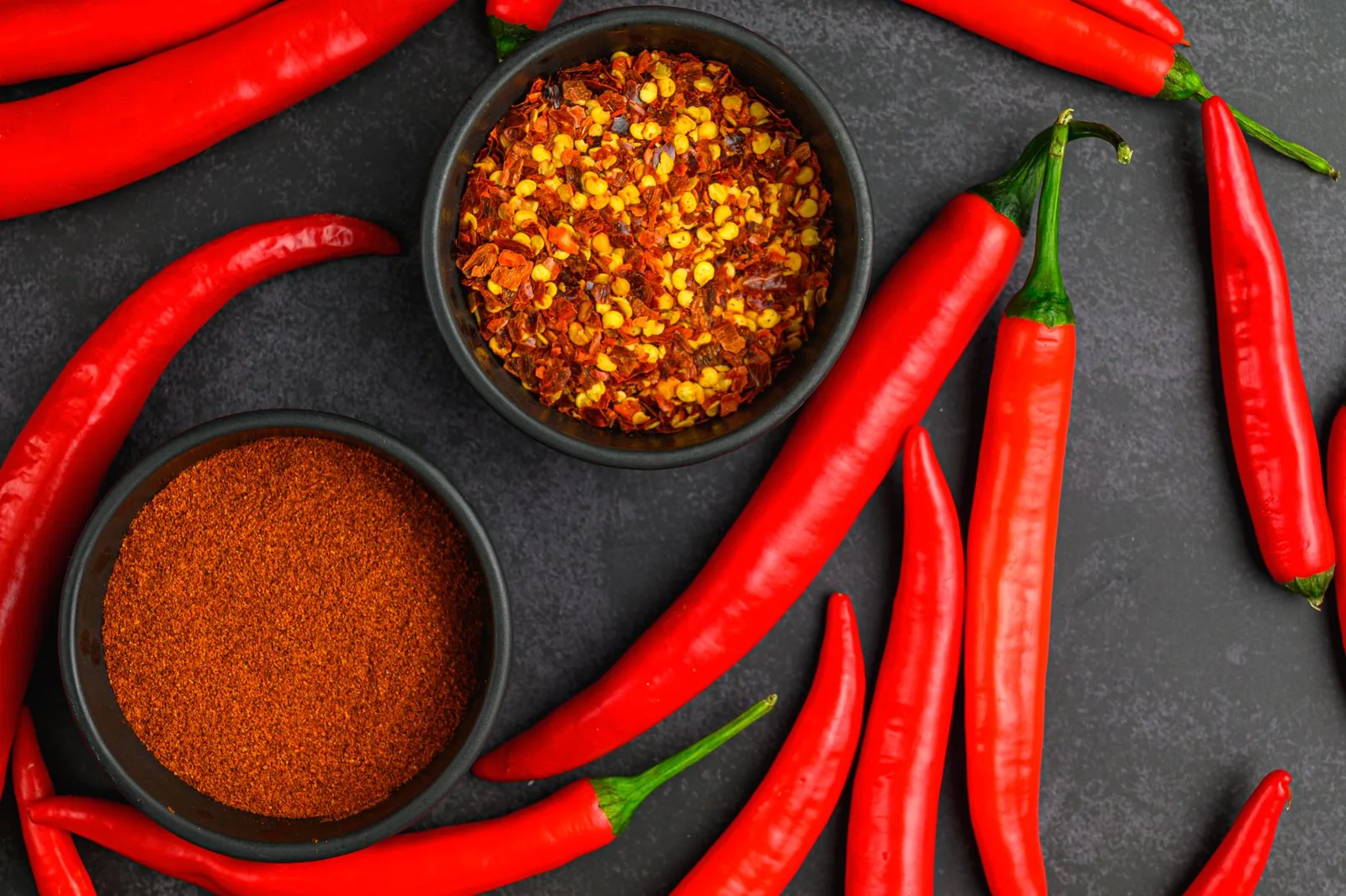
Chili content runs lower than the colour suggests. Gochugaru is dried chili and nothing else, while gochujang dilutes that same chili with grain, salt and sugar. Spoon for spoon the flakes carry more capsaicin, so none of the substitutions below are 1:1.
The fermented soybean note has no shortcut. Sriracha brings heat, vinegar and garlic; ketchup brings sugar and acid. Both leave the sauce sharp where the original tasted round.
Four bases, and which one to reach for
This table answers one question: which base to build given what is already in the cupboard.
| Base | Core seasonings | Heat | Fermented depth | Gochujang-free |
|---|---|---|---|---|
| Royal soy (gungjung) | Soy sauce, sugar, rice syrup, sesame oil | None | High | Yes |
| Gochugaru + soy | Chili flakes, soy sauce, garlic, sugar | High | Medium | Yes |
| Gochugaru + doenjang | Chili flakes, soybean paste, sugar | High | High | Yes |
| Cream and cheese | Milk or cream, soy sauce, garlic | Low | Low | Yes |
| Rosé (standard) | Cream plus gochujang | Medium | High | No |
Only the doenjang build replaces both of the hard parts at once, the heat and the fermented soybean. The last row sits in the table because rosé is the version most often recommended to anyone avoiding the paste, and it still contains it.
My default: with gochugaru in the cupboard, build the doenjang version. Without it, go royal soy rather than reaching for a Western hot sauce, which produces a pan that tastes like neither dish.
Gochugaru and doenjang, per 400 g of rice cakes
- 2 Tbsp gochugaru (coarse flakes)
- 1 Tbsp doenjang
- 1 Tbsp soy sauce
- 1½ Tbsp sugar
- 1 Tbsp minced garlic
- 300 ml anchovy stock
Two adjustments make this work. Doenjang is saltier than gochujang, so the soy sauce drops from the usual 2 Tbsp to 1. And with about 2 Tbsp of starchy paste gone, the sauce wants 2 to 3 extra minutes at a simmer before it clings to the tteok.
This one fails if you substitute Japanese white miso at 1:1. Miso is sweeter, lower in salt, and fermented on rice rather than on meju, so the same spoonful leaves the pan under-seasoned and faintly sweet. Use 1½ Tbsp of white miso and cut the sugar to 1 Tbsp when that is the only paste in the house.
The royal soy base, at 3:2:1
Korean recipe convention fixes this sauce at soy sauce : sugar : rice syrup = 3 : 2 : 1. For 400 g of rice cakes that is 3 Tbsp soy sauce, 2 Tbsp sugar and 1 Tbsp rice syrup, plus 1 Tbsp sesame oil and 1 Tbsp minced garlic, with 240 ml of water or beef stock and 150 g of thinly sliced beef.
Scaled, that comes to 0.75 Tbsp of soy sauce per 100 g of rice cakes. So 600 g of tteok takes 4½ Tbsp soy sauce, 3 Tbsp sugar, 1½ Tbsp rice syrup and 360 ml of stock. Without rice syrup, swap in 1 Tbsp of honey, or ½ Tbsp more sugar with 15 ml less liquid, since the syrup carries gloss as well as sweetness.
The Korean Food Promotion Institute lists the dish's components as white rice cake, beef sirloin, sesame oil, soy sauce, scallions, mushrooms, pine nuts and sesame seeds, arranged around a five-colour scheme. The full method, the soaking times and the conversion from a spicy recipe are set out in our guide to the soy-sauce royal court tteokbokki; this section gives the ratio, that one gives the technique.
A cream version that is genuinely paste-free
Rosé tteokbokki (로제떡볶이) is cream, milk or cheese stirred into the sauce, with the name describing the pink colour. The paste stays in. It dilutes the heat and does nothing at all for someone avoiding gochujang for allergen reasons.
A cream build without the paste starts from the soy base instead: 400 g rice cakes, 200 ml milk or cream, 1 Tbsp soy sauce, 1 tsp garlic, a pinch of black pepper, and 30 g of shredded mozzarella melted in at the end. Add ½ tsp of gochugaru for colour without much burn. Reduce it gently, because dairy splits at a hard boil.
Why meju is the part you cannot fake
Chili arrived on the peninsula late. The National Institute of Korean History places chili peppers in Joseon between the late 16th and early 17th century, after the Imjin War, with a written gochujang preparation method following in Jeungbo Sallim Gyeongje in 1766. The fermented soybean base is the older half of the paste, and it is the half that carries the savoury weight.
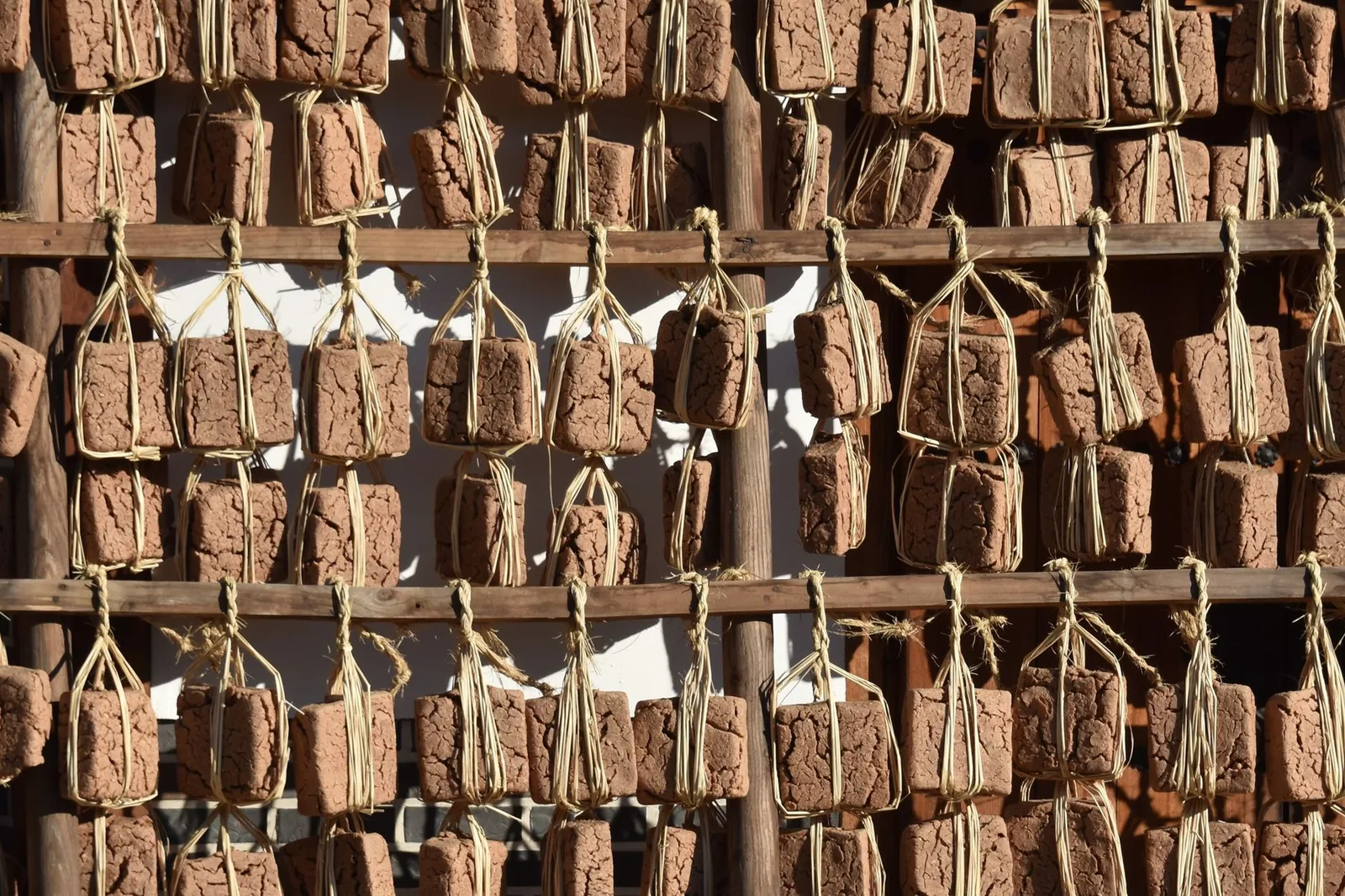
That is what doenjang shares with gochujang and what miso does not. Meju is soybean fermented in block form, dried, then aged in brine; the resulting paste tastes deep and salty rather than sweet. Any substitution that skips it produces heat without a foundation under it.
The street version of tteokbokki is much younger than either paste. The 1953 Sindang-dong origin story credited to Ma Bok-rim is repeated in nearly every account and documented in no primary source, so treat it as a dated story rather than a verified fact.
Reading the label: wheat, not gluten
Wheat is the usual reason people drop gochujang, and the label is the only reliable check. Gochujang is frequently made with wheat flour or barley malt, and Canadian authorities recalled Daesang brand gochujang over undeclared wheat, which is a useful reminder that a familiar brand's formulation can carry an allergen its packaging fails to state.
One confusion is worth clearing up. The "glutinous rice" in gochujang describes stickiness, not gluten. Glutinous rice is gluten-free. The wheat, where it exists, comes from the flour, the malt, or from soy sauce blended into the paste.
For a fully wheat-free pan the soy sauce needs replacing too, since brewed Korean ganjang commonly contains wheat. Guk-ganjang (soup soy sauce) or a certified tamari both work, and guk-ganjang is saltier, so use two-thirds of the quantity given above. Doenjang can contain wheat as well. The same substitute-and-rebalance arithmetic applies when removing fish sauce from a kimchi batch, where one missing ingredient changes the salt maths for everything else.
Where these sauces go wrong
Hard rice cakes are the most common complaint and almost always a soaking problem. Vacuum-packed tteok straight from the fridge stays chalky in the centre after ten minutes of simmering, because the starch has retrograded and needs water and time before it meets heat. Soak refrigerated tteok 20 to 30 minutes in cold water; boil frozen tteok for 2 minutes after a full thaw.
Over-salting is second. Soy sauce, doenjang and stock all bring salt, and unlike gochujang none of them brings much sugar to balance it. Taste the sauce before the rice cakes go in, while water can still correct it.
The third is expectation. None of these builds tastes like a Sindang-dong street portion, because this article replaces gochujang's functions rather than reproducing its specific fermented chili flavour. What comes out of the pan is the older, glossier dish, or a chili version with a different fermented backbone under it.
Anyone adding gochujang back to another Korean staple runs into the reverse of this problem, where the paste's salt and sugar reshape a whole batch; that trade-off is worked through in how much gochujang a kimchi ferment can take.
Which one to make tonight
Check the cupboard in this order. Gochugaru and doenjang both present: make the doenjang build at 2 Tbsp flakes to 1 Tbsp paste per 400 g, and give it the extra three minutes. Gochugaru but no doenjang: same flake quantity, 2 Tbsp soy sauce, and accept a cleaner and shallower sauce. Neither: go royal soy at 3:2:1 and stop trying to make the pan red, because paprika adds colour with no heat and cayenne adds heat with a sharpness that reads as wrong in this dish.
General cooking and allergen information only. Anyone managing coeliac disease or a diagnosed food allergy should confirm ingredients against the manufacturer's own labelling.