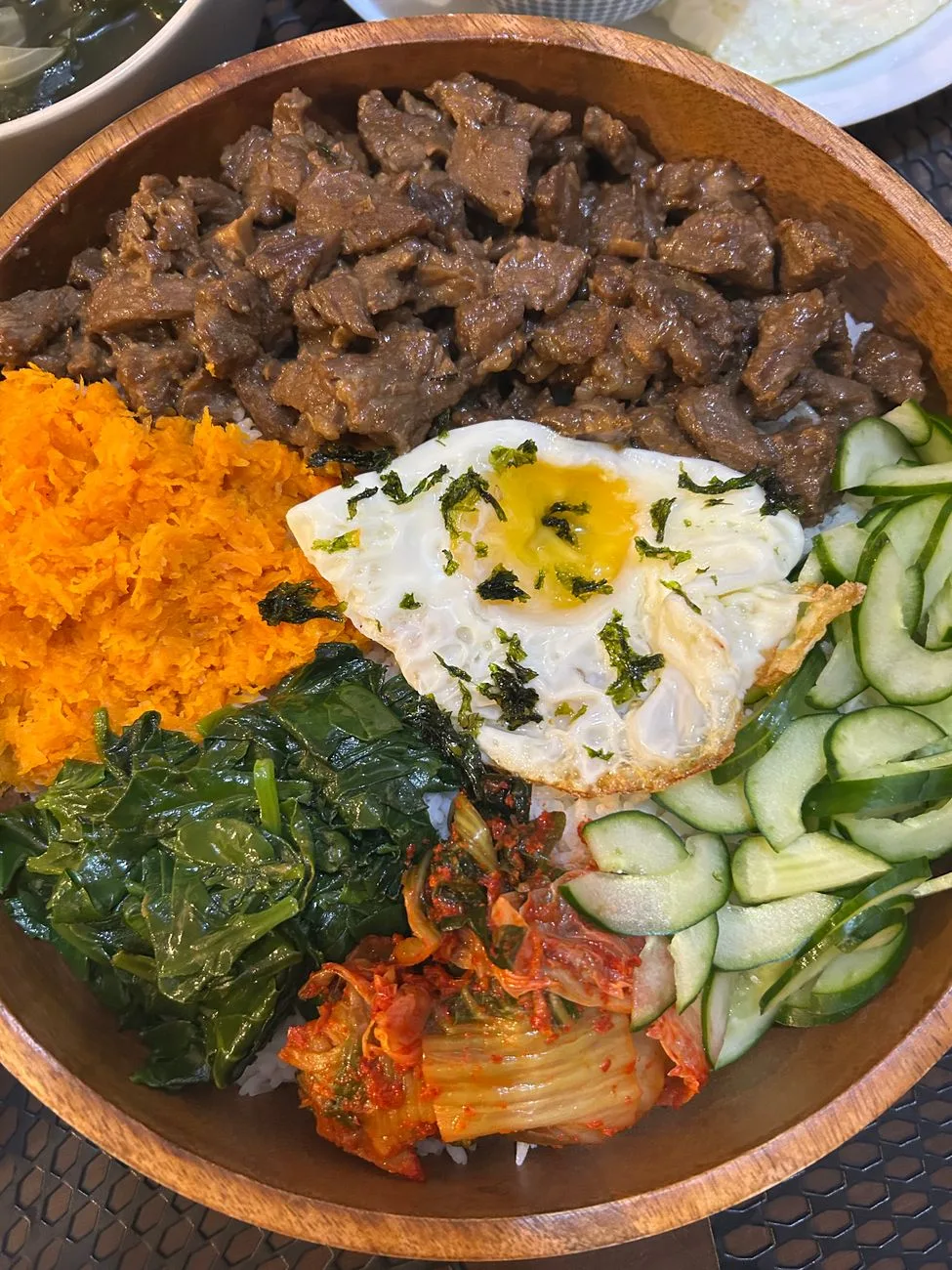
Ground beef works in bibimbap because the meat is carried by a soy-sugar-sesame seasoning rather than by a cut-specific technique. Brown a pound of 90/10 beef, season it with soy sauce, sugar, sesame oil, garlic and rice wine, then build bowls with short-grain rice, three or four vegetables, a fried egg and gochujang sauce.
Korean Bapsang, written by Hyosun Ro and one of the most widely referenced English-language Korean recipe sites, states in its bibimbap recipe that ground beef can replace the thinly sliced rib eye or sirloin and be seasoned the same way. So the substitution is legitimate. What changes is the order of operations, and that is where most home versions fall apart.
The short version: brown the beef first and season it in the pan, never marinate it in advance; drain anything fattier than 85/15; and keep the gochujang sauce off the heat.
What changes when you use ground beef instead of sliced beef
A marinade on sliced beef does two jobs: it seasons the surface and it has about 20 minutes to work its way into the muscle. Korean Bapsang gives that resting time for 8 ounces of sliced beef. Ground beef has already been shredded into thousands of surfaces, so there is nothing left to penetrate. The seasoning is fully absorbed in the time it takes to stir it through a hot pan.
Marinating ground beef ahead of time actively hurts it. Salt and sugar pull water out of the mince, and that water hits the pan before the meat can brown. What comes out is grey and slightly bouncy rather than caramelised. Brown the beef dry, then pour the seasoning in during the last minute.
Fat content matters more than it does with sliced beef, because rendered fat has nowhere to go in a bowl. It pools under the rice and coats the gochujang, flattening the chilli.
| Ground beef ratio | What happens in the bowl | Verdict |
|---|---|---|
| 80/20 | Noticeable fat slick at the bottom; sauce tastes muted | Usable, but drain the pan before seasoning |
| 85/15 | Good browning, small amount of rendered fat | Drain lightly; excellent flavour |
| 90/10 | Clean bowl, still juicy; the ratio Skinnytaste specifies for its ground beef bibimbap | Best default |
| 93/7 or leaner | Dries out and turns grainy once the soy hits it | Add an extra teaspoon of sesame oil, or skip |
The usual advice online is that leaner is better in a rice bowl. Past 90/10 that stops being true, because there is no marinade sitting on the outside of the meat to keep it moist.
Ingredients for four bowls
Beef and its seasoning (doubled from the marinade Korean Bapsang specifies for 8 ounces of sliced beef, to cover a full pound of mince):
- 1 lb (about 450 g) ground beef, 90/10
- 3 Tbsp soy sauce
- 1 Tbsp plus 1 tsp sugar
- 4 tsp toasted sesame oil
- 4 tsp rice wine (mirin or cheongju)
- 2 tsp minced garlic
- 2 Tbsp chopped scallion, plus black pepper
Rice. The two source recipes measure this differently and it confuses people: Korean Bapsang lists 3 cups of short-grain rice for four servings, while Skinnytaste lists 3 cups of cooked rice for the same four. Cook about 1½ cups of uncooked short-grain rice, which yields roughly 4½ cups, and you get a generous bowl each with a little spare.
Vegetables, following the set Skinnytaste uses: 8 oz sliced shiitake mushrooms, 1 cup grated carrot, 5 oz baby spinach, 3 cloves garlic, 1 tsp grated ginger, 1 tsp neutral oil. Bean sprouts, julienned zucchini and thin cucumber are all standard additions.
Eggs: 4 large, one per bowl.
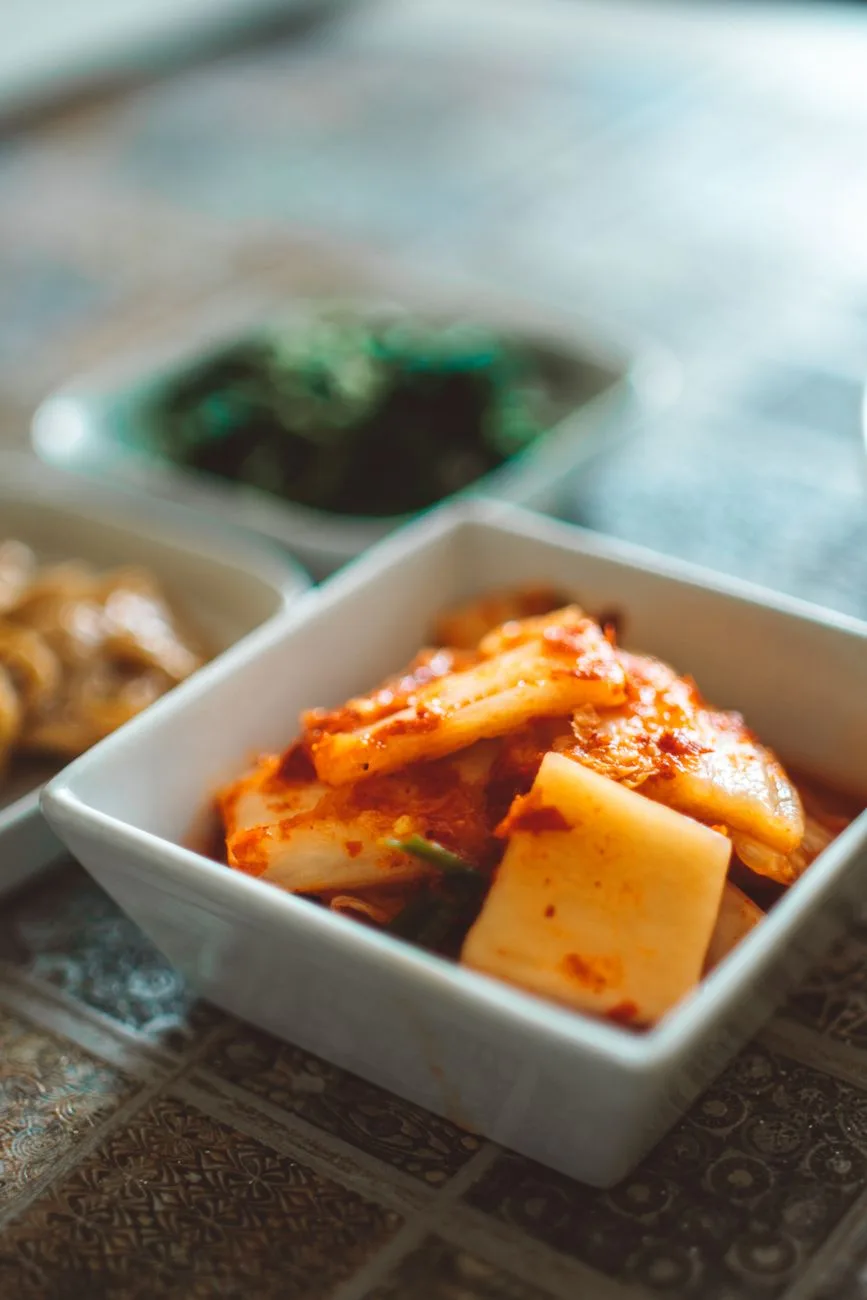
Gochujang is the one ingredient with no real substitute; sriracha and chilli-garlic sauce are fermented differently and taste nothing like it. Korean grocery chains such as H Mart carry several brands, though the company does not publish an official store count and third-party location trackers disagree, putting its US footprint somewhere between 85 and 94 stores depending on when the count was taken.
Method: about 30 minutes, in the order that matters
Skinnytaste times its ground beef version at 10 minutes prep and 20 minutes cooking, 30 minutes total. Korean Bapsang's sliced-beef bibimbap runs 25 minutes prep and 30 minutes cooking, 55 minutes total. The gap is almost entirely the vegetables: the traditional method blanches and seasons each namul separately in its own bowl.
- Start the rice first. Everything else finishes faster than rice does.
- Wilt the spinach. Five ounces of baby spinach collapses to a small handful in about 90 seconds. Tip it into a sieve and press hard with the back of a spoon. Skipping this step is the single most common reason a bowl turns watery.
- Cook the mushrooms dry. Put the shiitakes in a hot dry pan with no oil until they release their liquid and it evaporates, then add the oil, garlic and ginger. Oiling first makes them steam.
- Brown the beef in the same pan. Break it up, leave it alone for a minute at a time to get colour, and only stir occasionally. Drain if you are using 85/15 or fatter.
- Season off the heat. Kill the heat, pour in the soy, sugar, sesame oil, rice wine and garlic, and stir for 30 seconds. The residual heat is enough. On full heat the sugar scorches in seconds.
- Verify the temperature. USDA's Food Safety and Inspection Service requires ground beef to reach an internal temperature of 160 °F, checked with a food thermometer, and states plainly that colour is not a reliable indicator of doneness.
- Fry the eggs last so the yolk is still hot when it reaches the table.
- Assemble: rice in the bottom, beef and vegetables arranged in separate wedges on top, egg in the centre, sauce spooned over or served alongside.
The arrangement is not decoration. Keeping each component in its own section lets whoever is eating decide the ratio when they mix, which is the point of the dish.
Two gochujang sauce formulas, and which to use
The two recipes behind this article take genuinely different approaches to the sauce, and averaging them produces something worse than either.
| Component | Korean Bapsang (gochujang-forward) | Skinnytaste (soy-forward) |
|---|---|---|
| Gochujang | 4 Tbsp | 2 Tbsp |
| Soy sauce | none | 3 Tbsp low-sodium |
| Sweetener | 2 tsp sugar (adjustable 1–3 tsp) | none |
| Acid | none | 1 Tbsp rice vinegar |
| Sesame oil | 1 Tbsp | 1 tsp |
| Thinner | 1 Tbsp water | none |
Korean Bapsang suggests roughly 2 tablespoons of sauce per bowl, or serving it on the side.
Use the gochujang-forward sauce. With ground beef the meat is already carrying soy sauce, sugar and sesame oil from its own seasoning, so a second soy-heavy sauce doubles the salt and blurs the chilli. Skinnytaste's nutrition panel already puts one of its four bowls at 508.5 calories, 38 g protein, 52.5 g carbohydrate, 15.5 g fat and 952 mg sodium. The exception: if you seasoned the beef with salt and pepper only, the soy-forward sauce is the better choice, because then it is the only source of savouriness in the bowl.
The vegetables: how far to take it
A Jeonju-style bibimbap can carry seven or more separately seasoned namul, each blanched, squeezed and dressed on its own. That is a genuine hour of work and it tastes different from a weeknight bowl, in the same way that individually seasoned banchan taste different from a mixed salad.
Three vegetables is the practical floor for a bowl that still reads as bibimbap: one green (spinach), one sweet and crunchy (carrot), one savoury and meaty (mushroom or bean sprouts). Below three it is a rice bowl with beef on it.
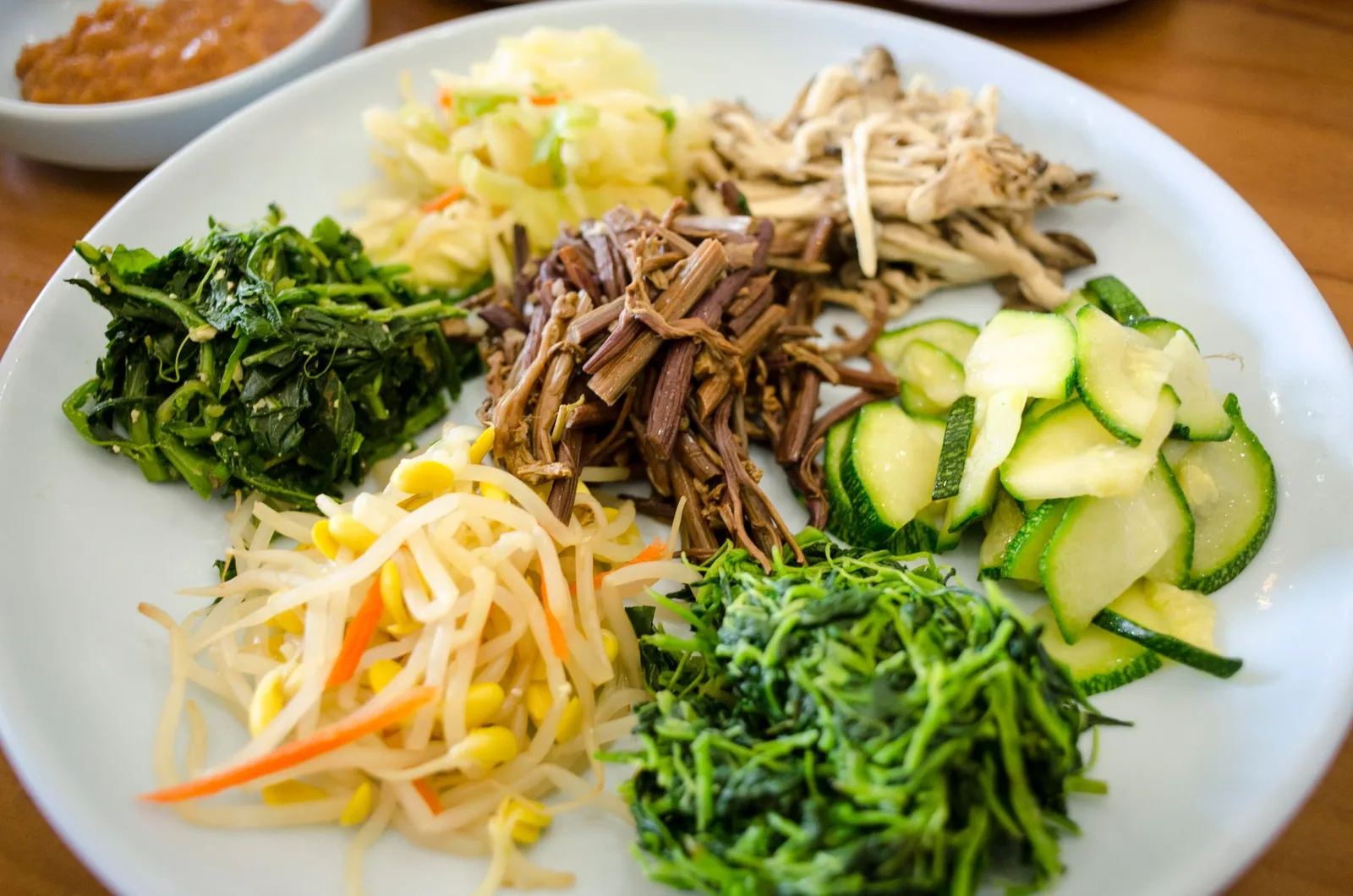
Colour contrast does real work here, which is why cucumber and carrot are worth cutting into matchsticks rather than grating when you have five spare minutes. Grated carrot disappears into the rice.
Where ground beef bibimbap goes wrong
Wet spinach. Covered above, and it is the top failure. Squeeze it until it stops dripping.
Scorched gochujang. Fermented chilli paste is roughly a third sugar by character; direct high heat turns it bitter and slightly metallic. Sauce goes on at the table, not in the pan.
Rice cooked too soft. Short-grain rice for bibimbap wants to be a shade firmer than usual, because it is about to absorb sauce, egg yolk and vegetable moisture. Day-old refrigerated rice is better than fresh for this dish, and essential for a stone bowl.
Salt stacking. Seasoned beef plus a soy-based sauce plus salted vegetables is three salt sources in one bowl. Season the vegetables with sesame oil and a pinch of salt only.
Serving the egg cooked hard. The runny yolk functions as an emulsifier when the bowl is mixed. If a runny yolk is a concern for anyone at the table, cook the egg through and add an extra teaspoon of sesame oil to compensate for the lost richness.
Stone bowl or regular bowl
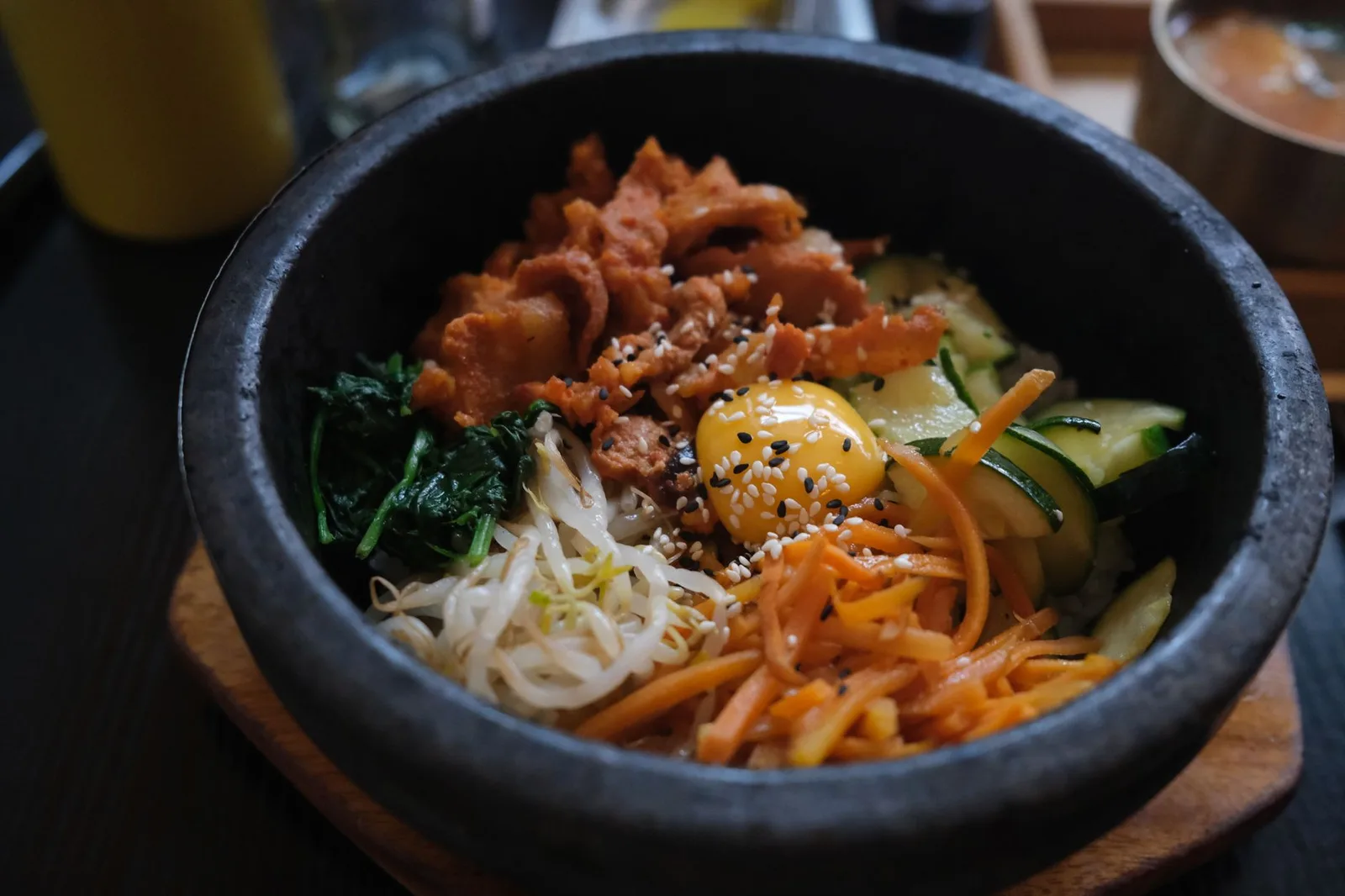
Dolsot bibimbap gets its appeal from nurungji, the crisp scorched rice layer that forms against the hot stone. Preheat the dolsot, brush it generously with sesame oil, press day-old rice into it and leave it undisturbed for several minutes before adding toppings.
This does not transfer to a nonstick pan. Without the stone's heat retention the rice fries rather than crusts, and the sesame oil smokes. A cast-iron skillet is the only reasonable substitute; anything else, serve in a normal bowl and accept that you are making the everyday version, which is what most Korean households eat anyway.
Leftovers and food safety
FSIS guidance is specific and worth following exactly. Raw ground beef should be held at 40 °F or below and used within 2 days or frozen. Cooked beef refrigerated promptly, meaning within 2 hours, or within 1 hour if the room is above 90 °F, keeps 3 to 4 days.
Store the components separately. Beef and mushrooms reheat well; spinach goes slimy after two days and rice goes hard in the fridge but recovers with a splash of water in the microwave. Fry a fresh egg each time.
The seasoned beef itself freezes cleanly and is worth making in a double batch, since it also fills lettuce wraps and tops noodles. If you want to see how the same seasoning behaves on whole cuts over charcoal, that is the territory covered in our guide to choosing Korean BBQ in Seoul by cut and budget.
Common questions
Is ground beef authentic in bibimbap?
Ground beef is a home and diaspora adaptation rather than the classic preparation. Jeonju, the city most associated with the dish, is known for a version built on seasoned raw beef, and restaurant bibimbap across Korea generally uses sliced or minced-by-knife beef. Jeonju City has announced its bibimbap festival opening on 2 October 2026 under the Jeonju Festa umbrella; confirm dates on the city's own channels before travelling.
How much gochujang per bowl?
About 2 tablespoons of mixed sauce per bowl, per Korean Bapsang's serving note, which works out to roughly 1 tablespoon of straight gochujang if you use the gochujang-forward formula. Start lower and add at the table, since brands vary substantially in heat.
Can I use ground turkey, chicken or pork instead?
Yes, with one adjustment. Poultry has less fat and no beefy depth, so add an extra teaspoon of sesame oil and let the seasoning reduce slightly longer in the pan. Ground pork is closest to beef in behaviour. Note that FSIS safe minimum temperatures differ by species, so check the figure for whichever meat you use rather than assuming 160 °F applies.
Do I need a rice cooker?
No. Short-grain rice cooks fine in a heavy lidded saucepan. What matters is rinsing it until the water runs nearly clear and letting it rest off the heat for 10 minutes before fluffing, which is what gives you separate grains instead of paste.
What if I have no gochujang at all?
Then make the soy-forward sauce with a spoonful of miso and a pinch of chilli flakes and call it a beef rice bowl. It will taste good. It will not taste like bibimbap, and no amount of sriracha closes that gap.
This article is general cooking and food-safety information. For temperature and storage rules, follow current USDA FSIS guidance, which supersedes anything written here.