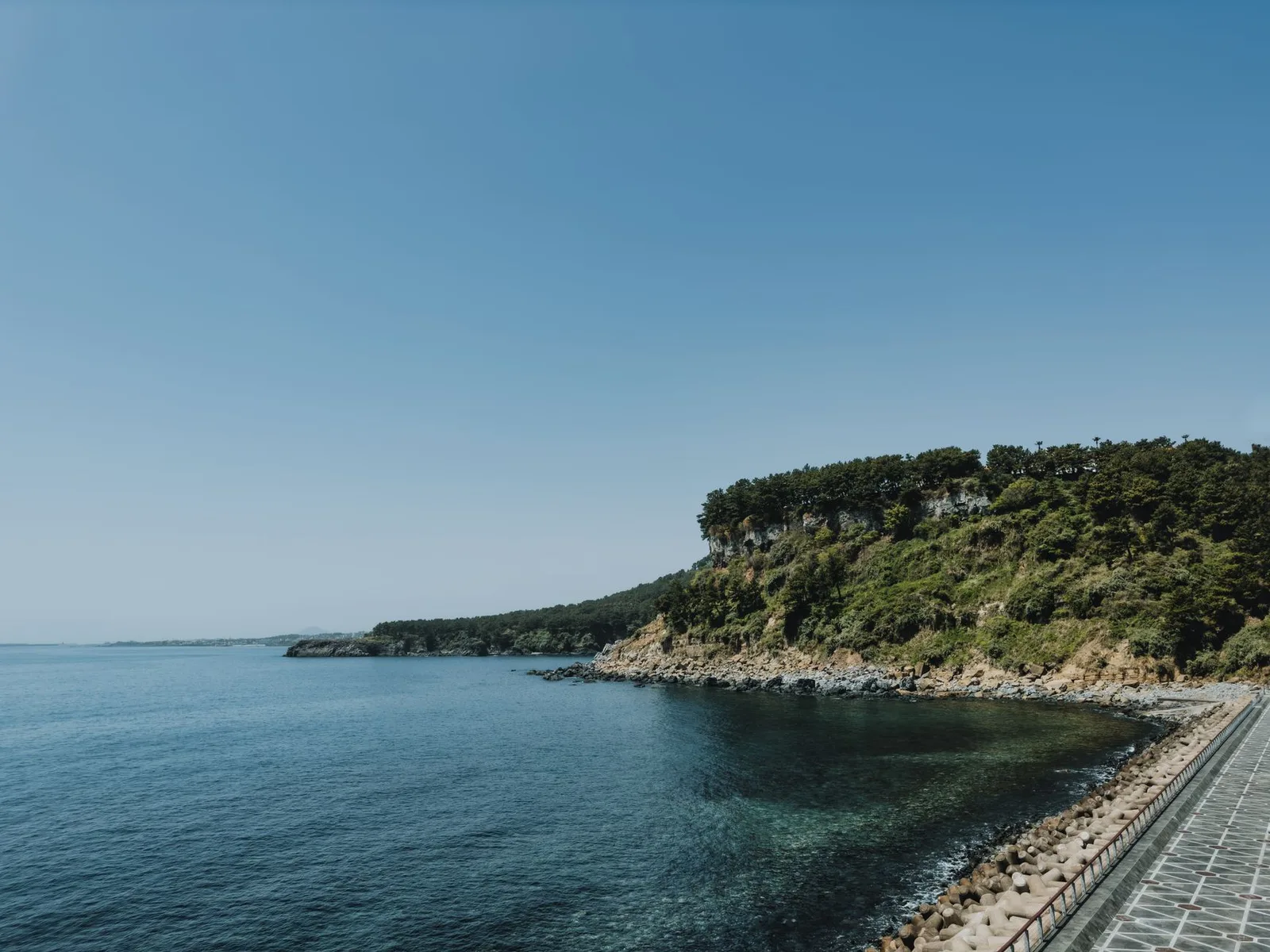
Jeju Island needs a weather-flexible packing list because coastal wind, sudden rain, strong sun, and large day-to-night temperature changes can affect the same trip. Pack light layers, waterproof footwear or covers, sun protection, and a compact rain shell. Add hiking equipment only for planned trails, and adjust insulation to the month.
Key takeaways
- Spring and autumn: Pack a breathable base layer, light jacket, trousers, and a compact rain shell. March and November need more warmth than May and September.
- Summer: Bring quick-dry clothes, sandals or water shoes, sun protection, and reliable rain protection. Jeju’s summer is humid, and August and September receive particularly heavy rain.
- Winter: Pack a warm insulating layer, windproof outer shell, gloves, hat, and footwear with good traction. Strong winds can make mild temperatures feel much colder.
- Hiking: Shoes with grip matter more than heavy technical equipment for ordinary coastal walks. Hallasan routes require more planning, and Seongpanak and Gwaneumsa use an official reservation system.
- The practical rule: Build the bag around the coldest, wettest activity on the itinerary, then use layers to handle everything else.
How Jeju weather changes what belongs in the bag
Jeju has four seasons and a temperate-to-subtropical climate. The official Visit Jeju tourism guide divides the year into spring from March to May, summer from June to August, autumn from September to November, and winter from December to February.
The island is exposed to weather from several directions. The Korea Meteorological Administration’s 1991–2020 climate normals record annual precipitation of 1,502.3 mm in Jeju, 1,182.9 mm in Gosan, 2,030.0 mm in Seongsan, and 1,989.6 mm in Seogwipo. Annual average wind speeds range from 2.5 m/s in Seogwipo to 6.8 m/s in Gosan. That regional spread explains why a sunny forecast in Jeju City does not guarantee calm conditions on the western or eastern coast.
The Korea Meteorological Administration regional climate statistics provide those long-term normals. They are useful for choosing layers, but a current forecast still determines whether a specific day needs waterproof trousers, extra insulation, or a hat that will stay on in the wind.
| Season | Average temperatures | Main packing problem | Core solution |
|---|---|---|---|
| Spring | 11.6–19.9°C | Wide temperature range | Thin layers and scarf |
| Summer | 21.7–27.1°C | Humidity, sun, storms | Quick-dry clothes and rain shell |
| Autumn | 15.6–24.1°C | Cool mornings and evenings | Light jacket and layers |
| Winter | 7.8–10.7°C | Strong, frequent wind | Warm insulation and windproof shell |
This table answers the central seasonal question: how much protection should the bag provide? The numbers are monthly averages from the Visit Jeju guide, not guaranteed daytime highs or lows for a particular trip.
Jeju Island packing list by season
Spring: March through May
Spring temperatures rise from an average of 11.6°C in March to 15°C in April and 19.9°C in May. Visit Jeju describes spring as having a large temperature range and recommends a thin jacket or scarf.
A practical spring bag contains:
- Two or three breathable shirts
- One thin sweater or fleece
- A light windproof jacket
- A compact rain shell
- Long trousers, with one lighter pair for May
- Comfortable walking shoes with traction
- A scarf or neck warmer for exposed coastlines
- Sunglasses and sunscreen
March deserves more warmth than the word “spring” suggests. A thin sweater under a windproof jacket is more useful than one bulky coat because indoor spaces and sunny afternoons can feel much warmer. May can support short sleeves during the day, but the rain shell remains useful on coastal walks.
Summer: June through August
The Visit Jeju guide lists average temperatures of 21.7°C in June, 24.2°C in July, and 27.1°C in August. Its monthly high/low ranges are 28.8°C–15.6°C in June, 30.5°C–18.6°C in July, and 32.2°C–20°C in August. Visit Jeju describes summer as humid, with storms or typhoons possible, while the Korea Meteorological Administration identifies Jeju as exposed to monsoon rain and northward-moving typhoons.
Summer clothing should dry quickly after sweat or rain. Pack:
- Three or four quick-dry tops
- Lightweight shorts or trousers
- A thin long-sleeved shirt for sun and air conditioning
- A compact waterproof rain shell with a hood
- Sandals or water shoes for beach use
- Closed walking shoes for trails and volcanic terrain
- A wide-brim hat or secure cap
- Sunscreen and sunglasses
- A dry bag or waterproof pouch for electronics
- A spare pair of socks
August and September receive particularly heavy rain according to Visit Jeju. A small umbrella can help around towns, but a hooded shell protects better on exposed paths because wind can turn an umbrella into a liability. Pack a waterproof phone pouch if a day includes beaches, boat activities, or long walks with no shelter.
August is also Jeju’s warmest average sea-temperature month at 27°C, according to Visit Jeju. For a planned swim, add a swimsuit, towel, and rash guard or water leggings. The 2026 Jeju Ecotourism Week activity listing names those items as preparation equipment and lists ₩100,000 for one scuba activity, so a participant can avoid packing unnecessary dive gear while still bringing personal swim layers.
Autumn: September through November
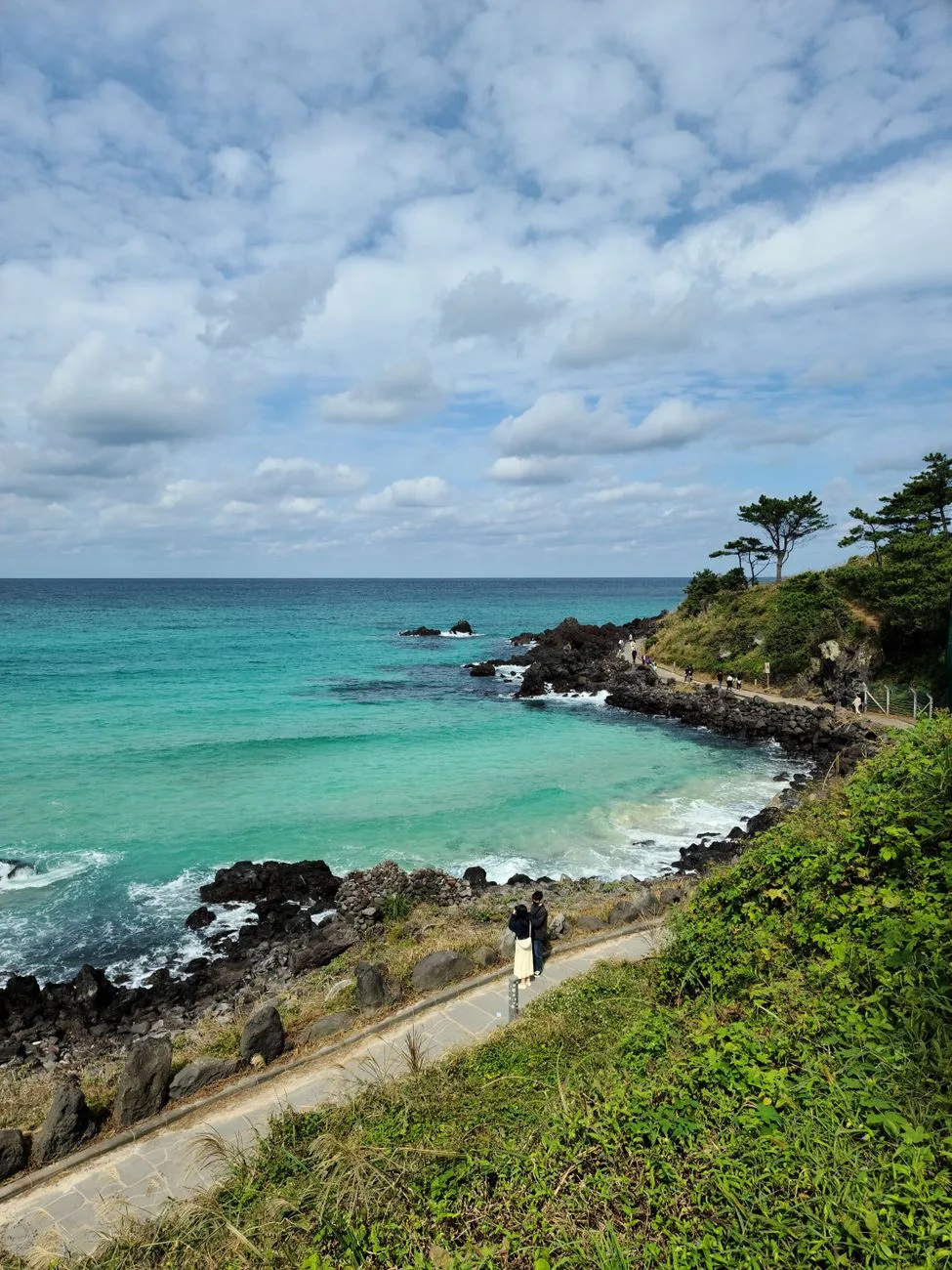
Average temperatures fall from 24.1°C in September to 20°C in October and 15.6°C in November. Visit Jeju notes a large daily temperature range in autumn and recommends a light jacket.
September still belongs in the summer-rain category for packing purposes. The calendar says autumn, but heavy rain can continue, so the bag needs quick-dry clothing and waterproof protection. October is the easiest month for a light-layer strategy. November needs a warmer mid-layer, especially for sunrise, evening markets, and open coastal viewpoints.
Pack two footwear options only if the itinerary justifies them: closed walking shoes for trails and a lighter pair for towns or accommodation. Otherwise, one pair of broken-in shoes with good grip saves space. New shoes can create blisters before a long Olle route is finished.
Winter: December through February
The official guide lists average temperatures of 10.7°C in December, 7.8°C in January, and 9.3°C in February. It also says winter winds are strong and frequent and that winter clothing is essential for snow trekking.
A winter Jeju bag should include:
- Thermal or moisture-wicking base layers
- A warm fleece, wool sweater, or insulated mid-layer
- A windproof outer shell
- Warm trousers or thermal leggings under trousers
- Gloves, a hat, and a neck warmer
- Thick socks, with one spare pair
- Waterproof shoes with firm traction
- Lip balm and moisturizer for wind exposure
- A compact rain cover for the daypack
A heavy coat alone is less adaptable than a base layer, insulating layer, and windproof shell. That combination handles a cold summit approach, a heated café, and a windy bus stop without forcing the whole outfit to stay on all day.
Snow trekking changes the equipment threshold. For a normal city-and-coast itinerary, ordinary winter walking shoes may be enough. The advice fails if the plan includes icy or snowy high-elevation terrain, where traction and weather-specific clothing become safety equipment rather than comfort items.
The walking and hiking kit that matches the route
Jeju Olle has 26 routes, made up of 21 main routes and five sub-routes, with a combined length of 422 km. Individual routes take approximately one to eight hours, according to Visit Jeju’s Jeju Olle information.
That range makes a single “hiking outfit” inadequate. Course 6 is 13.3 km, takes approximately four to five hours, and is rated low difficulty. Course 18 is 19 km and takes approximately six to seven hours. The longer route needs more water, food, blister protection, and weather margin even when technical climbing equipment is unnecessary.
For a half-day Olle walk, pack:
- Broken-in shoes with traction
- Two pairs of socks if rain is forecast
- A refillable water bottle
- A small snack or meal
- Rain shell and pack cover
- Sunscreen, hat, and sunglasses
- Blister plasters and basic personal medication
- Portable battery and phone pouch
- Tissues and hand sanitizer
- A small towel or sweat cloth
Hallasan requires a separate check. The official reservation-status page for Hallasan National Park covers the Seongpanak and Gwaneumsa trails and warns that availability can change. A reservation does not replace weather preparation. The summit route can demand warmer layers, stronger traction, and an earlier start than a low-difficulty coastal course.
The decision rule is simple: choose clothing for the route’s exposure and duration, not for the label “Jeju hiking.” A four-hour coastal course and a full Hallasan ascent should not share the same minimum kit.
Beach, water activity, and market items
Jeju’s 12 designated beaches operate for 75 days from June 24 through September 6, 2026, from 10:00 to 19:00, according to Visit Jeju’s 2026 beach information. Beach hours do not determine whether every water activity is available, so the packing list should reflect the reservation or activity description rather than assume a full beach-service setup.
For a beach day, bring a swimsuit, quick-dry cover-up, towel, waterproof phone pouch, sunscreen, hat, sunglasses, sandals or water shoes, and a bag for wet clothing. A rash guard is useful for sun exposure and is explicitly listed among the preparation items for the 2026 Jeju Ecotourism Week scuba activity.
For food-focused days, leave some room in the bag. Visit Jeju identifies black pork, abalone, cutlassfish, and red tilefish as notable local foods, and lists dishes such as abalone porridge, pork noodles, braised cutlassfish, bomal noodle soup, and mom seaweed soup. Dongmun Traditional Market is Jeju City’s largest permanent traditional market, while Jeju City Traditional 5-Day Market operates on days ending in 2 or 7 and has approximately 1,000 shops.
A foldable tote is more practical than packing a second large bag. It handles snacks, packaged goods, or a wet towel without using the main luggage for every small purchase. Keep a few tissues and hand sanitizer accessible rather than buried under clothing.
A worked packing example for a five-day October trip
Consider a five-day itinerary with two nights in Jeju City, two nights on the southern coast, one low-difficulty Olle walk, one beach viewpoint day, and no Hallasan summit attempt. October’s average temperature is 20°C, but the official guide identifies a large daily range, so the bag should prioritize layers and rain protection.
A compact clothing plan is:
- Four shirts
- One long-sleeved base layer
- One fleece or thin sweater
- One light windproof jacket
- One compact rain shell
- Two trousers
- Five pairs of underwear
- Five pairs of socks
- One sleep outfit
- One pair of broken-in walking shoes
- One pair of lightweight sandals only if accommodation or beach use requires them
The arithmetic shows why this works. Four shirts plus one long-sleeved base layer equals five upper-body changes. Two trousers cover five days if one pair is worn and the other is packed, while the rain shell and jacket cover weather changes without adding a second heavy coat. The result is a layered system rather than five complete outfits.
For the daypack, use one bottle, one snack, one rain shell, one phone pouch, one battery, one sunscreen, one hat, and blister plasters. The same daypack supports a four-to-five-hour Course 6 walk, but a six-to-seven-hour Course 18 outing requires additional food, water, and time. The pass/fail threshold is the activity length: the small daypack is sufficient for a short walk only when the weather and route access support it.
This plan fails if the October trip includes snow trekking, a Hallasan ascent, or several full days in heavy rain. Add warmer insulation and traction for snow, or spare dry clothing and a more protective pack system for prolonged wet conditions.
What not to pack, and the mistakes that cause trouble
Heavy clothing for every day creates bulk without solving Jeju’s main problem. A flexible shell and mid-layer cover more situations than several thick sweaters.
A fragile umbrella is another weak choice on exposed coastlines. Windproof rain protection belongs in the bag even when the forecast looks calm at departure.
Unworn fashion shoes cause predictable problems on stone paths, stairs, and long coastal routes. Pack footwear that has already been walked in, and give grip more weight than appearance.
A single pair of shoes for a wet itinerary can also fail. Waterproof shoes are useful, but they still need time to dry after immersion. A spare pair of socks is the minimum fix; a second pair of shoes is justified when the itinerary contains consecutive trail days.
The most serious mistake is treating a forecast as a packing guarantee. Jeju’s climate normals show meaningful differences between Jeju City, Gosan, Seongsan, and Seogwipo, while the island is exposed to monsoon rain and typhoons. Keep the rain shell and one warm layer accessible during transit instead of placing them at the bottom of checked luggage.
Final checklist before leaving for Jeju
Confirm the travel month, then mark the coldest planned activity and the wettest planned activity. Pack for both. Add route-specific items only after checking whether the day involves a low-difficulty Olle course, a long route, a beach activity, or Hallasan’s reservation-controlled trails.
The leanest reliable formula is one breathable base, one insulating layer, one windproof rain layer, broken-in traction shoes, quick-dry clothing, sun protection, and a waterproof pouch. Everything else should earn its space by serving a named activity.
FAQ
What should I pack for Jeju in summer?
Pack quick-dry clothing, a hooded rain shell, sun protection, walking shoes, beach footwear, and a waterproof pouch. June through August averages 21.7°C to 27.1°C, while summer humidity, storms, and heavy rain can still disrupt outdoor plans.
Do I need hiking boots for Jeju Olle?
Not for every route. A broken-in pair of walking shoes with good traction suits a low-difficulty route such as Course 6, which is 13.3 km and takes approximately four to five hours. Snow, ice, steep terrain, or Hallasan plans require more specialized footwear.
Should I bring a raincoat or an umbrella to Jeju?
Bring a raincoat or hooded shell as the primary protection. An umbrella can help in sheltered urban areas, but a shell is more reliable on windy coastal paths and during active walking.
What should I pack for Hallasan?
Pack warmer layers, a windproof outer layer, water, food, gloves, a hat, spare socks, and footwear with firm traction. Check the official Hallasan reservation status for Seongpanak or Gwaneumsa before the hike because availability can change.
Is Jeju warm in winter?
Jeju’s winter averages 7.8°C to 10.7°C from January through December, with February averaging 9.3°C. Strong and frequent wind makes a windproof shell, warm mid-layer, gloves, and hat more useful than a light sweater alone.
What should I pack for a Jeju beach day?
Bring swimwear, a towel, quick-dry clothing, sunscreen, sunglasses, a hat, beach footwear, and a waterproof phone pouch. For a 2026 beach visit, the designated beach operating period is June 24 to September 6, 10:00 to 19:00, according to Visit Jeju.