Seoul has no shortage of things to do. It has a scheduling problem. The sights people fly in for are shut on fixed weekdays, capped by timed tickets, or only worth the trip after dark, and a list that ignores that produces a wasted morning at a locked gate.
The essential things to do in Seoul, South Korea: walk the royal palace circuit and Jongmyo Shrine, eat at Gwangjang and Tongin markets, spend an evening on the Han River, climb one ridge such as Inwangsan or Bukhansan, and book one capped experience like Changdeokgung's Huwon garden or a DMZ tour. Closing days set the order.
Five constraints that decide your Seoul list
- Gyeongbokgung closes Tuesdays; the other palaces and Jongmyo close Mondays. Nothing else about your plan matters until those two days are placed.
- A handful of experiences are capped, not merely popular. Huwon, night palace openings and DMZ trips run on quotas and advance reservations.
- Seoul covers 605 km². Three neighbourhoods in one day is comfortable, five is a day spent underground.
- Weather removes whole categories. The late-June to late-July rainy season and August heat make outdoor plans between noon and 4pm a bad bet.
- Foreign-issued cards fail on many Korean ticketing sites and kiosks. Assume some bookings need a Korean phone number or an on-site window.
Things to do in Seoul that need booking before you fly
The difference between a good Seoul trip and an ordinary one is usually four or five reservations made weeks early. Everything else can be decided the morning of.
Huwon, the rear garden at Changdeokgung, admits visitors only on timed, numbered tours. A share of tickets is released online through the Korea Heritage Service's royal palace reservation site several days ahead, and a smaller share is held back for same-day sale at the ticket office. English-language slots go first. Turning up at 2pm in April and hoping for a place is how most people miss it.
Night openings at Gyeongbokgung and Changdeokgung run in limited spring and autumn windows with separate ticketing and an allocation set aside for foreign visitors. Dates are announced season by season, so there is no permanent schedule to memorise; check the Korea Heritage Service site once your dates are fixed.
DMZ and JSA tours cannot be done independently. Access is through authorised operators, requires your passport, and can be suspended at short notice for military or political reasons. Book a flexible date early in your trip so a cancellation leaves room to rebook.
Templestay programmes are coordinated by the Cultural Corps of Korean Buddhism through the official Templestay site. Jogyesa, in the middle of Jongno, runs short city programmes; overnight stays at mountain temples fill on weekends.
KBO baseball at Jamsil Stadium, home to both the LG Twins and the Doosan Bears, is one of the best-value evenings in the city and one of the hardest to book from abroad. Tickets are released roughly a week ahead and the payment step frequently demands local identity verification. The reliable workaround is the stadium box office on a weekday, where outfield seats are the cheapest tier. The regular season runs from late March into early October.
The palace circuit: closing days, ticket prices, and the arithmetic
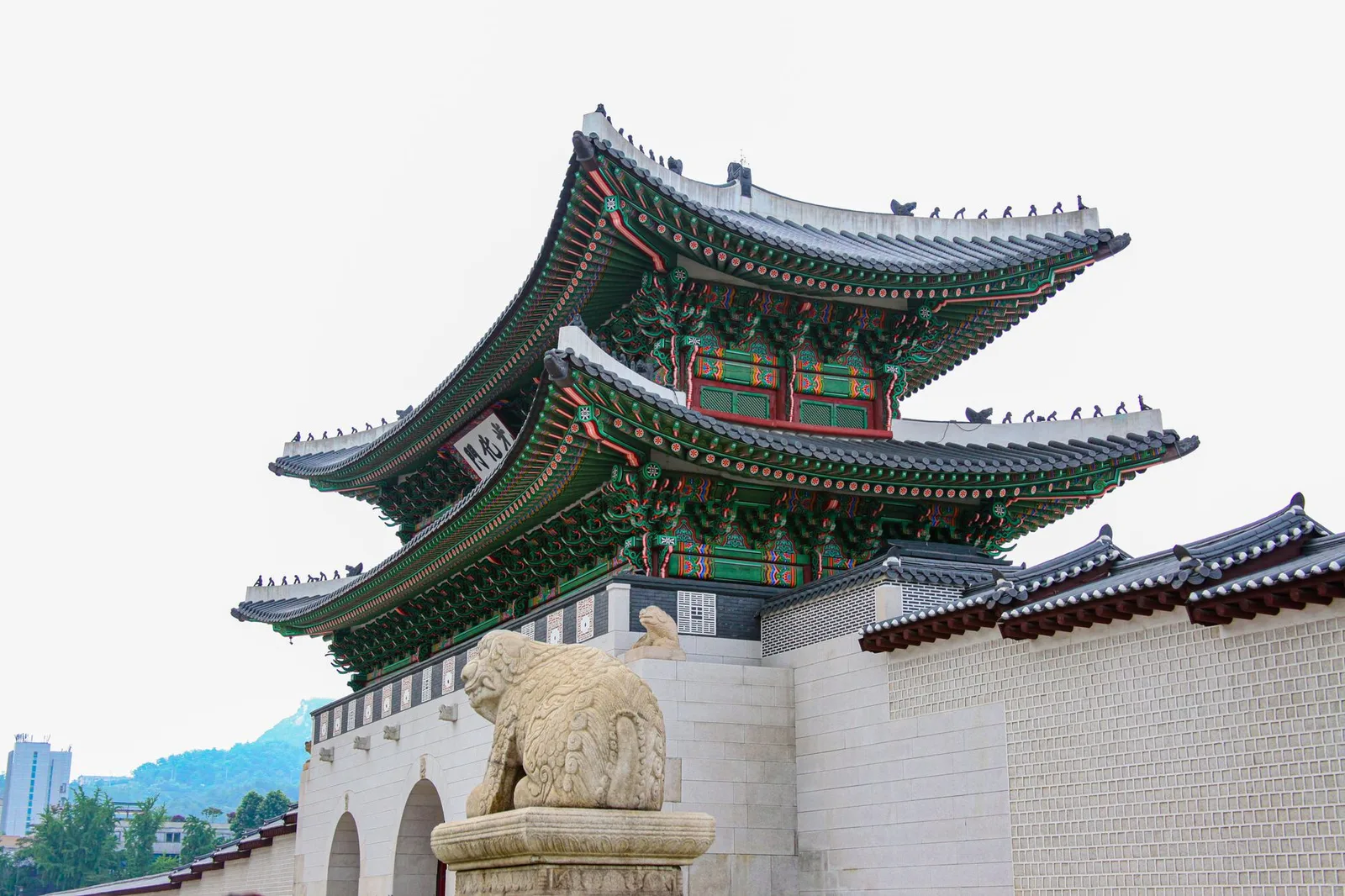
Five palaces plus Jongmyo Shrine sit within a 30-minute walk of each other in Jongno. They are the core of any Seoul list, and they are the easiest thing to get wrong.
| Site | Closed | Adult admission | Worth knowing |
|---|---|---|---|
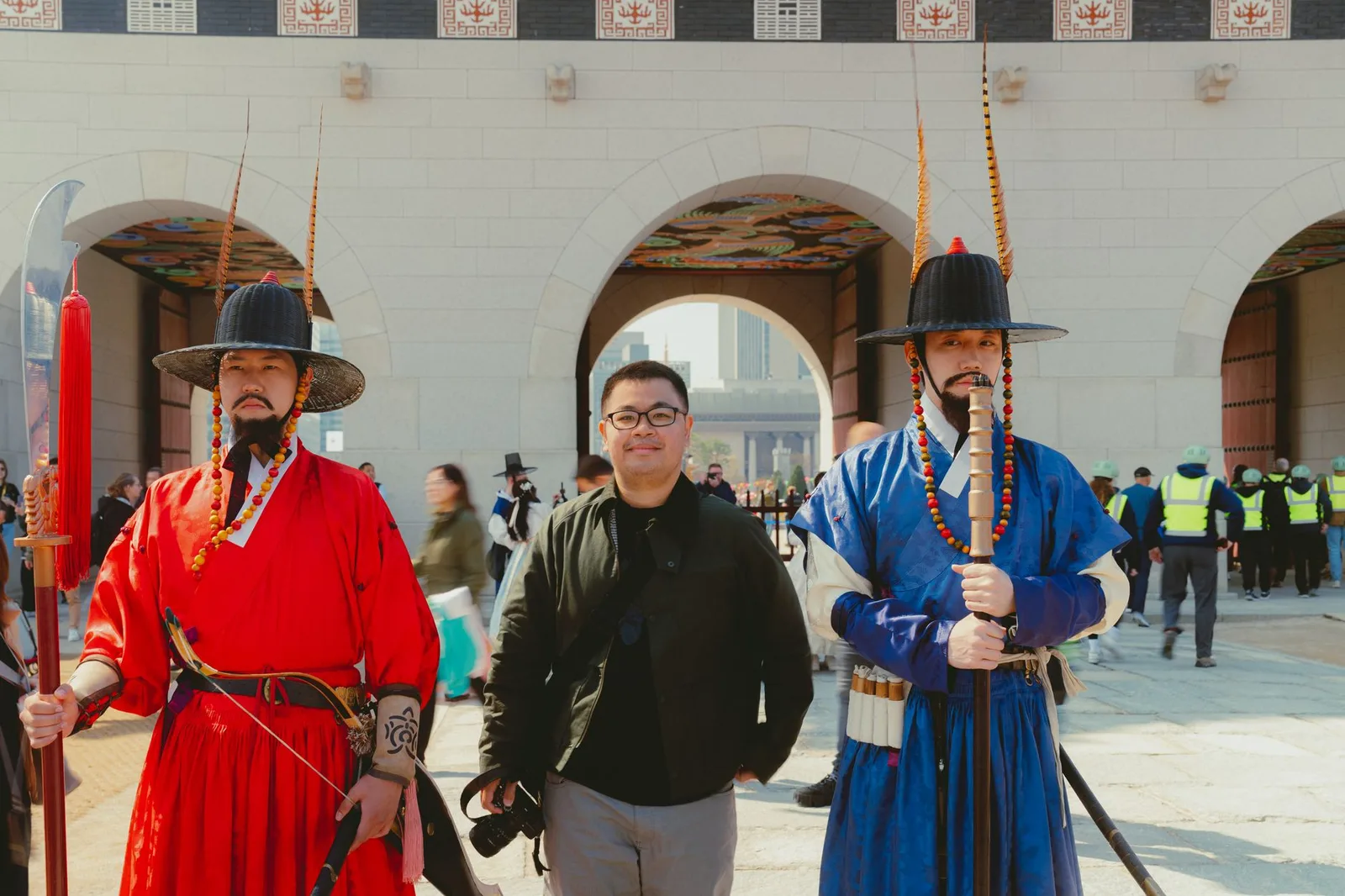
| Gyeongbokgung | Tuesdays | 3,000 KRW | Royal guard changing ceremony at 10:00 and 14:00, about 20 minutes, cancelled in rain or extreme heat |
| Changdeokgung | Mondays | 3,000 KRW | Huwon garden is a separate 5,000 KRW timed tour |
| Changgyeonggung | Mondays | 1,000 KRW | Connects to Changdeokgung on foot, so pair them |
| Deoksugung | Mondays | 1,000 KRW | Open into the evening; the stone-wall path outside is free |
| Gyeonghuigung | Mondays | Free | Small, rebuilt, quiet at any hour |
| Jongmyo Shrine | Tuesdays | 1,000 KRW | Guided-tour entry only, except Saturdays and the last Wednesday of the month |
Prices are the published rates of the Korea Heritage Service (국가유산청); confirm current figures before you budget, since admission has been revised in the past.
Here is the calculation nobody runs. Bought separately, all five palaces plus Jongmyo come to 3,000 + 3,000 + 1,000 + 1,000 + 1,000 = 9,000 won. The integrated ticket costs 10,000 won and is valid for three months. On those numbers alone it loses. It wins only because it also covers the 5,000-won Huwon garden tour, which turns the real comparison into 14,000 against 10,000. Inclusions have changed over the years, so ask at the window whether Huwon is bundled before you hand over the 10,000. If you are only seeing Gyeongbokgung and skipping the garden, buy the single 3,000-won ticket.
Two free-entry rules are worth planning around. Visitors wearing hanbok enter the four main palaces and Jongmyo free, which is why rental shops cluster around Gyeongbokgung's Gate 3; the outfit has to meet the published criteria, so a costume-ish approximation can be refused at the gate. And on Culture Day, the last Wednesday of each month under the Ministry of Culture, Sports and Tourism programme, many public sites cut or waive admission and Jongmyo drops its guided-tour-only rule.
Neighbourhoods, sorted by what you actually want to do
Seoul rewards depth over coverage. Two areas a day, chosen for the right hour, beats a checklist.
| Area | Go for | Best time | Watch out for |
|---|---|---|---|
| Bukchon and Samcheong-dong | Hanok lanes, small galleries, hillside cafés | Weekday morning | Residential streets with restricted visiting hours; steep gradients |
| Ikseon-dong | Hanok converted to cafés and bars | Late afternoon | Tiny alleys, long weekend queues |
| Euljiro and Gwangjang | Market food, printing-district bars, retro rooftops | Evening | Some stalls and older bars prefer cash |
| Hongdae | Busking, live music, secondhand clothing | Friday and Saturday night | Noise until dawn if you also sleep here |
| Seongsu-dong | Coffee roasters, brand pop-ups in old factories | Weekday | The best pop-ups require app reservations in Korean |
| Apgujeong and Gangnam | Flagship stores, clinics, Bongeunsa temple | Daytime | Long blocks; walking distances are deceptive |
| Yeouido and the Han River | Parks, riverside picnics, bridge lights | Evening | Nothing to do there in heavy rain |
Bukchon deserves a specific warning. Jongno-gu designated the busiest residential lanes a special management zone after years of complaints from residents, introducing visiting hours and penalties for after-hours entry. The measures have been adjusted since they were announced, so confirm the current rules with the Jongno-gu district office rather than relying on a two-year-old blog post. People live behind those gates.
If you are still choosing a base, the trade-offs between these areas as places to sleep are covered separately in our guide to the best neighbourhoods to stay in Seoul.
Markets and street food that justify the detour
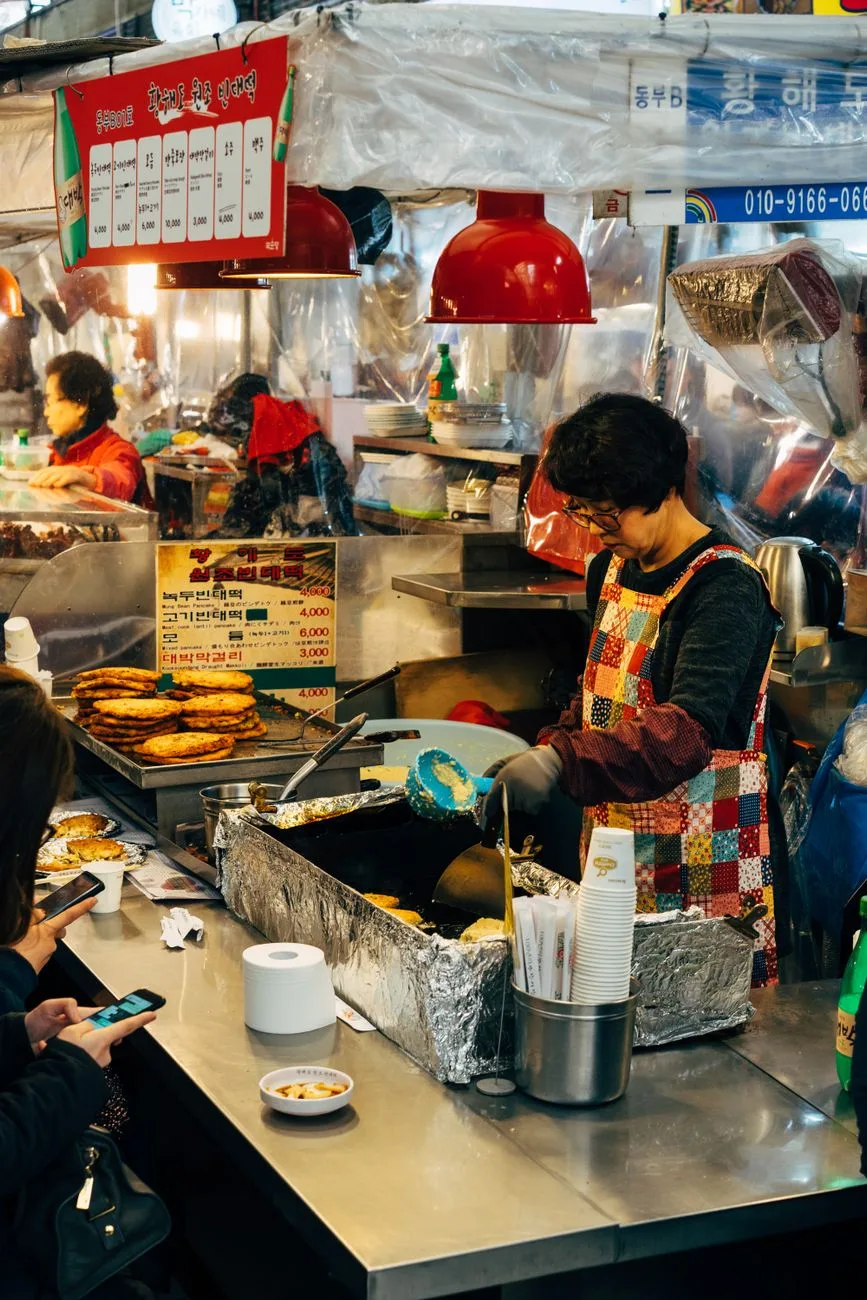
Gwangjang Market is the one everyone names, and it earns it: mung bean pancake fried in a shallow pan of oil, seaweed-wrapped mayak gimbap, raw beef in the yukhoe alley at the north end. Ask the price before you order. After a run of complaints about portion sizes and unmarked pricing, the market cooperative and Jongno-gu pushed price-display measures on stalls, but checking first is still the sensible habit.
Tongin Market, ten minutes from Gyeongbokgung's west gate, runs a lunchbox system that is genuinely unusual. You buy brass-style tokens at the customer centre, take an empty tray, and fill it from participating stalls that price dishes in tokens rather than won. The token price has crept up over the years, so treat any figure you read online as approximate.
Mangwon Market is where the food is aimed at people who live there, which shows in the prices. Noryangjin Fisheries Wholesale Market works differently again: you buy at a ground-floor tank, then pay a preparation fee at a restaurant upstairs to have it served. Agree the fish price and the fee before anything is scooped out of the tank.
Free and nearly free things to do in Seoul
A surprising amount of the city's best material costs nothing.
The Han River parks at Yeouido, Ttukseom and Banpo are open around the clock, and the convenience stores inside them sell instant ramyeon with hot-water machines, which is a legitimate local ritual rather than a tourist gimmick. The Moonlight Rainbow Fountain on Banpo Bridge, run by the Seoul Metropolitan Government, performs on a seasonal evening schedule from roughly April to October and stops in rain or wind; the Seoul city tourism site Visit Seoul publishes the current timetable.
The Seoul City Wall (Hanyangdoseong) can be walked in sections. The Naksan stretch takes about an hour and is nearly flat. Inwangsan gives the best skyline view in the city for roughly 90 minutes of climbing. Bukhansan National Park sits inside the metropolitan boundary, is free to enter, and is administered by the Korea National Park Service, whose site posts trail closures during fire-risk seasons and after heavy rain.
Permanent collections at the National Museum of Korea and the Seoul Museum of History are free. Closing days differ from the palaces, which is exactly the kind of thing that makes them useful on a Monday.
A priced day, end to end
A realistic central Seoul day, using the palace and transport figures above:
- 09:00 Gyeongbokgung on the integrated ticket, 10,000 KRW
- 10:00 Guard changing ceremony at Gwanghwamun, free
- 11:30 Lunch at Tongin Market's token lunchbox, about 6,000 KRW
- 13:00 Bukchon lanes and the city wall above Samcheong, free
- 15:30 Metro to Ttukseom, 1,400 KRW
- 16:00 Riverside coffee, about 5,000 KRW
- 18:30 Dinner at Gwangjang Market, about 15,000 KRW
- 21:00 Metro back, 1,400 KRW
Total: 38,800 KRW, excluding accommodation. Seoul Metro's base fare has been 1,400 won on a T-money card since the October 2023 revision, with 100 won added per additional 5 km beyond the first 10; city bus fares sit at 1,500 won. Further increases have been proposed and postponed more than once, so verify before you build a budget. Converting to your own currency is worth doing on the day, because the won has moved sharply against the dollar in recent years. Whether a T-money card or the Climate Card serves you better depends on how many rides you take: we ran that comparison in T-money card vs Climate Card.
Where this advice stops working
The river evening fails from late June through most of July. That is jangma, the East Asian monsoon front, and it does not produce photogenic showers; it produces days of rain that close riverside stalls and suspend the Banpo fountain. August adds heat above 33°C with high humidity, which makes an outdoor palace at 2pm actively unpleasant. Those weeks call for a different list altogether: the National Museum of Korea, the Starfield Library at COEX, an indoor observatory, a jjimjilbang. The month-by-month picture is in our Korea weather guide, and the two windows most travellers actually want are covered in the cherry blossom timing guide and Korea in autumn.
The other case where a standard list breaks is the lunar holidays. During Seollal and Chuseok, a large share of independent restaurants and small shops close for several days while the city empties out. Palaces have opened free of charge over those holidays in recent years, which makes them unusually pleasant, but plan meals around chains and department stores. Dates shift annually with the lunar calendar; see the Korean festival calendar.
Mistakes that cost visitors a whole day
- Landing on a Monday and heading for Changdeokgung. Reverse it: Mondays are for Gyeongbokgung, Tuesdays for Changdeokgung and Changgyeonggung.
- Booking a hanbok rental nowhere near a palace. The free-admission benefit is worth having only if you are within walking distance of the gate.
- Assuming cards work everywhere. Korea is close to cashless and most venues take foreign cards, but market stalls, some older taxis and many self-service kiosks will refuse them. Carry 50,000 to 100,000 won in cash.
- Stacking Gyeongbokgung, Namsan, Hongdae and Gangnam into one day. Each transfer costs 30 to 45 minutes door to door.
- Treating the guard ceremony as guaranteed. It is cancelled in rain and in extreme heat, with no substitute performance.
For a version of all this arranged into an actual sequence with the closing days already solved, see our five-day Seoul itinerary.
Book these three first
Before anything else is fixed: the Huwon garden slot, one DMZ tour on a flexible date, and, if you land between late March and early October, a Jamsil baseball ticket. Everything else in this article can be decided over breakfast.
Frequently asked questions
How many days do you need in Seoul?
Four full days covers the palace circuit, two or three neighbourhoods, one market evening and one hike without rushing. Three days works if you drop either the DMZ or the hiking. Anything under 48 hours means choosing between Jongno's palaces and the modern city, and the palaces are the harder thing to see elsewhere.
What is the best free thing to do in Seoul?
The Inwangsan ridge walk, for the view over the palace district and the downtown towers, followed closely by an evening at a Han River park. Both cost nothing beyond the metro fare, and neither depends on a reservation.
Do I need a visa or K-ETA to visit Seoul?
It depends on nationality. Many passport holders enter Korea visa-free for short tourism, and the Korea Electronic Travel Authorization requirement has been temporarily waived for a rotating list of countries with the waiver extended more than once. Check your own case at the government's official K-ETA site rather than relying on secondhand summaries, because the list changes.
Can I visit the DMZ on my own?
No. The Civilian Control Line and the Joint Security Area are accessible only through authorised tour operators with prior clearance, and you must carry your passport. Independent travel to the border area is not permitted.
Is Seoul walkable, or do I need taxis?
The metro reaches almost everything a visitor wants, runs until roughly midnight depending on line and station, and costs a fraction of a taxi. Taxis are useful late at night, when the base fare in Seoul has been 4,800 won since the February 2023 revision, with a surcharge after 22:00. Confirm current fares with the Seoul Metropolitan Government before budgeting.
Admission prices, fares and opening rules in this article reflect published figures from the Korea Heritage Service, the Seoul Metropolitan Government and the Korea Tourism Organization, and change without much notice. Verify anything you are budgeting on against the official source listed above before you travel.