Planning a trip to South Korea and unsure which month to book? The short answer below tells you exactly when to go depending on what you want, followed by a month-by-month breakdown, a cost-versus-crowds framework, and the mistakes that ruin otherwise well-planned trips.
Direct answer: The best time to visit Korea in 2026 is mid-September to early November (autumn) and April to mid-May (spring). These shoulder seasons deliver mild temperatures, low rainfall, and Korea's two signature natural events — cherry blossoms in spring and fiery foliage in autumn — while avoiding the summer monsoon and the deep winter cold.
Key takeaways
- Autumn (late Sept–early Nov) is the single best overall window: crisp, dry weather and peak foliage, but book accommodation early.
- Spring (April–mid-May) brings cherry blossoms; bloom dates shift year to year, so track forecasts rather than fixed dates.
- Summer (late June–Aug) is hot, humid, and includes the monsoon (jangma) and typhoon season — best only for beaches, festivals, and lower airfares.
- Winter (Dec–Feb) suits skiers and those chasing quiet cities and snow, with the coldest but often clearest skies.
- Avoid Korea's two big national holidays — Seollal (Lunar New Year) and Chuseok — unless you enjoy near-empty cities with many closures.
The quick decision framework: match the season to your priority
Instead of asking "when is Korea nicest?", ask "what do I want most?" Your answer points to a season.
| If your priority is… | Go in… | Why |
|---|---|---|
| Best all-round weather + scenery | Late Sept–early Nov | Dry, mild, peak autumn foliage |
| Cherry blossoms | Late March–mid April | Short 1–2 week bloom, moves yearly |
| Lowest airfares + fewest tourists | Winter (Jan–Feb, excl. holidays) | Off-peak pricing, quiet sights |
| Beaches + festivals | July–August | Warm sea, but humid and rainy |
| Skiing + snow | Dec–Feb | Resorts in Gangwon-do open |
| Hiking | May & October | Comfortable temps, clear trails |
The two shoulder seasons win for most travelers. But if a specific experience — snow, blossoms, or a beach — is the whole point of your trip, plan the dates around that event, not around "nice weather."
Korea's climate, month by month
South Korea has four distinct seasons with a temperate, monsoon-influenced climate. Weather statistics below reflect long-term patterns from the Korea Meteorological Administration (KMA); check the KMA forecast (weather.go.kr) close to your trip for current-year specifics, as blossom and foliage timing shift annually.
Spring (March–May)
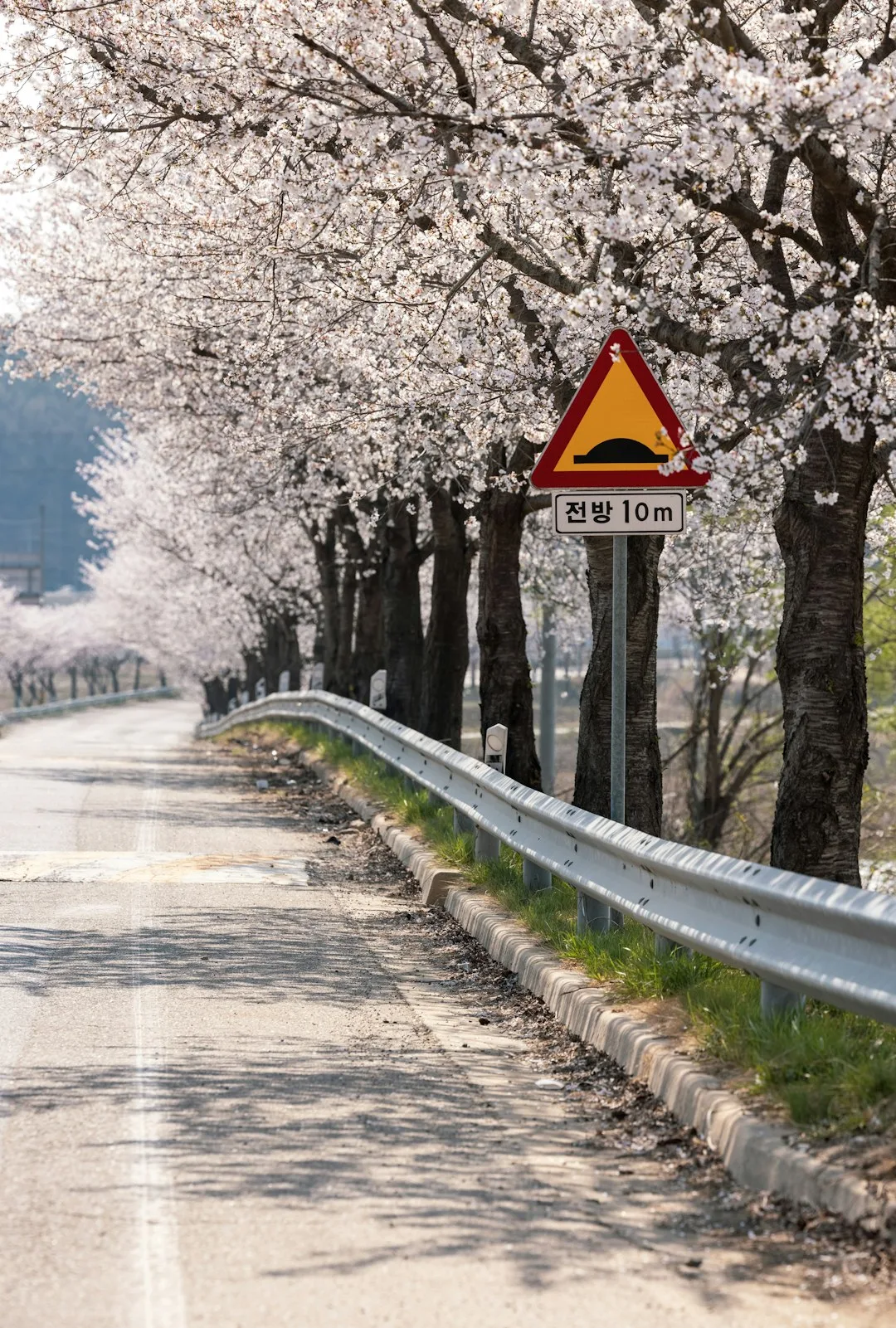
Temperatures climb from chilly to pleasant, roughly 5–20°C by May in Seoul. Cherry blossoms typically open in the southern city of Busan and Jeju in late March and reach Seoul in early-to-mid April, but exact peak-bloom dates change every year based on temperatures. Late spring is warm and dry — ideal for hiking. The main downside is occasional fine dust and yellow-dust (hwangsa) days blowing in from the west; check the air-quality index on bad days.
Summer (June–August)
Hot and very humid, with Seoul highs around 28–33°C. The monsoon season (jangma) usually runs from late June into July, bringing concentrated, heavy rain. Typhoon season peaks in August and September and can disrupt flights and ferries. Upsides: this is festival season, beach towns like Busan's Haeundae come alive, and airfares outside peak Korean holiday weeks can be softer.
Autumn (September–November)
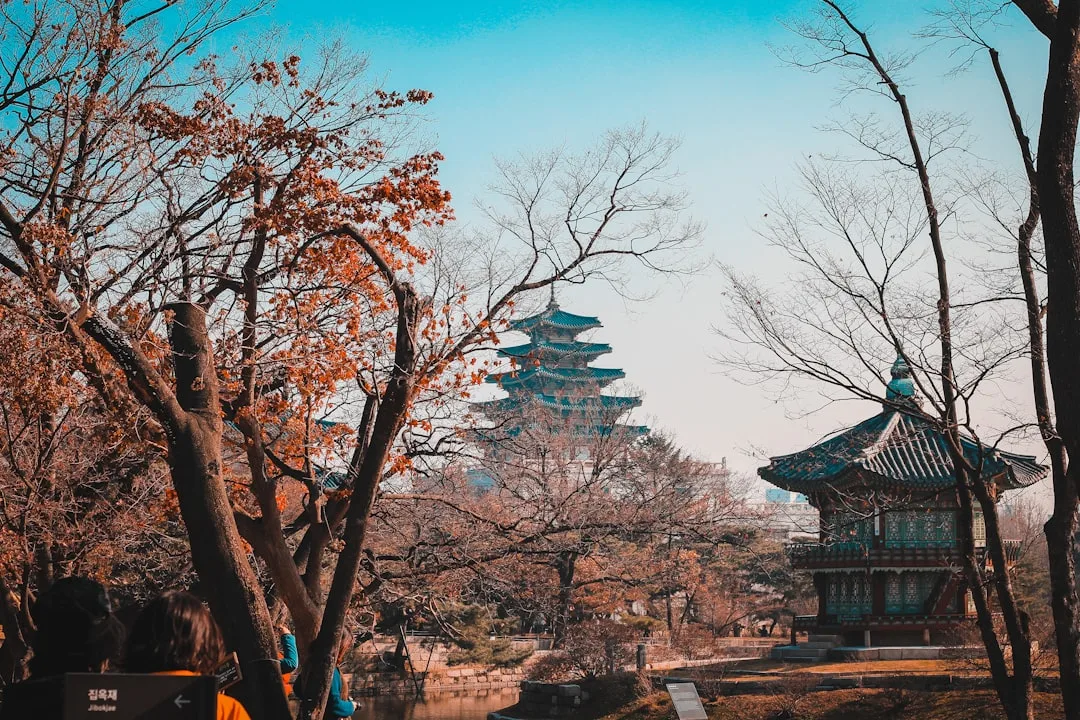
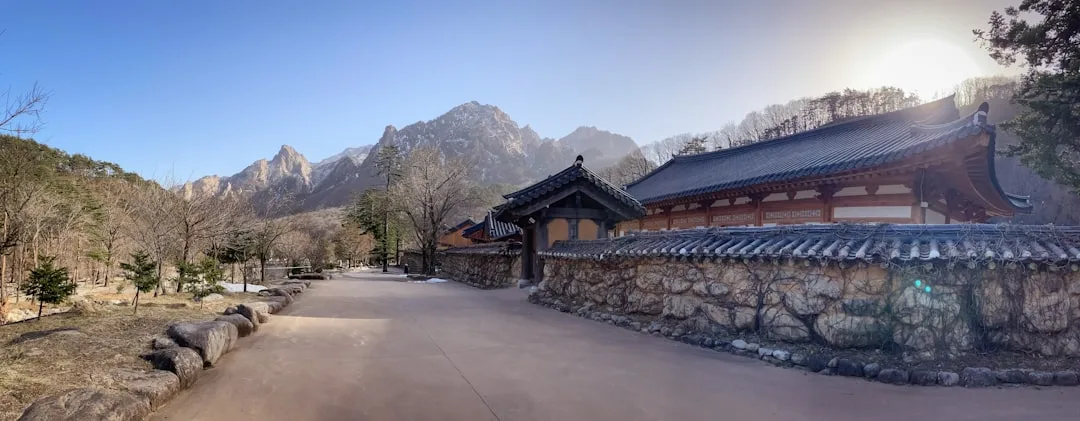
The standout season. After the summer humidity breaks in mid-September, days turn clear, dry, and comfortable (roughly 10–25°C, cooling through November). Autumn foliage starts in the northern and mountainous areas (like Seoraksan) in early-to-mid October and moves south, reaching Seoul and southern regions late October into November. Skies are typically the bluest of the year — the best time for photography and hiking.
Winter (December–February)
Cold and dry, with Seoul often dropping below freezing and averages near −2 to 5°C; inland and mountain areas are colder. It rarely rains but snow falls, especially in Gangwon-do, home to ski resorts. Cities are quiet, palaces look striking under snow, and prices drop. Pack serious layers — the wind chill is real.
Worked example: comparing an April trip vs. an October trip
Say you have one week and can travel in either April or October. Here is how the trade-offs actually play out:
- Scenery: April offers cherry blossoms if you time the 1–2 week bloom correctly — a real gamble. October's foliage window is broader and more reliable across the country.
- Weather risk: April carries yellow-dust days; October is the driest, clearest month with the lowest rain risk.
- Crowds: Both are popular. Blossom season concentrates crowds at famous spots (Yeouido, Jinhae) over a few days; autumn crowds spread across more weeks and destinations.
- Cost: Both are shoulder-to-peak pricing; expect higher hotel rates than winter. Book 2–3 months ahead for either.
Verdict: For a first, general-purpose trip, October edges out April on reliability. Choose April only if seeing cherry blossoms is a genuine must — and stay flexible on exact dates.
Dates to avoid (or plan around)
Korea's biggest holidays empty the cities and close many businesses — the opposite of what most tourists expect.
- Seollal (Lunar New Year): A multi-day holiday in late January or February. Dates follow the lunar calendar, so confirm the exact 2026 dates.
- Chuseok (Korean harvest festival): A multi-day holiday in September or October, also lunar-based.
During both, Koreans travel to hometowns, so transport is jammed, and many restaurants, shops, and small attractions close. Major palaces and some museums often open free, but the overall experience is muted. Verify the official 2026 public-holiday calendar before locking dates; Korea's public holidays are set by government decree and published by public agencies such as the Korea Tourism Organization (visitkorea.or.kr).
Other busy periods include Korean summer school vacation (late July–August) and peak foliage weekends in October, when popular mountain and hotel bookings fill fast.
Common planning mistakes
- Booking cherry-blossom dates too rigidly. Bloom timing varies by a week or more year to year. Build in buffer days and watch forecasts.
- Underestimating summer humidity. "Warm" undersells it — the combination of heat and moisture is draining for full days of walking.
- Landing during Seollal or Chuseok by accident. Cross-check your dates against the lunar-holiday calendar first.
- Packing for one temperature. Spring and autumn swing widely between morning and afternoon; layers are essential.
- Ignoring typhoon season for island trips. Ferries to Jeju and smaller islands can be cancelled in August–September storms — keep flexible plans.
Next steps
- Decide your single top priority (blossoms, foliage, snow, beach, or budget) and pick the matching season from the framework above.
- Cross-check your candidate dates against Korea's 2026 lunar holidays (Seollal, Chuseok) via the Korea Tourism Organization.
- Watch the KMA blossom or foliage forecasts if timing a natural event, and book flights and hotels 2–3 months out for shoulder seasons.
- Pack layers and check the air-quality and typhoon outlook a few days before departure.
This article is general travel guidance. Weather, bloom, and holiday dates vary each year — always confirm current-year information with official Korean sources before booking.
Frequently asked questions
What is the cheapest time to visit South Korea?
Winter, roughly January to February (excluding the Seollal holiday), typically has the lowest airfares and hotel rates because it is off-peak. You trade cost for cold weather, but cities are quiet and palaces look beautiful under snow.
When do cherry blossoms bloom in Korea in 2026?
Blossoms generally open in late March in the south (Jeju, Busan) and reach Seoul in early-to-mid April, but exact peak-bloom dates shift each year with temperatures. Track the Korea Meteorological Administration's seasonal forecast closer to your trip rather than relying on fixed dates.
Is summer a bad time to visit Korea?
Not bad, just demanding. Summer is hot, very humid, and includes the monsoon (late June–July) and typhoon season. It is a good time for beaches and festivals and can offer lower fares, but heavy rain and heat can disrupt sightseeing plans.
When is the best time to see autumn foliage?
Foliage peaks from early-to-mid October in northern and mountainous areas like Seoraksan, then moves south to reach Seoul and southern regions in late October into November. This period also offers Korea's clearest, driest weather.
Should I avoid Korean national holidays?
Yes, if you want full access to shops and attractions. During Seollal (Lunar New Year) and Chuseok, many businesses close and transport is heavily booked as residents travel home. Confirm the exact 2026 dates, which follow the lunar calendar, before finalizing your itinerary.