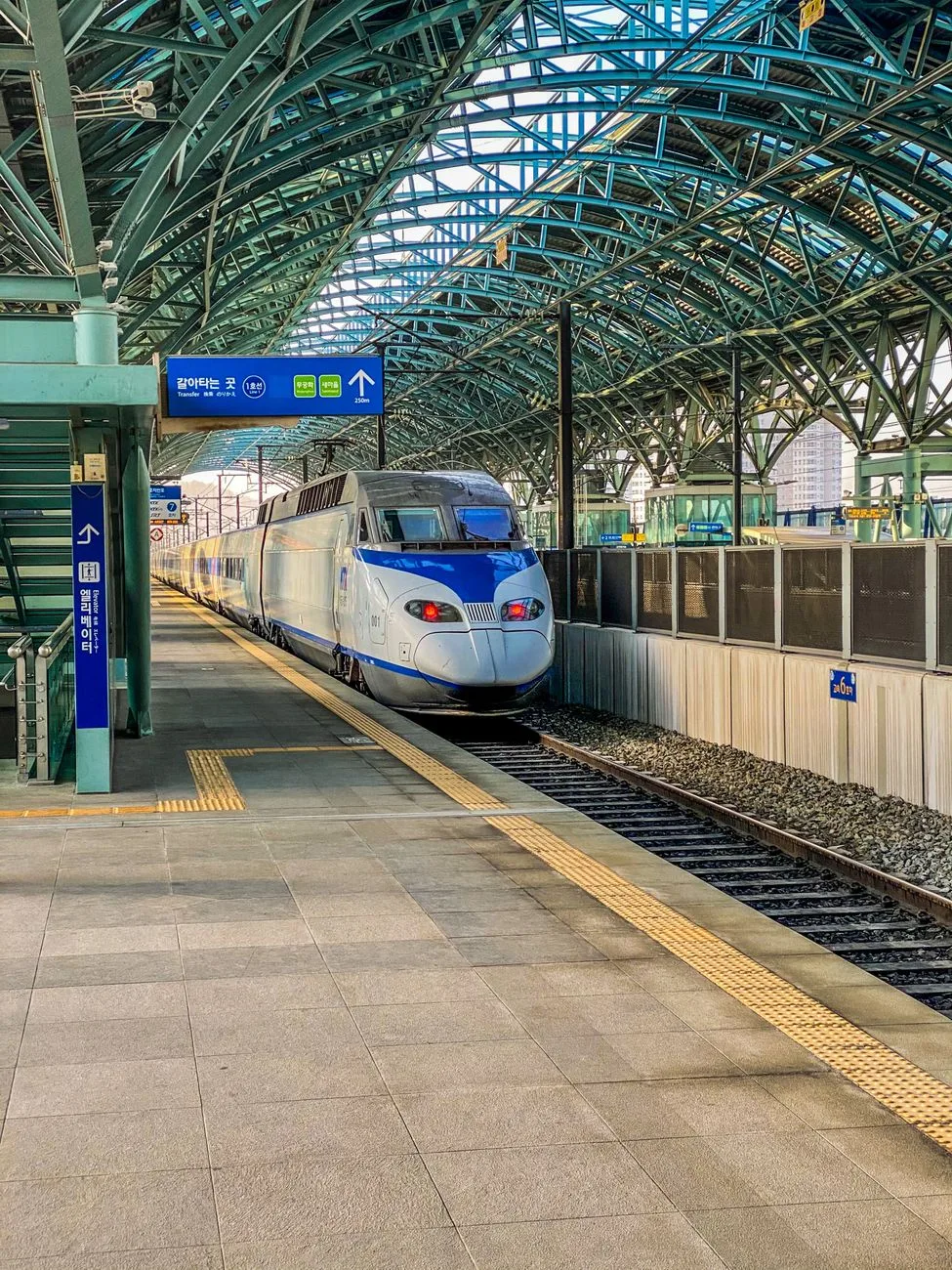
Short answer: The KTX is the best choice for most trips from Daejeon to Seoul: the fastest listed services reach Seoul Station in about 1 hour 8 minutes and cost ₩23,700 for an adult standard-class ticket, based on KORAIL timetable and fare data applying in August 2026. Choose Mugunghwa at ₩10,800 when saving money matters more than an extra 56 minutes.
Quick decision: which train should you take?
Choose KTX if Seoul is the destination for a day trip, a hotel check-in has a fixed time, or the onward journey begins at Seoul Station. The extra ₩12,900 over Mugunghwa buys about 56 minutes on the listed services.
Choose ITX-Maum if the KTX schedule does not fit and a middle price matters. The listed service costs ₩16,000 and takes 1 hour 45 minutes to Seoul.
Choose Mugunghwa if the fare is the main constraint and a journey of about two hours is acceptable. The listed service costs ₩10,800 and arrives at Seoul Station at 11:15 when departing Daejeon at 09:11.
The route is a rail decision, not an airport decision. Daejeon Station and Seoul Station are city-centre stations, so the train often saves the transfer time associated with flying. The right comparison is door-to-door time and total cost, not just the time printed beside the train name.
KTX from Daejeon to Seoul: time, fare, and booking rules
KTX runs directly from Daejeon Station to Seoul Station on the Gyeongbu line. KORAIL’s official timetable page identifies the timetable dated May 15, 2026, and its fare table is effective from April 15, 2026. A representative adult standard-class fare is ₩23,700 one way.
Two listed KTX examples for August 17, 2026 show how close the departures can be:
| Train | Departure | Arrival | Journey time | Fare (KRW, Aug 2026) |
|---|---|---|---|---|
| KTX | 06:35 | 07:49 | 1h 14m | ₩23,700 |
| KTX | 06:45 | 07:53 | 1h 08m | ₩23,700 |
| ITX-Maum | 09:22 | 11:07 | 1h 45m | ₩16,000 |
| Mugunghwa | 09:11 | 11:15 | 2h 04m | ₩10,800 |
The table answers the practical question: how much time does the faster train buy? The second KTX example reaches Seoul 56 minutes before the Mugunghwa service while costing ₩12,900 more.
Official KORAIL timetable and fare information is the controlling source for the departure selected on the day. Timetables and fares can change after the dates used in this article, so the date attached to each figure matters.
KORAIL’s English booking information says online booking is available until 20 minutes before departure. Ticket machines sell tickets until 10 minutes before departure, while station ticket-office sales continue until departure. A sold-out train is a separate issue from the booking cut-off, so a last-minute purchase is only useful if seats remain.
KTX, ITX-Maum, and Mugunghwa compared by real trip cost
The headline fare does not include getting to Daejeon Station or leaving Seoul Station. Daejeon city buses cost ₩1,500 by transport card or ₩1,700 in cash for adults. Seoul subway rides cost ₩1,550 by transit card, based on the fare effective June 28, 2025. A Seoul bus costs ₩1,500 for an adult by card or cash.
For a simple station-to-station trip using one Daejeon bus and one Seoul subway ride, the local transport adds ₩3,050 when both legs use a transit card. The one-way totals become:
| Option | Rail fare (KRW) | Local transfers (KRW) | One-way total (KRW) | Best fit |
|---|---|---|---|---|
| KTX | ₩23,700 | ₩3,050 | ₩26,750 | Time-sensitive trip |
| ITX-Maum | ₩16,000 | ₩3,050 | ₩19,050 | Middle ground |
| Mugunghwa | ₩10,800 | ₩3,050 | ₩13,850 | Lowest listed cost |
This comparison shows why the cheapest train is not free travel. The local-transfer assumption is one Daejeon bus plus one Seoul subway ride. A taxi, a second subway ride, or a different destination changes the total.
The same calculation for a return journey is straightforward: KTX costs ₩47,400 for rail, plus ₩6,100 for the two local transfer pairs, for ₩53,500. Mugunghwa costs ₩21,600 for rail, plus ₩6,100 for local transfers, for ₩27,700. The KTX return premium is therefore ₩25,800 before any extra city transport.
That premium is justified when the saved time has a clear use. If the saved 1 hour 52 minutes across both directions prevents a missed reservation, a paid late check-in, or a lost work block, KTX has a practical return. If the day has no fixed appointment, Mugunghwa leaves ₩25,800 available for food, admission, or accommodation.
How to choose between Seoul Station and Suseo
KTX arrives at Seoul Station. SRT serves Suseo Station, and the official SRT route map includes both Daejeon and Suseo on the route. The meaningful choice is the Seoul neighbourhood after arrival.
Seoul Station is the stronger endpoint for Myeongdong, Namdaemun, City Hall, Jongno, and connections toward Incheon Airport. Suseo is more convenient for southeastern Seoul, including parts of Gangnam, Songpa, and nearby districts. A cheaper rail ticket can lose its advantage if the final subway or taxi trip is much longer.
SRT is therefore an alternative route rather than a guaranteed cheaper option. The official SRT material confirms the stations, but the research available for this article did not establish a current one-way Daejeon-to-Suseo fare and complete August 2026 timetable from an official English-language page. No SRT price is stated here because substituting an unverified figure would make the comparison unreliable.
For a destination near Gangnam, compare the final station-to-hotel transfer before booking. For a destination around Jongno, Seoul Station usually gives the cleaner arrival path. Station choice can matter more than a small difference in rail fare.
Step-by-step: booking and taking the train
Set the true destination. Decide whether the final stop is near Seoul Station, Suseo, Gangnam, Jongno, Hongdae, or another district. This determines whether KTX or SRT is the more practical rail endpoint.
Search Daejeon Station to Seoul Station. Use KORAIL for KTX, ITX-Maum, and Mugunghwa services. Select the travel date, passenger count, and standard class before comparing departure and arrival times.
Compare the time premium. Subtract the cheaper train’s fare from the KTX fare. For the representative services, ₩23,700 minus ₩10,800 equals ₩12,900. Then compare that cost with the 56-minute saving.
Book before the preferred train fills. KORAIL’s stated online booking cut-off is 20 minutes before departure, but popular morning trains can sell out earlier. A booking cut-off is not a seat guarantee.
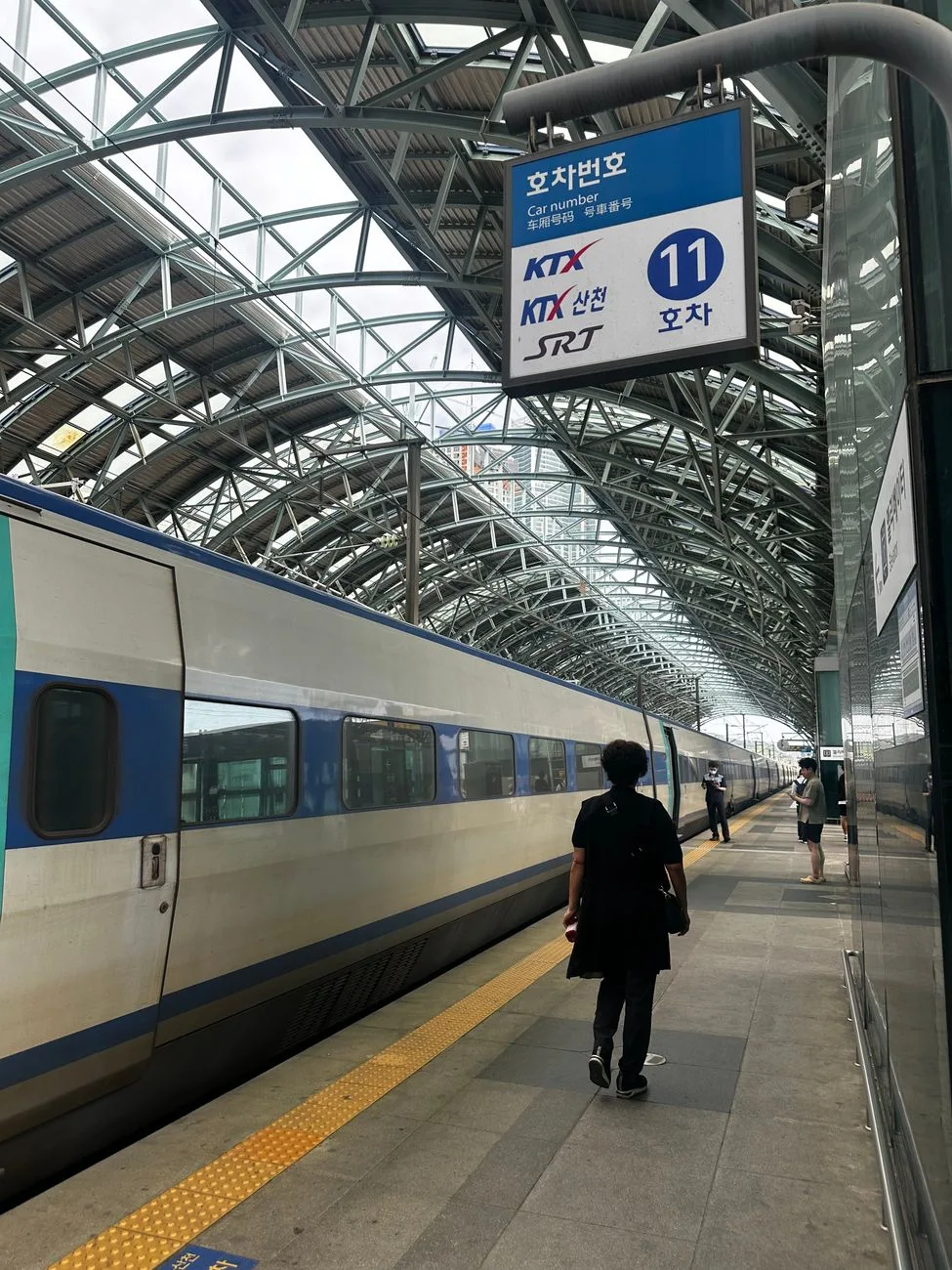
Arrive at Daejeon Station with transfer time. The train time begins when the train leaves the platform. Add the time needed to reach the station, find the correct platform, and handle luggage. Daejeon Station is not interchangeable with Daejeon Government Complex bus stops or other city transport hubs.
Check the coach and seat details. Keep the booking information available on the phone or as a printed ticket. Follow the platform display because the platform and boarding information are operational details, not assumptions from a previous trip.
Continue from Seoul Station. Use a transit card for the subway or bus when possible. Seoul’s adult subway base fare is ₩1,550 by card, and a trunk or branch bus is ₩1,500.
A frequent failure mode is planning from the hotel to “Seoul” as though Seoul were one terminal. Seoul Station to Gangnam, Hongdae, or the Olympic Park area can involve a substantial final transfer. The train booking is only one part of the journey.
A worked example for a one-day Seoul trip
Assume two adults leave Daejeon in the morning, spend the day around Jongno, and return the same evening. The KTX option uses the representative ₩23,700 adult fare each way and two local transfer pairs per person, with one Daejeon bus and one Seoul subway ride in each direction.
Rail calculation:
- Two adults × two KTX legs × ₩23,700 = ₩94,800
- Local transfers: two adults × four transfer legs × ₩1,500 or ₩1,550 = ₩12,200
- Estimated transport total = ₩107,000
The equivalent Mugunghwa calculation is:
- Two adults × two Mugunghwa legs × ₩10,800 = ₩43,200
- Local transfers = ₩12,200
- Estimated transport total = ₩55,400
The KTX day trip costs ₩51,600 more for two people. It also saves about 1 hour 52 minutes across the return rail journey when comparing the listed 1-hour-8-minute KTX service with the 2-hour-4-minute Mugunghwa service. That is the decision threshold: pay ₩51,600 to recover nearly two hours for the pair, or keep the money and accept the slower schedule.
This example fails if the return train is booked too late and the preferred service is unavailable. It also understates the total if the travellers take taxis, use additional subway rides, or travel to a district far from Seoul Station. The arithmetic is useful because its assumptions are visible.
What can go wrong on the Daejeon to Seoul route?
Booking the wrong station
Daejeon Station is the rail origin in the KTX comparison. Daejeon has several major transport locations, and a taxi or bus driver may need the exact station name rather than simply “Daejeon.” The destination also needs a precise station choice: Seoul Station and Suseo serve different parts of the metropolitan area.
Treating a timetable sample as a permanent schedule
The listed times above apply to August 17, 2026 examples. They are useful for understanding the route and fare structure, not for assuming that every date has identical departures. Use the dated KORAIL timetable for the actual booking.
Paying cash for every local leg
Daejeon’s adult city-bus fare is ₩1,500 by card and ₩1,700 in cash. Seoul’s subway base fare is ₩1,550 by card and ₩1,650 for a single-ride cash ticket. The small difference compounds across a return journey, and a transit card also simplifies transfers.
Choosing the cheapest train before checking the appointment
Mugunghwa saves ₩12,900 per one-way adult rail fare against the representative KTX fare. It also adds 56 minutes on the listed services. The cheap option is poor value when the arrival time causes a missed booking or a shorter paid activity.
Assuming the train is the whole budget
The fare from Daejeon Station to Seoul Station does not include the first bus, the final subway, luggage storage, meals, or a taxi. A complete plan should price the first and last kilometre separately.
When to book and how much buffer to leave
For an ordinary weekday, booking once the travel date and appointment are fixed gives more control over the preferred departure. For holiday periods, advance planning matters more. VisitKorea states that intercity train and bus demand surges during Seollal, and the 2026 holiday period ran from February 16 through February 18, with Seollal on February 17.
A practical buffer is the scheduled train journey plus the station transfer and final city transfer. For a 9:00 appointment near Jongno, a 06:45 KTX arrival at 07:53 leaves time for the subway and a short delay, while a 09:11 Mugunghwa arrival at 11:15 cannot serve that appointment. The schedule decides before the fare does.
FAQ: travelling from Daejeon to Seoul
How long does KTX take from Daejeon to Seoul?
The listed KTX examples take 1 hour 8 minutes and 1 hour 14 minutes from Daejeon Station to Seoul Station. The exact duration depends on the selected service and travel date.
How much is a KTX ticket from Daejeon to Seoul?
The representative adult standard-class fare used here is ₩23,700 one way, based on the KORAIL fare information applying in 2026. Fare class, passenger type, and later fare-table changes can affect the amount.
Is Mugunghwa cheaper than KTX?
Yes. The listed adult standard-class Mugunghwa fare is ₩10,800, compared with ₩23,700 for the representative KTX fare. Mugunghwa takes 2 hours 4 minutes in the listed example, compared with 1 hour 8 minutes for KTX.
Does SRT go from Daejeon to Seoul?
SRT connects Daejeon and Suseo according to the official SRT route map. Suseo is in southeastern Seoul, so it is a better endpoint for some Gangnam-area destinations than Seoul Station. A current SRT fare is not stated here because an official English-language fare figure was not verified for the article date.
Can I buy a train ticket at Daejeon Station on the day?
KORAIL states that online booking remains available until 20 minutes before departure, ticket machines until 10 minutes before departure, and station ticket-office sales until departure. These cut-offs do not mean that seats will remain available until the final minute.
Which station is better for central Seoul?
Seoul Station is the practical rail endpoint for Myeongdong, City Hall, Namdaemun, and many Jongno itineraries. Suseo can be better for southeastern Seoul. The final neighbourhood should determine the station choice.
For most travellers, book KTX to Seoul Station when arrival time matters. Book Mugunghwa when the ₩12,900 one-way saving is worth the extra 56 minutes, and price the final city transfer before treating either option as cheaper.