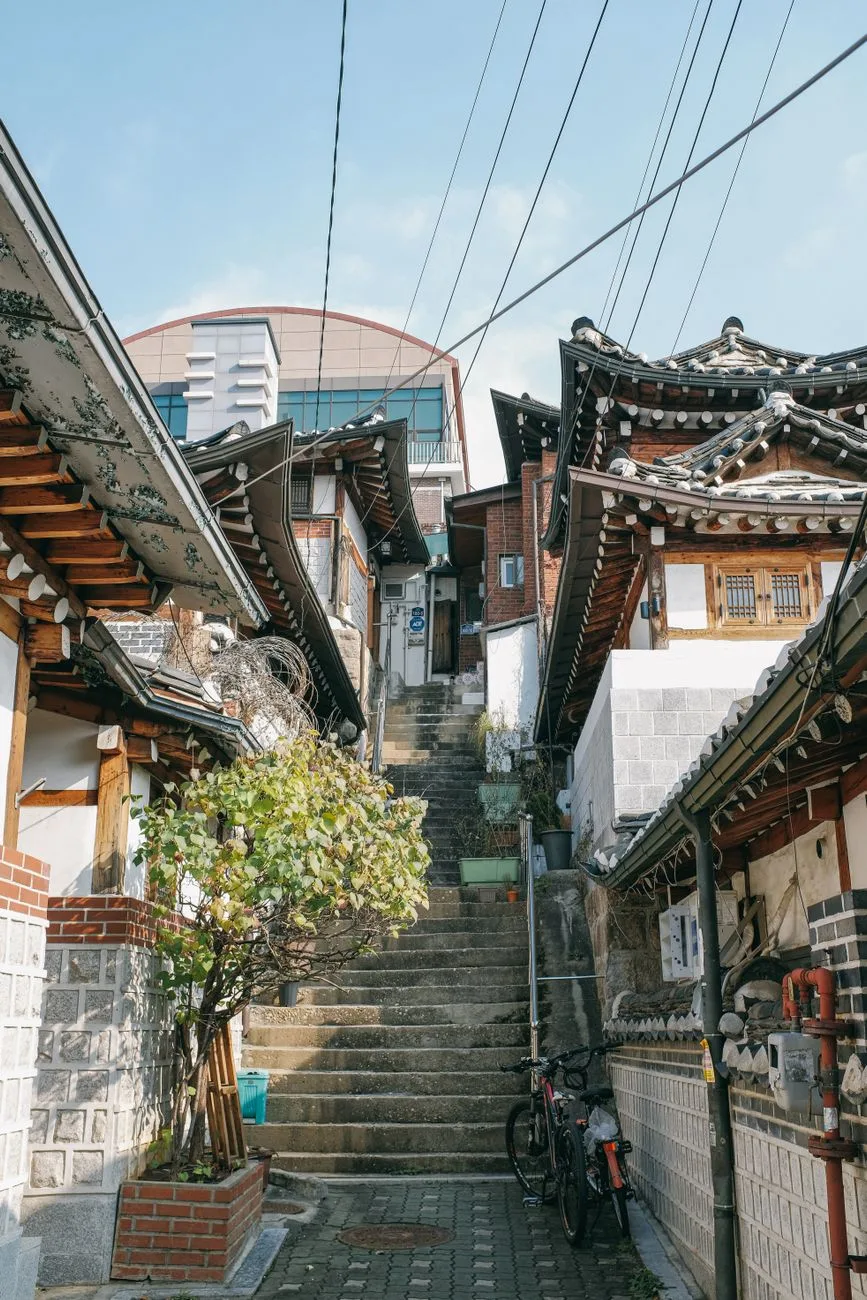
The best hanok stay in Seoul depends on the experience being purchased. Choose Rakkojae Hanok Collection for the fullest traditional programme, Seoul Hanok Stay for Gyeongbokgung access and a practical courtyard, or a private Nostalgia Seoul property for exclusive space. For most first-time visitors, Rakkojae is the strongest cultural choice; private houses win for groups that value space and privacy.
Key takeaways for choosing a Seoul hanok
- Best cultural experience: Rakkojae Hanok Collection near Bukchon Hanok Village.
- Best palace-area location: Seoul Hanok Stay, about three minutes on foot from Gyeongbokgung Station.
- Best for private groups: Nostalgia Seoul’s standalone properties, subject to the date-specific price.
- Best value starting point: A legally registered Seoul Stay property with a room rate below the city’s current hanok average.
- Main warning: Bukchon is a residential neighbourhood, so noise, luggage handling, steep lanes, and quiet hours matter as much as the room itself.
What makes a hanok stay different from a hotel
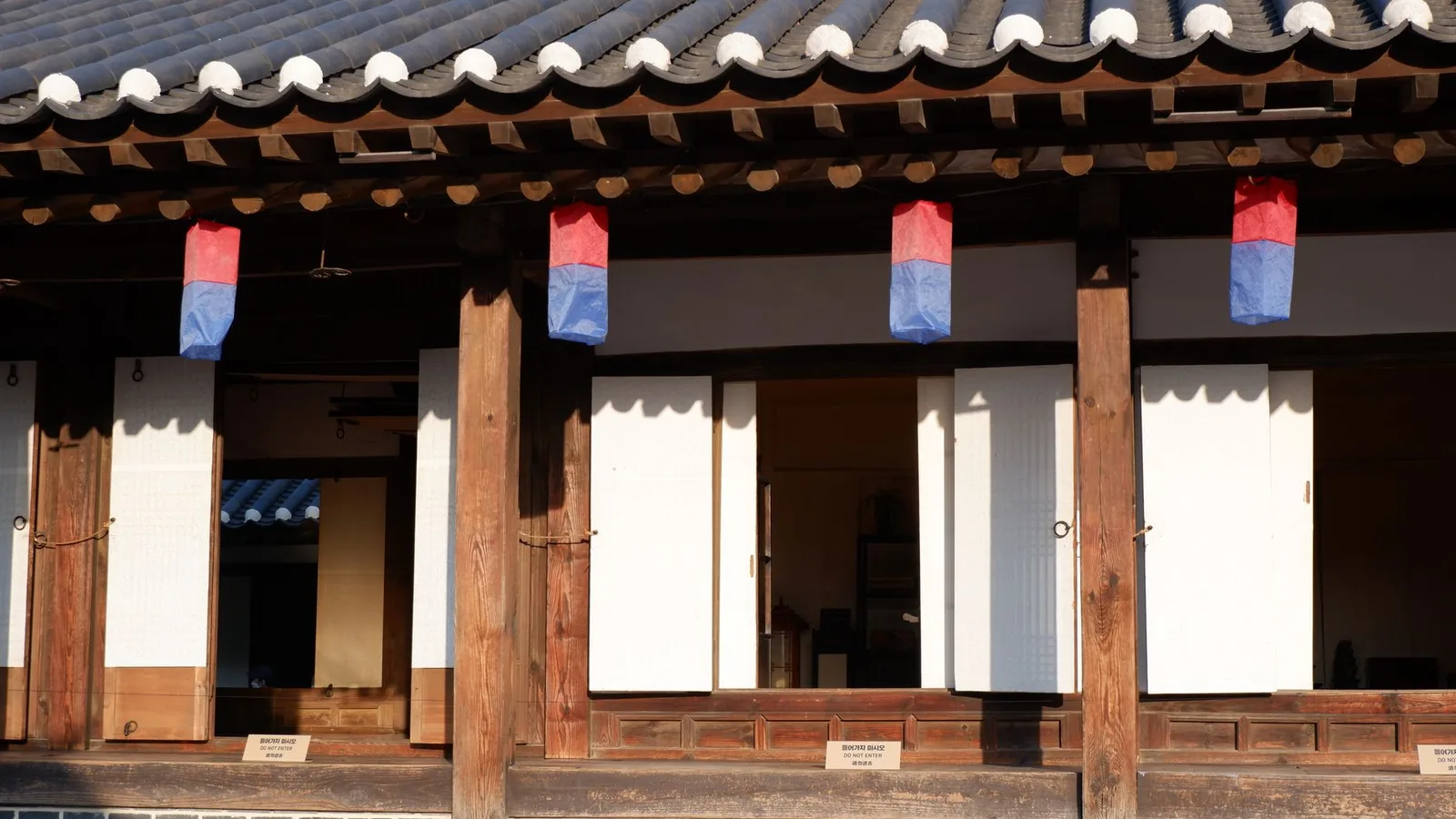
A hanok is a traditional Korean house, identified by features such as a tiled roof, timber structure, inner courtyard, and rooms arranged around shared or semi-private outdoor space. A modern hanok stay may preserve the building while adding private bathrooms, heating, air conditioning, Wi-Fi, and contemporary bedding.
The phrase “hanok stay” does not describe one uniform hotel category. Seoul’s Seoul Stay programme, supported by the Seoul Metropolitan Government, includes legally registered “Urban Stay” and “Hanok Stay” accommodations. The city also selects an annual “Best Seoul Stay” from registered Seoul Stay properties. The official Seoul Stay guide is therefore useful for checking whether a property belongs to the city-supported accommodation system.
That registration question matters because a beautiful house listed on a booking platform can still provide a very different level of documentation, guest support, and operating standards from a registered accommodation. Registration does not make one property automatically superior, but it gives the search a more reliable starting filter.
The main trade-off is physical. Traditional rooms may use floor bedding rather than tall Western beds. Courtyards can be exposed to weather. Historic buildings can have narrow entrances, uneven thresholds, and smaller bathrooms. Those features create the atmosphere, but they also affect comfort.
Best hanok stay in Seoul by traveller type
The right choice changes with the reason for booking. A couple seeking a cultural evening needs a different property from a family carrying large suitcases or a group splitting the cost of an entire house.
Choose Rakkojae for the deepest traditional programme
Rakkojae Hanok Collection is the clearest choice when the stay itself is part of the itinerary. The Korea Tourism Organization describes its Seoul locations near Bukchon Hanok Village as offering traditional tea ceremonies, Korean dining, etiquette, and cultural programmes. The property is designed around participation in Korean traditions, not only sleeping inside an old-style building. Details are published by the Korea Tourism Organization’s Rakkojae Hanok Collection listing.
Rakkojae suits travellers who will actually use those services. If the itinerary consists of late-night shopping, early airport transport, and long days away from the accommodation, the cultural premium may go unused. In that case, a simpler registered hanok near a subway station can be the more rational purchase.
Choose Seoul Hanok Stay for palace access and a practical layout
Seoul Hanok Stay, also identified as JNP Stay, is about three minutes’ walk from Gyeongbokgung Station. The Korea Tourism Organization lists a courtyard where guests can play traditional Korean games and use a barbecue area. That makes the property a good fit for visitors who want a hanok setting without giving up direct access to Seoul’s palace district. See the Korea Tourism Organization’s Seoul Hanok Stay listing.
The location is particularly useful for a first Seoul visit. Gyeongbokgung Palace, Bukchon, Insadong, and the Jongno area can be combined in one walking-heavy day, while Gyeongbokgung Station provides a simple subway connection when the weather changes or luggage becomes inconvenient.
The courtyard is a useful differentiator for families and small groups. It creates a shared area that a conventional hotel room does not provide. The failure case is a guest expecting a full-service hotel: a courtyard and traditional atmosphere do not necessarily mean a 24-hour front desk, lift, restaurant, or Western-style room configuration.
Choose a private Nostalgia Seoul property for exclusive space
Nostalgia Seoul publishes multiple private properties with names including Nook Jae, Hidden Jae, Hillo Jae, Slow Jae, Double Jae, and Blue Jae. In a booking search for 30–31 July 2026, the published starting prices were ₩600,000 for Nook Jae, ₩1,000,000 for Hidden Jae, ₩1,000,000 for Hillo Jae, ₩1,150,000 for Slow Jae, ₩1,500,000 for Double Jae, and ₩2,200,000 for Blue Jae. These are date-specific starting prices from Nostalgia Seoul’s reservation page, not permanent tariffs.
A private house becomes more competitive as the group grows. A ₩1,000,000 night costs ₩250,000 per person for four guests, or ₩125,000 per person for eight. The same property is expensive for one or two people because the entire-house price is being divided among fewer occupants.
Private accommodation also changes the social experience. It works for a group that wants to eat, talk, and use the courtyard together. It works poorly when the group expects hotel-style daily service or plans to spend almost every waking hour outside.
Where to stay: Bukchon, Gyeongbokgung, or another Seoul neighbourhood
Location should be assessed by the next morning’s route, not only by the photograph of the building. Bukchon Hanok Village sits between Gyeongbokgung Palace and Changdeokgung Palace, according to Visit Seoul’s official Bukchon guide. It is also a residential neighbourhood.
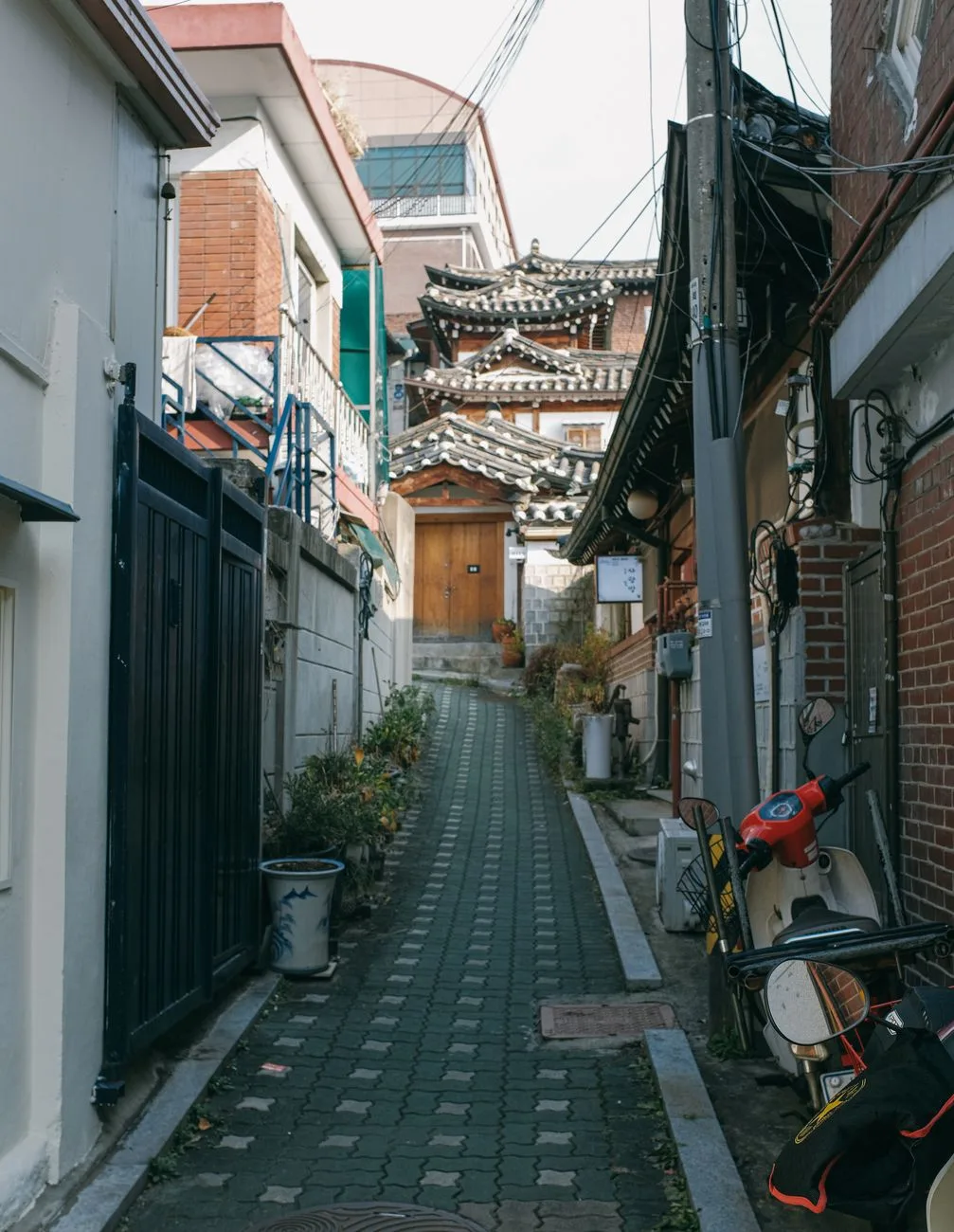
That creates a strong sightseeing base and a real responsibility. Guests should expect residential quiet hours, pedestrians on narrow lanes, and neighbours living beside the accommodation. A property in Bukchon is not suitable for loud late-night gatherings, even when the house has a beautiful courtyard.
Use this decision rule:
- Choose Bukchon when the priority is hanok atmosphere, palace walks, photography, and traditional streets.
- Choose Gyeongbokgung Station or Jongno when subway access and a compact cultural itinerary matter more than complete seclusion.
- Choose a private property outside the densest tourist lanes when the group needs space, privacy, and evening time at the house.
The city’s historic lanes also affect arrival logistics. A taxi may stop at the nearest accessible road rather than at the door. Large suitcases are awkward on sloped or narrow streets, and some traditional entrances have raised thresholds. Confirm the final walking route before arrival, especially for older guests, children, or anyone travelling with heavy luggage.
How much a hanok stay in Seoul costs
A Booking.com page viewed in August 2026 reported an average Seoul hanok price of US$175 per night for the displayed weekend. That figure is a market snapshot, not a guaranteed citywide rate. It can include different room sizes, amenities, cancellation conditions, and neighbourhoods. The Booking.com Seoul hanok page is the originating source for that dated average.
Private houses can sit far above that benchmark. The Nostalgia Seoul examples above range from ₩600,000 to ₩2,200,000 for one night in the 30–31 July 2026 search. The gap reflects the number of rooms, the exclusivity of the property, the setting, and the fact that the price may cover the whole house rather than one room.
Worked example: when a private hanok becomes reasonable
Assume four adults are considering a private property priced at ₩1,000,000 for one night, before any separately stated taxes, service charges, meals, or optional activities.
₩1,000,000 ÷ 4 guests = ₩250,000 per guest
For two nights:
₩1,000,000 × 2 nights = ₩2,000,000 total
₩2,000,000 ÷ 4 guests = ₩500,000 per guest
The decision is straightforward. If each traveller would otherwise pay ₩250,000 per night for separate rooms, the private house reaches parity at four guests. If only two people share it, the same one-night booking costs ₩500,000 per person, before extras. This is why private hanok accommodation is a group-space decision rather than a simple room-price decision.
A second comparison uses the dated Booking.com snapshot. A US$175 average room for two nights is US$350 before taxes and booking-specific charges. That cannot be compared directly with a Korean-won private-house quote until the exchange rate, occupancy, inclusions, and cancellation rules are aligned. The useful comparison is price per person for the same dates and the same service level.
What to check before booking a Seoul hanok
The listing photograph answers only one question: whether the building looks traditional. The following details decide whether the stay works in practice.
Confirm the sleeping arrangement
Ask whether the room has a raised bed, a mattress on an ondol floor, or a mixture of both. Check the number of mattresses rather than assuming that the advertised guest capacity equals the number of proper beds. Floor bedding can be comfortable, but it is a poor match for anyone who cannot easily get down to or up from the floor.
Check the bathroom and temperature controls
A restored exterior does not tell you whether the bathroom is private. Confirm bathroom count, shower separation, hot-water arrangements, heating, and air conditioning. Historic construction can make temperature control less even than in a modern hotel.
Read the arrival instructions
Look for the nearest subway exit, the final walking distance, luggage assistance, check-in hours, door codes, and taxi drop-off point. A property listed as “near Bukchon” may still involve a walk through narrow lanes. Save the address in Korean as well as English for the driver or map application.
Understand what the price includes
Separate the accommodation charge from breakfast, tea ceremonies, dining, barbecue use, cleaning fees, taxes, deposits, and late check-in charges. A cultural programme can be valuable, but it should be treated as an included service only when the listing says so.
Respect the residential setting
Bukchon’s status as a residential neighbourhood changes guest behaviour. Keep voices low outdoors, avoid blocking alleyways, and follow the property’s quiet-hour instructions. A courtyard is a shared architectural feature, not permission for an outdoor party.
Common booking mistakes and the cases where the advice fails
The most common mistake is choosing the most traditional-looking property without checking access. A beautifully restored house can be unsuitable when the route includes several flights of stairs, uneven lanes, or no practical luggage drop-off.
Another mistake is comparing a private-house total with a hotel room total without dividing by the same number of guests. The ₩1,000,000 example is expensive for two people and potentially reasonable for four or eight. The arithmetic must use total nights, total guests, and identical inclusions.
A third mistake is treating “near Bukchon” as a promise of silence. Bukchon is a living neighbourhood. Traffic, nearby visitors, renovation work, and neighbouring homes can affect the experience, while the accommodation’s own rules limit late-night noise.
The usual recommendation for a first visit is a palace-area hanok. It fails if the itinerary is centred on Gangnam, Jamsil, or early-morning airport travel. In those cases, a central modern hotel near the planned transport route can save enough time and taxi cost to outweigh the traditional setting.
Season also changes the experience. Seoul climate normals published by the Korea Meteorological Administration show average highs and lows of 25.6°C and 16.7°C in September, 19.7°C and 9.8°C in October, and 11.5°C and 2.9°C in November. Recorded rainfall in those normals is 137.6 mm in September, 49.3 mm in October, and 53.0 mm in November. The Korea Meteorological Administration climate data is historical normal data, not a forecast for a particular booking date.
October is the strongest balance for visitors who want palace walks and comfortable outdoor time. September brings warmer evenings and more rainfall. November offers colder nights, so floor heating, bedding, and indoor bathroom comfort deserve extra attention.
The final choice: which Seoul hanok should you book
Book Rakkojae Hanok Collection when the cultural programme is the main reason for the stay. Book Seoul Hanok Stay when Gyeongbokgung Station access, a courtyard, and a practical palace-district base matter most. Book a Nostalgia Seoul private property when at least four guests can share the whole-house price and the group values private space.
Before paying, compare the total cost per person, sleeping surface, bathroom arrangement, luggage route, quiet-hour policy, and cancellation terms for the exact dates. That checklist produces a better result than ranking houses by architecture alone.
Frequently asked questions
Is Bukchon Hanok Village a good area for a hanok stay?
Yes, Bukchon is a strong choice for palace access and traditional streets, but it is a residential neighbourhood between Gyeongbokgung Palace and Changdeokgung Palace. Guests should follow quiet-hour and access rules.
What is the cheapest Seoul hanok price?
The lowest dated private-house starting price in the supplied Nostalgia Seoul search was ₩600,000 for Nook Jae for 30–31 July 2026. The displayed price was time-sensitive and cannot be treated as a permanent rate.
Is Rakkojae worth the higher price?
Rakkojae is the stronger choice when tea ceremonies, Korean dining, etiquette, and cultural programmes will be used. It is less compelling when the accommodation is only a place to sleep between sightseeing stops.
Are Seoul hanok rooms suitable for children or older travellers?
They can be, but the sleeping surface, thresholds, stairs, bathroom layout, and luggage route must be checked first. Floor bedding and narrow historic entrances create practical limits that a standard hotel room may avoid.
Can a private hanok save money for a group?
It can once enough guests share the fixed house price. A ₩1,000,000 night costs ₩250,000 per person for four guests, but ₩500,000 per person for two, before separately charged extras.
What is the best month for a hanok stay in Seoul?
October offers the most comfortable balance in the supplied Seoul climate normals, with an average high of 19.7°C, low of 9.8°C, and rainfall of 49.3 mm. November is colder, while September is warmer and wetter.