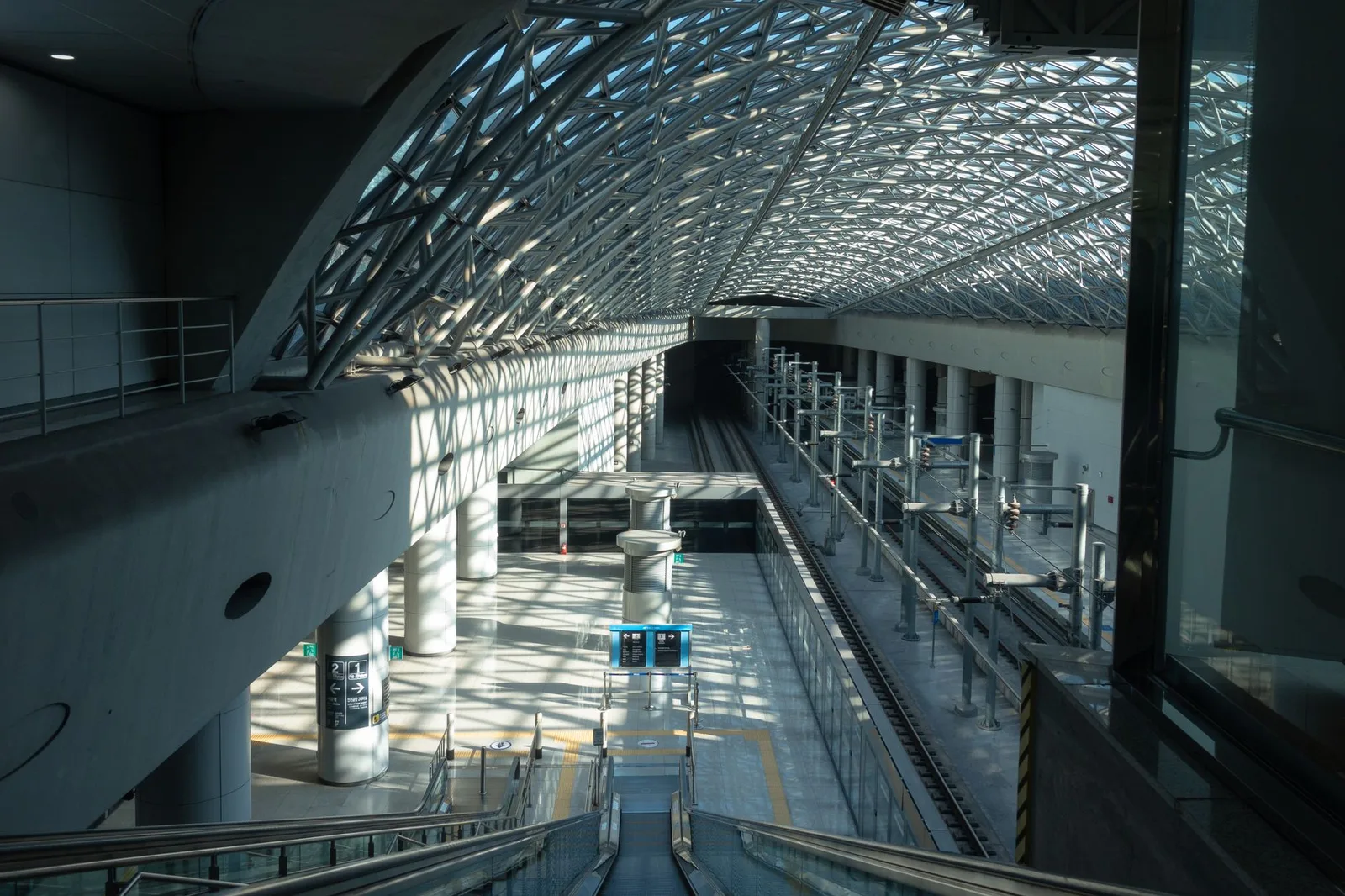
Two Seoul stations sell tickets to Jeonju, and they are not interchangeable. Yongsan runs 26 KTX departures a day. Seoul Station ran between five and eight a day over the week of 14 August 2026.
The fastest way to get to Jeonju from Seoul is the KTX from Yongsan Station: about 1 hour 35 minutes across 237 km of track, ₩34,400 in standard class. The express bus from Central City Terminal costs around ₩15,000 and takes 2 hours 56 minutes on the published timetable, but sets you down 10 minutes closer to the Hanok Village.
Before you book
- Leave from Yongsan, not Seoul Station. Twenty-six daily KTX departures against five to eight, and ₩200 cheaper per ticket.
- KTX standard class Yongsan to Jeonju is ₩34,400, first class ₩48,200, on KORAIL's Jeolla Line timetable effective 30 December 2025.
- The express bus runs 96 times a day from Central City Terminal, first at 05:30 and last at midnight.
- The ITX-Saemaeul is the trap option: ₩17,600 and three and a half hours, slower than the bus for more money.
- Last KTX out of Yongsan is 21:48. The last coach leaves at 24:00.
Taking the KTX from Yongsan to Jeonju
Jeonju sits on the Jeolla Line (전라선), which branches off the Honam corridor, and Seoul's hub for that corridor is Yongsan Station at 405 Hangang-daero, Yongsan-gu. Trains terminate at Jeonju Station (전주역), 680 Dongbu-daero, on the north side of the city in Deokjin-gu. Anyone who has already made the run down to Gwangju will recognise the same departure hall.
KORAIL's published Jeolla Line timetable, effective 30 December 2025, prices a standard adult one-way at ₩34,400 from Yongsan and ₩48,200 in first class. Twenty-six trains cover the route on a weekday, rising to 28–30 at weekends, with the first departure at 05:08 and the last at 21:48. Coming back, Jeonju's first northbound train is 06:25 and its last is 23:11.
Journey time moves with the stopping pattern rather than the train type. Published figures for the route cluster between 1h26 and 1h53, and the fastest service listed on the live board for 14 August 2026 was KTX-Sancheon 517 at 1 hour 44 minutes. Plan on 1h30 to 1h50 and you will not be caught out.
One pricing trap worth naming: booking aggregators advertise Seoul–Jeonju rail "from ₩16,544" or "from ₩17,600". Those are promotional lead-ins and slower-service fares. The walk-up KTX fare is the ₩34,400 figure above, and it is what you will pay at the machine on the day.
Why Seoul Station is the wrong platform for Jeonju
A handful of services run through from Seoul Station instead of starting at Yongsan, and the frequency gap is severe. Across 14–20 August 2026, that station showed eight trains on most days, seven on the 17th, and five on the 18th and 19th, with the first at 07:03 and the last at 17:37. The fare is ₩34,600, ₩200 above Yongsan, and the same board listed a 3h14 Saemaeul alongside the fast services.
Most search apps aggregate both stations under "Seoul", so the origin field decides whether you get a train every 40 minutes or a train every three hours. Read it before you pay.
The express bus from Central City Terminal
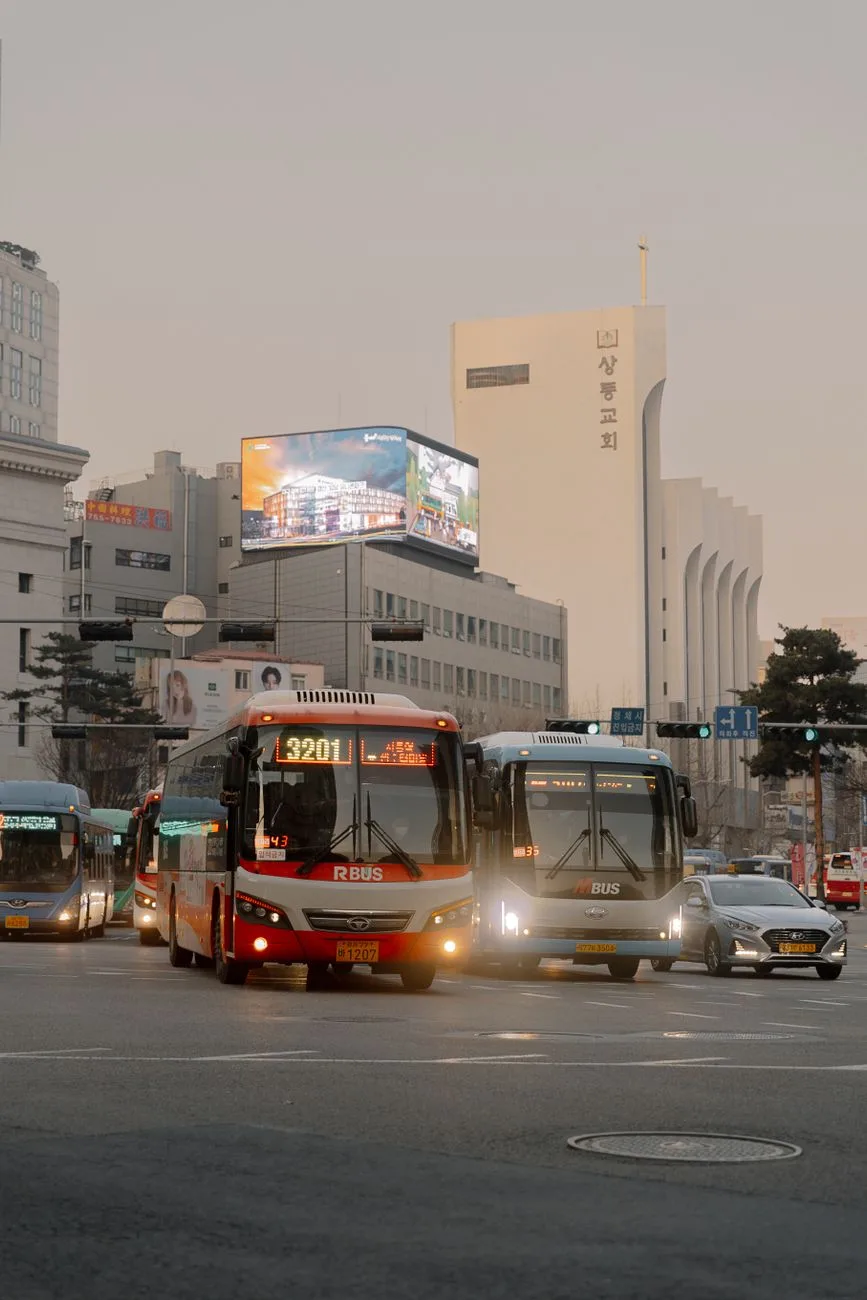
Central City Terminal (센트럴시티터미널) in Seocho-gu handles the Honam-line coaches, and four operators — Geumho, Dongyang, Jungang and Cheonil — share the Jeonju route into Jeonju Express Bus Terminal. As of 13 August 2026 the timetable showed 96 departures a day, one every 10 to 20 minutes, from 05:30 until midnight. The road distance is 202.6 km.
The published running time is 2 hours 56 minutes. In light traffic the coaches do it in about 2h30; Friday and Sunday afternoons push past three hours; overnight runs finish in 2h10 to 2h30 because the expressway is empty.
As of August 2026 the grade fares on this route run about ₩15,000 for a standard seat, ₩22,000 for udeung (the 28-seat business layout), and ₩27,200–32,600 for premium, with weekend and late-night departures at the top of each band. Published sources label the middle grades inconsistently, so book on kobus.co.kr, the operators' own reservation site (ARS 1644-9030), where the fare for your exact date and grade is priced before payment.
What the two options cost door to door
This table answers one question: which departure point and service class is worth booking for a normal trip to the Hanok Village.
| Service | Departs from | Journey time | Fare (KRW, one-way, Aug 2026) | Recommended |
|---|---|---|---|---|
| KTX | Yongsan Station | 1h30–1h50 | 34,400 | Yes |
| KTX | Seoul Station | from 1h44 | 34,600 | No |
| ITX-Saemaeul | Yongsan Station | 3h30–4h | 17,600 | No |
| Express bus, standard | Central City Terminal | 2h30–3h | ~15,000 | Yes |
| Express bus, premium | Central City Terminal | 2h30–3h | 27,200–32,600 | Optional |
The table shows why only two rows matter. The slow train costs ₩2,600 more than a standard coach seat and takes an hour longer, so the real choice is KTX from Yongsan or bus from Central City. Premium coach seats are worth it overnight and hard to justify in daylight.
Now the arithmetic, for a Saturday trip starting from a hotel in Myeongdong.
By rail: Line 4 to Seoul Station and Line 1 down to Yongsan, about 20 minutes at ₩1,550, the Seoul transport-card base fare since 28 June 2025 published by the Seoul Metropolitan Government. Then ₩34,400 for the KTX, then ₩1,650 for city bus 119 or 999 to Jeondong Catholic Church. Total ₩37,600, and with a 20-minute buffer at Yongsan plus the 25-minute ride at the far end, about 2 hours 50 minutes door to door.
By coach: Line 3 to Express Bus Terminal, about 25 minutes for the same ₩1,550. Then ₩15,000 for a standard seat and ₩1,650 for bus 79 or 999 from the terminal. Total ₩18,200, and about 3 hours 50 minutes on the published 2h56 running time, closer to 3h25 when the Honam Expressway is clear.
So ₩19,400 buys between 35 and 60 minutes, each way. On a single-day return, take the KTX: the two hours it gives back is a fifth of the daylight you have in Jeonju, and ₩38,800 return is a fair price for it. With a night booked, or with three or more people travelling, the coach wins outright. A family of four going down and back pays ₩155,200 extra by rail for time they are not short of.
Driving, and where to leave the car
By road it is about 240 km: the Gyeongbu Expressway (Route 1) south out of Seoul, then the Honam Expressway (Route 25) from Nonsan Junction, in 2h30 to 3h without holiday traffic. That is competitive with the coach only if the car is already paid for.
Parking is the catch. The hanok quarter's lanes are narrow and largely closed to through traffic, and Jeonju City runs a free shuttle from 10:00 to 19:00 to compensate: Route A links the Daesung parking lot and Hotel Lewin with the village, and Route B is added at weekends and on holidays, according to Jeonju City's official access page.
From Jeonju Station or the bus terminal to the Hanok Village
Jeonju Hanok Village is at 99 Girin-daero, Wansan-gu, and neither arrival point is walking distance.
- From Jeonju Station: city buses 79, 101, 112, 119, 508, 536, 542, 545, 546 and 999, alighting at Jeondong Catholic Church (전동성당), about 25 minutes on Jeonju City's own figures.
- From Jeonju Express Bus Terminal: buses 79, 999 and 1994 from the Buddhist Association building, about 15 minutes.
- By taxi from Jeonju Station: 7 to 10 minutes.
Jeonju city bus fares, set by Jeonju City and effective 1 August 2025, are ₩1,650 by transport card and ₩1,700 in cash for adults, ₩1,300 and ₩1,350 for youth, with village buses at a flat ₩500. One free transfer applies within 40 minutes on a transport card across Jeonju and Wanju, which covers the station-to-village hop if you tag in on arrival. What to see once you are inside, and what it costs to enter, is covered in the hanok village guide with its fees and 5 p.m. rule.
When this advice breaks
The KTX-first rule fails on the Chuseok holiday, which falls on Thursday 24 to Saturday 26 September in 2026, with Chuseok day itself on Friday 25 September. Rail seats on the Honam and Jeolla lines go within minutes of reservations opening, and the expressways slow to a crawl, so whichever mode you get is the one you booked weeks earlier.
It also fails after 21:48. That is the last Yongsan departure, and coaches keep running until midnight, so a late finish in Seoul makes the bus the only option regardless of budget.
Festival weekends are the third case. Jeonju has been a UNESCO Creative City of Gastronomy since 2012, the first in Korea, and the 2026 Jeonju Bibimbap Festival runs 2–4 October at Deokjin Park, its first year at that venue after moving from the World Cup Stadium. Trains on those weekends sell out days ahead while extra coaches keep appearing on the board. The city's official festival calendar lists the current schedule, and if the dish is the reason you are going, the home version of bibimbap is a useful comparison for what Jeonju does differently.
Common questions about the Seoul to Jeonju trip
Is there a direct train from Seoul Station to Jeonju?
Yes, but only five to eight a day, against 26 from Yongsan. The Seoul Station fare is ₩34,600, first departure 07:03 and last 17:37 in the week checked on 14 August 2026. Yongsan is the better booking on frequency, price and first-train time.
How long does the bus from Seoul to Jeonju take?
The timetable lists 2 hours 56 minutes from Central City Terminal as of 13 August 2026. Real running time is about 2h30 in clear conditions, over three hours on Friday and Sunday peaks, and 2h10 to 2h30 on overnight services.
Can Jeonju be done as a day trip from Seoul?
Yes. The first KTX leaves Yongsan at 05:08 and the last train back from Jeonju is 23:11, which gives more than twelve hours in the city even allowing for the 25-minute bus at each end. It is one of the longer options among day trips from Seoul, and it works because the last departure is late rather than because the ride is short.
Is a KORAIL PASS worth buying just for Jeonju?
No, on the arithmetic alone. A Yongsan–Jeonju return at the standard fare is ₩68,800, and a rail pass has to beat that total before it earns anything. Official 2026 pass prices are not currently published in a verifiable form, so price the pass on Korail's own site against that ₩68,800 figure; it pays only if you are adding two or more further intercity legs in the same window.
What is the last train and last bus back to Seoul?
Jeonju's last northbound train departs at 23:11 on the timetable effective 30 December 2025, with the first at 06:25. Coaches back to Central City run until 24:00, starting at 05:00 on most days and 04:30 on Mondays.
Fares and timetables in Korea change on published effective dates, so treat every figure here as accurate to its stated date and confirm the price at booking.